
News
Easter Sunday carnage: Church examines available official records, alleges govt. continues to withhold crucial info

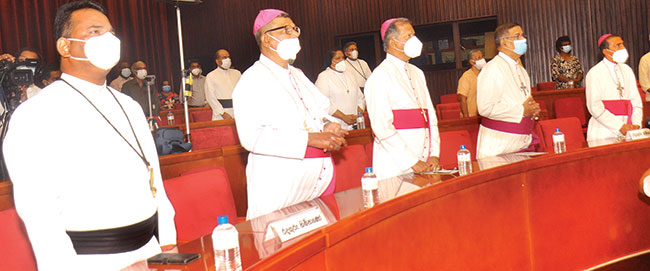
… scathing attack on AG’s Dept. and current dispensation
By Shamindra Ferdinando
Archbishop of Colombo Rt. Rev. Malcolm Cardinal Ranjith has questioned the accountability on the part of the Attorney General’s Department in the overall legal process that had so far failed to ensure justice for those killed and maimed in near simultaneous 2019 Easter Sunday suicide attacks.
The terror attacks carried out by the National Thowheed Jamaat (NTJ) killed 269 people and wounded over 500.
In a strongly-worded video message, Archbishop Ranjith accused the current political leadership, Attorney General Sanjay Rajatatnam, the AG’s Department, intelligence services and law enforcement authorities of badly letting down those who demanded justice. The outspoken priest stressed that nearly three years after the heinous crimes successive governments continued to suppress crucial evidence and deprived the Catholic Church of all available information available with the AG’s Department.
The Cardinal said that the Church didn’t have any faith in the government or the AG at all. His Eminence said so at the launch of ‘Thitha’ (full stop) authored by Rev. Lal Pushpadeva Fernando with the assistance of Maximus Linton Fernando, Dr. Sachitha Mendis and Ajith Mendis, at ‘Jesmine’ Hall at the Bandaranaike Memorial International Conference Hall (BMICH).
The 448-page book, published in Sinhala on behalf of the National Catholic Communication Centre, meticulously dealt with five separate reports on the Easter Sunday carnage. Rev. Father Pushpadeva Fernando explained the arduous examination of Supreme Court Justice Vijith Malalgoda’s report, followed by the Parliamentary Select Committee (PSC) report, Parliamentary Oversight Committee on Defence (POCD), Presidential Commission of Inquiry (P CoI) report and finally the ministerial subcommittee study and recommendations pertaining to the POCD and P CoI reports. Rev. Fernando said that in spite of spending public funds on those reports, absolutely nothing had been achieved so far.
Ironically, the event was held at the same venue where Tamil National Alliance (TNA) Jaffna District MP M.A. Sumanthiran, a week after Easter Sunday attacks, blindly declared the carnage, was a result of Sri Lanka’s failure to ensure certain basic values. Attorney-at-law Sumanthiran warned of dire consequences unless the government addressed the grievances of the minorities. Sumanthiran said so at an event organised by the Sinhala weekly Annidda to celebrate its first anniversary. Subsequently, lawmaker Sumanthiran was appointed to the PSC on Easter Sunday carnage, headed by the then Deputy Speaker of Parliament Ananda Kumarasiri.
The Saturday’s event commenced with a relatively small gathering observing one minute silence exactly at 8.42 in memory of those who perished in suicide attacks. Alleging that deliberate attempts were being made to suppress the truth, the gathering was told of a despicable conspiracy to protect the perpetrators.
Rev. Father Pushpadeva Fernando said that Easter Sunday carnage could have been averted. In spite of specific information that had been received by the State intelligence services, pertaining to the attack, including a warning at 6.41 am on the day of the incident, those responsible did nothing. Alleging that lawlessness had set in, the priest emphasised the responsibility on the part of the society to seek an end to the current system of governance.
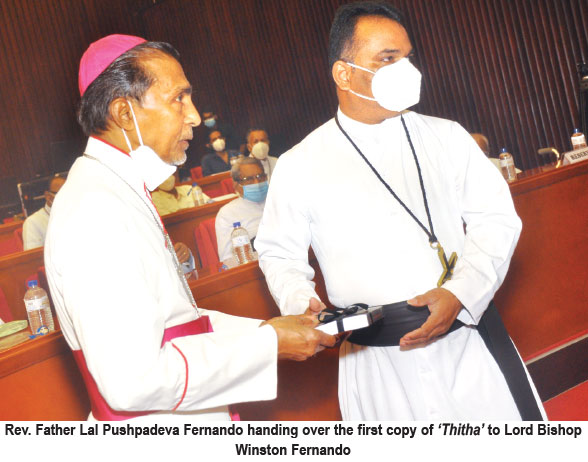
The Archbishop said that intelligence services and senior police officials knew of the imminent attack, planned by a group of Muslim extremists. Understanding the importance of evidence gathered by the PCoI, the Archbishop alleged that the government and the Attorney General had suppressed evidence that had been the basis for the P CoI report. The Cardinal alleged that the government and the Attorney General hadn’t provided to the Church several chapters sought by them. The Church leader blamed both the yahapalana government and the current dispensation for the sorry state of affairs. Declaring that the truth couldn’t be established unless the government shared all available evidence, the Cardinal said that justice had been hindered by the actions of the AG and the AG’s Department.
The book launch was held close on the heels of both the then Secretary Defence Hemasiri Fernando and IGP Pujith Jayasundera indicted separately before a three-judge trial-at-bar over their failure to thwart the Easter Sunday carnage, being unanimously acquitted and released.
The indictments were prepared by Rajaratnam’s predecessor Dappula de Livera, PC, who retired in May last year.
The Cardinal alleged that the current dispensation hadn’t fulfilled any of the promises it had made regarding the Easter Sunday carnage. Although legal action had been initiated against some of those who had been indirectly involved with suicide bomber Zahran Hashim, the Church was not sure of the status of the investigations, the Cardinal said.
The priest flayed the government for protecting political leaders, intelligence and police officers responsible for the overall failure while pointing out how some of those who had been blamed for serious lapses were given promotions. The Cardinal was referring to the then Chief of State Intelligence Senior DIG Nilantha Jayawardena, currently the senior officer in charge of Central Range. Jayawardena turned a state witness in the above case.
Commenting on the government’s response to their concerns, the Cardinal said that they didn’t have faith in the current dispensation or the AG’s Department. The Cardinal said that since independence those who had been in power should accept collective responsibility for the current pathetic situation. “We should change this system. If we do not do away with the present system, the situation will continue to deteriorate and the people will suffer more.”
The Cardinal emphasised that he was concerned about not only those who suffered due to the Easter Sunday attacks but also all the communities. Those who backed Muslim extremists should accept responsibility for the mayhem caused in April 2019, the Cardinal said, adding that certain organisations that caused friction among communities, too, were accountable.
The Archbishop stressed that they were confident that God would ensure justice one day. The work undertaken by Rev Father Pushpadeva Fernando was part of their effort to pursue justice.
Lord Bishop Winston Fernando, the President of the Catholic Bishops’ Conference of Sri Lanka, said that the government couldn’t absolve itself of the responsibility for bringing the perpetrators of the Easter Sunday carnage to justice. Lord Bishop Fernando paid a glowing tribute to members of the editorial board for taking tangible measures to educate the masses. The priest emphasised that the Church would seek redress in terms of the Catholic teachings while urging the people of all faiths to respond compassionately and to act according to their conscience. While deeply appreciating the support extended by all communities to their cause, Lord Bishop said that the Church expected continued support in support of their struggle for justice. The priest pointed out among the victims had been nearly 50 foreigners of different nationalities while blaming the political leadership for protecting the perpetrators and those who facilitated the terror project. Lord Bishop didn’t mince his words when he explained how the political and defence set up contributed to the suicide missions.
Lord Bishop demanded early implementation of recommendations made by the Presidential Commission of Inquiry that probed the Easter carnage, while commending the role played by the Archbishop of Colombo to pressure successive governments over the Easter Sunday carnage. The national reconciliation was at stake due to the inordinate delay in solving the massacre.

Easter Sunday carnage:
Investigations into the 2019 Easter Sunday terror attacks will not be halted due to protests, demonstrations or Satyagraha campaigns, Minister of Public Security Ananda Wijepala told Parliament yesterday (10), while alleging that investigators had gathered sufficient evidence to establish the involvement of former State Intelligence Service (SIS) Director, retired Major General Suresh Sallay, in a conspiracy linked to the attacks.
Making a special ministerial statement in the House, the Minister said that evidence uncovered during ongoing investigations indicated that Sallay had prior knowledge of the planned attacks and related extremist activities before the coordinated bombings that claimed more than 270 lives and injured hundreds of others, on April 21, 2019.
Wijepala claimed that three weeks before the attacks, Sallay had deployed four Muslim individuals to gather intelligence, including information on the number of worshippers attending mass at a church in Negombo.
According to the Minister, the principal individual among the four had been identified by witnesses to the CID as an ISIS extremist and had subsequently gone missing following the Easter Sunday attacks.
“There is evidence suggesting that Major General Sallay met the informant who had tipped off Army Intelligence regarding the attacks at a hotel in Colombo,” Wijepala said.
The Minister maintained that investigators had uncovered evidence indicating that Sallay had taken steps to prevent the disclosure of information that could have revealed crucial details relating to the attacks and the events leading up to them.
Referring to allegations that Sallay had been subjected to inhumane treatment while in custody, Wijepala rejected such claims, describing them as false and misleading.
He told Parliament that the former intelligence chief had been afforded all facilities and privileges due to a primary suspect under the law, including unrestricted access to legal counsel.
“The Magistrate personally visited Sallay to ascertain his health and wellbeing. At no stage did he complained of any inhumane treatment. Neither has he lodged complaints with any other relevant authority in that regard,” the Minister said.
Wijepala also disclosed that Sallay had thus far declined to provide investigators with the passwords to his laptop computer and mobile phone, a move he described as an attempt to obstruct the investigative process.
“He is acting in a manner that hinders the progress of investigations,” the Minister alleged.
The Public Security Minister maintained that the government remained committed to uncovering the full truth behind the Easter Sunday attacks and bringing all those responsible before the law, irrespective of their status or position.
Emphasising that the investigation would continue without interference, Wijepala said attempts to exert pressure through public protests or Satyagraha campaigns would not influence the course of the inquiry.
“The investigations into the Easter Sunday attacks will not be halted by any protests or Satyagraha,” he said.
By Saman Indrajith

A total of 267,138 children dropped out of the school system between 2018 and 2024, Prime Minister and Minister of Education Dr. Harini Amarasuriya informed Parliament yesterday (10).
Responding to a question raised by SJB Ratnapura District SJB MP Hesha Withanage, the Prime Minister said that the government did not possess definitive data on school dropouts from 2010 to the early part of 2017.
She explained that the figures for the period from 2018 to 2024 had been derived from annual school census reports using an internationally recognised methodology that takes into account student enrolment figures and dropout rates from Grade One to Grade Ten.
According to the statistics presented to Parliament, 38,839 students dropped out of school in 2018,
while the figure increased to 41,503 in 2019. In 2020, the number stood at 32,540 before declining further to 25,492 in 2021.
However, a sharp increase was recorded in 2022, when 52,596 students were identified as having left the school system. The figure remained high in 2023 at 50,345 before declining to 25,823 in 2024.
The Prime Minister cautioned that the figures did not necessarily indicate that all students classified as dropouts had completely discontinued their education.
She noted that some students may have transferred to schools in other provinces, enrolled in international schools, or migrated overseas with their families while continuing their studies.
Dr. Amarasuriya said that such cases could not be separately identified under the methodology used to compile the statistics and were, therefore, included in the overall dropout figures.
Addressing the causes of school dropouts, the Prime Minister said a range of factors contributed to students leaving the formal education system.
These included personal circumstances, school-related issues, family and economic difficulties, social influences, as well as students opting for alternative educational pathways and training opportunities, she said.
By Saman Indrajith
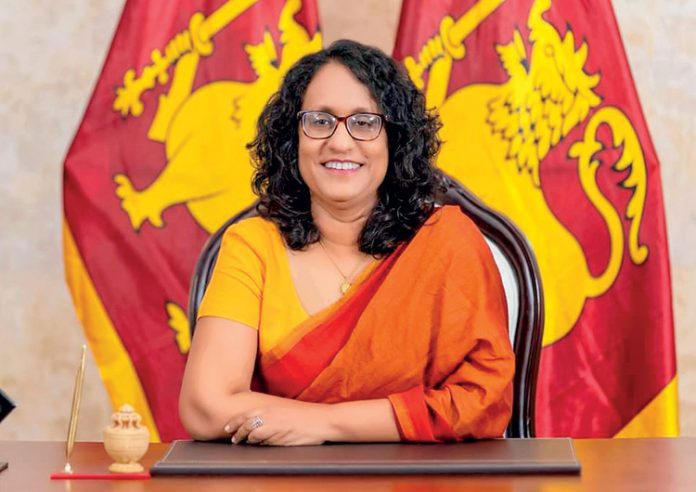
Prime Minister Harini Amarasuriya told Parliament yesterday that Provincial Council elections would not be conducted under the existing proportional representation system and would instead be held under a new electoral system.
Responding to a question raised by MP Ravi Karunanayake, the Prime Minister said there was no justification for holding elections without ensuring adequate representation for women and youth in Provincial Councils.
She said that the government’s position was to first finalise reforms to the electoral system before proceeding with polls.
The Prime Minister also provided a detailed breakdown of when the terms of Provincial Councils expired, noting that all nine councils had been without elected administrations for several years. According to her, the Sabaragamuwa Provincial Council term ended on September 29, 2017, followed by the Eastern and North Central Councils on September 30 and October 1, 2017 respectively.
The Central and North Western Provincial Councils ended their terms on October 08 and 10, 2018, while the Northern Provincial Council term ended on October 24, 2018. The Southern Provincial Council term expired on April 10, 2019, followed by the Western Provincial Council on April 21, 2019, and the Uva Provincial Council on October 8, 2019.
Amarasuriya said that under Section 10(a) of the Provincial Councils Elections Act No. 2 of 1988, the Election Commission was required to publish a notice of intention to hold an election within one week after the dissolution or expiry of a council, following a direction from the President.
However, she noted that the Election Commission had not issued such notices due to the absence of enabling legal provisions following subsequent amendments.
She further explained that under Section 3A of the Provincial Councils Elections (Amendment) Act No. 17 of 2017, the holding of elections is linked to the completion of a delimitation process. This requires the appointment of a Delimitation Committee by the President to define electorates within administrative districts and submit its report to Parliament, with elections to be held only after parliamentary approval.
The Prime Minister said the delimitation process has not yet been completed, which has prevented the conduct of Provincial Council elections under the revised framework.
Amarasuriya also informed Parliament that a parliamentary select committee had been appointed to examine and make recommendations on whether Provincial Council elections could be conducted under the previous electoral system through further amendments to existing legislation.
The committee, titled the “Select Committee of Parliament to look into and report to Parliament on the matter of selecting the Electoral System under which the Provincial Council Elections should be held and submit its proposals and recommendations in that regard,” comprises MPs Vijitha Herath (Chairman), Nizam Kariapper, Chandana Sooriyarachchi, Darmapriya Wijesinghe, Samanmali Gunasingha, Shanakiyan Rasamanickam, Lakshman Nipuna Arachchi, Mano Ganesan, Ranjith Madduma Bandara, Arun Hemachandra, Sunil Watagala and Muneer Mulaffer.
She said further decisions regarding the holding of Provincial Council elections will be taken based on the recommendations of the parliamentary select committee.

Canada introduces bill to ban social media for children under 16

Lutkenhaus, 17, upsets Olympic champion Wanyonyi in Oslo

An Everest guide’s miraculous survival raises questions for tourism industry

Whale graveyard dating back five million years discovered

Trump says US will hit Iran ‘hard’ again today

Showers will occur at times in the Western, Sabaragamuwa and North-western provinces and in Galle, Matara, Kandy and Nuwara-Eliya districts

‘Dates have the highest sugar content to fight Coronavirus’

Sunday Island 27 December – Headlines

#SundayIsland 17th December – Headlines

Sunday Island – 28th March

Sunday Island Headlines – 21 March

Sunday Island – 21st February – Headlines
-
 Features6 days ago
Power crept into the Sangha and is now tearing it apart
-

 Features6 days ago
Kondachchi wind farm and battery storage project to boost energy security, says Power Ministry Secretary
-
 News4 days ago
Women’s T20 World Cup 2026 warm-up: Chamari Athapaththu’s 94 helps Sri Lanka beat Pakistan
-
 Features6 days ago
Saudi Arabia sets new benchmark in Hajj management as 1.7 million pilgrims complete sacred journey
-

 News5 days ago
Asst. Manager, security officer arrested over Rs 30 mn snatch at Horana PB branch
-

 Editorial3 days ago
Probe Sallay’s complaint
-

 News4 days ago
Lankan-Canadian inducted to Toronto Sports Hall of Fame
-
 News1 day ago
Local firms move millions of dollars overseas for phantom imports: Govt.