
News
ARTHUR DIAS AND THE JAK TREE


by Goolbai Gunasekara
“Environment” is probably the most popular word in the world at the moment. Buildings are built on a ‘going green’ basis. Companies advertise the fact that their products and indeed even their new surroundings have all ‘gone green.’ New factories would not dream of being constructed without an environmentalist telling them how to set about it.
The subject forms part of school syllabuses. For example, Geography in my time used to be all about mountain ranges, national rivers, varied climates and the diversity of vegetation. No longer. I picked up an OL Geography text the other day and found it was as incomprehensible to me now as Science texts used to be in the past. The Geography syllabus is now so vast it has become a specialized subject and with good cause, for there is no doubt that our planet is heavily under siege thanks to the stupidity of man himself who has brought it to the brink of tragedy. It cannot be stressed strongly enough how urgently necessary it is to halt the destruction of the soil.
All this brings to mind the work of one man who was a well-known personality of my youth (nay even earlier for I was around five when I received my first jak seed from him). He is not even mentioned by most people today who have moved on to new heroes of Sport and Politics, and yet this man’s work, in my opinion, is one of the most valuable contributions made to the population of this country albeit in a quietly caring yet passionately concerned way.
The Dias name is a well-known one in Visakha Vidyalaya, the foremost Buddhist Government Girls’ School in Colombo. Mrs. Jeremias Dias was the philanthropist who donated the prime land on which Visakha stands today. She is revered as the school’s Founder.
Her son, Arthur Dias naturally took a great interest in this fledgling Buddhist Girl’s School that my American Mother headed for 12 years at a time when it was still a private school and the Government had not taken over most schools and forced them willy nilly into the Free Education System.
His brother, Mr. Charles Dias, took over the managership of the school after the great National leader, Sir Baron Jayatilleke was appointed Sri Lanka’s High Commissioner to India and could no longer act as Manager. This gave his brother, Arthur, the forum he needed to popularize his dream of having a Jak tree in every garden of Sri Lanka.
At every Visakha Prize Day Arthur Dias would be on stage alongside his brother (and my mother) with a box of specially packeted jak seeds on the Prize table. His own mother, Mrs. Jeremias Dias’s portrait, presided over all these doings on the Visakha stage and one assumes that she instilled these ideas of future staple foods for Sri Lankan populations into her sons along with her ideas of running the highly successful Dias estates in which Jak trees abounded along with plantation crops.
Every Visakha Prize winner was handed a Jak tree seedling and sometime during the evening Arthur would give a talk to the audience about the nutritional value of the Jak fruit which would serve as a standby were famine ever to hit our fruitful land. I have just planted two jak trees myself outside our garden on a vacant swamp land in the hope it will feed someone, sometime in the future. Mr. Dias would be proud of me.
The Dias Walauwe was in Panadura, and not content to popularize his vision in Visakha alone, he had his helpers standing at the bus stands in the city handing out these precious seeds to passengers.
And if all this sounds excessively obsessive, Arthus Dias went further. He petitioned the British Government of the time to pass a law that no Jak tree could be cut down without the permission of the authorities. Governments then (even British ones) were not ready to pass such requests without first ignoring them, later grudgingly reading them and finally agreeing to the excellence of the scheme.
To this day this law is still in operation and is rarely disregarded.
If Arthur Dias had this kind of influence in one school I wonder if schools of today could not popularize some aspect of the environment that would benefit the food chain of Sri Lankan. In the future we face droughts, floods and even famines.
That sturdy Jak tree has saved many a village family from hunger. What could it not have done for the Bihar famine of British times in India! Imagine a Jak tree in every home feeding the starving population of Bihar that Churchill was deliberately starving.
I have no idea if new Jak trees continue to be planted in our island. I think it an inspired idea if schools were to hand out these seeds at prize givings and other functions. Not only will the work of a far-seeing man be perpetuated but the country will surely benefit tremendously by this highly tasty addition to its food supply. Of course, more than half the recipients of these seeds will toss them in the nearest wastepaper basket but there will be that small percentage of citizens who will actually follow through and plant them.
The outlook of future world food supplies is bleak. We are told that pollution of the seas will be so great that fish will be contaminated thus putting a stop to one source of food. Animals will also be likewise polluted by the air and all sorts of poisonous gases, so meat is out.
Ergo, vegetarianism is on the cards. Let us begin getting used to it and just to make life easier for us, Sri Lankans, let us begin planting Jak trees. Arthur Dias’s dream may save us.
(Excerpted from Principal Factor first published in Lanka Market Digest)

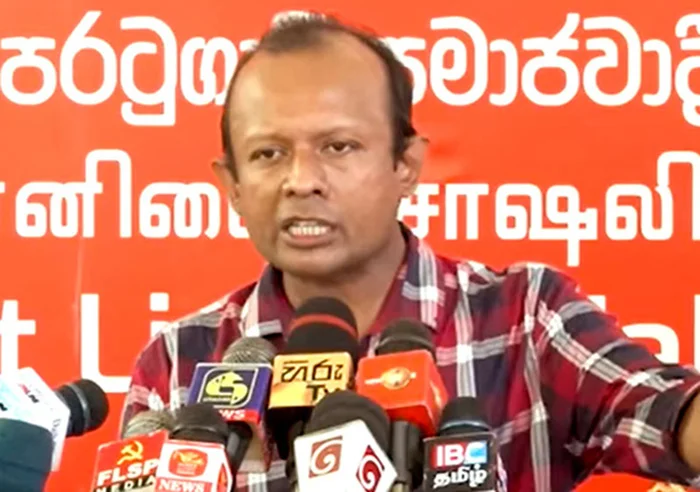
The Frontline Socialist Party (FSP) yesterday accused the government of seeking to use the proposed Protection of the State from Terrorism Act (PSTA) to suppress popular political activity, claiming that some of its provisions were more repressive than those of the Prevention of Terrorism Act (PTA).
FSP Education Secretary Pubudu Jayagoda told a media briefing, in Nugegoda, that the definition of terrorism in the Bill was so broad that it could be used to label almost any form of popular political activity as terrorism.
He said the Bill’s approach to defining terrorism was based largely on attempts to compel a government, or an international organisation, to do, or refrain from doing something, rather than on internationally recognised criteria, such as killings, causing serious bodily harm, kidnapping or acts intended to spread terror among the public.
Jayagoda also alleged that the Bill transferred substantial powers from the judiciary to the executive, while extending powers of arrest, investigation and detention to the armed forces, in addition to the police.
He claimed that the government had sought to portray the Bill as a replacement for the PTA while retaining or introducing provisions that could facilitate political victimisation and repression.
The FSP also questioned the government’s decision to proceed with the Bill, despite having previously sought public views on an earlier draft.
Jayagoda said a draft had been published earlier this year, with the period for public submissions ending on February 28, but the Bill subsequently gazetted was essentially the same draft with some provisions rearranged.
Jayagoda also referred to a letter reportedly sent by Attorney-at-Law Saliya Peiris, a member of a Committee, chaired by President’s Counsel Rienzie Arsecularatne, that had been appointed to draft the legislation. He said Peiris had stated, in the October 06 letter, that changes had been made to the draft prepared by the Committee.
“This means that even the Committee, appointed to prepare the Bill, was a deception,” Jayagoda alleged.
He said that the PSTA was fundamentally similar to the Anti-Terrorism Bill introduced by the previous government, in 2023, which the National People’s Power (NPP) opposed and challenged in court.
“If the NPP opposed that Bill then and is now bringing the same legislation before Parliament, the government must explain its position,” he said.
Jayagoda called on NPP MPs to oppose the PSTA in Parliament and urged trade unions and other groups to build a broad public movement against the legislation.
He challenged the government to an open debate on the Bill.
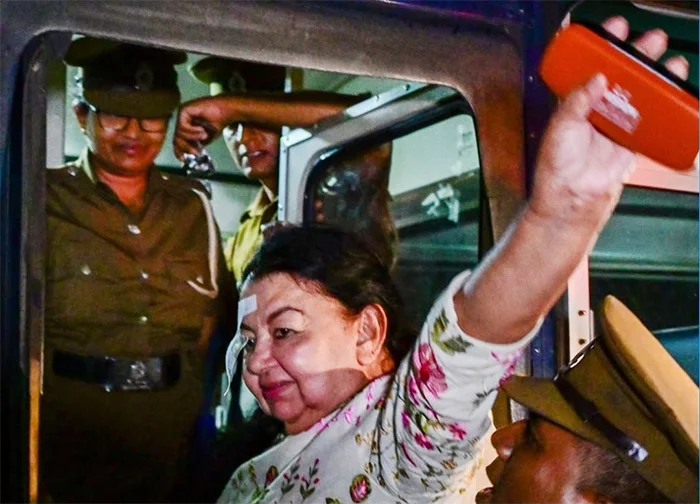
Former First Lady Shiranthi Rajapaksa was yesterday remanded until 13 October after being produced before the Colombo Magistrate’s Court following her arrest by the Commission to Investigate Allegations of Bribery or Corruption (CIABOC).
Shiranthi, wife of former President Mahinda Rajapaksa, was arrested at her residence on Poorwarama Road, Kirulapone, after CIABOC officers recorded a statement from her for nearly two hours.
According to the CIABOC, the arrest was made over allegations that Rs. 10 million obtained from the National Savings Bank through the Siriliya Saviya organisation was misappropriated.
The money was allegedly obtained to provide a Computed Tomography (CT) scanner to the children’s hospital. Investigators allege that the scanner was not provided and that the funds were instead unlawfully used.
CIABOC is investigating alleged offences under the Public Property Act and corruption-related provisions in connection with the transaction and other financial activities involving Siriliya Saviya, which was headed by Rajapaksa.
Rajapaksa returned to Sri Lanka on Monday night on a flight from Malaysia after travelling overseas for medical treatment. She left for Singapore on 16 September after being admitted to a private hospital in Colombo on 15 September following an illness.
She had been due to appear before the Financial Crimes Investigation Division (FCID) on 13 October in connection with its investigation into the financial affairs of Siriliya Saviya.
Meanwhile, her lawyers filed an anticipatory bail application before the Maligakanda Magistrate’s Court on Monday, seeking an order preventing her arrest in connection with the FCID investigation.
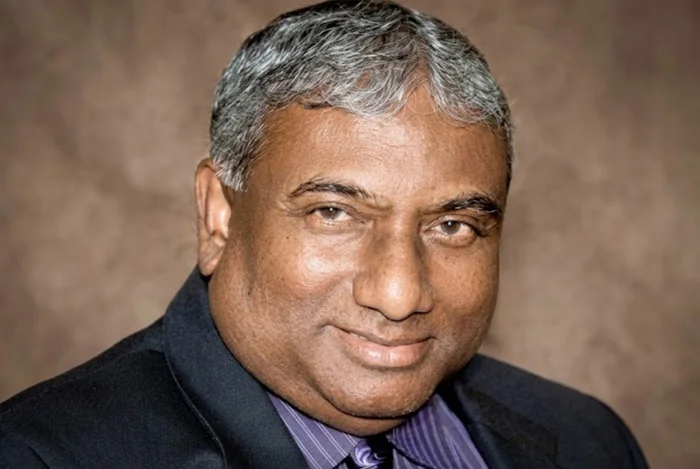
Former National Savings Bank (NSB) Chairman Pradeep Kariyawasam was yesterday granted bail by the Colombo Magistrate’s Court following his arrest by the Commission to Investigate Allegations of Bribery or Corruption (CIABOC).
Kariyawasam, husband of former Chief Justice Shirani Bandaranayake, was arrested in connection with the Bribery Commission’s investigation into the ‘Siriliya Saviya’ account linked to former First Lady Shiranthi Rajapaksa.
The investigation concerns financial activities involving the Siriliya Saviya initiative, which was headed by Rajapaksa, wife of former President Mahinda Rajapaksa.
CIABOC is continuing investigations into the alleged financial irregularities relating to the account.

Showers above 100 mm are likely at some places in the Western, Sabaragamuwa, Central, Uva and Southern provinces and in Anuradhapura district

PSTA worse than PTA: FSP

Shiranthi R remanded until 13 Oct.

Former NSB Chairman Kariyawasam granted bail

Katchatheevu row: India SC urges fishermen to avoid Sri Lankan waters

Remembering Juvenal, Coke, Acton and Machiavelli

‘Dates have the highest sugar content to fight Coronavirus’

Sunday Island 27 December – Headlines

#SundayIsland 17th December – Headlines

Sunday Island – 28th March

Sunday Island Headlines – 21 March

Sunday Island – 21st February – Headlines
-

 Editorial6 days ago
Colombo Port drug bust: The plot thickens
-

 Features4 days ago
The first woman in the foreign service or Ceylon Overseas Service it was then called
-

 Editorial5 days ago
Fuelling discontent and protest
-

 News3 days ago
Geneva takes up Sallay’s case and govt. ignores opportunity to answer accusations
-
 Foreign News5 days ago
Ten injured after car crashes into rugby supporters in Australia
-

 Latest News5 days ago
Tharindu Rathnayake, bowlers secure Asian Games Bronze for Sri Lanka
-

 News4 days ago
Nearly 20 Iranian tankers stranded off Lanka amid US sanctions
-

 Features3 days ago
Sri Lanka Cricket Bill: Governance reform is not yet a cricket strategy