
Sports
Rugby remembers Nizar Haji Omar

By a Special Sports Correspondent
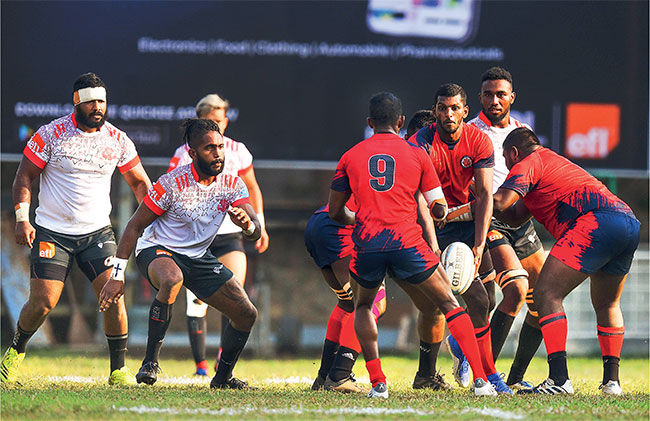
Domestic rugby in Sri Lanka kicked off three weeks ago and most of the top clubs are playing cohesive rugby and entertaining appreciative crowds that made it to the grounds. Ceylonese Rugby & Football Club (CR&FC) produced a surprise package in their encounter with Colombo Hockey & Football Club (CH&FC) to record a 27-22 win and keep alive hopes of doing well. The match was played for the Nizar Haji Omar Memorial Trophy and CR & FC did well to win the game and bring respect to the late Omar who was a rugby stalwart this Longden Place club produced.
In an era where the average individual can become a star overnight using social media outlets real heroes like Omar must be remembered and spoken of through our rugby fraternity. He passed away in 2009. Former CR&FC and Royal College player Jehan Canaga Retna writing about Omar in this newspaper, some years ago, rated him as a kind-hearted and respectful player who never lost his cool. Wow! That’s the stuff rugby players must be made of. Today we see more of self-centred players who are committed players alright, but they could learn much about human relations from the generations who played the game before them.
In life we get to see and meet people who have achieved much in a short period of time and also at a very young age. Omar was the youngest President CR & FC produced at age 36 and he was also the youngest SLRFU president; taking the hot seat at age 38. He was to be appointed life member of the SLRFU, but death came in the way. Perhaps nice people, who have to go fast, get the blessings of the Almighty and the nature to achieve their targets at a young age. He had been a successful career man and also a keen traveller and reveller. When this writer reads appreciations about the late Omar it is evident that he made it a point to enjoy life, where ever he was and both on and off the field. In the good old days rugby games were followed by socializing and this built much camaraderie among players; hence we rarely saw players leaving a ‘nest’ which nurtured them. Players were not paid for their availability and commitment. Instead players were willing to sweat to maintain their reputation and names which they worked on like nurturing a child.
This piece about him would not be complete if we didn’t say that Omar represented Sri Lanka at rugby from 1966-74 and captained the national side in 1969. He was also the president of the SLFRU when Sri Lanka won the ‘Bowl’ competition at the famed Hong Kong Sevens in 1984; a feat which has to date not been emulated by any Sri Lankan side. He played for the Red Shirts alongside players like Dushyantha Samarasekare, Bumpy Jayasekera, Sari de Sylva, Eric Roles, Mohan Sahayam, Tony Sirimanne, Regi Bartholameusz, Didacus de Almeda, Kamal Ratnapala and Ajith Abeyratne.
During these Covid days we also lost some rugby players of repute like Chandrishan Perera, Ibrahim Hamid, Gamini Fernando Shyam Sideek, Kamal Jayawardene, Iswan Omar and Vajira Jayatilake and the rugby fraternity misses them while remembering their contributions to the game.
Coming back to the game a young CR&FC side had done well to record a memorable win where the difference in score was an unconverted try. It would have been hard for the CH side to stomach the defeat given that the Maitland Crescent side is buying the best players and also has the influence of elite members of the family clan who are the decision makers of this country.
After major layoff from the game Kandy Sports Club too has returned to the field and maintains its winnings ways. Last week it got the better of Navy Sports Club (35-30) in a close game where the ‘Sailors’ came back fighting in the second half. The Nittawela Club is a hot prospect in the league rugby tournament and it has the player resources in the likes of Bawantha Udangamuwa, Buddhima Piyaratne, Jason Dissanayake, Roshan Weeraratne, Lavanga Perera, Danush Dayan and Skipper Nigel Ratwatte to take them a long way this season. The professional environment they train in make the players committed to the game and raise their game to the next level. In the hills up here in Kandy no king on the hill is assured of his place because there are other hungry ‘wolves’ climbing up the hill and wanting ‘the life of a rugby player’.
Havies, also known as the Park Club, is another team knocking on the door this season to be considered as a winning outfit. It did well to down the ‘Soldiers’ 36-14 and much is expected of this side led by Shenal Deelaka. Air Force Sports Club is also there with much fire power and did remarkably well in their January 29th game against CR & FC where they recorded a handsome 19-11 win. The captain of the side Nuwan Perera, the scrum half, is expected to marshal the side. The other side that can spring some surprises this season is Navy Sports Club which has some dedicated and tough as nails players.
On the financial side of the tournament Sri Lanka Rugby had to start the tournament sans a sponsor because negotiations with Dialog Axiata PLC didn’t reach the stage of inking an agreement and having a working document in terms of a sponsorship deal. The president of SLR Rizly Illyas received the approval of the council members to go ahead with the tournament without a sponsor. All this goes on to prove that the club rugby structure in Sri Lanka is strong and can survive a ‘journey on rough sea’.


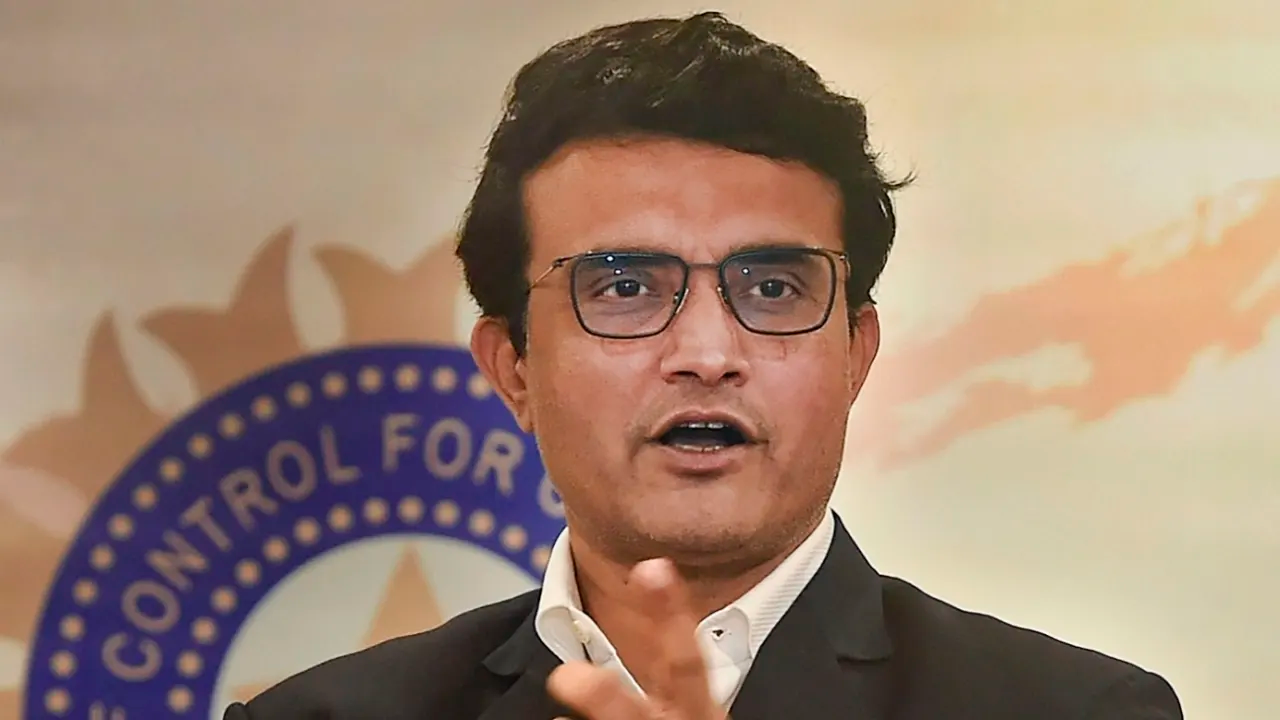
Sourav Ganguly, Kevin Petersen and Anjum Chopra have become the latest inductees to the ICC Hall of Fame, unveiled at a ceremony in Edinburgh. Their induction takes the total number of ICC Hall of Fame members to 125.
Ganguly, considered one of India’s best captains, played 113 Tests and 311 ODIs. He started his Test career against England in 1996 and made two hundreds in his first two Tests. In all, he scored 7212 runs at an average of 42.17 in Test cricket and 11,363 at 41.02 in ODIs. In white-ball cricket, he formed a prolific opening pair with Sachin Tendulkar. The two opened together 136 times, adding a record 6609 runs with 21 century stands.
Ganguly’s bigger contribution probably was as captain. He took over the side after the 2000 match-fixing saga and made India a formidable side outside India. Under his captaincy, India won the NatWest Series in England in 2002 and were the joint-winners of the Champions Trophy later that year. In 2003, he led the team to the final of the 2003 ODI World Cup, where they lost to Australia. In Test cricket, Ganguly’s side beat Australia 2-1 in the famous 2000-01 Border-Gavaskar Trophy at home before drawing 1-1 in Australia in 2003-04.
“To have my name included among cricket’s greatest players will remain one of my most cherished moments,” Ganguly said. “Representing India and playing along with several greats of the game has been a privilege, and to now be recognised in this way is truly special. This game has given me a lot, and I hope to continue to serve the game in the years to come.”
England’s Pietersen played 104 Tests, scoring 8181 runs at 47.28. In his very first Test series, the 2005 Ashes, he played a key role in England winning the urn after 17 years with a stroke-filled 158 at The Oval on the final day of the series. In 2012-13, he was also instrumental in England winning a Test series in India for the first time in 28 years.
Known for his flamboyant strokeplay, including the switch hit, Pietersen also scored 4440 runs in 136 ODIs, and was the Player of the Tournament in England’s 2010 T20 World Cup win.
“It is the highest recognition a cricketer can receive, and I know it will take some time for it to fully sink in,” Pietersen said. “I feel privileged to have played across all three formats of the game, and I look back on my career with immense pride and satisfaction.”
Chopra, a left-hand batter who captained India in all three formats, made her international debut in 1995. She was the first Indian woman to reach 1000 ODI runs and the first to play 100 ODIs. She also made notable contributions for India in the 2000 and 2005 ODI World Cups. Overall, she scored 2856 runs in 127 ODIs.
She played 12 Tests, scoring 548 runs with a best of 98 that came in the 2006 victory over England in Taunton. She also captained India to their overseas Test victory, in South Africa in 2002.
“As a kid growing up in a sporting household, I had heard stories of cricketing greats and momentous achievements,” Chopra said. “A dream to play for India got instilled very early on. I was encouraged to think big by my parents, teachers and coaches who have always been there to support me during tough times.
“I also got the timely support of administrators as I went on to wear the national colours with great pride. This honour – to be recognised amongst the game’s greatest – is an award for all those who have helped shape my career.”
Launched in January 2009 as part of the ICC’s centenary celebrations, the ICC Hall of Fame honours those whose achievements, skill and lasting influence have shaped the game. Players become eligible for induction only five years after their final international appearance.
[Cricinfo]
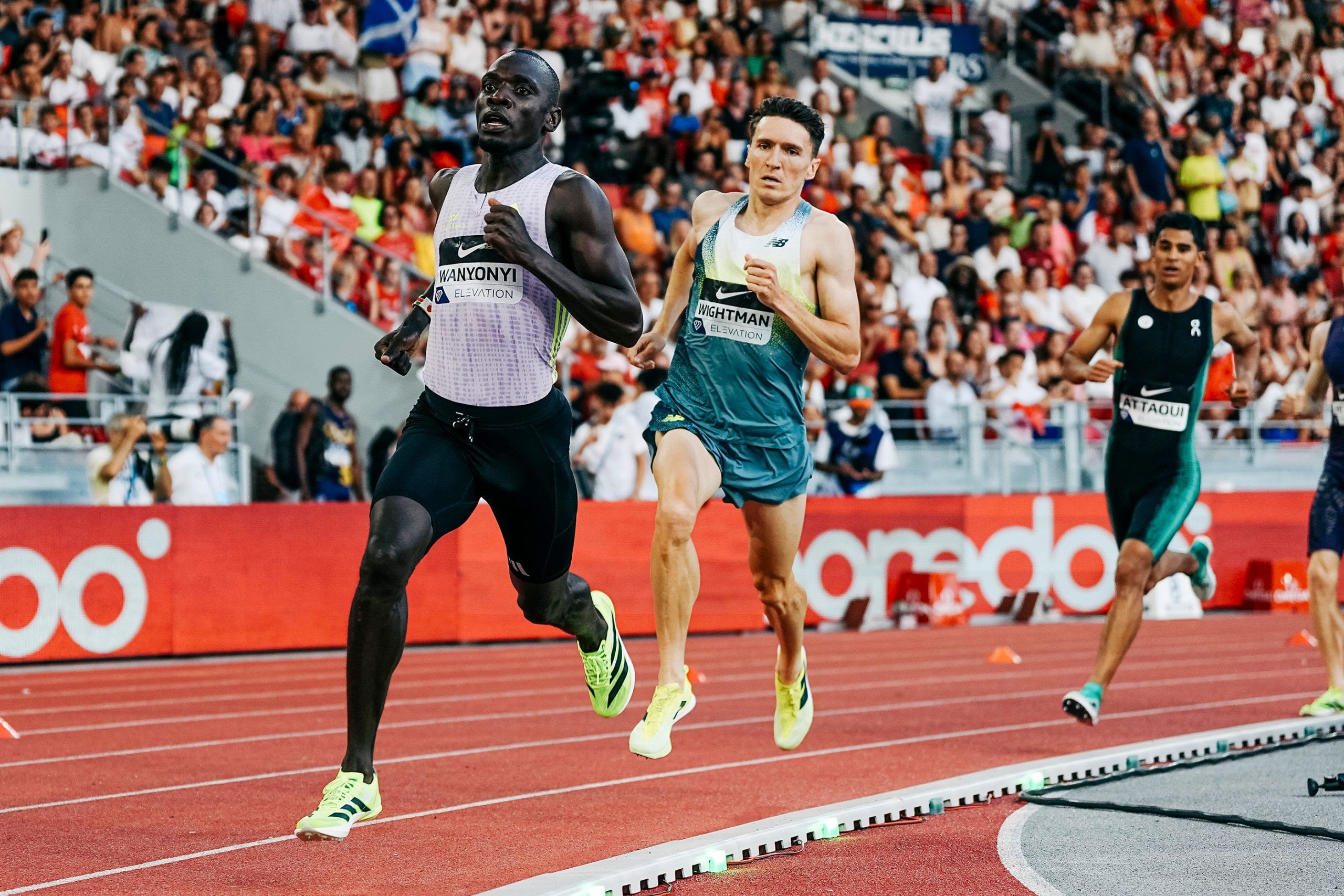
Emmanuel Wanyonyi made his 1000m debut in sensational style, running 2:11.83* to break the long-standing world record at the Meeting International d’Athlétisme Herculis EBS in Monaco on Friday (10).
With that performance at the Wanda Diamond League meeting, the Olympic and world 800m champion took 0.13 off the world record of 2:11.96 set by his Kenyan compatriot Noah Ngeny in Rieti in 1999.
Wanyonyi followed the pacemakers as the first pacemaker reached 400m on world record pace in 50.95 as planned. The second pacemaker hit 800m in 1:45.11 before Wanyonyi took over and stormed towards the finish line, chased hard by 2022 world 1500m champion Jake Wightman.
Wanyonyi reached the finish in 2:11.83, Wightman followed him in 2:12.77 to move to fifth on the world all-time list and world and Olympic medallist Djamel Sedjati was third in 2:13.94 as the top six all dipped under 2:15.
[World Athletics]
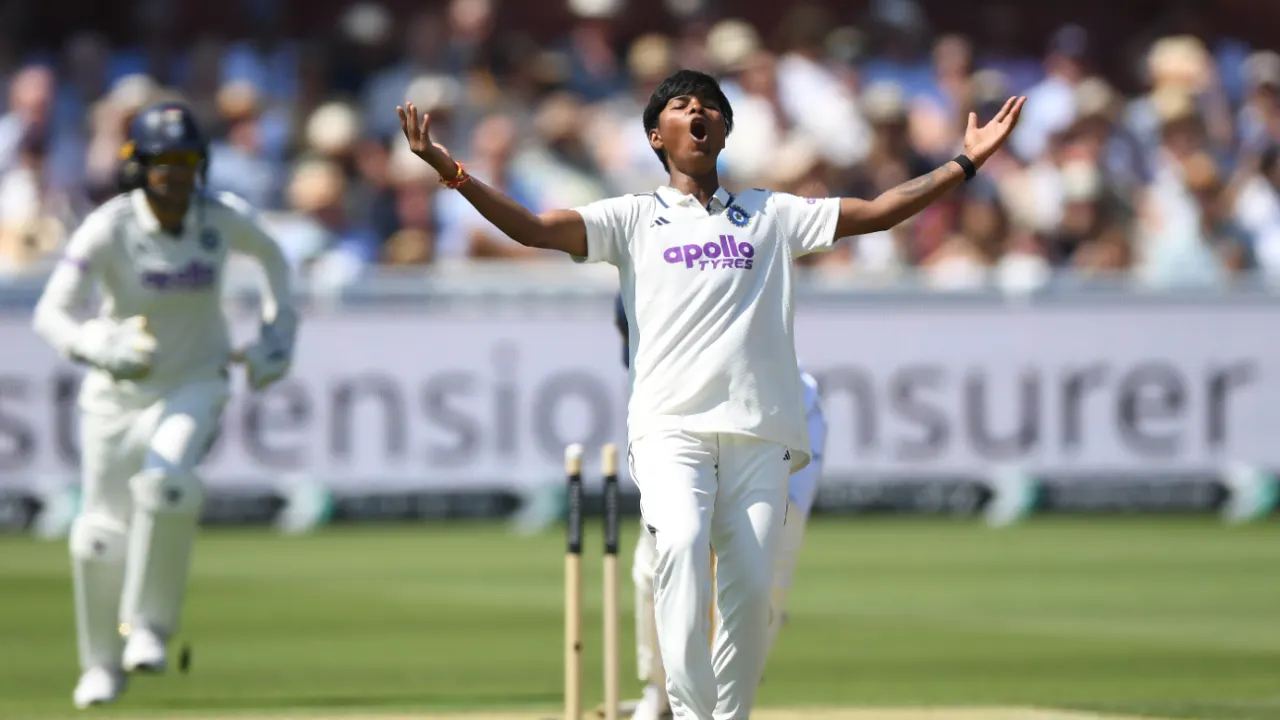
As the ball popped out of Sneh Rana’s hands and looped over her shoulder at second slip, a place in history hung in the air. Shafali Verma’s attention and agility snatched it, centimetres above the Lord’s turf, and now Kranti Gaud is the first woman’s name inked on the revered Test honours board.
Gaud had removed retiring England opener Tammy Beaumont on the first evening of this maiden women’s Test at Lord’s and picked up on Saturday where she’d left off, as India’s quicks condemned their hosts to a rough start on the second day. By stumps, Gaud had taken 5 for 37 and India were well on course for a famous win in a famous match.
Resuming on 21 for 1 in reply to India’s 285, England lost three wickets inside the first seven overs of the day, then their last six for 39 runs as they were bowled out for 170. Amy Jones’ second fifty in the format – she scored her first on Test debut in 2019 – went largely in vain as England faced a first-innings deficit of 115 runs.
Smriti Mandhana raised her second half-century of the match in front of 15,243 people at Lord’s, a world-record attendance for a single day at a women’s Test, to consolidate India’s control over the match.
Having scored 83 in the first innings, Mandhana was unbeaten on 69 at the close alongside Yastika Bhatia, who was not out on 39, the pair having shared an unbroken 66-run stand for the second wicket to put India 269 runs ahead and looking well beyond England’s reach. The highest successful run-chase in women’s Tests is 198 by Australia against England in Sydney in 2011.
Gaud struck in the third over of the day as Maia Bouchier fenced at one outside off and sent a thick outside edge to Bhatia behind the stumps.
Heather Knight fell three balls later, failing to overturn an lbw decision to a Sayali Satghare fuller ball that bent past the outside edge and rapped Knight’s front pad in line with middle stump. Ball-tracking upheld the dismissal on umpire’s call with the ball shown to be clipping leg stump.
But Gaud’s removal of Alice Capsey was the highlight. The ball pitched on a full length and angled in before swinging away to flatten off stump, giving Gaud two wickets for five runs in the space of 13 balls.
Jones brought up her half-century off 49 balls, steering Rana through deep third and running three before Nat Sciver Brunt sent a glorious slog-sweep over the rope off Shree Charani. But Rana’s riposte broke their 84-run stand for the fifth wicket as Jones jabbed her bat down and sent an inside-edge ballooning straight to Richa Ghosh at short leg.
Gaud had just started her second spell when she removed Sciver-Brunt with the ninth ball after the lunch break, lbw for 44. Satghare and Rana then dispensed with Sophie Ecclestone and Mady Villiers in the space of seven deliveries and, after a brief change of ends to bowl down the slope for an over, Gaud switched back to going uphill and, two balls later, she had her historic five-for.
As Lauren Bell attempted to drive outside off stump, the ball shot straight at Rana’s throat and she parried it into the air, spinning in confusion while Verma swooped at first slip to save the catch. The moment Rana realised Verma had held the ball in her right hand diving forward at full stretch, she did an about-face, thrust her index finger in the air and ran to join the mob enveloping Gaud.
One day shy of a year since making her T20I debut in England during India’s tour last summer – during which she also took a six-wicket haul in just her fourth ODI appearance – Gaud could lay claim not just to a significant personal achievement but to putting her side in a winning position even before the halfway point of this match.
Bell and Issy Wong sent down three maidens between them to start the evening session after India went to the tea break at 30 without loss, but it was a short-lived break to India’s progress. Shafali struck back-to-back fours off Wong and Mandhana helped herself to three fours in a row off Wong’s fourth over, clearing point, piercing the gap to the right of gully and driving through the covers as the India pair combined for an 88-run opening stand.
Ecclestone re-entered the attack after drinks and, when Mandhana skipped down the pitch and launched one down the ground for six, she replied with the wicket of Verma, picking out sub fielder Emma Lamb at mid-on to depart for 33. Aside from a missed leg-side stumping as Bhatia toppled out of her crease to Ecclestone, it was the only real opportunity England could create.
Scores:
India Women 285 in 74.5 overs [Smriti Mandhana 83, Harmanpreet Kaur 58, Deepti Sharma 57; Sophie Ecclestone 3-68] and 154 for 1 in 42 overs (Smriti Mandhana 69*, Yastia Bhatia 39*; Sophie Ecclestone 1-46) lead England Women 170 in 59.1 overs (Nat Sciver Brunt 44, Amy Jones 52; Kranti Gaud 5-37) by 269 runs
[Crricinfo]

Noskova defeats Muchova in Wimbledon final to record first Grand Slam title

Former Emir of Qatar Sheikh Hamad bin Khalifa Al Thani dies aged 74

Sourav Ganguly, Kevin Pietersen and Anjum Chopra inducted into ICC Hall of Fame

The President’s Fund has been transformed into a people-centred fund – PM

Wanyonyi breaks world 1000m record with 2:11.83 in Monaco

Gaud makes her Lord’s mark as India surge into dominant position

‘Dates have the highest sugar content to fight Coronavirus’

Sunday Island 27 December – Headlines

#SundayIsland 17th December – Headlines

Sunday Island – 28th March

Sunday Island Headlines – 21 March

Sunday Island – 21st February – Headlines
-
 News3 days ago
Herath warns prospective migrant workers not to get fleeced by racketeers
-

 News7 days ago
AI concerned over proposed SL military deployment in Haiti
-

 Midweek Review5 days ago
Unexpected focus on ‘pieces of tin’ worn by military men
-
 Latest News6 days ago
Nyamhuri and Ngarava stun Bangladesh by defending 141
-

 News4 days ago
Negombo Prison riot: Ensuring protection of prisoners fundamental responsibility of the state – UN
-
 Features3 days ago
Devanesan Annan – in Memoriam
-

 Editorial2 days ago
What’s the world coming to?
-
 Foreign News3 days ago
Tensions erupt in Indian state after 11-year-old raped and murdered