
News
Lanka points out flaws in Geneva process, disputes Canada’s genocide claim

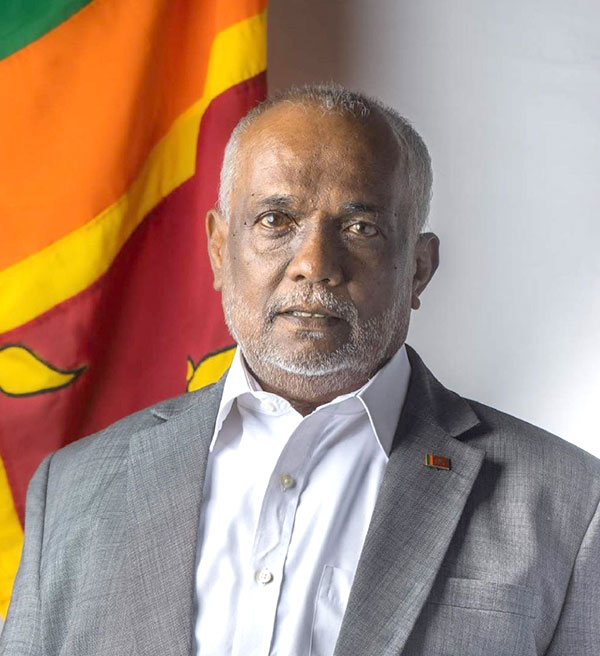
HC Navaratne responds to Ontario’s politico’s allegation 140,000 killed in Vanni war
Sri Lanka has pointed out flaws in the process adopted by the Geneva-based United Nations Human Rights Council (UNHRC) to pursue unsubstantiated war crimes accusations, which paved the way for the 2015 accountability resolution. In spite of serious concerns expressed by the then Opposition and the armed forces, the yahapalana government co-sponsored the controversial resolution against Sri Lanka.
Sri Lanka’s High Commissioner in Ottawa Harsha Kumara Navaratne has pointed out glaring inadequacies in the Geneva process exploited by interested parties, including those in Canada, to accuse Sri Lanka of causing genocide in the final phase of the conflict.
There hasn’t been a previous instance of Sri Lanka directly disputing the Geneva process since the adoption of the 2015 accountability resolution. The much-anticipated position has been taken ahead of the next Geneva sessions scheduled to begin later this month.
The following is the text of the statement titled ‘Refuting the allegation of ‘Tamil Genocide’ in the final phase of the conflict in Sri Lanka issued by the Sri Lankan mission in Ottawa requesting those interested in genuine post-war national reconciliation to initiate a dialogue with HC Navaratne: The term genocide is used to describe one of the gravest crimes against humanity, comprising of specific acts committed with intent to destroy, in whole or in part, a national, ethnical, racial or religious group. Therefore, the Sri Lanka High Commission in Canada notes with serious concern attempts by certain parties in Canada trying to portray the final phase of the conflict in Sri Lanka which ended in 2009 as ‘genocide’ against the Tamil people of Sri Lanka. The Sri Lanka community in Canada is multi-ethnic and multi-religious. In this context, the Private Member Bill 104 on ‘Tamil Genocide Education Week’ passed in Canadian province of Ontario has caused strain in intercommunity relations among the Sri Lankan community by the depiction of a false narrative against one community.
In addition, while appreciating the various Canadian Government focused programs for Sri Lankan Tamil Canadians, we are disappointed to note that on January 31, 2022, at an event announcing funding for Tamil students with targeted mental health and wellness programs and resources, Mr. Stephen Lecce, Ontario’s Minister of Education made comments including “we are very deliberate in our choice of words that we recognize a genocide that transpired against the innocent Tamil people” and “in a genocide that has left over 140,000 innocents perished at the hands of the regime in Colombo”. Mr. Vijay Thanigasalam, MPP Scarborough – Rouge Park, who was also present, referred to “Tamil genocide’ in his remarks.
We are appreciative that the Department of Foreign Affairs, Trade and Development in a
Diplomatic Note dated 7 th April 2021 responding to a clarification stated “that the Department of Foreign Affairs, Trade and Development clarify Canada’s official position with regard to allegations of genocide in Sri Lanka, the department can officially confirm that the Government of Canada has not made a finding that there was genocide in Sri Lanka”. Further, the Government of Canada has proscribed the Liberation Tamil Tigers Eelam Organisation (LTTE) as a Terrorist organization.
In this background, the repeated use of the word “Tamil Genocide” only generates dissention and prejudice amongst the children and community of Sri Lankan Canadians living in Ontario. Therefore, such allegations need to be refuted in the interest of social harmony and to prevent the spread of fallacies about Sri Lanka in the international community.
During the final phase of the conflict in Sri Lanka, the government forces confronted the internationally proscribed terrorist group Liberation Tigers of Tamil Eelam (LTTE), one of the most brutal terror groups the world has witnessed. The aim of the LTTE was to divide Sri Lanka on ethnic lines and carve out a separate State. With this objective, they conducted a three decades long terrorist campaign which brought much suffering and destruction on all communities.
During the last stages of the military conflict in 2009, when the LTTE was facing inevitable defeat, it resorted to holding Tamil civilians hostage as a human shield and refused all efforts to move civilians away from conflict areas. The allegation of civilian casualties and the exaggeration of the numbers was the means by which the LTTE sought to force foreign intervention to halt the government advance.
Nevertheless, the government forces managed to rescue approximately 290,000 Tamil civilians from the clutches of the LTTE, cared for them and resettled them. In addition, over 12,000 armed LTTE cadres were rehabilitated and released, proving thereby that the Sri Lankan government had avoided causing unnecessary deaths even among enemy combatants, not to speak of noncombatant civilians.
Therefore, there is absolutely no evidence to suggest any act and/or intent of the spurious allegations of “genocide” during the military engagement with the LTTE. Neither was there a pattern of events even to suggest “genocide”. Military experts have noted that the tactical options were justifiable and proportionate given the situation in the last phase of the military conflict.
Some parties, including LTTE remnant groups and sympathizers, have seized on hypothetical figures of civilian casualties contained in certain seriously flawed Reports commissioned by the UN, to push a claim of genocide of Tamil people in Sri Lanka during the final stage of the military conflict. However, not even the much-disputed UN Secretary General’s Panel of Experts report (PoE) carry the accusation of “genocide” against the Government of Sri Lanka. The principal findings of the OHCHR Investigation on Sri Lanka (OISL), in 2015 in to the alleged “war crimes” of Sri Lanka do not even suggest “genocide”.
Groups espousing the claim of genocide have seized the claim, made without any proof, in the PoE report “that there could have been as many as 40,000 civilian deaths” during the final months of the conflict. The PoE report came up with the hypothetical figure of 40,000 civilian deaths by setting off the actual number of people finally rescued by the Sri Lanka Army which was approximately 290,000 against the hypothetical figure of 330,000 which they deemed to be the number of civilians who had been in the area (Vanni) before military operations commenced in that region. This hypothetical number of 330,000 civilians used by the PoE is a purely arbitrary construct. Nobody, in Sri Lanka or outside, really knew exactly how many civilians the LTTE was holding in captivity during those months in 2009.
In addition, the PoE report mentions a lower figure of 7,721 deaths (up until 13 May 2009) reported by the United Nations Country Team in Sri Lanka. However, this figure is later disputed by the PoE report without explaining how it is that over 30,000 people could have been killed in the final days up until 18 May 2009 when the conflict ended, if the figure of 40,000 is ever to be correct and accurate.
It may be noted that in July 2011, the data collected by Department of Census and Statistics of Sri Lanka in the Northern Province, found that in 2008 and 2009 when the final battles raged in the Northern Province, the total number of persons who died of causes other than natural causes, was 9,283. The field data collection required for the project, the first enumeration of its kind in that part of the country since the census of 1981, was carried out by the predominantly ethnic Tamil government employees serving in the Northern Province. The number of fatalities suffered by the Sri Lanka Army during the final war against the LTTE between July 2006 and May 2009 was 5,876. It would only be logical to assume that the LTTE would have suffered a greater number of fatalities than the armed forces of Sri Lanka, and that of those reported (9,283) to have died in the Northern Province due to other than natural causes in 2008 and 2009, the vast majority would have been LTTE cadres or those directly involved in hostilities.
Legal experts have identified that the use of the disputed figure, which is the central weakness in the PoE report, is exacerbated by the standard of proof that it professed to adopt. A non-legal analysis (‘I felt sure’, I felt reasonably confident’, I was absolutely convinced’, ‘I had my suspicions’ etc.) is used in a document dealing with alleged criminality on a major scale – that name those who may be responsible and who merit further judicial and other process. They note that international courts and tribunals have not placed reliance on reports of this nature as being probative evidence to prove allegations in trials for war crimes and crimes against humanity.
Since the end of the conflict in 2009, Sri Lanka has pursued a policy of restoration, reparation, re –integration, rehabilitation and reconciliation within the overall concept of restorative justice. At a time when Sri Lanka is moving ahead with these processes, certain groups, including remnants of LTTE international network, have been trying to discredit and destabilize the efforts undertaken by Sri Lanka by pushing agendas such as ‘Tamil genocide’.
As seen in the comments made by Mr. Stephen Lecce, who cited a figure of 140,000 deaths, the contents of unverified reports have succeeded in misleading the international community and influencing opinion-formers and decision makers. If, with the passage of time, the dubious nature of the evidence on which the UN reports are based is forgotten, their accusations, which are in fact unproven, may become potent over repeated use.
The allegations of genocide impact on Sri Lanka’s relations with the international community, at a time when it is engaged in a long-standing cooperation with the UN human rights mechanisms and the UN Human Rights Council and is delivering on its commitment to address accountability and reconciliation through domestic processes and institutions.
Therefore, the High Commissioner of Sri Lanka extends an open invite to all those who are committed to the peace and reconciliation process of Sri Lanka to visit, meet and have a dialogue with him on this subject.”





The Sri Lanka Navy successfully recovered its Fast Attack Craft P 4447 following a successful salvage operation, bringing a multi-stage emergency response to a close.
The craft, which ran into distress during a routine patrol on 15th August 2026 off Angulana, was brought to the surface on 11th September, from a depth of approximately 80 feet. It was
subsequently towed to the Colombo Dockyard premises.
The initial phase of the operation immediately following the incident focused on search and rescue. A joint effort involving the Navy, Air Force, Police, and local fishermen from Angulana
resulted in the rescue of 11 crew members. The search and rescue phase drew to a close with the recovery of the remains of the Second in Command of the craft, on 4th September.
Following the search and rescue phase, specialized Navy diving and salvage teams launched a dedicated recovery phase against rough sea conditions and underwater challenges, adhering to
strict safety protocols. The Navy’s marine, hull, electrical, and electronic engineering teams utilized specialized technical know-how and equipment to raise the vessel in stages.
Thus, the salvage operation marked an outstanding achievement attained through the professionalism, technical expertise of Navy divers, and coordinated contribution of all
engineering and technical branches of the Sri Lanka Navy. Technical support and specialized expertise were also extended by the Sri Lanka Ports Authority and Colombo Dockyard PLC.


By Shamindra Ferdinando
The Opposition should intensity its focus on the forthcoming selection of a member of the Commission to Investigate Allegations of Bribery or Corruption (CIABOC) and remain vigilant as Speaker Dr. Jagath Wickremaratne, MP, the head of the Constitutional Council (CC) tasked with making the relevant recommendation, is under investigation by the CIABOC, sources familiar with the ongoing inquiry told The Island.
Chethiya Goonasekara, PC, is expected to complete his three-year term on Dec 31, 2026. Sources pointed out that CIABOC Commissioners are appointed by the President on the recommendation made by the 10-member Constitutional Council.
The CIABOC initiated the investigation following a complaint lodged by suspended Chief of Staff and Deputy Secretary General of Parliament Chaminda Kularatne in early February this year. Sources said that as Goonasekera is scheduled to complete his term toward the end of 2026, the CC would have to call applications soon to choose the successor.
Goonasekara received his appointment from President Ranil Wickremesinghe in January 2024. A Justice W. M. N. P. Iddawala was appointed Chairman of the CIABOC. The other commissioner is K. Bernard Rajapakse.
Asked whether Iddawala and Rajapakse, too, would complete their terms soon, sources said that in terms of the Anti-Corruption Act No 09 of 2023, the Chairman of CIABOC would hold office for a period of five years, second commissioner (K. Bernard Rajapakse) for four years and the third commissioner (Chethiya Goonasekara) for a period of three years.
Sources said that the Opposition as well as civil society representatives in the CC should take up the issue of Speaker facing an investigation by the CIABOC taking part in the forthcoming selection process. Responding to queries, sources emphasized that the issue was whether in terms of Section 107 of the Anti-Corruption Act the participation of the Speaker in the selection process amounted to a violation of the Act itself.
The current members of the CC are Dr Jagath Wickramaratne, Speaker and Chairman of the Constitutional Council, Dr. Harini Amarasuriya, Prime Minister, Sajith Premadasa, Leader of the Opposition, Bimal Rathnayake, MP, Aboobucker Athambawa, MP, Ajith P. Perera, MP, Sivagnanam Shritharan, MP, Austin Fernando, Civil society representative, Prof. Wasantha Seneviratne, Civil society representative and Ranjith Ariyaratne, Civil society representative.
Sources pointed out that in spite of the sensitivity of the case, the CIABOC recorded Kularatne’s statement in the second week of August, six months after he lodged the complaint.
The CIABOC on 3, 8 and 10 Sept recorded the statements from the Transport Officer, Deputy Director, Administration and Assistant Director, Finance regarding the use of facilities by the Speaker, those assigned to his staff and other relevant matters.
The NPP named Dr. Wickramaratne as the Speaker after Asoka Ranwala resigned over controversy regarding his higher education qualifications.
SJB lawmaker Dayasiri Jayaskera has repeatedly raised the issues concerning the Speaker with the focus also on the Speaker using two government-managed residences, relevant staff in addition to expenditure on food, transport and fuel provided to the Speaker’s private secretary.
Political sources said that trouble erupted after the Parliamentary Staff Advisory Council in late January sacked Kularatne accusing him of providing false information to secure his appointment. Before being appointed as the Deputy Secretary-General of Parliament in 2023, Kularatne held several high-ranking positions, including Secretary to the Chief Government Whip, Additional Secretary to the President, Additional Secretary to the Prime Minister, and Additional Secretary to the Leader of the Opposition.
The SJB declared in Parliament that Ranwala should be brought back as the Speaker as they have no faith in Wickramaratne. MP Mujibur Rahuman jokingly told parliament that the Opposition wouldn’t raise Ranwala’s educational qualifications.

The Government Medical Officers’ Association (GMOA) has stressed the need to conduct a comprehensive countrywide cadre revision urgently.
GMOA spokesman Dr. Lasitha Dhammika told The Island that the failure on the part of successive governments to conduct cadre revision caused the deterioration of the public sector health services. Due to the absence of required statistics, they hadn’t been able to fully comprehend the situation on the ground and to ascertain the requirements of the public.
Dr. Dhammika pointed out the expansion of the services without supporting statistics and the need to initiate an immediate cadre revision. According to him, the GMOA had raised this issue with successive governments without success. The GMOA spokesman said that they also sought relevant information from the Health Ministry in terms of the Right to Information (RTI) Act two weeks ago but was yet to receive response.
(SF)

Fast Attack Craft P 4447 recovered in successful salvage operation

Showers above 100 mm are likely at some places in the Western, Central, Sabaragamuwa, Southern, North-central and North-western provinces

Shafali, Mandhana power India to eighth Asia Cup title

Tharanga wins Ultimate Javelin title

CIABOC member’s appointment: Controversy over Speaker under probe heading selection process

GMOA: Countrywide cadre revision not done since 2015

‘Dates have the highest sugar content to fight Coronavirus’

Sunday Island 27 December – Headlines

#SundayIsland 17th December – Headlines

Sunday Island – 28th March

Sunday Island Headlines – 21 March

Sunday Island – 21st February – Headlines
-

 Sports3 days ago
DDS set to lose Test captaincy
-
 News6 days ago
Thailand shuts door on undesirables from Sri Lanka
-

 News3 days ago
Sri Lanka faces new grid challenge as rooftop solar surges: former CEB GM
-
 Business6 days ago
CEB successor company breaks into top three in competitive BESS tender
-
 Latest News3 days ago
Shafali, Deepti power India into sixth T20 Asia Cup final
-
 Opinion5 days ago
Navigating Sri Lanka’s Israeli Dilemma
-
 Latest News2 days ago
Sri Lanka thwart Fatima Sana challenge to secure Asia Cup final spot
-
 Features4 days ago
Lost for 90 years: Rare Goby resurfaces in Jaffna