
Sports
Time to go under the knife Lakmal


by Rex Clementine
Sri Lanka ‘A’ tour of South Africa in 2008 was a resounding success and coach Chandika Hathurusinghe earmarked three players to have an impact with the senior side. Less than a year later, two of those players – Tharanga Paranavithana and Suranga Lakmal were taken to Pakistan on their maiden tour. Literally, it was a baptism of fire as the Sri Lankan team bus came under a terroist attack at Liberty roundabout in Lahore.
Both Paranavithana and Lakmal were badly hurt. Medical experts advised Lakmal to take a break from cricket to remove the splinters on his right arm from the gunfire. Lakmal asked how long he will be out of cricket. Doctors opined that he will be out for close to two years as it was a complicated surgery with splinters spread all around his leg. It was a killer blow as Lakmal had barely started his career. In desperation, Lakmal asked for a second opinion, he was told that he could continue playing cricket as the ‘foreign objects’ are not life threatening and that he could eventually go under the knife when he is done with cricket. Lakmal chose that path. And he was a sensation.
Lakmal has a few tricks up his sleeves. Over the years, he has given us a few surprises. Last night as sports reporters were quietly retiring to taste their arrack came the news that Lakmal is retiring from all forms of international cricket at the end of the upcoming tour of India later this month. And the good news is having waited for 13 long years, he will finally go under the knife.
Carrying ‘foreign objects’ in his body had many challenges. During Lakmal’s overseas travels he needed to take with him all sorts of medical reports as he faces numerous obstacles passing security. He can not go pass metal detectors as they warn of presence of ‘foreign objects’ in the body and security thoroughly check him. Being from rural Debarawewa in the Hambantota district, Lakmal is not the most fluent in English and often the team manager has to come to his rescue.
Lakmal has been a terrific servant of Sri Lankan cricket. His 168 Test wickets is the fourth highest among Sri Lankans and he is the second most successful fast bowler produced by the nation.
A son of a farmer, Lakmal came to Colombo to try his luck in cricket. He was fortunate to meet President’s Counsel Dinal Philips, who was a father figure to him and he looked into every need of the youngster. Soon as Lakmal cemented his place in the side following the retirement of Chaminda Vaas money and fame followed him. It was thanks to Philips that he didn’t go out of track. Temptations for a youngster coming from a rural village to go astray in the city are many. Lakmal firmly focused on his cricket.
Lakmal has been a loyal servant of Sri Lankan cricket. He’s been an absolute team player and hugely popular among the playing group. His biggest achievement in the sport came at Kensington Oval in 2018 when he skippered Sri Lanka to a thrilling four wicket win. He is the only captain from Asia to have won a Test match in Barbados, the fortress of West Indies cricket.
The only blemish in Lakmal’s career remains his involvement in card games in Galle as Sri Lanka were slipping to a painful defeat against England last year. It was a rare moment of indiscretion. Overall, he has been a terrific bloke, champion bowler, inspirational captain and above all a good human being.


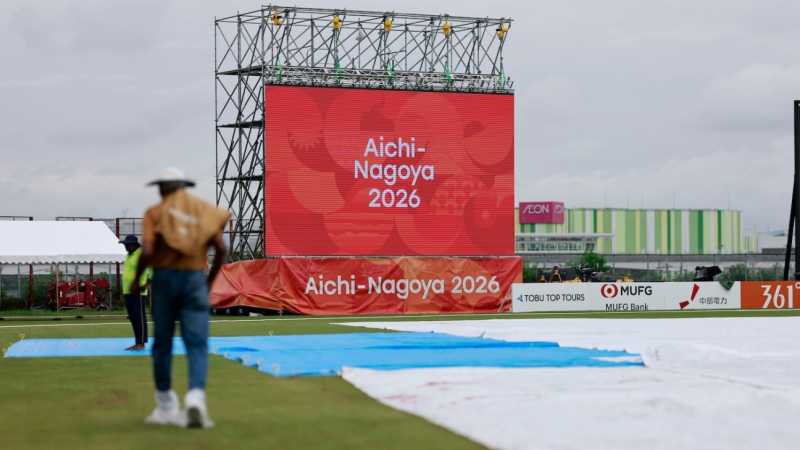
Sri Lanka will face India in the semi-finals of Asian Games men’s tournament after their quarter-final clash against Nepal was abandoned without a ball being bowled in Nisshin, Japan. The game was called off prior to the toss, with rain having begun hours prior to the scheduled 9am local start and not looking like abating.
Sri Lanka’s progression was assured by virtue of their higher seeding in terms of the ICC T20I rankings – Sri Lanka, alongside India, Pakistan and Bangladesh are the four seeded teams in the tournament. On Monday, India had qualified over Afghanistan after another washout, again by virtue of their higher. Similarly, Pakistan’s qualification was assured following a rain abandonment in their quarter-final against Hong Kong.
In the 2022 Asian Games, Sri Lanka had been eliminated at the quarter fial stages by Afghanistan. Another washout in the semis against, India though, will see the latter qualify for the final.
A few hours later, the fourth quarter-final between Bangladesh and Malaysia was also washed out. Bangladesh will now face Pakistan in the first semi-final on October 1, followed by India vs Sri Lanka later on the same day
(Cricinfo)
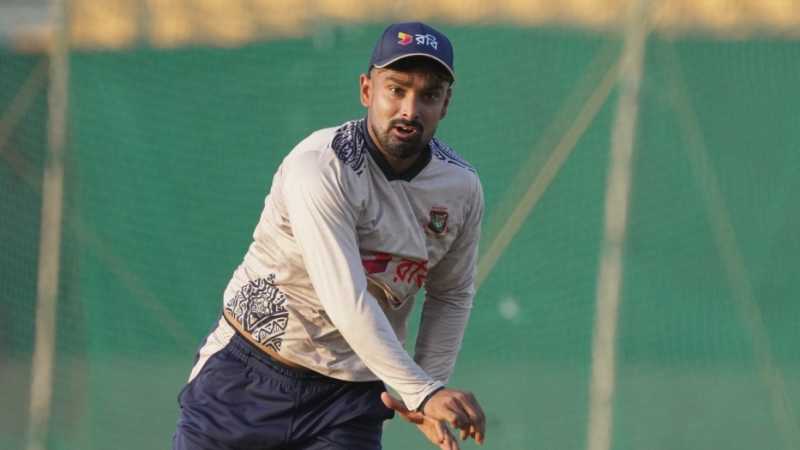
The Bangladesh vs Malaysia abandonment on Tuesday completed a quartet of rained off matches in the Asian Games men’s tournament. The match was called off two hours before the toss, with the teams told not to even turn up at the venue.
Bangladesh, by virtue of higher seeding, go through to the semi-finals where they will now face Pakistan on October 1. Earlier in the morning, the Sri Lanka vs Nepal fixture was also called off due to rain, with Sri Lanka advancing into the semi-finals where they will meet India.
There is, however, some good news, as the weather forecast in Nisshin is better for the semi-final and the medal match day, on October 1 and 3, respectively.
In the last edition (2023), Bangladesh had lost to India in the semi-final but won the third-place playoff against Pakistan to take home the bronze medal. They had won the bronze in 2014 as well and Bangladesh’s best finish was winning the gold medal in 2010, when they beat Afghanistan in the final.
(Cricinfo)
by Reemus Fernando
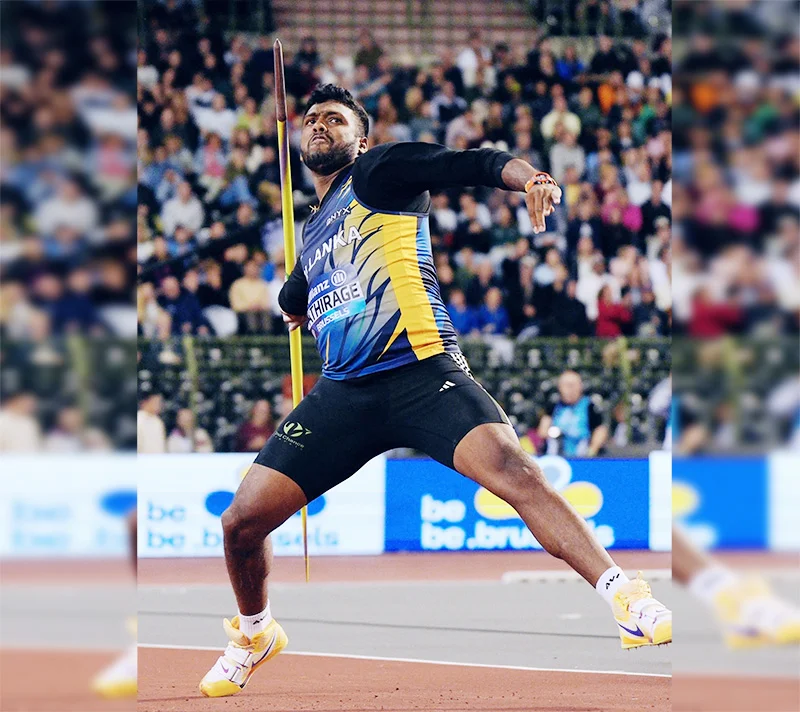
World javelin leader Rumesh Tharanga lived up to his billing to win Sri Lanka a highly anticipated gold medal, overcoming wet weather and a slow runway at the Asian Games in Nagoya, Japan, on Monday.
The overwhelming favourite after a string of victories at global level this year, Tharanga made an unlikely start, opening with 73.52m in the first round and trailing his South Asian rivals, including reigning Olympic champion Arshad Nadeem of Pakistan. At the halfway mark he surged ahead with a massive 88.33m, then sealed the contest with 88.55m.
”He rose like a true champion at the most crucial moment. It was an incredible performance in these wet conditions,” veteran coach Susantha Fernando, who watched from the stands, told The Island. “I was blessed to see a Sri Lankan win gold at back-to-back Asian Games.” Fernando’s own charge, Tharushi Karunaratne, won the 800m at the last edition. He was one of the team coaches at the venue yesterday.
The 23-year-old, trained by Tony Prasanna, arrived in Japan as world No. 1 and the season’s leading thrower. In June he became the first Sri Lankan to throw beyond 90m, launching a national-record 92.62m at the Rome Diamond League. In July he beat India’s Neeraj Chopra to take Commonwealth Games gold in Glasgow, and this month he won the inaugural World Athletics Ultimate Championship in Budapest. He also became the first Sri Lankan to win the Diamond League title. He was the only thrower in the field with two throws beyond 92m this season.
With such a reputation to carry, a Games record (89.15m) was widely expected, and Tharanga came close, but nearly every thrower struggled in the wet conditions.
With Chopra absent, India’s Y. Singh and R. Yadav took silver and bronze with 85.72m and 84.35m respectively. Nadeem finished just outside the podium with 80.29m. Former national record holder and Olympian Sumedha Ranasinghe was sixth with 78.08m.
Akalanka impresses in hurdles
Meanwhile, hurdler Ayomal Akalanka produced one of Sri Lanka’s best performances among those who narrowly missed the podium, finishing fifth in the men’s 400m hurdles.
Running from lane two, the 20-year-old clocked 49.37 seconds against an elite continental field. The former Ambagamuwa Central Udubulathgama athlete stayed in contention throughout the final and finished ahead of Japan’s Kazuki Kurokawa, India’s Santhosh Kumar Tamilarasan and Kazakhstan’s Vyacheslav Zems.
Qatar’s Bassem Hemeida won gold in 47.82, with Japan’s Taiju Goto taking silver in a personal best of 47.93. Taiwan’s Chung-wei Lin claimed bronze in a personal best 48.74, and his compatriot Jian-rong Chen was fourth in 49.25.

Cabinet nod to increase the number of new automated passenger clearance gates at the Bandaranayake International Airport to 12
Draft Bill for amending the Trust Ordinance
Implementing further relief programme to Public sffected by the Middle East conflict situation
Establishment of a Spectrum Management and Monitoring System and a Quality of Service and Quality of Experience System for the Telecommunications Regulatory Commission of Sri Lanka
Appointment of a Committee for the Restitution of Sri Lankan Cultural Heritage Held Abroad
Ten-Year National Action Plan on the Social Protection Sector (2026–2035)

‘Dates have the highest sugar content to fight Coronavirus’

Sunday Island 27 December – Headlines

#SundayIsland 17th December – Headlines

Sunday Island – 28th March

Sunday Island Headlines – 21 March

Sunday Island – 21st February – Headlines
-

 News7 days ago
Mastermind Naufer Moulavi among 15 found guilty
-
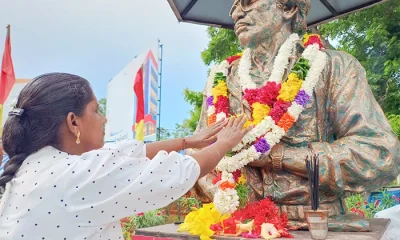
 Midweek Review7 days ago
Thileepan’s fast unto death: An authentic narrative that many missed
-

 Latest News6 days ago
Showers above 100 mm are likely at some places in the Western, Sabaragamuwa, Central and North-western provinces and in Galle and Matara Districts
-

 Editorial7 days ago
Big Bad Bills
-
Editorial6 days ago
Crimes punished and unpunished
-

 Features5 days ago
Beyond traditional jobs: Why Sri Lanka needs to facilitate the gig economy
-

 News7 days ago
One clause in Anti-Corruption (Amendment) Bill requires referendu: SC
-

 News7 days ago
No referendum needed for passage of 22 A: SC