
Business
John Keells IT supports IT infrastructure migration at Rockland Distilleries

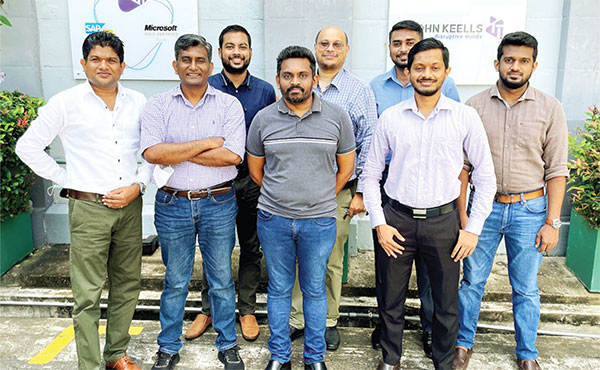
John Keells IT (JKIT), recently launched a project to migrate IT infrastructure to MS Azure cloud at Rockland Distilleries (Private) Limited with the aim of enhancing its SAP application performance, agility and stability. The Azure infrastructure for SAP is a leading solution to run mission-critical SAP ERP operations on the cloud while reducing the total cost of computing and significantly accelerating investment time to benefit. The team at John Keells IT closely assessed the then-existing on-premises data center with an onboard Disaster Recovery (DR) solution of the Rockland Distilleries (Private) Limited and introduced the Azure project where a migration of IT infrastructure to Microsoft Azure cloud was implemented successfully, with many benefits to the organization.
Cloud Adoption is a key milestone to bringing the organization closer to driving a digital transformation journey and provides the flexibility of scalable on-demand infrastructure which eliminates on-premises hardware limitations and the reduction in current cost spent on Capex. Accessibility to a wide range of services on Azure Platform Services can be achieved through this latest implementation.
“Moving to Azure on cloud, away from on-premise hardware was the most logical step for Rockland Distilleries (Private) Limited as it opened up the means to scale workloads on-demand while also benefiting from a significantly improved service up-time”, stated Nishan Thevathason, COO, John Keells IT.
Azure is a robust, reliable public cloud platform that offers critical advantages for essential applications including SAP, which has been a fundamental requirement for many organizations like Rockland Distilleries (Private) Limited. Advantages include the provision of extra capacity in the short term to perform tasks like the archival of the SAP ERP system, accelerated speed of provisioning, built-in tooling which provides robust tools for implementing and managing workstreams by reducing management overhead and pay-for-use which requires payment only for the actual usage of the Azure resources. Azure also provides “Reserved Instances”, a price model for customers to reduce costs up to 72% compared to a Pay-as-you-go model with 1 or 3-year terms on Windows and Linux virtual machines, and Azure Hybrid Benefit, which is a licensing benefit that helps to significantly reduce the costs of the running workloads in the cloud. It also offers high-speed connectivity in 50 regions and availability in 140 Countries with more than 1500 peering points for express routing which is exceptionally higher than other public cloud providers.
 Ranga Karunaratna, Group CIO of Rockland Distilleries (Private) Limited stated, “Working with John Keells IT was a wonderful experience. They are process-oriented and have a diverse skill set. We sought a partner that is passionate about providing trustworthy solutions and, most importantly, who is culturally compatible with Rockland Distilleries (Private) Limited. John Keells IT not only met our objectives but also completed one of the most spectacular migration projects in the industry.”
Through this six-month-long migration process, Rockland Distilleries (Private) Limited gained massively on their performance capacity, and the system availability and performance were also enhanced to a greater extent, enabling the company to perform operations with reduced lag and downtime. The premium disk storage usage also contributed in this regard as it enabled a much-improved level of performance compared to the on-premise storage used previously. System security and monitoring were greatly streamlined with dedicated solutions such as Azure Security Centre which provides low-cost and efficient means to secure the company’s IT ecosystem and monitor it remotely via a single dashboard. Using Azure virtual desktop provides a more secure hybrid workplace experience when accessing the company data and apps.
John Keells IT (JKIT), has a vision of providing quality, world-class end-to-end information and communications technology services ranging from business process outsourcing, software services, and information integration to office automation. It has established a strong customer base in Sri Lanka, South Asia, the United Kingdom, the Middle East, North America, Scandinavia and the Far East. JKIT strives to disrupt the industry together with forward-thinking companies such as Rockland Distilleries (Private) Limited.

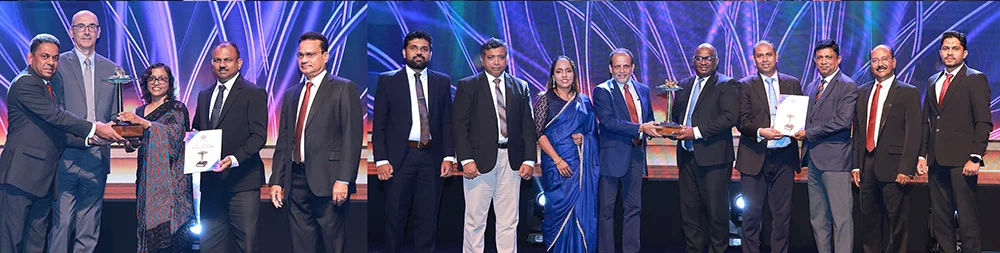
Corporate accolades underscore the alignment between its operational excellence and national development
In an era where national competitiveness is intrinsically tied to digital connectivity, strengthening the country’s digital backbone has become an urgent priority. Within this context, the evolving role of Sri Lanka’s leading telecommunications provider, SLT-MOBITEL, offers valuable insight into how technological infrastructure can underpin broader economic resilience.
Telecommunications and digital networks are foundational to economic transformation. By expanding high-speed broadband access, upgrading enterprise cloud capabilities, and bridging the urban-rural connectivity divide, SLT-MOBITEL helps reduce business transaction costs, streamline supply chains, and enable micro, small, and medium enterprises to reach global markets.
Recent corporate accolades further underscore this alignment between operational excellence and national development. SLT-MOBITEL’s triple triumph at the National Business Excellence Awards 2026 – winning in the Infrastructure and Utilities sector, Performance Management, and ICT Services categories – highlights its growing impact. Notably, the recognition of eChannelling’s contributions to digital healthcare reflects a broader strategic pivot toward integrated technology solutions.
“Institutional efficiency of this nature is critical for attracting foreign direct investment, as global partners increasingly assess a country’s digital maturity and systemic stability before committing capital,” noted industry observers.
Moreover, the company’s transition from a conventional telecom utility to a comprehensive digital solutions provider aligns seamlessly with Sri Lanka’s national digitalisation agenda. As the country pursues public sector modernisation, enhanced e-governance, and a competitive knowledge economy, the private sector must step up to deliver secure, scalable, and future-ready networks. Investments in data centres, cybersecurity frameworks, and advanced ICT infrastructure act as strategic buffers, ensuring that Sri Lanka’s economic apparatus remains agile and resilient amid future global uncertainties.
However, industry experts caution that while these achievements are commendable, SLT-MOBITEL still has a considerable distance to cover in fully enabling a truly digital economy.
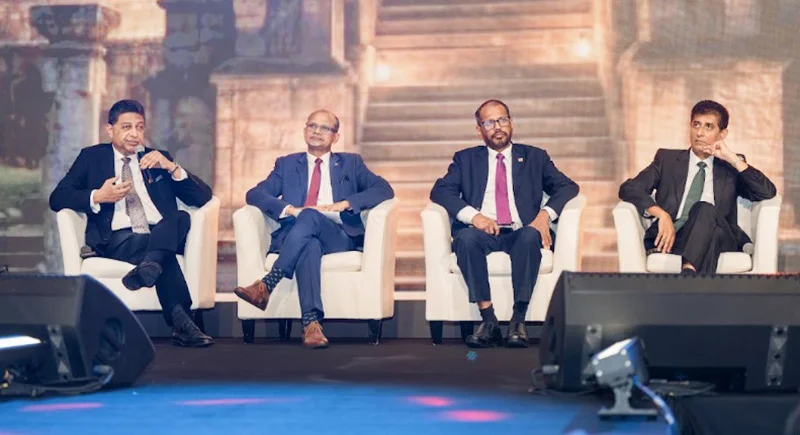
Port City Colombo (PCC) took a prominent role as Platinum Sponsor at the second edition of Sri Lanka Beyond Your Dreams, a high-level diplomatic and investment engagement hosted by the Consulate General of Sri Lanka in Dubai and the Northern Emirates. The event, held on 2nd September 2026 at the Hilton Dubai Al Habtoor City, brought together over 400 senior UAE-based business leaders, investors, diplomats, and institutional stakeholders, alongside Sri Lanka’s most senior government representatives.
The gathering was graced by Dr. Thani bin Ahmed Al Zeyoudi, UAE Minister of Foreign Trade, as Guest of Honour, and Vijitha Herath, Sri Lanka’s Minister of Foreign Affairs, Foreign Employment and Tourism. A high-level Sri Lankan delegation – including the Secretary to the Prime Minister, the Chairman of the Board of Investment, the Chairman of the Export Development Board, and the Director General of Commerce – underscored the government’s strong commitment to deepening economic diplomacy with the UAE.
In his keynote address, Minister Herath reaffirmed the centuries-old ties between Sri Lanka and the Arab region, emphasising the UAE’s vital role as a key economic partner. He stressed the urgency of finalising a Comprehensive Economic Partnership Agreement (CEPA) with the UAE, which would establish a robust framework to elevate trade, investment, and bilateral cooperation. Declaring Sri Lanka “open and ready for business,” he positioned Port City Colombo as the physical embodiment of this economic mission – a modern Special Economic Zone (SEZ) with a dedicated legal framework and competitive incentives, offering UAE investors a natural gateway to South Asia while maintaining strong Gulf connectivity.
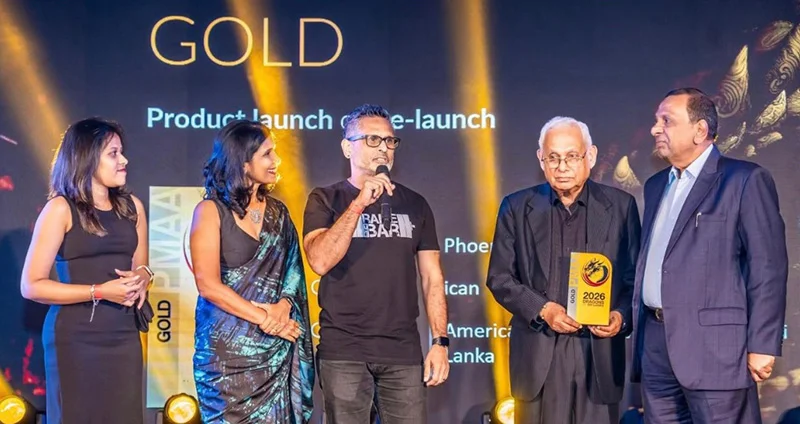
American Premium Water has secured four wins at Dragons of Sri Lanka Awards 2026, including three Gold Dragons and one Black Dragon, marking a significant milestone for the brand following its relaunch last year.
Part of the prestigious Dragons of Asia awards, Dragons of Sri Lanka brings the program’s regional platform to the local market, celebrating creative and effective marketing communications, with entries evaluated on strategic thinking, creativity, execution and impact. Established in 2000, Dragons of Asia is one of Asia’s premier results-driven marketing awards programs.
For American Premium Water, the achievements are particularly significant given that the company’s debut at the Dragons awards has resulted in four Dragons across four categories. In the distinction of Gold Dragons, American Premium Water was recognized across three categories including Product Launch or Re Launch, Cause, Environment or Sustainability and Creative Excellence while the Black Dragon was awarded in recognition of Small Budget.
Competing alongside leading brands and agencies in Sri Lanka, American Premium Water’s four wins demonstrate the strength and effectiveness of its recent work. Winning three Gold Dragons across three distinct categories highlights the breadth of the brand’s achievements, while the Black Dragon for Small Budget further emphasizes its ability to create meaningful impact through focused and efficient investment.

Trump says every adult American will get $5,000 if Republicans win midterms

Protesters mistake Pakistan’s U-19 team for asylum seekers in Portsmouth

Steps are being taken to provide accommodation facilities for 16,000 university students – Prime Minister

Showers will occur in the Western and Sabaragamuwa provinces and in Kandy, Nuwara-Eliya, Galle and Matara districts.


Sri Lanka reiterates its territory won’t be used against India

‘Dates have the highest sugar content to fight Coronavirus’

Sunday Island 27 December – Headlines

#SundayIsland 17th December – Headlines

Sunday Island – 28th March

Sunday Island Headlines – 21 March

Sunday Island – 21st February – Headlines
-

 News6 days ago
Namal remanded until Sept. 18 over Airbus deal investigation
-

 Latest News5 days ago
Tharanga creates history with Diamond League crown in Brussels
-

 News5 days ago
Dispute which triggered listed company director being detained at BIA resolved
-

 Features4 days ago
After the parade: What a traffic OIC’s walk-out tells us
-
 Opinion7 days ago
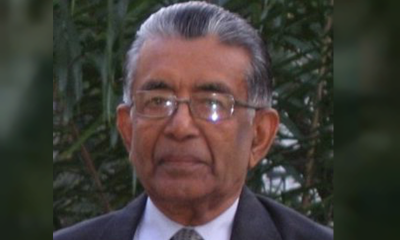
In Memory of Dr Upatissa Pethiyagoda
-

 Editorial6 days ago
Power vs Equality
-
Editorial4 days ago
Arrests as theatre
-

 Latest News6 days ago
SLPP MP Namal Rajapaksa arrested by CIABOC