
Business
The Museum of Modern and Contemporary Art Sri Lanka announces its second exhibition titled ‘Encounters’


‘Encounters’ is an exhibition of Sri Lankan modern and contemporary art that will be launched in February.
– The exhibition will bring together six encounters between artworks from the 1950s and the present.
The Museum of Modern and Contemporary Art Sri Lanka (MMCA Sri Lanka) announces the launch date of its second exhibition titled ‘Encounters’. The exhibition will be open from 11 February to 28 August 2022, and will be presented at the museum’s new venue at Crescat Boulevard. ‘Encounters’ will be structured as a sequence of changing displays bringing together six ‘encounters’ between works of art created between the 1950s and the present by various artists such as George Keyt, Pradeep Thalawatta, Nelun Harasgama, Senaka Senanayake, Abdul Halik Azeez, and Janani Cooray.
The artworks and ephemera that will be showcased as part of ‘Encounters’ revolve around, and respond to, specially chosen paintings drawn from the John Keells and George Keyt Foundation Collections. ‘Encounters’ provides the public with a rare opportunity to view several artworks from two of the country’s most important collections of art.
Sharmini Pereira, Chief Curator, MMCA Sri Lanka, said, “we are excited to announce the launch of our second exhibition. The past two years have not been ideal for exhibition programming around the world, with the unexpected travel restrictions and lockdowns. So, we are really pleased that we can begin this year with a newly curated exhibition which includes 46 artworks by approximately 18 artists along with historically important magazines and photographs. The exhibition has been curated as a series of changing six displays, where five displays are on view for approximately two months and one display will remain on view for the entire six months. We encourage visitors to return to the exhibition for each display changeover as each ‘encounter’ will be different to the previous one.”
 During the duration of ‘Encounters’, the MMCA Sri Lanka will be open from Tuesdays to Sundays from 10am to 6pm. Entrance to the museum and participation at all events in its public programme will be free-of-charge. For visitors who cannot easily visit during daytime opening hours, the museum will be open until 8pm on Fridays. The museum is easily accessible by public and private transport at its new venue with ample parking available.
‘Encounters’ is generously supported by the European Union, Foundation for Arts Initiatives, John Keells Foundation, and Asian Hotels and Properties PLC.
The Museum of Modern and Contemporary Art Sri Lanka is a cultural initiative focused on building a museum of modern and contemporary art for the country and fostering learning and engagement for as wide a public as possible. Alongside its curated exhibitions and education programmes, the museum is the first publicly accessible trilingual venue of its kind in Sri Lanka. For more information, visit www.mmca-srilanka.org or follow them on Facebook www.facebook.com/mmcasrilanka and Instagram https://www.instagram.com/mmcasrilanka/ for updates.


Sri Lanka’s economic growth for 2026 will be around 4-5 percent, Central Bank Governor Dr. Nandalal Weerasinghe said.
The Governor indicated the estimated economic growth while announcing the Central Bank’s policy agenda for this year, last Thursday.
‘The Central Bank’s 2026 growth estimation is higher than the growth prediction of the IMF and the World Bank and is achievable, the Governor told the media while announcing the Central Bank’s policy agenda for 2026.
Dr. Weerasinghe added: ‘The Central Bank will introduce a benchmark intra-day reference exchange rate this year to ensure transparency in the foreign exchange market.
‘The absence of a reference exchange rate has held back the expansion of the Sri Lankan forex market and discouraged the trading of rupee-denominated derivatives Governor said.
‘The Central Bank last year carried out the necessary preliminary work to implement the benchmark spot exchange rate.
‘The benchmark intra-day reference exchange rate will be introduced in 2026 to foster a transparent foreign exchange market.
‘This benchmark will guide market participants, help reduce volatility and promote more competitive pricing on a given date, thereby enabling the introduction of more innovative products in the foreign exchange market.
‘Sri Lanka’s foreign exchange market has limited derivatives like currency swaps and options aiming to deepen markets and attract inflows.
‘However, these instruments failed after a lack of reliable reference exchange rate amid concerns over excessive speculation, rupee over-appreciation risks and interventions distorting clean floating rates.’
Meanwhile, currency dealers welcomed the move and said it will help to deepen the market.
“This will expand the market with more products and promote rupee-denominated derivatives, a currency dealer from a local bank said.
“It is something the market wanted to fix in derivative prices. This is a pricing mechanism for the rupee, he added.
By Hiran H Senewiratne ✍️
Business
Sevalanka Foundation and The Coca-Cola Foundation support flood-affected communities in Biyagama, Sri Lanka


With funding support from The Coca-Cola Foundation (TCCF), the Sevalanka Foundation has launched a humanitarian relief programme to support flood-affected communities in Biyagama. The initiative focuses on restoring access to safe water, healthcare services, and essential public facilities during the critical recovery period following the Cyclone Ditwah.
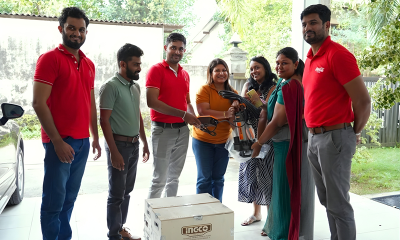
Working closely with the Divisional Secretariat, the program prioritizes the cleaning and rehabilitation of contaminated dug and tube wells, helping address the urgent post-flood challenge of access to safe water. This intervention will also support the cleaning and reopening of essential public spaces, including schools, and Grama Niladhari (GN) offices, enabling authorities and communities to resume daily activities safely. The Sevalanka Foundation and TCCF, as part of the initial response, have also donated water pumps to the Divisional Secretariat to support immediate water extraction and clean-up efforts.
In addition, as the second main component of the project, and based on the guidance of the Medical Officer of Health (MOH), support is being provided to MOH-operated healthcare facilities to restore access to emergency and essential medical services. This support includes sanitization, debris removal, hazard stabilization, and the provision of emergency medical supplies such essential medicines and hygiene products. Medical camps staffed by doctors and senior nurses will be conducted through MOH offices to provide prioritized groups of persons with health, nutrition and hygiene related relief items.


CSE activities were extremely bullish yesterday mainly due to the UK government’s announcement on tariff free access for local apparel sector exports into the UK coupled with Central Bank Governor Dr Nandalal Weerasinghe’s positive outlook on the economy this year.
Amid those developments the turnover level also improved and the All Share Price Index moved up to the 23500 mark during the trading day.
The All Share Price Index went up by 127.17 points, while the S and P SL20 rose by 56.75 points. Turnover stood at Rs 8.5 billion with 18 crossings.
Top seven crossings were: LOLC Holdings two million shares crossed to the tune of Rs 1.18 billion; its shares traded at Rs 575, Renuka Agri 45 million shares crossed to the tune of Rs 594 million; its share price was Rs 13.20, Sampath Bank 1.4 million shares crossed for Rs 215 million and its shares traded at Rs 154.35, Renuka Holdings 1.5 million shares crossed for Rs 75 million; its shares traded at Rs 50, Hayleys 200,000 shares crossed to the tune of Rs 41.3 million; its shares traded at Rs 207, Tokyo Cement (Non-Voting) 400,000 shares crossed for Rs 37.8 million; its shares sold at Rs 50 and NTB 100,000 shares crossed for Rs 326 million; its shares sold at Rs 326.
In the retail market top seven companies that contributed to the turnover were; LOLC Rs 340 million (591,000 shares traded), Sampath Bank Rs 310 million (two million shares traded), Renuka Agri Foods Rs 275 million (19.4 million shares traded), ACL Cables Rs 238 million (2.3 million shares traded), Overseas Realty Rs 215 million (4.9 million shares traded), CIC Holdings (Non Voting) Rs 180 million (6.3 million shares traded) and Wealth Trust Equity Rs 132 million (8.2 million shares traded). During the day 269.3 million share volumes changed hands in 47852 transactions.
It is said the banking and financial sectors performed well, especially Sampath Bank, while a top diversified company, LOLC Holdings, also performed well.
Yesterday, the rupee opened at Rs 309.15/30 to the US dollar in the spot market relatively flat from Rs 309.10/50 the previous day, having depreciated in recent weeks, dealers said, while bond yields opened higher.
The telegraphic transfer rates for the dollar were 305.8500 buying, 312.8500 selling; the British pound was 409.7568 buying, and 421.1186 selling, and the euro was 354.0809 buying, 365.4441 selling.
By Hiran H Senewiratne ✍️

The Government does not grant protection based on Status. – PM

Heavy showers above 100 mm are likely at some places in the Northern province

De Klerk comes clutch as RCB steal last-ball thriller against Mumbai Indians

Speaker bars Parliamentary probe into Judicial Service Commission

Elephant calf killed in collision with lorry on Anuradhapura–Padeniya Road

Devananda granted bail

‘Dates have the highest sugar content to fight Coronavirus’

Sunday Island 27 December – Headlines

#SundayIsland 17th December – Headlines

Sunday Island – 28th March

Sunday Island Headlines – 21 March

Sunday Island – 21st February – Headlines
-

 News5 days ago
Interception of SL fishing craft by Seychelles: Trawler owners demand international investigation
-
 News5 days ago
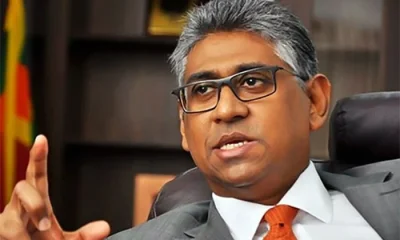
Broad support emerges for Faiszer’s sweeping proposals on long- delayed divorce and personal law reforms
-

 Opinion2 days ago
The minstrel monk and Rafiki, the old mandrill in The Lion King – II
-

 Features2 days ago
The Venezuela Model:The new ugly and dangerous world order
-

 News4 days ago
Prez seeks Harsha’s help to address CC’s concerns over appointment of AG
-

 News6 days ago
Private airline crew member nabbed with contraband gold
-
 Business14 hours ago
Sevalanka Foundation and The Coca-Cola Foundation support flood-affected communities in Biyagama, Sri Lanka
-

 Latest News2 days ago
Warning for deep depression over South-east Bay of Bengal Sea area