
Editorial
Dismantling brakes of a juggernaut

Saturday 5th September, 2020
The 20th Amendment (20A) bill is now in the public domain. The Attorney General is of the view that it requires only a two-thirds majority in Parliament for enactment. The government has 150 MPs on its side, and the passage of 20A is only a matter of time. Reflected in this constitutional amendment is the strategic thinking of the present dispensation.
It was thought, before last month’s general election, that 20A would be a slightly amended version of 19A as there was a need to help the President wriggle out of the constitutional straitjacket he found himself in. But 19A has been eviscerated. Only the five-year presidential term and the two-term limit seem to have been retained.
The general consensus is that 19A contains some salutary features, which must be retained although it was intended to keep the Rajapaksa family at bay, strip President Maithripala Sirisena of some executive powers and vest them in Prime Minister Ranil Wickremesinghe. The number of terms a President could serve was limited to two to prevent former President Mahinda Rajapaksa from contesting a presidential election again. Dual citizens were banned from entering Parliament or running for President because the yahapalana leaders wanted to prevent Gotabaya Rajapaksa and Basil Rajapaksa from seeking political office. Namal Rajapaksa was their obvious target when the minimum age limit for contesting a presidential election was raised to 35.
Wickremesinghe and Sirisena did everything in their power to ruin the political future of the Rajapaksas, but their plan went pear-shaped, and the boot is now on the other foot. Wickremesinghe is in the political wilderness; Sirisena, who left the SLFP as a powerful minister of the Rajapaksa government to contest the presidential election successfully, in 2015, having failed to realise his prime ministerial dream, is now playing second fiddle to the Rajapaksas, as an ordinary MP.
Dual citizens will be able to contest elections, and the minimum age for presidential candidates will be 30 if 20A is enacted. The path has been cleared for the Rajapaksa family.
The Constitutional Council (CC) is to be replaced with a Parliamentary Council (PC) under 20A. True, the CC functioned as a rubber stamp for the yahapalana government and was responsible for some controversial appointments which should not have been made. But the incumbent government could have changed the CC to make it more effective. What 20A proposes to set up is another rubber stamp council; the President will have the power to make all key appointments to the Election Commission, the judiciary, etc. Fear is being expressed in some quarters that the Auditor General’s Department will end up being an appendage of the government.
The government will be able to appoint any number of ministers if 20A is enacted, and this will help lure Opposition MPs into joining its ranks. A jumbo Cabinet will serve the purpose of only self-seeking politicians craving power and positions. Ideally, the Cabinet should not have more than 15 members. The number of ministers must not exceed 30 under any circumstances.
Worryingly, legal experts have pointed out that there is no provision in 20A for fundamental rights (FR) cases to be filed against the omissions and commissions on the part of the President. At present, FR cases can be filed against the Attorney General over presidential actions, but if 20A becomes law in its present form, people who feel that their fundamental rights have been violated by the President will not be able to invoke the jurisdiction of the Supreme Court. Instead, they will have to settle for going to the Appeal Court. The constitutional provision for FR cases anent presidential actions should be retained.
Overall, President Rajapaksa has done well despite 19A, which is annoyingly restrictive in some respects, and earned praise even from his critics. He certainly needs some more constitutional leeway to be able to live up to the expectations of the people who elected him and deserves the Defence portfolio among other things, as we have argued in previous comments. But 20A seeks to vest in the presidency excessive powers, and it in its present form is likely to cast him in an unfavourable light.
Framing a Constitution or amending it is a solemn task which requires sincerity and foresight, which the drafters of 19A sadly lacked; they played politics with it at the behest of their political masters. The architects of 20A have failed to be different. The yahapalana government went to one extreme, and the SLPP administration is set to go to the other. We are afraid that 20A will have a corrosive effect on the brake system of the SLPP juggernaut, causing it to go careening down the hill.
One can only hope that the government will heed concerns being expressed about 20A and consider watering it down instead of seeking a reversion to the status quo ante.



Tuesday 3rd March, 2026
Sri Lankans had to languish in long queues outside filling stations for days on end in 2022, when the country was short of foreign exchange for fuel imports. The JVP/NPP leaders made the most of that situation; they condemned the government of the day, instigated protests and shored up their electoral prospects. Today, winding queues have appeared again outside filling stations due to panic buying and hoarding triggered by the ongoing Middle East conflict though the Ceylon Petroleum Corporation (CPC) has assured that it has fuel stocks sufficient for more than four weeks. The government is apparently all at sea, unable to stop panic buying and hoarding. Curiously, it has baulked at adopting the QR-based fuel dispensing method to keep panic buyers and hoarders at bay.
CPC Chairman D. J. Rajakaruna yesterday claimed that the QR-based fuel issuance method had been introduced during a fuel crisis, and therefore there was no need for it to be reintroduced as the country had enough fuel stocks. His argument is flawed. That method needs to be introduced as a temporary measure to clear the queues and prevent panic buying and hoarding from causing a countrywide fuel shortage. The government seems to be labouring under the misconception that it will be able to get rid of queues by stepping up the fuel supply. This measure is ill-conceived, for it will lead to more hoarding, with queues persisting. Most of all, it is not possible to replenish fuel stocks at all filling stations countrywide daily to meet the increasing demand, and even if the CPC accomplished that task by any chance, queues would still not go away; tuk-tuk operators are in overdrive stocking up on fuel. Trishaws never leave fuel queues; they rejoin queues after obtaining fuel and pumping it into cans. They are not alone in doing so. If police care to conduct raids, they will be able to detect hoarded fuel in many houses.
What the persistence of fuel queues signifies is that the public does not take the government’s assurances seriously; there seems to be a serious trust deficit. Worse, those who have listened to the government and refrained from joining fuel queues find themselves at a disadvantage; with panic buyers and hoarders waiting in queues and buying all the fuel. At this rate, they, too, will be compelled to join the queues, cursing the government.
The government seems to think that panic buying and hoarding of fuel will help boost its revenue substantially as petroleum products are heavily taxed, but it ought to look at the bigger picture and take urgent action to prevent the depletion of its fuel stocks if it is to avert a crisis. The current conflict in the Middle East is bound to take a heavy toll on remittances from expatriate workers, export proceeds and tourism earnings at least in the short term, thereby causing a severe strain on the country’s foreign currency reserves. There is a pressing need to control the forex outflow, but hoarding of fuel will create a situation where the government will have to spend more foreign exchange on oil imports. If fuel stocks are depleted—perish the thought—it will take months to replenish them, and emergency purchases will have to be made at a premium. Such an eventuality will entail huge economic and political costs.
Has the NPP government stopped short of adopting the QR-based fuel dispensing method lest the credit for tackling panic buying and hoarding should go to the previous rulers who introduced it to manage a far worse fuel crisis? It will be a big mistake for the government not to curtail the huge increase that panic buying and hoarding have led to in the demand for fuel.
If panic buying and hoarding of fuel do not show signs of abating today, the government ought to swallow its pride and adopt the QR-based fuel issuance method. Nobody will think less of it for doing so; however, it will incur public wrath if it fails to ensure that fuel is readily available countrywide.

Monday 2nd March, 2026
We are witnessing a new world order that is anything but rules-based. The US has once again demonstrated that might is right. Big powers have placed themselves above international law and reduced the UN to a mere spectator.
US President Donald Trump has graduated from abductions to assassinations in dealing for foreign leaders he considers hostile. The US and Israel seem to think they have succeeded in engineering a regime collapse in Iran by assassinating Supreme Iranian Leader Ayatollah Ali Khamenei and scores of others in a series of air strikes on Saturday. Those killings must be condemned unreservedly. President Trump has audaciously claimed in a social media post that a wicked man was eliminated. The question is whether those who ordered Saturday’s air strikes, killing many Iranian civilians, including schoolgirls, can consider themselves any less wicked.
If history is anything to go by, air strikes alone cannot bring down long-established systems, and there is no guarantee that the toppling of a repressive regime always yields positive results and helps bring order out of chaos. Iraq and Libya may serve as examples. They remain fragmented and are in a far worse situation than they were under Saddam Hussain and Muammar Gadhafi respectively. The US and its allies plunged those two countries into anarchy in the name of eliminating repressive regimes.
The US and Israel are accused of waging a diversionary war for the benefit of President Trump and Israeli Prime Minister Benjamin Netanyahu. Both of them are facing scandals at home. Trump is troubled by a renewed scrutiny of the Epstein files and a Supreme Court judgment preventing him from imposing tariffs according to his whims and fancies. Netanyahu is facing bribery and fraud charges, and will be in serious trouble if voted out of power. He has to cling on to power at any cost. Fighting wars purportedly to save Israel seems to be the only way he thinks he can keep his political enemies at bay at home.
Iran has threatened to destroy Israel and the US, but its military capabilities are limited, as is known to military experts. It would never have taken on the US militarily or done anything fraught with the danger of triggering disproportionate military retaliation. It has been nowhere near developing nuclear weapons. The casus belli that Trump and Netanyahu used to attack Iran reminds us of the falsified intelligence dossiers President George W. Bush and British Prime Minister Tony Blair unashamedly produced in a bid to justify the invasion of Iraq. They said Saddam Hussain had stockpiled weapons of mass destruction, but they could not trace any.
The current Iranian regime, whose crackdown on protesters claimed thousands of lives, has weakened international opposition to US aggression significantly. However, some prominent Democrats have already condemned Trump’s bombing spree. U.S. Senator Tammy Baldwin has pointed out that Trump’s military action is illegal in that according to the US Constitution, if the President wants to start a war, the Congress, elected by the people, needs to sign off on it. He has said the Senate needs to come back immediately to vote on Trump’s senseless and illegal bombings. The Republicans have defended Trump’s military aggression, claiming that it is in the interests of the Iranian people.
One can only hope that the US Congress and judiciary will make Trump act with restraint.
****
Adopt QR remedy
The escalation of the Middle East conflict has triggered panic buying of fuel in Sri Lanka. Long lines of vehicles could be seen near fuel stations in various parts of the country at the time of going to press. The Ceylon Petroleum Corporation (CPC) had to step up fuel supply yesterday while claiming to have fuel stocks sufficient for more than one month and urging the public not to panic. The raging conflict is bound to affect the global fuel supply, and this is why Sri Lankans have panicked.
There is no reason to doubt the veracity of the CPC’s claim that it has sufficient fuel stocks, but panic buyers are impervious to reason. Unless hoarders are kept at bay, the CPC will run out of its stocks soon. One may recall that during the 2022 economic crisis, pumps ran dry at most filling stations mainly due to excessive hoarding. Rationing helped bring the situation under control.
The only way to stem the current wave of panic buying of fuel is to activate the QR-based fuel issuance system. Unless the government adopts that method forthwith and arrests panic buying, hoarders will have a field day and create a fuel shortage.

Arumahandi Janith Madushanka de Silva alias Podi Lassi, a dangerous underworld character, who was arrested in India, was brought back to Sri Lanka yesterday. On watching his arrival at the BIA, Citizen Perera must have uttered the same words as Mr. Bumble in Oliver Twist: “The law is an ass”. Criminals are caught, released and caught again. Arresting an underworld figure is no walk in the park. It takes months of meticulous planning to nab powerful criminals protected by private armies. The crime busters who risk life and limb to track down criminals are demoralised when the suspects they arrest get bail and flee the country.
Podi Lasi was arrested in 2020 and detained in the Boossa high-security prison, together with some other dangerous criminals. He secured bail in 2024. It was obvious that he would flee the country. He played the victim card, claiming that the STF was planning to kill him. His lawyers even demanded that he be given protection. He disappeared soon afterwards, and no one was surprised.
Many an eyebrow was raised when Podi Lassi was enlarged on bail, for he had even issued death threats to the then President and the Defence Secretary. In 2020, while in detention, Podi Lasi and two other underworld characters known as Kosgoda Tharaka and Pitigala Keuma threatened to harm the then President Gotabaya Rajapaksa, Defence Secretary General Kamal Gunaratne, and some senior prison officers. Podi Lassi bragged that his hit squads were capable of taking any target. Those who are charged with less serious offences than drug smuggling and underworld activities are denied bail in this country to prevent them from intimidating witnesses and fleeing overseas.
One may recall that a notorious drug dealer named Mohommad Najim Mohommad Imran alias Kanjipani Imran obtained bail in 2022. Everybody knew that he would flee the country, and he did so a couple of weeks later. The then Public Security Minister Tiran Alles claimed that some unscrupulous lawyers had facilitated Imran’s escape and that of another criminal called Ganemulle Sanjeewa. Imran had been arrested in Dubai together with Sri Lanka’s Napoleon of Crime, Samarasinghe Arachchige Madush Lakshitha alias Makandure Madush in 2019, and brought back to Colombo. Madush perished allegedly in a crossfire between the police and an underworld gang while in custody. Imran has been running his crime syndicate here from overseas. He is believed to have masterminded the murder of Wasantha Perera or Club Wasantha in 2024. Ganemulle Sanjeewa was gunned down inside a courtroom in Colombo in 2025.
Some underworld kingpins have turned this country into a narcotic hub, for all intents and purposes, if the sheer amounts of dangerous drugs frequently taken into custody are any indication. They are capable of killing anyone anywhere. A lawyer and his wife were gunned down near the defence headquarters complex, Akuregoda, recently.
It is public knowledge that whenever a drug czar is netted, a well-coordinated operation gets underway to secure his release, with lawyers, politicians, and some rogue elements in the police and other state institutions such as the Government Analyst’s Department springing into action. In September 2023, Nadun Chinthaka Wickremaratne alias Harak Kata almost escaped from the CID headquarters where he was detained and interrogated. If not for some vigilant STF personnel, his crime syndicate would have been able to launch a spectacular operation with the help of some commandos and spring him free. Salindu Malshitha alias Kudu Salindu, arrested with Harak Kata in Madagascar, and extradited to Sri Lanka in 2023 also fled the country after obtaining bail.
Sri Lanka’s anti-narcotic laws are characterised by glaring inadequacies that allow clever lawyers appearing for wealthy drug lords to drive a coach and horses through them. They have done so on numerous occasions much to the dismay of the police and the public. The need for laws with stronger teeth to deal with drug lords and other such criminals firmly and make this country safe for the ordinary citizens cannot be overemphasised.
Six US soldiers killed in Iranian strike on Kuwait base

Israel attacks presidential office in Tehran as reported death toll in Iran rises to 787

Attorney At Law S K Sangakkara pasess away

SriLankan Airlines Update on Middle East Operations

Trump says Iran war projected to last 4 to 5 weeks, could go ‘far longer’

Qatar downs two Iranian fighter jets as conflict widens

‘Dates have the highest sugar content to fight Coronavirus’

Sunday Island 27 December – Headlines

#SundayIsland 17th December – Headlines

Sunday Island – 28th March

Sunday Island Headlines – 21 March

Sunday Island – 21st February – Headlines
-

 Opinion5 days ago
Jamming and re-setting the world: What is the role of Donald Trump?
-
 Features5 days ago
An innocent bystander or a passive onlooker?
-
 Features6 days ago
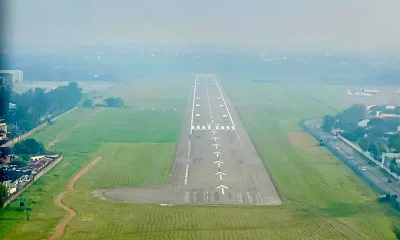
Ratmalana Airport: The Truth, The Whole Truth, And Nothing But The Truth
-

 Business7 days ago
Dialog partners with Xiaomi to introduce Redmi Note 15 5G Series in Sri Lanka
-

 Features7 days ago
Building on Sand: The Indian market trap
-
 Opinion7 days ago
Future must be won
-
 Features2 days ago
Brilliant Navy officer no more
-

 Business6 days ago
IRCSL transforms Sri Lanka’s insurance industry with first-ever Centralized Insurance Data Repository