
News
Lankan Economic Outlook 2022: Experts call for bold and radical reforms


International and local economic experts and corporate leaders have stressed the need for a concrete, long-term and bold reform agenda for the economy as the country braces for a critical year amidst unprecedented socio-economic challenges.
Speaking at the “Sri Lanka Economic Outlook 2022” forum organised by the Friedrich Naumann Foundation for Freedom and NextGenSL, recently, Prof. Lee. C. Buchheit, an international debt restructuring expert, Prof. H.D. Karunaratne, a prominent economist and the newly-appointed Vice Chancellor of the University of Colombo, Kasturi Chellaraja Wilson, Hemas Group CEO and Economist Deshal de Mel spoke at length about Sri Lanka’s economic trajectory for the year and the options available at present.
“Any fiscal adjustment programme initiated at this stage will be ‘distasteful’ and will involve a degree of pain. Even a home-grown adjustment programme will entail certain political problems due to the nature of reforms. The question here is whether the country’s political leaders will have the political stamina to proceed with them,” Prof. Lee C. Buchheit, an international expert with a 43-year legal career specialising in sovereign debt management, said.
Delivering the keynote speech at the event, Buchheit presented a detailed account of the global debt situation for the year 2022. He has worked on over two dozen sovereign debt restructurings and he led the legal teams advising the sovereign debtors in the two largest sovereign debt workouts in history (Greece in 2012 and Iraq in 2005-08).
“The problem Sri Lanka must ask itself at the moment is whether there is a plausible fiscal adjustment programme that can be implemented within the next two-three years. It is in this context that the option of seeking the support of the International Monetary Fund (IMF) should be assessed and analysed. The country can also proceed with borrowings from bi-lateral partners as long as the Government has a clear policy and the stamina to implement comprehensive reforms,” he added.
“Sri Lanka’s creditors — be they bilateral or commercial — will be interested in one critical question. That would be; who are we going to share the pain with? Every sovereign bond restructuring boils down to one decision — how much of the country’s pain should be borne by its citizens, and how much should be borne by the creditors,” the international expert explained.
“Commercial creditors caught up in this issue often ask themselves whether the proposed debt restructuring is necessary and whether the conditions proposed to them are proportionate to what the country actually needs.”
“This could be a challenging process as both the public and the creditors would say that they are disproportionately carrying the burden.”
“Therefore, the only entity in the world with the technical expertise and the political legitimacy to assuage such concerns and handle this process is the International Monetary Fund (IMF)”, Prof. Buchheit said.
“A number of countries in the world have embarked on debt restructuring without the IMF. But, if you ask whether the involvement of the IMF is useful, the answer would be ‘yes’,” he added.
Commenting on international credit rating agencies downgrading Sri Lanka, Prof. Buchheit said it should not be a major concern for Sri Lanka.
“This will only be a big concern if you are trying to re-access the global capital market in the near future. When the country announces the need for debt restructuring, rating agencies will downgrade the country to ‘selective default’ and this rating will remain until the restructuring is completed. Once this is done, they will upgrade the country to higher rating categories.”
“This will only be a major worry if Sri Lanka intends to issue additional International Sovereign bonds in the near future. I don’t think Sri Lanka is in a position to do so,” he said.
Speaking at the discussion, Prof. H.D. Karunaratne said the crisis in Sri Lanka had been brewing for over 70 years and opined that short-term fixes would not resolve a long-term problem.
“Sri Lanka is a country that harbours a lot of dreams. But, we are not working practically, with a rational approach, to achieve our dreams,” he said.
He added that “the large majority of Sri Lankans assume that bringing in more foreign investments alone will resolve our crisis. But, do we at least have consensus across the political spectrum on the nature of foreign investments Sri Lanka wants? The dynamics investors usually see in other countries do not work in Sri Lanka’s context. How are we going to attract high-value investments without addressing these critical issues?” Prof. Karunaratne asked.
The senior Economist also pointed out that the ever-expanding public sector was also another area of concern for Sri Lanka.
“We have nearly 1.4 million workers in the public sector and each government keeps on adding to this number. In addition, so many loss-making institutions in the public sector are being operated without any plan for restructuring. This irrational approach is one of the key contributing factors to the current situation,” he said.
“Another problem Sri Lanka must pay attention to is policy inconsistencies. For instance, in 2016, the Government announced tax concessions for electricity-based vehicles. In 2017, the Government imposed heavy taxes on the same vehicles. This is just one example as to how policy inconsistencies have contributed to the crisis we find ourselves in today,’ Karunaratne said, adding that Sri Lanka is currently paying the price for its over-reliance on gas.
Commenting on the way forward, Prof. Karunaratne said the country’s top priority should be to keep its house in order. “Whatever we do, we cannot expect satisfactory results unless we decide to keep our house in order. We can go on borrowing money from bilateral partners but what’s the point in doing so without any concrete plan to address these key areas for concern?”
The senior economist proposed to set up a Japanese-style “Economic Planning Agency” to ensure stable and consistent policies related to the country’s economy.
Hemas Group CEO, Kasturi Chellaraja Wilson said Sri Lanka should now focus on its approach to overcome the existing difficulties.
“We have faced immense difficulties ranging from accessing foreign exchange to opening Letters of Credit. But we, Sri Lankans, have faced challenges before and I am sure we will see many more challenges in the future. So, the problem is not the challenges, but the approach we adopt to overcome them,” she said opening her remarks.
“We must first come to the realization that short-term, tactical measures will no longer resolve our crisis at this point. We need long-term, concrete planning.”
“Do we have the political will to do what is right? Our politicians must decide whether they are going to play party politics or do what is right by the country. The Government, the Opposition, the public sector and the private sector must come together to lead the country out of the current crisis. That is what we want to see,” she said.
“There is no doubt about the fact that economic reforms are going to be a bitter pill to swallow. But, there is no other way out. The issue, however, is that we do not seem to have a common agenda as a country to navigate the crisis,” Wilson explained.
Economist Deshal de Mel who described this as an opportunity to come together for a bold and drastic reform agenda expressed the same sentiments.
“Whatever we do — be it debt restructuring or seeking support from bilateral or multilateral donors — we will not be able to avoid reforms. We all know that reforms are not going to be easy but I see this crisis as an opening to come together to initiate bold reforms,” de Mel said.
When asked about suggestions made by the business community and some economists to go for debt restructuring, De Mel said it could be deemed as a prudent approach. “The most important thing right now is to find a sustainable solution to the debt issue,” he added.
“Sri Lanka must find a way to build its reserves and to adjust the country’s fiscal trajectory,” De Mel stated adding that it was important to Sri Lanka to have a concrete plan to regain access to the global capital market.

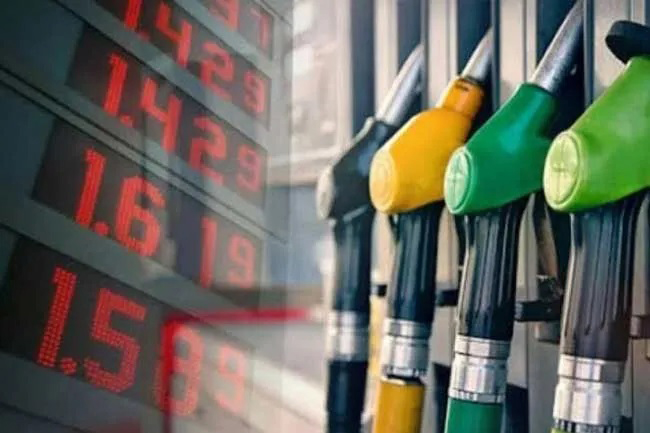
The Ceylon Petroleum Corporation (CEYPETCO) has announced a reduction in the prices of Petrol 92 and Petrol 95, effective from midnight today (30).
The price of Petrol 92 has been reduced by Rs. 15 per litre, from Rs. 414 to Rs. 399 while the price of Petrol 95 Octane has been reduced by Rs. 20 per litre, from Rs. 495 to Rs. 475
There will be no change in the prices of diesel, Super Diesel and kerosene under the latest revision.
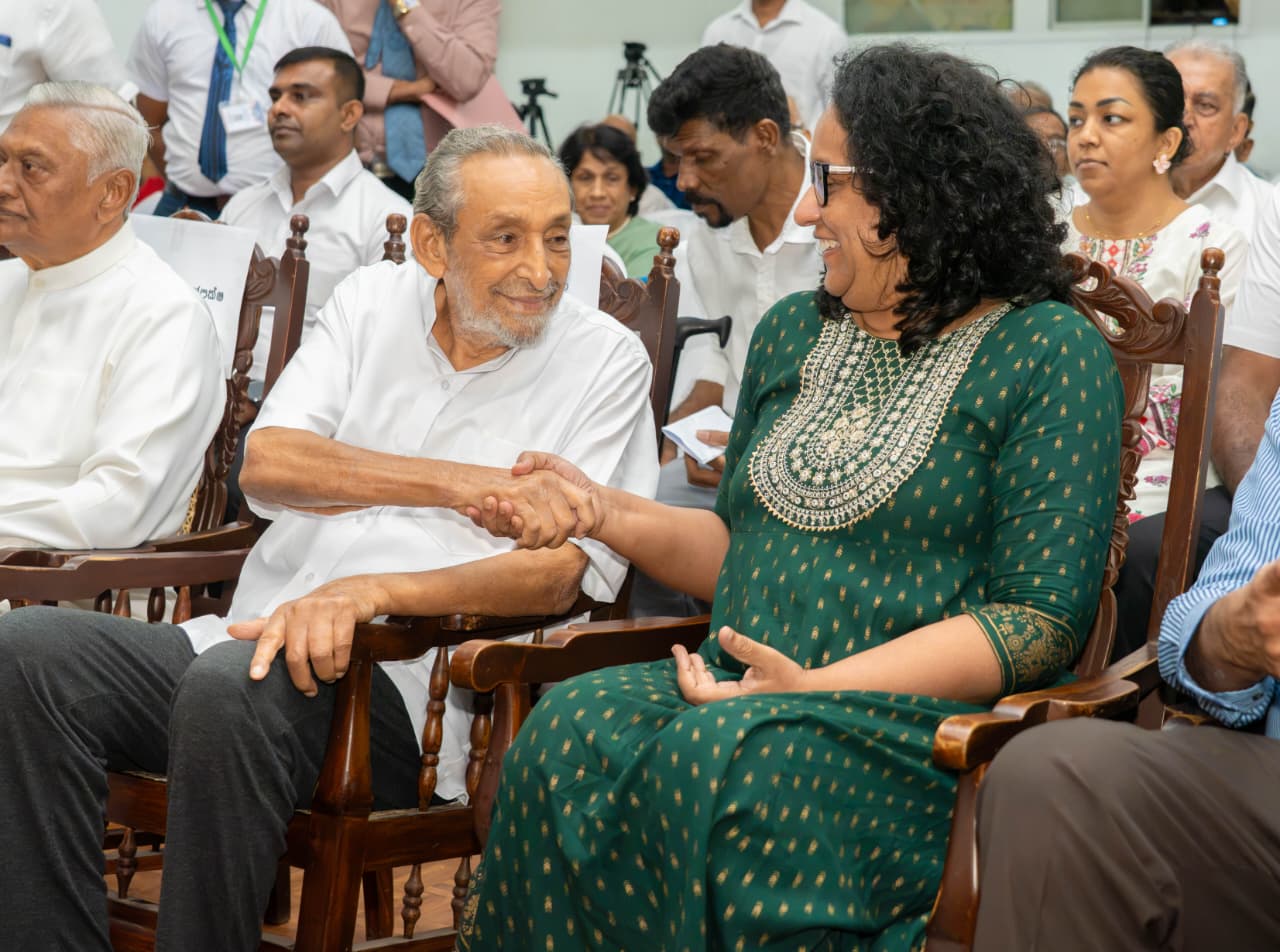
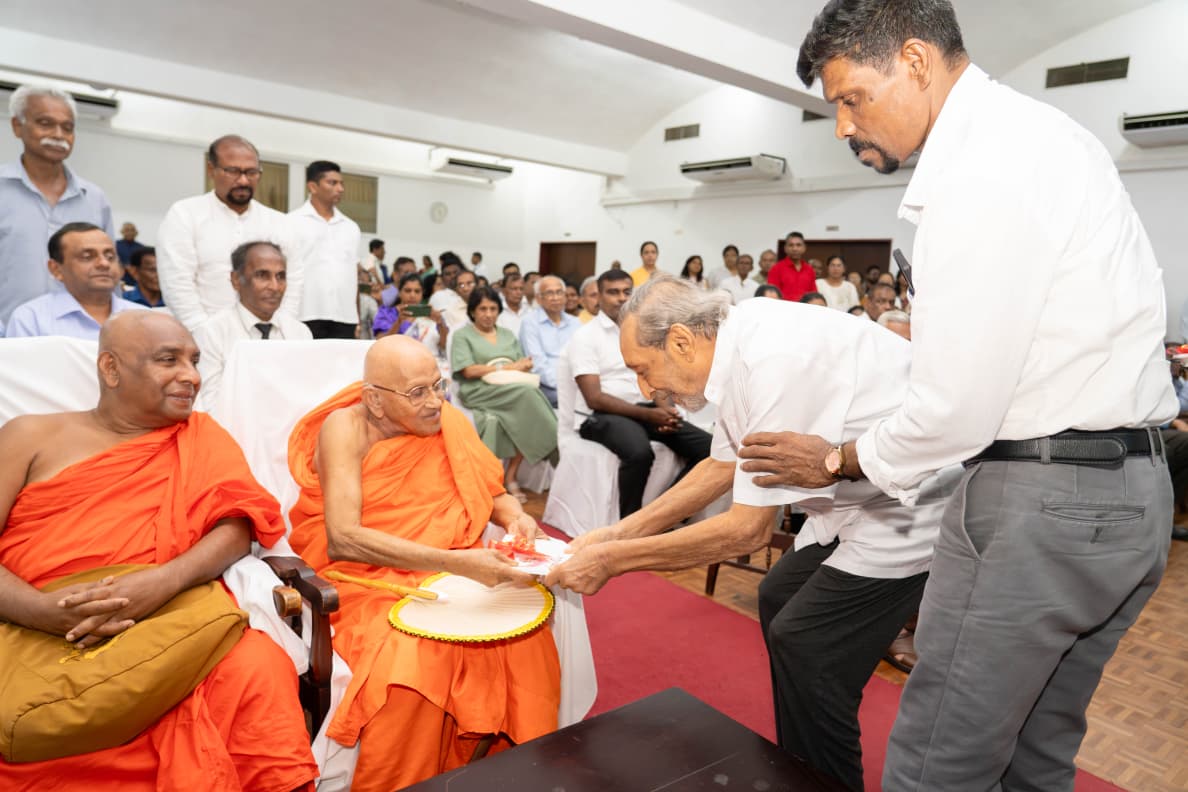
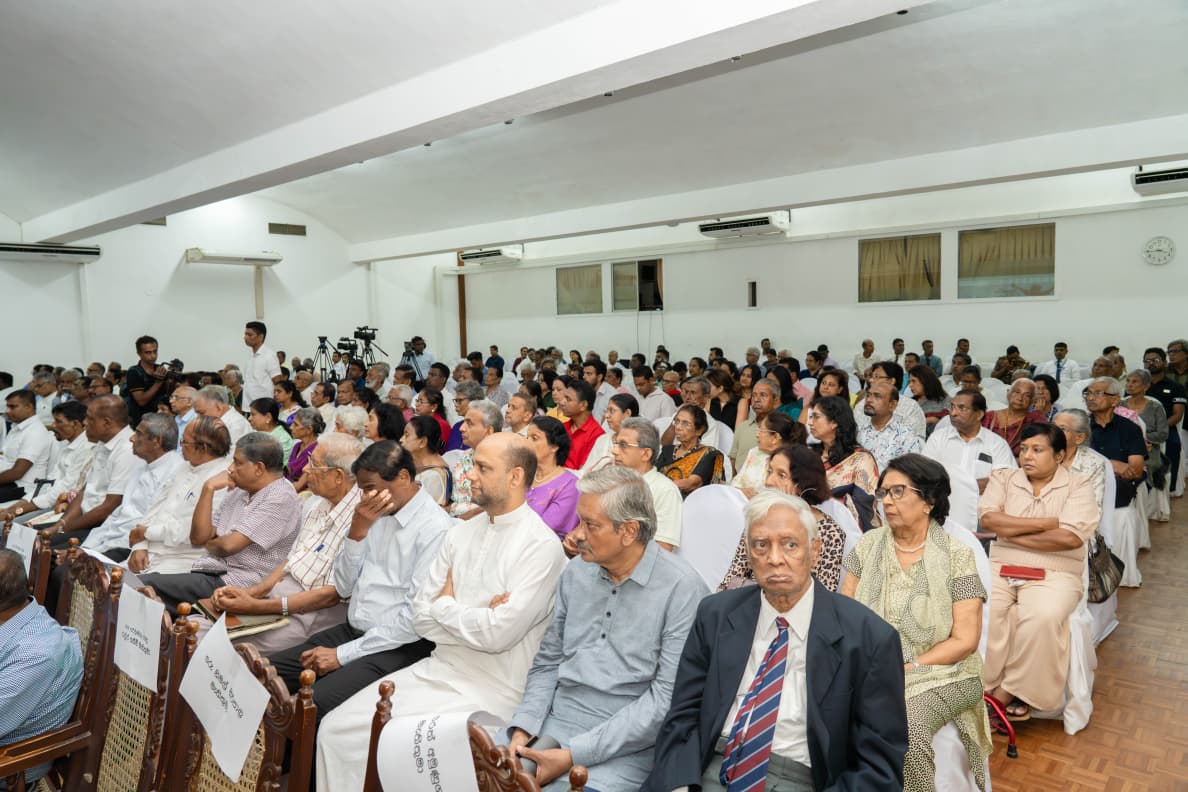
The book “Rathuwewi Mihimadala”, written based on the life story of Vasudeva Nanayakkara, Leader of the Democratic Left Front, was launched on Friday [August 28] at the Bandaranaike Memorial International Conference Hall (BMICH) in Colombo, with the participation of Prime Minister Dr. Harini Amarasuriya.
Speaking to the media afterwards about Vasudeva Nanayakkara, Prime Minister Dr. Harini Amarasuriya stated:
“Vasudeva Nanayakkara is a prominent figure in Sri Lankan politics, particularly within the left-wing political movement. There were several influential figures within the left movement, and that left-wing influence also contributed to bringing the country to where it is today. Politically, there were areas where we agreed and areas where we did not. However, I have great respect for the contribution made by Vasudeva Nanayakkara to left-wing politics. When I entered Parliament in 2020, Vasudeva Nanayakkara was also in Parliament. We sat in the same row, and we spoke about many important as well as interesting moments in his political career. I believe some of these experiences have also been included in this book.”
The event was attended by members of the Maha Sangha, Minister of Justice Harshana Nanayakkara, former President Maithripala Sirisena, former Speakers Karu Jayasuriya and Chamal Rajapaksa, as well as party members, family members and friends.
[Prime Minister’s Media Division]
Latest News
Sun directly overhead Mannar, Periyamadu, Puliyankulam, Welioya and Pulmoddai about 12.11 noon today (30)


The sun is going to be directly over the latitudes of Sri Lanka from 28th of August to 07th of September due to its apparent southward relative motion.
The nearest places of Sri Lanka over which the sun is overhead today (30) are Mannar, Periyamadu, Puliyankulam, Welioya and
Pulmoddai about 12.11 noon.

Petrol to cost less from midnight today (30)

Head teacher evacuated 900 children minutes before school washed away by Nepal floods

UPDATE: Seven killed and 23 missing after boat capsizes off northern Cyprus, says Turkish Cypriot PM

Iceland votes against restarting talks on joining EU

“Rathuwewi Mihimadala” Book Launched with the Participation of the Prime Minister

Turkiye, Somalia forces free cargo vessel hijacked by pirates

‘Dates have the highest sugar content to fight Coronavirus’

Sunday Island 27 December – Headlines

#SundayIsland 17th December – Headlines

Sunday Island – 28th March

Sunday Island Headlines – 21 March

Sunday Island – 21st February – Headlines
-

 News6 days ago
Missing doctor’s body found in Mahiyanganaya
-
 News6 days ago
Australia declines to release Finance Secy Suriyapperuma’s citizenship details
-
 News6 days ago
22A: BASL suggests CJ recuse himself from hearing petitions
-

 News3 days ago
Eight politicians in drug kingpin probe
-

 Editorial7 days ago
Govts. drag feet as undergrads age
-
 Features5 days ago
Insights from Chieftains of Uva: Genealogy of two Kandyan Families – Part II
-

 Business3 days ago
Sri Lanka opens up: A new season of direct connectivity
-

 Features3 days ago
Redefining ageing in Sri Lanka