
News
NGO to move SC against acquittal and discharge of first accused

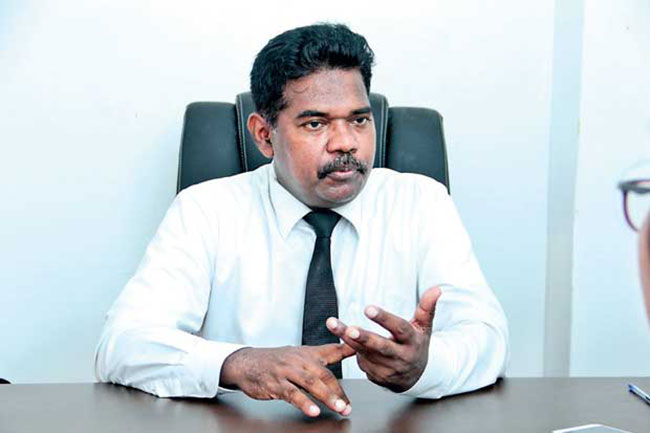
Welikada Prison killings
‘The BASL should make its position clear now’
By Shamindra Ferdinando
Chairman of the Committee to Protect the Rights of Prisoners, Attorney-at-Law, Senaka Perera, says his outfit will soon move the Supreme Court against the acquittal and discharging of Inspector Neomal Moses Rangajiva, the first accused in the Welikada Prison killings.
The civil society activist, in a brief interview with The Island, over the weekend, said that the relatives of those who perished in the violence in the Welikada Prison compound on Nov 09 and 10, 2012, had requested him to pursue this matter.
 Colombo High Court Trial-at-Bar last Wednesday (12) sentenced to death ex-Welikada Prisons Chief Lamahewage Emil Ranjan over the Welikada killings. He was the second accused in the high-profile case, whereas Rangajiva, at that time attached to the Police Narcotics Bureau (PNB), was acquitted and released from all charges.
Lawyer Perera said that as the verdict had been given by a Trial-at-Bar, the appeal would have to be made to the Supreme Court. The Trial-at-Bar bench comprising High Court judges Gihan Kulathunga (President), Pradeep Hettiarachchi and Manjula Thilakarathna was unanimous in its decisions.
The Trial-at-Bar said that the prosecution failed to prove its case against the PNB officer beyond reasonable doubt.
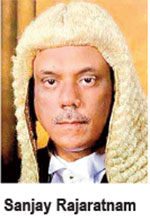
Responding to questions, Senaka Perera said that if it hadn’t been a Trial-at-Bar, his group would have moved the Court of Appeal. Senaka Perera explained: “We intend to write to Attorney General Sanjay Rajaratnam, PC, in this regard. We are of the view the AG should appeal against the acquittal and discharging of Rangajiva. However, if the AG refrained from doing so, the Committee to Protect the Rights of Prisoners will accept the responsibility.”
In terms of the Trial-at-Bar proceedings, the eight prison inmates who were killed in the incident are Kankanmalage Malinda Nilendra Pelpola alias Malan, Attapattu Sangakkara Nirmala Atapattu, Mohammed Wijaya Rohana alias Gundu, Chinthamani Mohottige Thushara Chandana alias Kalu Thushara, Asarappulige Jothipala alias Ponna Kapila, Harshan Sri Manakeerthi Perera alias Manju Sri, Raigamage Susantha Perera alias Mala Susantha, Devamullage Malith Sameera Perera alias Konda Amila.
However, lawyer Senaka Perera said that altogether 27 inmates had been killed after the deployment of the Special Task Force (STF) and the Army inside the Welikada Prison. According to official records, in addition to 27 deaths, at least 43 other inmates received injuries. The then Prisons Minister Chandrasiri Gajadeera informed Parliament of the deaths of 27 inmates.
The then Police Spokesman SSP Prishantha Jayakoday said that inmates had triggered violence as the STF was looking for drugs and hand phones inside the prison.
The Attorney General filed indictments against IP Rangajeewa, Lamahewage Emil Ranjan and Indika Sampath, an officer attached to the Prisons intelligence unit under 33 counts, including committing murder, conspiring to commit murder after being members of an unlawful assembly.
The Court proceeded in spite of the third accused Indika Sampath who managed to evade the police so far.
The human rights activist recalled how Chief Justice Jayantha Jayasuriya, PC, named a Trial-at-Bar to hear the Welikada case on a request made by Rajaratnam’s predecessor, Dappula de Livera, PC. The latter made the request in late June 2019. Rajaratnam succeeded de Livera in late May 2021.
The Prisons Department and the Justice Ministry couldn’t absolve themselves of the responsibility for ensuring safety and security of those in their care, lawyer Senaka Perera said. Those who had been remanded and sentenced could be serious offenders and some may even deserve a death sentence but the State shouldn’t under any circumstances resort to extra judicial measures, the public litigation activist said.
Lawyer Senaka Perera said that he believed the Bar Association of Sri Lanka (BASL) should examine the Welikada case and make its position known to the public. “Perhaps, the BASL, too, should consider moving the SC against the acquittal and discharging of the first accused,” the lawyer said.
Lawyer Senaka Perera said that before the former AG made an intervention the progress in investigations had been slow. In fact, real progress was made since 2017, two years after the change of government following the 2015 presidential election, the lawyer said, alleging that the powers that be continuously hindered the investigations.
According to lawyer Perera and other sources, there had been four separate investigations at different levels beginning with the one launched by the Criminal Investigations Department (CID) immediately after the Welikada killings. Subsequently the then Prisons Minister the late Chandrasiri Gajadeera named a three-member team to inquire into the Welikada killings. The committee comprising retired High Court judge Bandula Atapattu, retired DIG Gunasena Thenabadu and Prisons Ministry Legal Officer Lalith Andrahannadi produced two reports in Feb 2013 and Nov 2013. There had been two other investigations ordered by the then Prisons Chief P.W. Kodipillai and the Human Rights Commission.
Lawyer Senaka Perera said that the four investigations undertaken during the Rajapaksa administration should be examined. The lawyer emphasized the importance of appraisal of the investigations as the Trial-at-Bar declared that the progress had been made only since 2017.
In addition to those four investigations, there had been another report prepared by the three-member committee comprising retired High Court judge Wimal Nambuwasam, retired Senior DIG Asoka Wijeyatilleke and senior public servant S.K. Liyanage. Appointed on January 22, 2015, less than two weeks after the presidential election, the committee handed over its report to the then Prime Minister Ranil Wickremesinghe and Justice Minister Dr. Wijeyadasa Rajapakse, PC, on June 09, 2015 as the latter appointed it.
Lawyer Perera said that the former Prisons Chief claimed that the inmates after having broken into the Prisons armoury seized weapons, including machine guns.
The activist pointed out that the 2012 incidents were the worst since the 1983 massacre of Tamil terrorist suspects. The public have lost faith in law enforcement authorities and the political leadership regardless of the party that held power, the lawyer said. There couldn’t be better example than how the current dispensation handled the then State Minister for Prisons Lohan Ratwatte’s ‘raids’ on Welikada and Anuradhapura prisons in September last year.
The report prepared by retired High Court judge Kusala Sarojini Weerawardena into the incidents involving Ratwatte should be made public as the police were yet to at least record the State Minister’s statement, lawyer Perera said.




Latest News
Sun directly overhead Neriyakulam, Punewa, Kebithigollewa, Pankulam and Sinhapura at about 12.10 noon today (31)


The sun is going to be directly over the latitudes of Sri Lanka from 28th of August to 07th of September due to its apparent southward relative motion.
The nearest places of Sri Lanka over which the sun is overhead today (31) are Neriyakulam, Punewa, Kebithigollewa, Pankulam and Sinhapura about 12.10 noon.


… highlights injustice caused to Justice R. Gurusinghe
The Bar Association of Sri Lanka (BASL) has alleged that due to the failure on the part of President Anura Kumara Dissanayake to fill the existing vacancies in the Supreme Court, a Senior Justice of the Court of Appeal, Justice Dhammika Ganepola, retired at the age of 63 without being considered for, or granted, a promotion to the Supreme Court, to which he was well entitled. The BASL pointed out at the time of Ganepola’s retirement there were four vacancies in the Supreme Court.
In a letter dated 17 August, 2026, addressed to President Dissanayake, the BASL declared that the failure to promote and recognise Ganepola’s distinguished judicial service, resulting in his retirement at the age of 63, is indeed a loss to the Judiciary.
A top BASL spokesman told The Island yesterday (30) that the Bar Council, over the weekend, had decided to release the hitherto confidential letter.
The official said that they also wanted to remind the President of his assurance given to BASL, on 12 August, 2026, that vacancies in the Supreme Court and Court of Appeal would be filled as soon as possible, within a month.
The following is the text of the BASL letter, signed by Rajeev Amarasuriya, President, BASL, and its Secretary Nalin De Silva: “We write further to our letters dated 29th December 2025 and 30th June 2026 in relation to the above, to which we have not received any response.
We also refer to our meeting with Your Excellency on 12th August. As discussed during the meeting, there have been vacancies in the Supreme Court since May 2025, and the number of vacancies has now increased to four (04). There are also four (04) vacancies in the Court of Appeal. These are all matters we have already written to Your Excellency about.
Your Excellency informed the BASL Delegation when we met that you would be taking steps to make recommendations to fill these vacancies as soon as possible, within a month.
We write to reiterate the importance of giving due consideration to the criteria set out in our aforesaid letter dated 29th December 2025. We also wish to emphasise that, in making judicial appointments and promotions, seniority should be given due priority, in keeping with longstanding practice, until such time there are objective and defensible guidelines governing the assessment of merit.
The only justifiable departure to this criterion would be where there exists a specific and recognized demerit in respect of the particular Judge concerned or such other known compelling circumstances that are objectively identifiable such as where a Judge has previously been overlooked for promotion unfairly or conversely, where a Judge has been unfairly previously granted promotions above others.
This approach will safeguard both the integrity of the Judiciary and the trust reposed in it by the public.
Further, while there has been considerable discussion and representation by the Government regarding the importance of retaining experienced judges, as reminded to Your Excellency at our said meeting that, only a few months ago on 8th May 2026, a Senior Justice of the Court of Appeal, Justice Dhammika Ganepola, retired at the age of 63 without being considered for, or granted, a promotion to the Supreme Court, to which he was well entitled, and in which there were four vacancies at the time.
The failure to promote and recognise his distinguished judicial service, resulting in his retirement at the age of 63, is indeed a loss to the Judiciary.
We also drew Your Excellency’s attention at the said meeting to the fact that the Senior-most Justice of the Court of Appeal, Justice R. Gurusinghe, who joined the Judicial Service in 1996, who also Acted in the Office of President of the Court of Appeal (appointed by Your Excellency) on 11th May 2026, is due to retire at the end of this month. In fact, we learnt through the Media that Her Ladyship then Chief Justice Justice Murdu Fernando, PC, had previously in July 2025 recommended to Your Excellency the promotion of Justice R. Gurusinghe to the Supreme Court, but the same is pending from that time.
He too is well deserving of promotion to the Supreme Court and has already been recommended by the former Chief Justice, and his case must also receive due and urgent consideration before his impending retirement.
We hope that Your Excellency will take due note of and give due regard to the concerns of the Bar, as well as to the established principles, practices and conventions governing judicial appointments, when taking steps to fill these vacancies.
On this, Your Excellency is already open to the accusation that these vacancies have been kept open, to fill with favourites of the Government which is yet another serious indictment on the independence of the judiciary which accusation would be confirmed if recommendations are made outside established practice.
Moreover, the BASL expresses grave concern that withholding promotions of Judicial Officers for extended periods of time places undue pressure on Judicial Officers in the discharge of their duties and constitutes both directly and indirectly, interference with the independence of the Judiciary, in addition to the strain obviously caused to the dispensation of justice in other Courts and the stifling and delay of career progression of Judges legitimately entitled to promotions.
We do hope that Your Excellency would take due note and cognizance of the foregoing when effecting these judicial promotions which have been long overdue and which have already adversely impacted the efficiency and effectiveness of the administration of justice.”
The BASL has copied the letter to Prime Minister Dr. Harini Amarasuriya, Speaker Dr. Jagath Wickremaratne, Opposition Leader Sajith Premadasa and all members of the Constitutional Council.

Opposition Leader Sajith Premadasa on Saturday (29) challenged the government to hold the long-delayed Provincial Council elections, saying the polls would provide an opportunity to gauge the level of public support enjoyed by the administration.
Addressing a farmers’ meeting in Tissamaharama, Hambantota, Premadasa also criticised the latest Rs. 17 per kilogram increase in wheat flour prices, warning that it would push up the prices of bread, bakery products and other flour-based food items and place further pressure on households already struggling with the rising cost of living.
He said Sri Lanka ranked 120th among 130 countries in an international comparison of minimum wages, arguing that wages remained inadequate to meet the escalating cost of living.
Premadasa also questioned official assessments of living standards, asking whether a person could survive for an entire month on Rs. 17,315, a figure he attributed to the Department of Census and Statistics.
He claimed that between 30 and 40 percent of the population was living in poverty and called for a clear programme to help affected families improve their economic conditions.
Turning to the proposed 22nd Amendment to the Constitution, which seeks to increase the retirement age of superior court judges, the Opposition Leader accused the government of attempting to undermine judicial independence and interfere with democratic institutions.
He also criticised the government’s handling of poverty, employment, agriculture, healthcare and investment, saying more effective measures were needed to provide relief to people facing economic hardships.Premadasa called for stronger policies to attract foreign direct investment and urged the government to formulate a national strategy for developing the tourism industry.

Showers will occur in the Western, North-western and Sabaragamuwa provinces and in Galle, Matara, Kandy and Nuwara-Eliya districts.

Sun directly overhead Neriyakulam, Punewa, Kebithigollewa, Pankulam and Sinhapura at about 12.10 noon today (31)

BASL takes exception to Justice Ganepola being denied a place in SC

Sajith challenges govt. to hold PC polls

Mahendran denies name change allegation

US strikes Iran’s Larak Island in first attack in weeks

‘Dates have the highest sugar content to fight Coronavirus’

Sunday Island 27 December – Headlines

#SundayIsland 17th December – Headlines

Sunday Island – 28th March

Sunday Island Headlines – 21 March

Sunday Island – 21st February – Headlines
-

 News6 days ago
Missing doctor’s body found in Mahiyanganaya
-
 News6 days ago
Australia declines to release Finance Secy Suriyapperuma’s citizenship details
-

 News3 days ago
Eight politicians in drug kingpin probe
-

 News6 days ago
22A: BASL suggests CJ recuse himself from hearing petitions
-

 Features1 day ago
“Wrap Me Up in My Blazer”— A Gentlemanly Bradby Reminiscence
-

 Business3 days ago
Sri Lanka opens up: A new season of direct connectivity
-
 Features5 days ago
Insights from Chieftains of Uva: Genealogy of two Kandyan Families – Part II
-

 Features3 days ago
Redefining ageing in Sri Lanka