
Business
Northern fishermen switch to China-backed sea cucumber boom

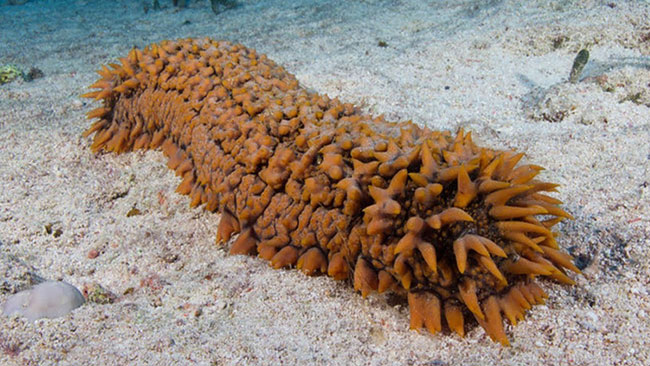
ECONOMYNEXT – Over 600 fishermen in Sri Lanka’s former northern war zone have switched to sea cucumber farming, a booming trade, in the coastal belt of Jaffna and Kilinochchi where a Chinese firm started a hatchery five years ago.
China’s joint venture Gui Lan hatchery in Jaffna’s coastal village of Ariyalai was started when many northern fishermen were finding it harder to catch large fish which is blamed on outlawed bottom trawling employed by Indian vessels.
The fishermen were given one-month-old small sea cucumbers from the hatchery, which were grown in their usual fishing spots in the sea.
N Dhivakaran, president of Jaffna District Sea Cucumber Association, told EconomyNext that over 600 fishermen have now started sea cucumber farming after they saw the potential for a steady income in the new venture.
“There are investors for sea cucumber farming. Now the fisheries ministry also promotes sea cucumber farming through incentives,” said Dhivakaran.
Dhivakaran maintains a 10-acre farm near the Gui Lan hatchery in Ariyalai. He now sells between 2,000 and 3,000 sea cucumbers a month, earning between 60,000 and 90,000 rupees in revenue.
“We sell a sea cucumber once it reaches 300 grams in weight,” he said. “I started the farm with 40,000 small sea cucumbers and now the hatchery’s production is not enough. So I try to get additional sea cucumbers from other sea areas.”
A 300 gram sea cucumber is sold for around 400 rupees to local agents who export them to countries like Singapore and Hong Kong.
“We do not have the proper certification process to export them directly to China. Our sea cucumbers go through that certification process in Singapore and Hong Kong before they are exported to China. So we are losing some foreign exchange because we do not have the certification process.”
China had been long awaiting an entry into Sri Lanka’s former northern war zone to strengthen its foothold in Sri Lanka, analysts and government officials have said.
Gui Lan Hatchery was its first project in the North, a project that’s being touted as assistance to revive the livelihoods of northern fishermen. Some legislators in the North, however, have raised concern over growing Chinese presence in the former war zones where India has historically had held more sway given in strong cultural and religious ties.
But fishermen now appreciate the Chinese move mainly because of a lingering Indian bottom trawling issue that has hit their livelihoods hard.
“We have provided over 170,000 small sea cucumbers to fishermen in both Jaffna and Kilinochchi district,” Sri Ganeshan, the officer in charge at the Gui Lan hatchery told EconomyNext.
“There is a huge demand now and many people are waiting to register companies and start sea cucumber farming. The Chinese have been educating us on the technology to produce sea cucumbers and it has been helping a lot of people now.”
Sea cucumbers are considered a delicacy in the Far East, with a majority of consumers in markets like China, Hong Kong, Taiwan, Singapore, Korea, Japan and Malaysia. In China, high quality specimens can occasionally fetch over 3,000 US dollars per kilogram after being cooked.
Demand for sea cucumber in the international market is growing even though it is only now being popularized among the Sri Lankan community. The price of one kilogram of sea cucumber in the international market garners a value of Rs 20,000 to 30,000.
Gui Lan is the first hatchery in Sri Lanka to mass-produce high value sandfish sea cucumber for commercial farming. Most sandfish sea cucumbers are depleting due to overexploitation, and hatchery bred juveniles are given to farmers to grow in their respective farms.
These factors have boosted the drive to grow more sea cucumbers and people like Dhivakaran want to expand their farming because of the return.
“I am going to start breeding sea cucumbers separately from next month,” he said.



The Ceylon Motor Traders’ Association (CMTA), established in 1919 is the most senior automotive association in Sri Lanka affiliated with the Ceylon Chamber of Commerce, is calling for greater consistency, transparency and fairness in the policies governing the country’s automotive sector, stressing that a sustainable vehicle import framework must ensure a level playing field across the entire industry.
The Association’s concerns come at a time when the automotive sector continues to operate under significant fiscal and regulatory pressures, with recent policy measures, including the introduction of a 50% surcharge on vehicles, adding further complexity to an already challenging market. While the CMTA recognises the Government’s need to manage foreign exchange, generate revenue and regulate vehicle imports responsibly, it believes that such measures must be structured in a manner that does not disproportionately disadvantage legitimate businesses or distort competition between different segments of the market.
At the centre of the Association’s concerns is the continued application of a blanket 15% depreciation on the Cost, Insurance and Freight (CIF) value of used vehicle imports for duty calculation purposes. The CMTA maintains that this mechanism creates an unintended advantage for certain used vehicle imports, particularly when vehicles entering Sri Lanka as used units can be virtually identical to brand-new vehicles in terms of model, specification and, in most cases, mileage.
The Association estimates that the existing depreciation mechanism resulted in approximately Rs. 40 billion in lost to government revenue in 2025 alone. Without corrective action, a similar level of revenue leakage could occur in 2026, representing a significant loss at a time when government revenue remains critical to strengthening public finances and supporting national development.
The issue, the CMTA emphasises, is not about restricting consumer choice or opposing the used vehicle market rather, it is about ensuring that vehicles entering the country are assessed fairly and consistently, based on their actual value and circumstances. When two substantially identical vehicles can attract different levels of taxation simply because one has been registered overseas before being imported, the Association believes the resulting disparity warrants policy reconsideration.
The CMTA argues that the same principle of fairness should also apply when considering the impact of newer fiscal measures, including the recent 50% surcharge. Such a substantial additional cost can have implications across the automotive value chain, affecting vehicle prices, consumer affordability, business viability and the broader ecosystem supporting vehicle sales and after-sales services.

Sampath Bank PLC announced the appointment of Dilip de S Wijeyeratne as Deputy Chairman, effective 10th September 2026, further strengthening the Bank’s leadership as it advances its strategic priorities and continues to evolve as a purpose-led, technology-enabled financial institution.
Wijeyeratne brings extensive experience across banking, finance, risk management and compliance, investment banking and treasury, complemented by a strong understanding of corporate governance, strategic planning and financial markets. His breadth of experience and forward-looking perspective will support Sampath Bank’s focus on translating purpose and strategy into sustainable growth, while advancing data-driven decision-making and the intelligent application of artificial intelligence across the organisation.
Wijeyeratne’s association with Sampath Bank spans nearly eight years. He joined the Bank as a Non-Independent, Non-Executive Director in November 2018 and was appointed an Independent Director in August 2019. He subsequently served as Senior Independent Director from May 2022 and continued as an Independent, Non-Executive Director from June 2026. He currently serves as Chairman of the Board Audit Committee and contributes to the Bank’s Sustainability, Human Resources and Remuneration, Treasury, Strategic Planning, Nominations and Governance, and Related Party Transactions Review committees.
A senior finance and banking professional and principal consultant,Wijeyeratne provides advisory services to organisations across the Middle East, Sri Lanka and Australia. His professional career includes senior roles with HSBC Group in Bahrain, where he held responsibility for finance and operations, global markets and treasury, corporate treasury sales and asset and liability management. He subsequently moved into entrepreneurship and advisory services, providing financial and strategic consultancy to private and public sector organisations.
In addition to his responsibilities at Sampath Bank, Wijeyeratne serves as Senior Independent Director of Singer (Sri Lanka) PLC and Hayleys Fibre PLC, and as an Independent, Non-Executive Director of Janashakthi Insurance PLC. His extensive governance experience across these institutions has provided him with broad exposure to financial oversight, risk, strategy and corporate governance.
Wijeyeratne is a Fellow Member of the Institute of Chartered Accountants of Sri Lanka, a Fellow Member of the Chartered Institute of Management Accountants, UK, and a Graduate Member of the Australian Institute of Company Directors. His combination of financial expertise, governance experience and strategic insight positions him to make a significant contribution to Sampath Bank’s continued growth and transformation.
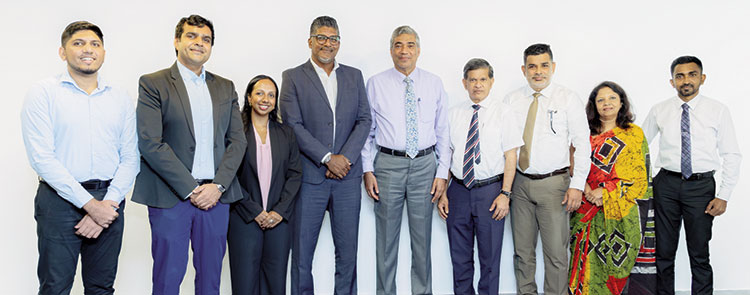
KOKO, Sri Lanka’s leading Buy Now, Pay Later (BNPL) platform, has partnered with Ceylinco General Insurance to introduce Sri Lanka’s first customised medical insurance offering designed exclusively around the needs of KOKO customers.
The partnership marks a first for Sri Lanka’s fintech and insurance sectors, bringing together Ceylinco General Insurance’s decades of expertise in health insurance with KOKO’s understanding of its customer community to create a medical protection solution built specifically for the digital lifestyle and financial needs of KOKO users.
Unlike a standard health insurance product adapted for a partner platform, this offering has been developed as a customised value package for KOKO customers, focusing on accessibility, affordability and ease of activation within the digital journey they already use. The policy provides medical insurance cover of up to USD 40,000, offering meaningful protection against hospitalisation, treatment costs and major medical expenses.

ITS Giuseppe Garibaldi’ departs Colombo

Green Climate Fund (GCF) Regional Dialogue for East and South Asia will be held from 14 to 17 September 2026 at Cinnamon Life at City of Dreams Hotel, Colombo

Showers will occur in the Western, North-western and Sabaragamuwa provinces and in Kandy, Nuwara-Eliya, Galle and Matara districts

Prof. Pieris says Buddha Dhamma recognised as source of law under Constitution

GR leaves FCID after making statement over MiG deal

Dengue cases top 97,000 in 2026

‘Dates have the highest sugar content to fight Coronavirus’

Sunday Island 27 December – Headlines

#SundayIsland 17th December – Headlines

Sunday Island – 28th March

Sunday Island Headlines – 21 March

Sunday Island – 21st February – Headlines
-

 Sports2 days ago
DDS set to lose Test captaincy
-

 Latest News7 days ago
Tharanga creates history with Diamond League crown in Brussels
-

 Features6 days ago
After the parade: What a traffic OIC’s walk-out tells us
-

 News7 days ago
Dispute which triggered listed company director being detained at BIA resolved
-

 Editorial6 days ago
Arrests as theatre
-

 News5 days ago
Thailand shuts door on undesirables from Sri Lanka
-

 Latest News6 days ago
Harshitha’s composed knock seals Sri Lanka’s semi-final berth
-

 News6 days ago
‘Choka Malli’ slips out of country before travel ban