
Opinion
Towards a future free from fears of Islamism – Part I

By Rohana R. Wasala
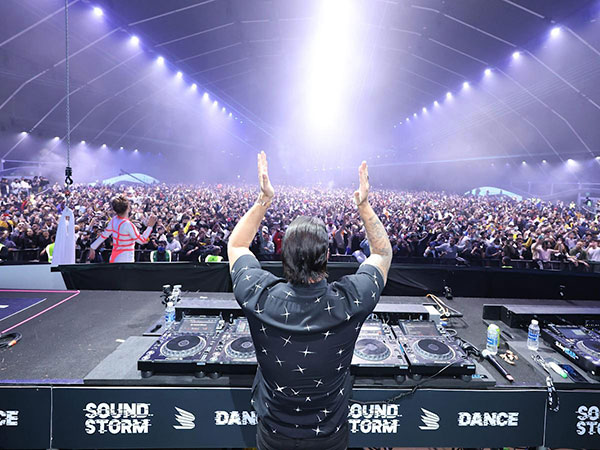
The web portal reported Tuesday December 21, 2021: “Riyadh holds 4-day EDM carnival”. Commenting on the electronic dance music extravaganza, unprecedented in Saudi Arabia, the news anchor said, “The de facto leader of the Islamic World, the Guardian of the two holiest sites in Islam, Saudi Arabia, did the unexpected this weekend. It’s through a giant rave party, a four-day electronic music festival complete with psychedelic lights and international DJs ….”. With video footage of densely packed dancing men and women taken from the exhilarating event held two or three days previously flashing across the background screen, the newscaster continued: “… the images that you see are from Saudi Arabia (where) a giant party was held in the deserts of Riyadh with the blessings and money of the Saudi royal family, the House of Saud. They fully endorsed and sponsored this carnival. It was attended by artistes from all over the world. Tiesto, Martin Garrix, David Guetta, Afrojack … you name them, the world’s leading DJs, performed at the rave. Their excitement was evident in their statements”. One of the DJs was heard saying: “It was the first time that there was going to be women and men being able to dance together, and there was also a very historical moment, and I am happy to be part of this …. Of course, there’s more things to be done to improve the country, but I think they are opening, are really going to the right direction, giving more rights to women, like four years ago women couldn’t drive …. they can come and dance…. It’s a huge evolution…”.
That was what one of the DJs taking part in the massive musical show said about its underlying significance for a socio-culturally changed future for the kingdom, the birth place of Islam, with a previous reputation as the exporter of Islamic fundamentalism. The news presenter then dwelt on the fact that the exuberant Western type of music festival in the traditionally conservative Saudi Arabia did indeed symbolise a ‘huge evolution’. She went on:
(QUOTE) “Saudi men and women dancing with abandon, swaying to the beats of Western music, no gender segregation, no full-length robes, no face veils, no any religious restrictions for that matter…. All this was unthinkable in Saudi Arabia just a few years back. Now it is happening … By the way, this rave party comes close on the heels of the … Red Sea International Film Festival, the first of its kind to be held in Saudi Arabia. It was a star-studded affair with women walking the red carpet in sleeveless gowns, a woman film-maker winning the Best Director award, and an openly queer man winning the Best Actor award … What do you make of these changes? The sands are shifting in Saudi Arabia, it’s evident. The socially conservative kingdom is trying to shake off its regressive image. It’s limiting the rule of religion in public life and fitting itself as a modern liberal and tourism-friendly kingdom. And this, we say, is a welcome change. Although critics of Saudi Arabia say it’s a facade (and) insist (that) the Saudi society is not making any fundamental meaningful change…., ever since Mohamed bin Salman was made the Crown Prince in Saudi Arabia, he’s embarked on a liberalisation drive, with loosened gender segregation norms, he’s reopened cinemas, allowed women to drive, to go to stadiums, take the haj without a male guardian….In a way MBS has defanged the country’s religious police that not too long ago would dictate every facet of daily life. And those are all remarkable reforms, they deserve applause…. But, I have also to say they are only half-measures, and very late at that. Some very problematic issues persist in the Saudi society. Saudi Arabia continues to arrest dissidents, …to extend prison terms of activists. It continues to detain the rich on allegations of corruption, a tinkering with power structures, arbitrary reshuffling whom the Crown Prince thinks are potential challengers. Political reform remains taboo …” (END OF QUOTE)
The foregoing is based on a news item from an independent online news source that represents the international free media. The comments on the piece of news are those of the newscaster, about which we listeners and viewers may or may not agree with her, or regarding which we may just remain neutral. But the piece of news is true, and so is what she says about the Saudi Crown Prince’s commitment to a ‘liberalisation drive’ and his determination to rid his country of its ‘regressive’ image. What it indicates is that the tide is turning against violent Islamic extremism. It is the same in other countries, too. Isn’t this good news for people all over the world who are faced with forms of violent Islamism? For, against this global anti-extremist background, we need not entertain exaggerated fears about the menace or resort to measures that are likely to breathe new life into it, instead of letting it die a natural death.
The Saudi Crown Prince Mohamed bin Salman’s brave initiative is an extremely praiseworthy example in a world where, in spite of the steadily rising awareness, particularly among the educated youth, of the dangerous insanity of excessive religiosity and the increasing rejection of its political backers and sympathisers by the civilised world, the backward ruling classes seem to believe that they are required to tolerate or even appease the few extremists in order to win the hearts and minds of the ordinary faithful. The Saudi leader’s reformist gestures make good news for non-Muslim majority countries, including Sri Lanka, where a few opportunistic Muslim politicians maintain secret dealngs with extremists while pretending that they had nothing to do with them.
It was justly suspected by many around the time of the 2019 Easter Sunday suicide bombings (i. e., both before and after the unspeakable horror) that a handful of opportunistic Sri Lankan Muslim politicians with a communal mindset were maintaining treacherous links with suicide-bombing extremists for personal political advantage. It is now well known that these sham champions of Muslims try to create the illusion of a non-existent Buddhist-Muslim conflict or disharmony in the country through false propaganda, which is a part of their scheming to position themselves between foreign donors inspired to genuinely help their Sri Lankan co-religionists that, they have been persuaded to wrongly believe, are being persecuted by the Sinhalese Buddhist majority. All our political, civil and religious leaders need to unite to convince the leaders of friendly Islamic nations not to be misled by these duplicitous, self-seeking Muslim politicos who ultimately betray not only the interests of Sri Lankan Muslims whom they claim to represent, but those of the whole nation.
I dealt with this subject in ‘MWL should separate the wheat from the chaff’/The Island/ May 4, 2021), where I wrote: “What should be of greater concern for the government is the fact that, by contriving to get themselves identified as constituting the whole Muslim community of the country, the handful of Islamist extremists who are widely believed to have provided tacit or explicit support for the suicide bombers are also foisting themselves on its (the MWL’s) powerful patronage”. By “the wheat” in the title I meant the traditional Sri Lankan Muslim minority who have co-existed peacefully with the majority Sinhalese Buddhists and other minority communities over the centuries; by “the chaff” I meant opportunistic Muslim politicos who secretly associate with extremists, while masquerading as champions of the generality of peaceful Muslims. These duplicitous Muslim politicos manage to enjoy the best of both worlds by making shrewd changes of their loyalty at the right time to join the incoming administration, under whichever major party’s leadership it gets formed. Leaders of both major parties don’t hesitate to cut deals with these communalist Muslim politicians at critical moments.
This reminded me of certain statements that businessman-turned-politician Shiraz Yunus made recently which were critical of the government, of which he is a partner. He attacked the government while claiming to be Prime Minister Mahinda Rajapaksa’s national coordinator for Muslim affairs. The PM’s media division has since denied that Yunus holds any position in the government and that he was expressing his individual personal opinions.
This is according to a statement in Sinhala from the Prime Minister’s Media Division published in the online news portal lankacnews on December 4, 2021 (a day after the Sialkot incident); it was signed by Rohan Weliwita, the PM’s Media Secretary. The statement was carried under a headline that translates into English as “Mr Shiraz Yunus has not been appointed to any post in the Prime Minister’s Office”:
QUOTE
I wish to announce that Mr Shiraz Yunus does not work as a coordinating secretary to the Prime Minister; such a position has not not been granted by the Prime Minister’s Office.
This is to declare that the PM’s Office has no connection with the statements that Mr Shiraz Yunus makes claiming that he serves as the PM’s coordinating secretary.
Meanwhile, he has not been given a post of any description in the PM’s Office.
I wish to further state that his statements are completely personal and that neither the Prime inister nor the Prime Minister’s Office endorses those ideas.
END OF QUOTE
Why shouldn’t we ask the PM’s media unit to tell it to the marines? This is hardly more than mere wordplay. In the following YouTube interview published more than five weeks ago, Shiraz Yunus didn’t ever once refer to himself as a coordinating secretary; he claimed to be the Prime Minister’s ‘National Coordinator for Muslim Affairs’. This interview took place more than a month before Priyantha Kumara was lynched by an Islamist mob. By denying after more than one month what Yunus never claimed (he never said he is/was acting as PM’s “coordinating secretary” for Muslim affairs), the PM’s media unit seems to be trying to eat the cake and have it, too. Did it have to take a heinous crime, like beating to death an helpless man and desecrating his dead body by burning it on a main road in Pakistan on December 3, 2021, by a lynch mob for alleged blasphemy for the PM (who is also the Minister of Buddha Sasana) to dissociate himself at long last from Yunus’s baseless attacks on the Gotabaya loyalist faction in the government? Yunus’s criticisms include the false charge of anti-Muslim discrimination as allegedly exemplified in the mandatory burning of Covid-19 dead ignoring the religious sensitivities of the Muslims. Government and Opposition leaders have an unavoidable responsibility to ensure the protection of the non-Muslim majority of the population and the moderate Muslims from the excesses of Islamist extremists. Politicians, please don’t sacrifice these innocents on the altar of political correctness to please the opportunistic ruling elite of the Muslim community.

What India chooses to do with the strategic freedom it has built over eight decades may be the defining question of its next phase
 by Milinda Moragoda
In the emerging global economy, countries will increasingly seek multiple sources of energy, technology, capital, minerals and markets. India can contribute by helping create an open network rather than another exclusive bloc.
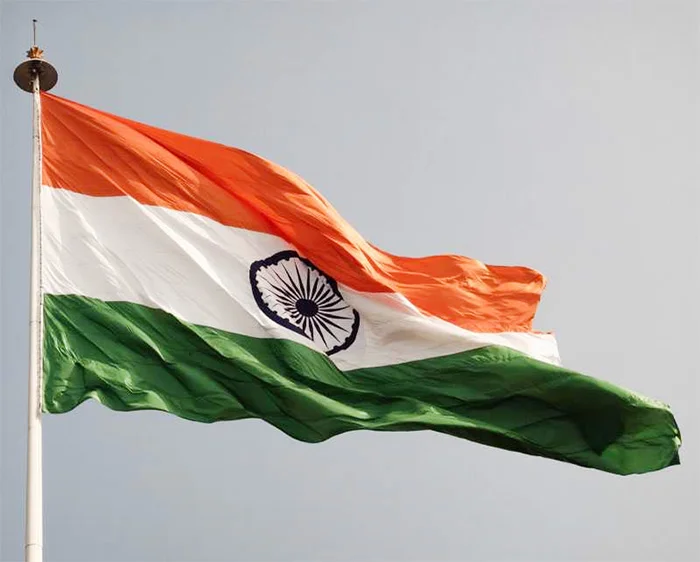
As India marks eight decades of Independence, its strategic position has changed almost beyond recognition. Yet the central question of strategic autonomy remains. What India chooses to do with the strategic freedom it has built over eight decades may be the defining question of its next phase.
India has spent the past decade expanding its strategic choices — deepening ties with the US, Europe and Japan while maintaining important ties with Russia and strengthening engagement with the Gulf, Africa and Southeast Asia. Australia and New Zealand are also becoming increasingly important partners in the wider Indo-Pacific. At the same time, India has sought a larger voice for the developing world in international institutions. Strategic autonomy has traditionally been understood in diplomatic terms: the ability to maintain freedom of action without being drawn into competing power blocs. In an increasingly interconnected world, however, that freedom will depend just as much on economic choices.
The objective should be strategic interdependence — building sufficiently diverse relationships that dependence on any one country or economic system does not become a vulnerability. India is unusually well placed to pursue this. Its geography connects the Gulf and wider West Asia, the manufacturing economies of Asia, Africa across the Indian Ocean and the Eurasian space extending through Russia. The opportunity, therefore, is to become a connector between economies increasingly fragmented by geopolitical competition.
India’s relationship with Japan is extending into advanced manufacturing, technology, energy, semiconductors and critical minerals. Its engagement with the US is deepening across technology, investment, advanced manufacturing, energy and strategic cooperation, while its engagement with Europe is becoming increasingly economic and technological. Its relationships with the Gulf are expanding beyond energy into investment and connectivity. Australia and New Zealand add an important southern dimension to its wider Indo-Pacific engagement, while Southeast Asia provides pathways into wider Asian production networks.
Russia remains an important part of this equation. India’s continuing engagement with Moscow, alongside its deepening relationships with Washington, Tokyo, Europe and the Gulf, demonstrates that strategic autonomy gives India the flexibility to maintain important relationships across geopolitical divides.
China inevitably occupies a special place in this landscape. India’s answer cannot be either excessive dependence or complete separation. It will require strengthening domestic capabilities, diversifying supply chains and building partnerships elsewhere, while retaining space for engagement where interests permit.
India possesses another asset that few countries can match: a large, globally active and influential diaspora. Yet the diaspora can also present challenges, as political currents within these communities do not always align with India’s interests and can occasionally create sensitivities in its relations with host countries. The greater opportunity lies in nurturing the economic, intellectual and cultural connections the diaspora can create, while respecting its diversity and independence. In the emerging global economy, countries will increasingly seek multiple sources of energy, technology, capital, minerals and markets. India can contribute by helping create an open network rather than another exclusive bloc.
Ports, shipping routes, energy corridors, digital infrastructure, supply chains and trade agreements increasingly shape strategic influence. India’s challenge is to bring these strands together without turning them into a closed sphere of influence.
India’s economic rise will be more sustainable if other countries see themselves as participants in its growth rather than simply as markets for it. The value for India lies in making these relationships complementary rather than choosing among them. India’s leadership of the Global South can now move beyond representation in international forums towards creating an international economic environment in which developing countries have greater choices. India’s own experience is relevant here. It has moved from a relatively closed economic model towards deeper global integration while retaining a strong emphasis on domestic capability. The lesson is that openness and strategic autonomy need not be contradictory.
As the G20 meets again in Miami in December, India can continue to argue that the Global South should not merely seek greater representation within existing institutions, but a greater stake in shaping the economic networks and institutions of the future. An economically integrated Indian Ocean could allow countries such as Sri Lanka, Bangladesh and the Maldives to participate more deeply in regional supply chains, logistics, energy, tourism, technology and services. Influence based on shared prosperity is more durable influence based on dependence. India’s strategic opportunity, therefore, lies in becoming one of the principal connectors of a changing world.
(Milinda Moragoda is founder of the Pathfinder Foundation, strategic affairs think tank, and can be contacted via email @milinda.org.)
Courtesy Hindustan Times
by By Kasun Kariyawasam
and Shiran Illanperuma
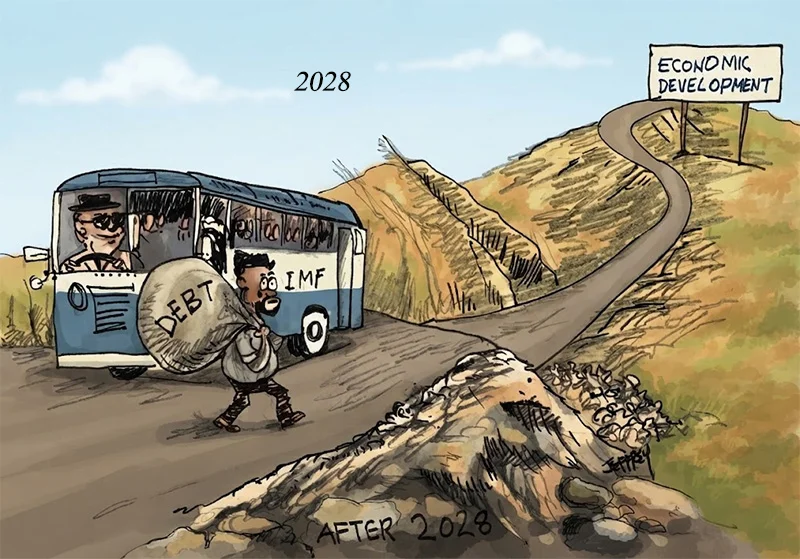
In March 2027, Sri Lanka’s Extended Fund Facility with the International Monetary Fund (IMF) will expire. It is the seventeenth arrangement the country has entered into with the Fund since 1965. That number is not a footnote; it is the argument. Sixteen previous left the underlying structure of the economy intact – an economy that imports what it consumes, exports what it cannot process further, and borrows to cover the difference. Each programme ended, and the conditions that produced it reassembled themselves.
The seventeenth has been the most invasive. Approved on 20 March 2023, in the aftermath of the sovereign default and the uprising that followed, it arrived at a moment of maximum leverage for the creditor and minimum room for the debtor. Fiscal consolidation was achieved primarily through indirect taxation, so that the burden fell heaviest on the poor. Energy subsidies were withdrawn and utility pricing made cost-reflective, transmitting global price movements directly into household budgets and industrial input costs. Public investment was compressed, and public sector wages held below inflation for years.
The revenue target was met but the social consequences are now well documented.
First, poverty in Sri Lanka roughly doubled after 2022 and has remained near a quarter of the population – a level not seen for two decades. Malnutrition among children, school dropout, and the depletion of household savings and assets are the transmission channels through which a fiscal adjustment becomes a lost generation.
Second, the most mobile and most skilled workers – nurses, doctors, engineers, IT workers – have left in numbers that constitute a structural loss of productive capacity, subsidised by the Sri Lankan state and captured by the labour markets of the Gulf, East Asia, and the West.
Third, and the least discussed, is the loss of economic sovereignty. The Central Bank Act of 2023 grants the Central Bank of Sri Lanka operational independence under a narrow inflation-targeting mandate and prohibits the monetary financing of government deficits, removing an instrument of development finance that every industrialised economy used on its way up. The Economic Transformation Act of 2024 legislates the programme’s own quantitative targets as binding statutory obligations on all future governments.
Although the IMF programme ends in March 2027, the framework it installed does not. Austerity has been converted into a legal architecture. Any government that wishes to finance development after 2027 will find that the fiscal space to do so has been pre-emptively legislated away, and that the debt service profile steps up sharply from 2028 as the restructured bonds begin to amortise in earnest.
The instruments on the table
Three instruments are currently under discussion for managing the debt portfolio. Each is worth examining on its merits, and each shares a common limitation.
Macro-linked bonds.
The upside triggers are more likely to be hit than the underlying real economy warrants, because the reference variable is dollar GDP. A nominal appreciation of the rupee lifts dollar GDP without a single additional unit of output being produced. The control variable intended to guard against precisely this – a requirement of 11.5% cumulative real growth – is a low bar following two consecutive years of contraction, when the base effect alone does much of the work. The country may find itself paying creditors a growth premium for an exchange rate movement.
Climate swaps.
Debt-for-nature and debt for-climate arrangements can retire a portion of the stock and may unlock multilateral climate grants, which are concessional. But they do not address the productive structure that generates the deficit in the first place, and their conditionalities – conservation commitments over land, forest, and coastal zones – can cut directly against the industrial and energy build-out that any serious development strategy requires. A country cannot finance debt relief by constraining its own industrialisation.
Bond buybacks. Retiring restructured bonds converts a contingent, complex portfolio into a plainer one, which makes debt management tractable. If the bonds trade below face or recovery value, Sri Lanka retires debt at a discount. Lazard reportedly advised this course for Zambia, so the playbook exists. However, Sri Lankan bonds have performed strongly since the restructuring, which means the discount that would make a buyback attractive has largely disappeared. A buyback becomes cheap only if sentiment softens again, or if specific contingent tranches are marked down on fear of the upside triggers. Moreover, a sovereign buying back its own debt shortly after a restructuring invites the interpretation that it anticipates difficulty, which raises the cost of future issuance. Selective buybacks are worth pursuing, given the uncertain external environment and the value of a cleaner portfolio, but that they are a marginal improvement rather than a solution.
All three instruments manage the existing stock of debt. None of them generates new finance for development. They are exercises in liability management, and a country cannot manage its way out of underdevelopment. Sri Lanka needs relief and it needs capital, and the current conversation addresses only the first.
Building the domestic architecture
New financing without new institutions reproduces the crisis. Before Sri Lanka seeks capital abroad, it must rebuild the machinery that governs how it borrows.
The primary dealer system requires reconstruction on a proper legal footing. Before the crisis, the primary dealer network degenerated into a captive placement channel: when the central bank could no longer absorb unsold stock, dealers took paper on terms set by proximity rather than price. This is allocation by moral suasion, and it produced a domestic debt market that told the government nothing useful about the cost of its own borrowing. Rebuilding it with binding contractual obligations, genuine capital requirements, and published performance rankings – as China does for its own dealer network – would restore price discovery. A government that cannot read a true yield curve cannot manage a debt portfolio.
Sri Lanka also needs a published Medium-Term Debt Management Strategy (MTDS) with explicit targets for the composition of the portfolio: external against domestic, concessional against commercial, and fixed against floating rate. Borrowing at present is reactive, driven by immediate financing needs rather than by a strategic view of currency, rollover, and interest rate risk. An MTDS makes those trade-offs visible and accountable. It is unglamorous and it is prerequisite.
The China angle
Sri Lanka’s most underused financial asset is its existing relationship with China’s monetary and capital market infrastructure. A currency swap line of 10 billion RMB is already in place, renewed in 2025, and it functions almost entirely as a passive reserve backstop. It could be the foundation of a financing strategy.
Broaden the use of RMB for trade settlement.
The swap is presently constrained in its permitted uses. Extending it to cover bilateral trade invoicing and settlement would reduce the dollar dependency that is the primary transmission channel for external volatility into the Sri Lankan economy. Every import invoiced in dollars is a claim on reserves that fluctuates with US monetary policy, over which Sri Lanka has no influence whatsoever.
Request eligibility for the FIMA RMB repo facility.
China’s facility, announced in June 2026, provides eligible central banks with access to RMB liquidity against holdings of Chinese government bonds. For Sri Lanka this would mean an RMB reserve buffer that is genuinely liquid rather than notional, and a second source of emergency liquidity that does not require a Fund programme as its precondition.
Issue panda bonds in the onshore Chinese market.
Sri Lanka has already begun refinancing dollar-denominated loans from Chinese banks into RMB, which establishes the precedent and the relationships. Issuance in the Shanghai interbank market would lock in RMB funding at rates below what the Eurobond market will offer a recently defaulted sovereign, and it diversifies the creditor base away from the Paris Club and Western commercial holders whose collective action in 2022 and 2023 was itself a lesson in concentration risk.
Access the offshore dim sum market in Hong Kong.
The offshore CNH market is deep – new issuance reached $157.2 billion in 2025 – and is a plausible source of medium-term infrastructure financing on terms that do not carry policy conditionality.
Integrate with CIPS.
None of the above scales without payments infrastructure. Integration with China’s Cross-Border Interbank Payment System reduces exposure to dollar-clearing volatility, carries lower transaction costs than routing through SWIFT correspondent banking, and is what allows the swap facilities to be used at volume rather than symbolically.
Establish direct LKR–RMB settlement.
Building on the Indonesia–HKMA–PBoC framework of June 2026, a direct settlement mechanism for bilateral trade would give Sri Lanka a working channel into one of the largest markets in the world, and create a pipeline for foreign direct investment and other inflows that does not transit the dollar system at all.
Multipolarity as infrastructure
What Sri Lanka should build is a blueprint for a local currency settlement corridor that can be scaled to any partner. Begin with China, where the infrastructure already exists, and extend it to India, the country’s nearest neighbour and one of its largest trading partners, where rupee settlement arrangements are already operating with other states. The same institutional template – bilateral swap, direct settlement mechanism, payments system linkage, local currency invoicing – applies to any counterparty with which Sri Lanka has meaningful two-way trade.
The immediate prize is energy. A large share of Sri Lankan inflation originates in oil, transmitted through both the world price and the exchange rate at which it is paid. That volatility does not merely raise the cost of living; it creates genuine industrial hurdles, because manufacturers cannot plan around input costs that move with a currency they do not earn. Denominating energy imports in local currency terms would break one of the most damaging transmission channels between external shocks and domestic prices. For a country whose recent history is defined by a fuel queue, this is not an abstraction.
Multipolarity, understood correctly, is a portfolio strategy. A sovereign with settlement channels in several currencies, funding relationships across several capital markets, and reserve buffers denominated in more than one unit of account is a sovereign with options during a crisis. Sri Lanka in 2022 had none, and the terms it accepted in 2023 reflect that.
By Chula Goonasekera,
on behalf of the LEADS Forum
Based on discussions with Ajith Wijemanna, Director General of the Department of Meteorology, and Kithsiri Abayasinghe, former Director of the Department of Meteorology
Sri Lanka may be facing another major natural challenge. Unlike many disasters, however, the warning signs are already visible, giving the country an opportunity to prepare before the situation becomes critical.
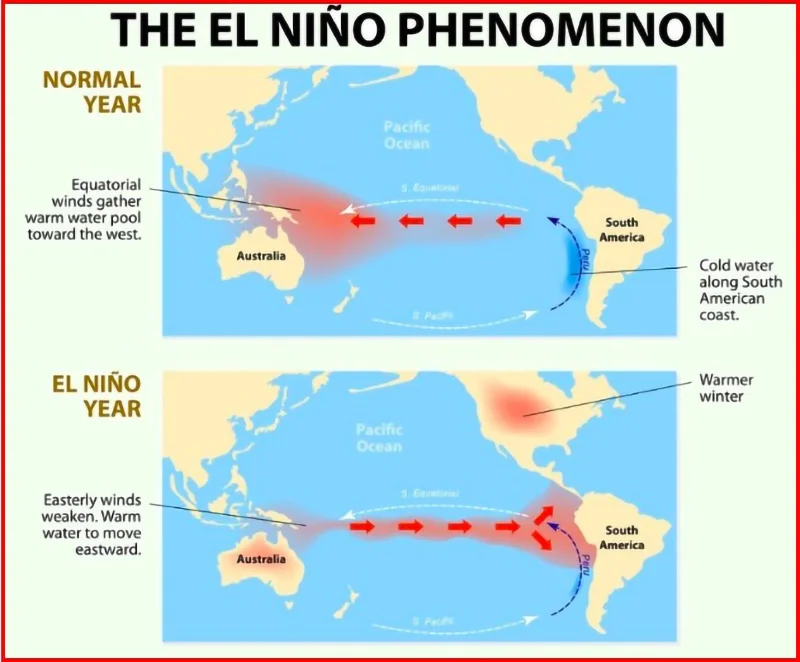
A recent discussion with two of Sri Lanka’s most experienced meteorologists highlighted concerns about the developing El Niño phenomenon and its potential consequences for the country. While no scientist can predict with certainty exactly how El Niño will evolve, current indications suggest the possibility of above-normal rainfall later this year, followed by reduced rainfall and potentially severe drought conditions in early 2027.
This is a warning Sri Lanka cannot afford to ignore.
Most Sri Lankans still remember the devastation caused by the Indian Ocean tsunami in December 2004. El Niño is fundamentally different. It does not arrive as a single catastrophic event. Instead, its effects can develop over many months, potentially bringing drought, water shortages, crop failures, extreme heat, wildfires, flooding and food insecurity.
The critical difference is that, unlike a tsunami, El Niño gives us time to prepare.
Sri Lanka therefore has a choice: act on the warnings now or pay a far greater price later.
We Must Not Wait for Disaster
The 2004 tsunami exposed Sri Lanka’s vulnerability to large-scale disasters and demonstrated the immense human and economic costs of inadequate preparedness.
El Niño cannot be prevented. However, many of its potentially damaging consequences can be reduced through early planning, effective coordination, public awareness and practical risk-reduction measures.
The purpose of this article is not to predict exactly what will happen. Rather, it is to ask a more important question:
Are we prepared for what could happen?
Depending on the intensity and evolution of El Niño, Sri Lanka could face:
· severe drought and prolonged dry spells;
· water shortages affecting households, agriculture and industry;
· reduced agricultural production and increased food insecurity;
· increased risks of forest and grassland fires;
· heatwaves and heat-related illness; and
· localised flooding caused by unusually heavy rainfall.
One threat deserves particular attention: wildfires.
During prolonged dry periods, fires can spread rapidly through forests and grasslands, destroying ecosystems, wildlife habitats, agricultural land, livelihoods and critical infrastructure, while placing enormous pressure on emergency services.
The lesson is straightforward: understanding potential worst-case scenarios before they occur greatly improves our ability to prevent them from becoming national catastrophes.
A Crucial Role for Disaster Management
We understand that Sri Lanka’s Disaster Management Centre (DMC) is already engaged in preparing the country for the potential impacts of a stronger El Niño event. Its focus must remain on helping communities prepare before emergencies arise, while ensuring that essential services continue to function during periods of crisis.
Disaster response and recovery come at a high cost to the public through government expenditure and taxpayer-funded resources. Investing in preparedness is therefore not only a humanitarian responsibility but also a sound economic strategy—particularly at a time when Sri Lanka continues to face considerable fiscal constraints and limited capacity to absorb another major shock.
The principle is clear:
Prevention is invariably less costly than recovery.
Every rupee invested in preparedness today can help prevent far greater social and economic losses tomorrow.
Listen to the Scientists
The public should pay close attention to forecasts and guidance issued by the Department of Meteorology.
At the same time, it is important to recognise that long-range forecasting is inherently complex. Climate systems involve countless interacting variables, many of which cannot be measured or predicted with complete accuracy months in advance.
When a forecast subsequently changes, this should not automatically be regarded as a failure of science. Forecasting is, by its nature, an assessment of probabilities and risks based on the best available evidence at a particular point in time.
The appropriate response is not to dismiss forecasts because they contain uncertainty, but to use them as tools for informed preparation.
What Should the Government Do?
The Government and relevant public institutions should urgently review Sri Lanka’s preparedness for drought, flooding, wildfires and extreme heat.
Key priorities should include:
· strengthening climate monitoring and early-warning systems;
· improving weather forecasting and public communication;
· developing comprehensive drought, flood and wildfire preparedness plans;
· enhancing reservoir, catchment and water-resource management;
· maintaining drainage infrastructure to reduce urban flooding;
· strengthening wildfire prevention, detection and response capabilities;
· investing in climate-resilient infrastructure; and
· establishing clear lines of responsibility and coordination among government agencies.
Coordination is particularly important. During a national emergency, citizens should never be left wondering which institution is responsible for taking action.
Water Security Must Be a National Priority
If prolonged dry conditions materialise, water security could become one of Sri Lanka’s most pressing challenges.
The country should strengthen groundwater protection, support the rehabilitation and maintenance of wells, and implement long-term water-security strategies in drought-prone regions. Such measures are important not only for human communities but also for agriculture, livestock and the natural ecosystems that sustain the country’s biodiversity.
Reservoirs and catchments must be managed carefully, while water conservation should be actively promoted among households, businesses, industries and farmers.
The key question is simple:
How much water will Sri Lanka require if the dry season lasts significantly longer than expected?
That question is far easier to answer before reservoirs begin to run dry.
Protecting Agriculture and Food Security
Agriculture remains highly vulnerable to drought and irregular rainfall. Significant disruption could result in rising food prices, reduced farm incomes and increased pressure on vulnerable households.
Sri Lanka should accelerate the adoption of drought-resistant crops, climate-smart farming techniques and efficient irrigation systems, including drip irrigation. Measures should also be taken to secure water and feed supplies for livestock, maintain strategic food reserves and strengthen weather-based advisory services for farmers.
Food security must be regarded not merely as an agricultural concern but as a matter of national resilience.
Preparing for Wildfires
Prolonged dry conditions can significantly increase wildfire risks. Sri Lanka must strengthen its capacity to prevent, detect and respond to fires before they escalate.
An effective strategy should rest on four pillars:
Prevention. Preparedness. Early detection. Rapid response.
Seasonal climate forecasts should be used to identify periods of heightened risk. Vegetation dryness, weather conditions and fire-prone regions should be monitored systematically, with modern technologies used wherever feasible.
Firebreaks should be established and maintained around vulnerable communities, forests and critical infrastructure. Dry vegetation and other combustible materials should be appropriately managed. Where environmentally and scientifically justified, carefully regulated controlled burning could also form part of an integrated fire-management strategy.
Human activity is responsible for many wildfires. During high-risk periods, open burning should therefore be restricted and unsafe land-clearing practices rigorously controlled. Public education campaigns should reinforce these measures.
Firefighting resources should be pre-positioned in high-risk areas before peak fire seasons begin. Adequate equipment and water supplies should be secured, and coordination strengthened among local authorities, fire services, forestry officials, disaster-management agencies and, where necessary, the armed forces.
Where practical and affordable, aerial firefighting capabilities should also be considered.
The guiding principle is straightforward:
Fight fires when they are small, rather than after they become uncontrollable.
Protecting Sri Lanka’s Natural Ecosystems
Healthy ecosystems are among the country’s most effective natural defences against climate stress.
Sri Lanka should protect wetlands and other water-retaining ecosystems, conserve forests, prevent unnecessary land clearing and fragmentation, and safeguard wildlife habitats from fire and degradation.
Forest conservation is not simply an environmental issue. It is central to water security, food security, biodiversity protection, public health and long-term national resilience.
Citizens Also Have a Responsibility
Preparedness cannot be the responsibility of government alone.
During dry periods, households should conserve water and avoid unnecessary waste. Communities should ensure that wells are cleaned, maintained and restored where necessary, particularly if prolonged disruptions to piped water supplies occur.
During periods of extreme heat, people should remain hydrated, avoid unnecessary outdoor activity and follow public health advice.
Families should maintain basic emergency plans and supplies. Communities in fire-prone areas should know evacuation routes and designated safe assembly points. Citizens should also avoid activities that could inadvertently start fires and remain alert to official warnings.
Particular attention should be given to vulnerable groups, including older people, people with disabilities and those with limited mobility. Communities should also be prepared for the health effects of wildfire smoke and deteriorating air quality.
From Response to Preparedness
Sri Lanka’s greatest challenge is not responding when disaster strikes. It is ensuring that natural hazards do not develop into national catastrophes.
This requires a fundamental shift from a culture of reaction to a culture of preparedness.
Government agencies, scientists, farmers, businesses, schools, community organisations and individual citizens all have important roles to play. A coordinated approach combining climate forecasting, land management, public education, community preparedness, early-warning systems and rapid emergency response can significantly reduce the risks posed by El Niño and other climate-related threats.
Even if severe drought conditions do not materialise, investments in preparedness will strengthen Sri Lanka’s resilience against future disasters. If severe conditions do occur, early preparation could save lives, protect livelihoods, reduce economic losses and prevent a difficult situation from escalating into a national crisis.
Sri Lanka has already learned, at enormous cost, the consequences of being unprepared. We should not wait for another disaster to teach us the same lesson.
The warning signs are present. The scientists are speaking. The risks are increasingly clear.
What remains is the political will and public commitment to act.
Preparation today will always cost less than recovery tomorrow.

22A: SC urged to suspend hearing, appoint full bench

Govt. seeks NATO assistance

Recent ‘Ice’ detection at the Colombo Port made on US intelligence – Embassy

Sri Lanka launches National Food Safety Policy with support from FAO and EU

Mendis, Nissanka return for England white ball series

Janashakthi Life delivers 36% revenue growth, ‘outperforming the industry’

‘Dates have the highest sugar content to fight Coronavirus’

Sunday Island 27 December – Headlines

#SundayIsland 17th December – Headlines

Sunday Island – 28th March

Sunday Island Headlines – 21 March

Sunday Island – 21st February – Headlines
-

 News6 days ago
Eight politicians in drug kingpin probe
-

 Features4 days ago
“Wrap Me Up in My Blazer”— A Gentlemanly Bradby Reminiscence
-

 Business6 days ago
Sri Lanka opens up: A new season of direct connectivity
-

 Features3 days ago
When Sri Lankan stories find their own voice
-
 Latest News7 days ago
Nepal-Tibet floods: What happened, what caused them and who is missing?
-

 Features6 days ago
Redefining ageing in Sri Lanka
-

 Editorial6 days ago
The toxic legacy of two lakes
-
 Business6 days ago
Jaffna Teaching Hospital secures lifeline water supply via ADB-funded Thalaiyadi sea water desalination plant