
News
Prof. Peiris briefs Australia on reviewing policies, including PTA

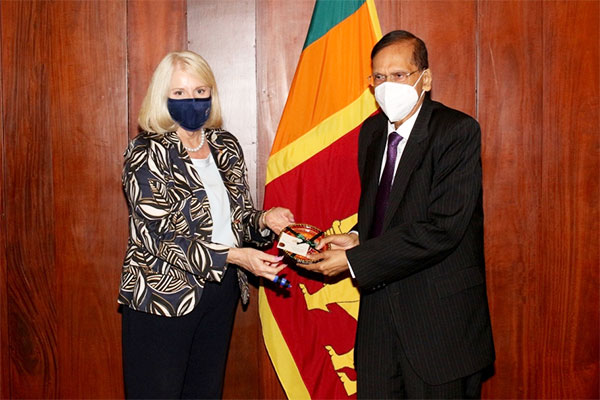
Foreign Minister Prof. G.L. Peiris has apprised Australian Minister for Home Affairs Karen Andrews of the ongoing review of policies and laws, including the Prevention of Terrorism Act (PTA) in order to address the residual issues still remaining after the successful conclusion of the war against terrorism in May 2009. Among the measures undertaken by the Government include the setting up of the Office of Missing Persons, Office for Reparations, the Office of National Unity and Reconciliation (ONUR), SDG 16 Council and the Human Rights Commission of Sri Lanka, Prof. Peiris has said.
Minister Karen Andrews met Prof. Peiris on 20 December 2021 at the Foreign Ministry during her official visit to Sri Lanka and discussed avenues for enhanced cooperation on a broad spectrum of areas.
The Foreign Minister expressed satisfaction with Australia’s significant involvement in preventing people smuggling and transnational crimes in Sri Lanka as well as in the region. The Minister reiterated that the vibrant partnership between Australia and Sri Lanka exemplified the highly effective and successful collaboration between the two countries in the field of preventing people smuggling and border security matters.
During Minister Andrews’ visit, the Sri Lanka Border Risk Assessment Centre (BRAC) at the Department of Immigration and Emigration was ceremonially inaugurated jointly with her Sri Lankan counterpart, Minister Chamal Rajapaksa at the Department of Immigration and Emigration. Earlier in the day, both Ministers also signed the Memorandum of Understanding of Return and Readmission of Persons between Sri Lanka and Australia at the State Ministry of Home Affairs.
Referring to Australia’s experience in vocational education, Foreign Minister Peiris sought Australia’s technical assistance to strengthen Sri Lanka’s vocational education sector.
The visiting Minister also expressed keen interest in the proposed establishment of a Transshipment Hub in Sri Lanka to route Australian products through here to other markets, which would immensely benefit the Sri Lanka economy.
Furthermore, both Ministers also agreed to hold the next session of the Joint Working Group (JWG) on People Smuggling and other Transnational Crime in Sri Lanka in the coming months and agreed to work together closely to further enhance the cordial relations between Sri Lanka and Australia. Minister Andrews and Minister Peiris agreed on the need to celebrate the 75th anniversary of the establishment of diplomatic relations between the two countries next year, 2022 in a befitting manner.


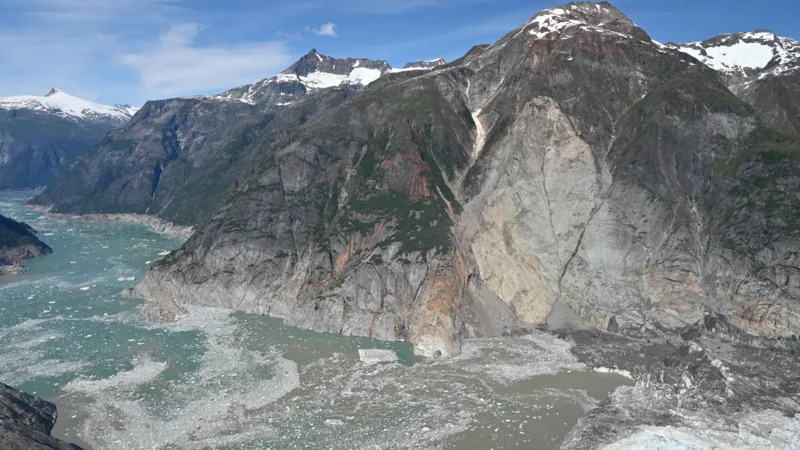
A massive ‘megatsunami’ wave created when part of an Alaskan mountain crumbled into the sea is the second tallest ever recorded – and a reminder of the risks posed by melting glaciers, say scientists.
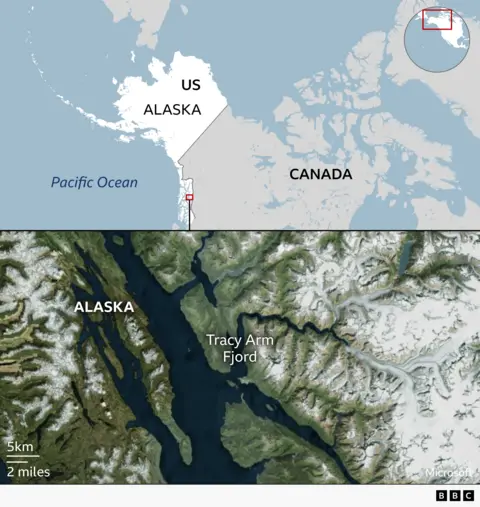
Last summer a giant wave swept through a remote fjord in southeast Alaska leaving destruction in its wake.
The event went largely unreported at the time, but a new scientific analysis shows it was caused by a massive landslide.
An incredible 64 million cubic metres of rock – the equivalent of 24 Great Pyramids – splashed into the water below. The sheer power of that amount of rock plunging into the fjord in under a minute created a gigantic wave almost 500 metres tall.
Only the time it happened – in the early hours of the morning – prevented tourist cruise ships being caught up in the devastation, say the researchers.
Dr Bretwood Higman, an Alaskan geologist, who saw for himself the damage at Tracy Arm Fjord, said it was “a close call”.
“We know that there were people that were very nearly in the wrong place,” he said. ‘I’m quite terrified that we’re not going to be so lucky in the future.”
These huge waves, labelled megatsunamis, happen when a landslide caused by either an earthquake or loose rock hit water below. They are usually localised and dissipate quickly.
The other type of tsunamis happen in the open ocean and are directly triggered by earthquakes, or occasionally other powerful events such as underwater volcanoes.
They, like the 2011 Japan tsunami, can travel for thousands of miles, hitting populated areas and causing widespread devastation and loss of life.
The biggest megatsunami was in the 1950s and was over 500 metres. This latest megatsunami was the second largest.
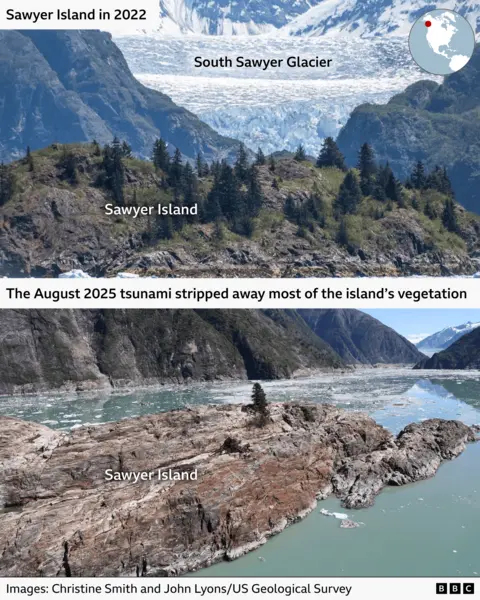
Dr Higman arrived on the scene a few weeks after the tsunami hit at the Tracy Arm Fjord – a destination popular with cruise ships exploring the natural wonders of Alaska.
He found broken trees littering the mountainside and hurled into the water, and vast swathes of scarred rock stripped of soil and vegetation.
Alaska is especially vulnerable to megatsunamis because of its steep mountains, narrow fjords and frequent earthquakes.
Now new research published in Science suggests glacier melt driven by climate change is making such collapses far worse.
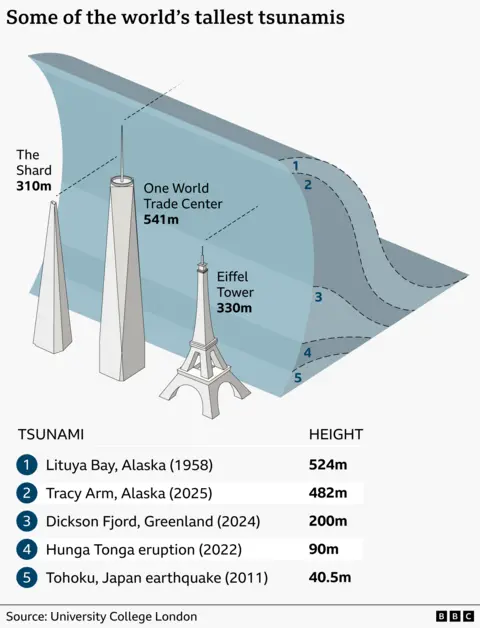
The team combined field work, seismic and satellite data to reconstruct a domino chain of events and trace the height of the wave.
Dr Stephen Hicks of University College London said the glacier was previously “helping to hold up this piece of rock”, and so when the ice retreated, it exposed the bottom of the cliff face, “allowing that rock material to suddenly collapse into the fjord”.
He and his colleagues have studied tsunamis for decades and are worried.
“More people are now going to remote areas – often these tourist cruises are going to see the natural beauty of the area to actually learn more about climate change – but they are also dangerous places to be.”
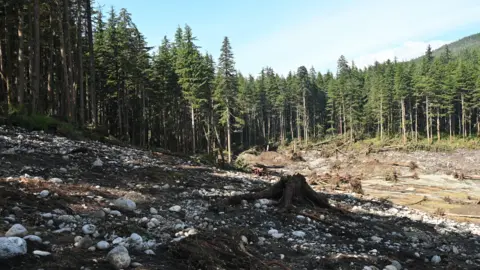
Dr Higman said there is little doubt that the risks of megatsunamis are increasing.
“At this point, I’m pretty confident that these are increasing not just a little bit, but increasing a lot,” he said.
“Maybe in the order of 10 times as frequent as they were just a few decades ago.”
The scientists are calling for wider monitoring of hazards in parts of Alaska that might be vulnerable to megatsunamis.
Some cruise companies have announced they are to stop sending ships into Tracy Arm amid safety fears.
[BBC]

The Cabinet of Ministers has approved the resolution furnished by the Minister of Industries and Entrepreneurship Development to recognize the “Sri Lanka National Export
Development Plan – 2026–2030” as the official strategic framework for export development and promotion of exports in Sri Lanka.
The Sri Lanka Export Development Board, in collaboration with public and private sector stakeholders connected to the export sector, has formulated the National Export Development Plan 2026–2030 by obtaining technical assistance under the Policy-Based Lending Programme of the Asian Development Bank.
The aforementioned Plan provides a comprehensive strategic framework to guide and monitor Sri Lanka’s export development process, with the target of earning US$ 36 billion in foreign exchange through the export of goods and services by the year 2030
The Cabinet of Ministers has approved the resolution furnished by the Minister of Women and Child Affairs to accept the Global Charter for Children’s Care Reform for Sri Lanka.

Massive Alaska megatsunami was second largest ever recorded

Oil prices drop and stock markets rise after reports of deal to end Iran war

Shamas, Feroza hit tons as Pakistan win big to clinch ODI series

Connolly ton in vain as batting muscle fires Sunrisers Hyderabad to top of the table

Trump says had ‘very good talks’ with Iran as Tehran reviews US proposal

Cabinet approves recognition of ‘Sri Lanka National Export Development Plan – 2026–2030’

‘Dates have the highest sugar content to fight Coronavirus’

Sunday Island 27 December – Headlines

#SundayIsland 17th December – Headlines

Sunday Island – 28th March

Sunday Island Headlines – 21 March

Sunday Island – 21st February – Headlines
-

 News7 days ago
Rooftop Solar at Crossroads as Sri Lanka Shifts to Distributed Energy Future
-
 News2 days ago
CJ urged to inquire into AKD’s remarks on May 25 court verdict
-
 News6 days ago
“Three-in-one blood pressure pill can significantly reduce risk of recurrent strokes”
-

 News3 days ago
USD 3.7 bn H’tota refinery: China won’t launch project without bigger local market share
-

 News6 days ago
Alarm raised over plan to share Lanka’s biometric data with blacklisted Indian firm
-

 News5 days ago
Ten corruption cases set for court in May, verdict ordered in one case – President
-
 News4 days ago
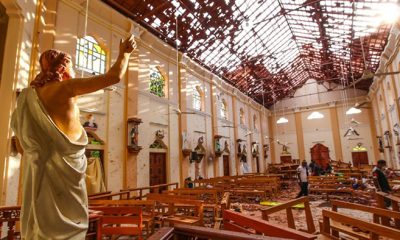
Easter Sunday Case: Ex-SIS Chief concealed intel, former Defence Secy tells court
-

 News6 days ago
USD 2.5 mn fraud probe: Interdicted MoF official found dead at home