
Business
Sri Lanka Tourism kicks-starts an aggressive media and travel influencer campaign for Russia and Ukraine markets

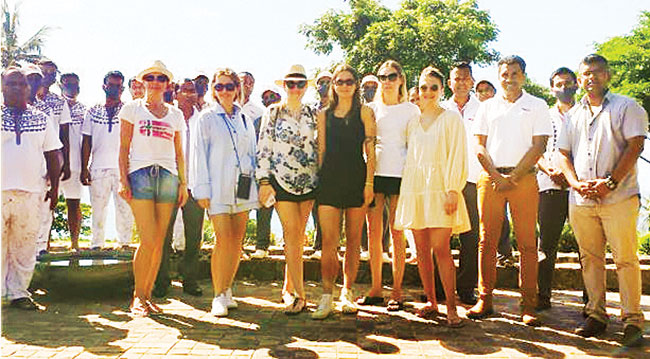
(Two groups of elite travel writers & influencers from Russia & Ukraine were invited and facilitated by Sri Lanka Tourism)
Targeting on immediate promotional boost within potential Russian and Ukrainian winter-holiday seekers, Sri Lanka Tourism has organized massive media and influencer promotion in the months of November/ December 2021 together with some high profile media / influencer delegations with a combined media reach of 12 million audience (in total circulation & subscriptions) covering both countries. Considering the current global travel trends, this is expected to be an important strategic move for Sri Lanka tourism for a speedy recover.
Due to the pandemic concerns, travelers are reluctant to make early bookings in advance and much prefer make quick travel decisions by analyzing the latest travel updates and recommendations. Considering this ‘New Normal Travel Patterns” organizing last moment media promotions will strategically position the island as a top of the mind holiday destination during the last moment winter holiday planning for 2021/2022.
 Excluding all CIS countries (where Russians travel mostly for work and to visit their relatives), Turkey is the most popular country for Russians (as well as for Ukrainians) by a significant margin. 3.9 million Russian tourists visited the country in January-September 2017 and almost a million more (4.9 million) in the same period in 2018. Besides Turkey, the most popular countries among Russian tourists are: China, Thailand, Spain, Greece, Italy, Cyprus, Germany, UAE, and Tunisia.
According to ‘Visa’- the international payment company, released their Visa Global Travel Intentions Study and revealed how much money people from different countries spend on a trip. Between 2016 and 2017, Russian travelers spent $1,676 per one trip – more than European travelers who spend $1,174. At the same time, 51% of the budget is spent before the trip, and 49% – at the place of destination. 70% of Russians use bank cards when they plan their travel trips (www.tourism-review.com). In 2020 alone, over 12 million Russians travel abroad which is a 45 % decrease from the year before in 2019- (approximately 19.8 million in 2019) and 2.1 million tourists were visiting Turkey.
These eleven (11) high prolific travel writers (representing key media publications) and travel influencers (Instagram & YouTube) were invited to Sri Lanka from 21st November to 8th December period to increase awareness about the reopening of Destination Sri Lanka for international tourists from 1st of October.
Some of the key publications invited are: Vogue- Ukraine : https://vogue.ua/,
Harper’s Bazzar- Russia: https://bazaar.ru/, Total Escape- Ukraine: https://escapemgz.com/ ,
Areoflot Inflight Magazine- Russia : https://www.aeroflot.ru/ruen/information/onboard/entertainment .
Also, famous Ukrainian Travel Bloggers & Instagramer Yana Usipava (539,000 followings in Instagram -Link: https://www.instagram.com/yana_osypova/) and Maxis & Olha Uzol from the popular YouTube travel vlog : https://www.youtube.com/channel/UCwv4Vw-oa1cTPd4sfvDuSJw have also been part of this Sri Lanka Tourism’s media & influencer promotion .
According to Ms. Maria Alikhanova Golikova Director for Tourism at Aeroflot In-flight Magazine
‘while popular high end destinations for Russians such as Italy, France, Bali (Indonesia) are still in hold to welcome Russian travelers, there is greater opportunity for emerging destinations like Sri Lanka to grab the market attention. Since there is direct flight connection now, Sri Lanka can be easily positioned as top of the mind tropical travel option to consider during the upcoming seasons 2021/2022.
To add on with that Ms. Maria Kudimova, Editor of Ukrainian travel magazine Total Escape has stated that “By combining amazing beaches with wild safaris, breathtakingly beautiful highlands, rich local cuisines Sri Lanka has all the elements to become a perfect island holiday destination for Ukrainian travelers. “
Ms. Maria Kudimova, Editor of Ukrainian travel magazine Total Escape,Trying Sri Lankan Prawns Curry at ANI –Resorts ,Dickwella .
Popular Ukrainian Travel Influencer Ms. Yana Osipava invited all of her virtual fans to explore Sri Lanka by stating:
“First time in Sri Lanka and I was so excited to witness Beautiful beaches, Great Hotels, Wild Elephants and Heritages such as Sigiriya Rock Fortress.
(Ms. Yana visiting a Turtle Hatchery in Kosgoda)
According to Ms Yulia Markovchina , Public Relations Director for La Bibliotheque -Russia :
‘’Sri Lanka has so much to offer for Russian and Ukrainian high-end travel market and potential luxury travelers are still not fully aware about the Destination’’
Both media & travel influencer groups traveled separately around the island covering Koggala, Dickwella, Yala, Nuwara Eliya, Kandy, Habarana and Colombo . Local Tourism & Hospitality Industry partners including ANI Sri Lanka Resort –Dickwella, Amaya Resorts & Spa (Langdale Boutique Hotel by Amaya), Jetwing Yala Hotel, The Fortress Resorts & Spa, The Galle Face Hotel, The Theva Residency- Kandy , Cinnamon Hotels & Resorts and Table by Taru have joined hands with Sri Lanka Tourism Promoion Bureau to undertake the destination promotions.
Wild Safari at Minneriya National Park by Maksym Uzol from YouTube Channel UZOL AND MANKO
Invited media and travel influencers will be expecting share the unique experiences try have enjoyed in Sri Lanka within their millions of travel seeking audiences in Russia and Ukraine and invite them to explore Sri Lanka as their next bucket list destination.
Overall, with the pandemic lockdown and stages of travel restrictions, Sri Lanka Tourism has continued to undertake various media & travel influencer related promotions to ‘’Keep The Sri Lankan Holiday Dream Alive’’. Total of 24 International media personnel and travel influncers were facilitated in Sri Lanka within the last 11 months and reached to over 25 million global audience via various online news articles, YouTube vlogs, Instagram & Facebook Posts, etc. Key source markets were focused on including India, UK, UAE, Russia, Ukraine, USA & Canada and Norway. Under Sri Lanka Tourism’s Visiting Journalists & Blogger Programs during the period of 2021, destination Sri Lanka has been featured in many mainstream online news channels and social media platforms. Approximately over 500 various ONLINE & Social Media Posts were created about destination Sri Lanka.
Sri Lanka was featured at BBC.travel in May 2021
(Link: https://www.bbc.com/travel/article/20210502-the-unsolved-mystery-of-sri-lankas-stargate)
Authentic Sri Lankan Food Culture promoted via YouTube in July 2021
(Link: https://www.youtube.com/watch?v=uRBmu-eHeBE )
Sri Lanka Re-open Back for Int. Tourists and Travel Bio-Bubble
(Link: https://www.youtube.com/watch?v=CGKwnJYiAAg)
Contact: Public Relations Division
Sri Lanka Tourism Promotion Bureau 80, Galle Road, Colombo 03. 94 112 426 900, sureshnie@srilanka.travel

Business
Janashakthi Finance relocates Nugegoda branch to enhance customer convenience and accessibility

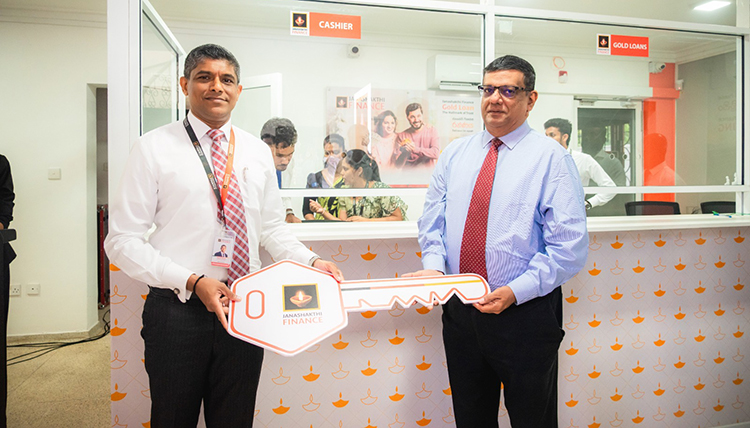
Janashakthi Finance PLC, a member of JXG (Janashakthi Group), has relocated its Nugegoda Branch to a more accessible and customer-friendly location at No. 136/5, S. De S. Jayasinghe Mawatha, Nugegoda, further strengthening its commitment to convenience and service excellence.
Situated in the heart of one of Colombo’s busiest urban centres, the new premises offer improved accessibility and enhanced facilities, enabling customers to engage with the Company’s services in a more comfortable and efficient environment.
The branch continues to provide a comprehensive range of financial solutions, including deposits, savings accounts, leasing, gold loans, alternative finance solutions, corporate and SME financing and other tailored financial services designed to meet both individual and business needs.
Nugegoda is a vibrant and densely populated commercial hub, and this relocation allows us to enhance service delivery while providing an improved experience for our valued customers.

The much discussed latest electricity tariff debate has taken a controversial turn, with senior power sector officials and independent energy analysts questioning whether opaque fuel pricing mechanisms are artificially inflating the cost of electricity generation while shielding politically sensitive petroleum losses.
At the centre of the controversy is the widening gap between diesel pricing and the steep increases imposed on Heavy Fuel Oil (HFO) and naphtha — two fuels heavily used by the Ceylon Electricity Board (CEB)� for thermal power generation.
Energy analysts argue that while electricity tariffs are officially calculated on a “cost reflective” basis, the fuel pricing structure feeding into those calculations appears far from transparent.
A senior CEB official told The Island Financial Review that the present fuel pricing pattern raises “serious economic and policy concerns.”
“The entire electricity tariff framework is built on the assumption that fuel supplied to the power sector reflects actual import costs. But if fuel pricing itself is distorted, then tariff calculations become distorted too,” the official said.
According to CEB operational data reviewed by sector analysts, the utility regularly consumes nearly two-and-a-half times more HFO than diesel for thermal generation. Yet recent fuel revisions saw diesel prices rise only marginally — despite allegations that diesel cargoes had been procured at extraordinarily high dollar values.
Industry analysts pointed out that diesel imported at around USD 286 per barrel resulted in only about a Rs. 10 domestic price increase, while HFO prices surged by nearly Rs. 42 per litre and naphtha by around Rs. 34 — increases estimated at roughly 25 percent.
“This creates the impression that losses on diesel are being absorbed by overpricing HFO and naphtha,” an energy economist said.
“If CPC is maintaining artificially low diesel prices for political or inflation management reasons, the burden appears to be transferred to electricity consumers through thermal generation costs.”
The analyst noted that because the CEB relies heavily on HFO for regular dispatch operations, even relatively small increases in HFO pricing can translate into billions of rupees in additional annual generation costs.
In dollar terms, the implications are substantial.
Power sector officials estimate that every major upward revision in HFO pricing adds several billion rupees to annual generation expenditure, particularly during periods of low hydro availability. Given the depreciation pressures on the rupee and the dollar-denominated nature of fuel imports, the resulting tariff burden on consumers becomes even more severe.
A second senior CEB official expressed concern that institutional checks and balances within the energy sector appeared to be weakening.
“There is growing concern within the industry that the electricity sector regulator is no longer functioning with the level of independence expected of it,” the official said, referring to the Public Utilities Commission of Sri Lanka (PUCSL).
“The regulator’s responsibility is to independently scrutinise cost submissions, fuel assumptions and tariff calculations. But many in the sector now feel there is inadequate challenge or verification of the numbers being presented.”
The official warned that if regulatory independence is perceived to be compromised, public confidence in tariff revisions could deteriorate further.
A senior engineer attached to the CEB said the issue goes beyond tariff formulas.
“What is missing is cost transparency. There is no publicly accessible breakdown showing actual landed fuel costs, financing charges, hedging exposure, exchange losses, or refinery margins. Without that, nobody can independently verify whether the fuel pricing is truly cost reflective.”
Analysts also questioned the apparent disparity between crude oil acquisition costs and refined fuel pricing adjustments.
“If crude was purchased at almost the same price range, why are HFO and naphtha seeing disproportionate hikes while diesel remains comparatively protected?” one analyst asked.
Several observers believe the answer may lie in broader political and financial calculations.
Keeping diesel prices artificially low helps contain inflationary pressure across transport, logistics and food supply chains. However, critics say it may also help suppress scrutiny over controversial diesel procurements carried out at elevated international prices.
Energy sector sources further alleged that maintaining a lower diesel benchmark may also indirectly soften calculations linked to the long-running coal procurement controversy, where comparative generation cost modelling often references diesel-based thermal pricing.
“This has major political implications because lower diesel benchmarks can influence public perception regarding coal generation economics,” an analyst said.
By Ifham Nizam

BETSS.COM, the digital platform of Sporting Star, is ushering Sri Lanka’s horse racing into a new era through a landmark three-year title sponsorship of the BetSS Governor’s Cup and BetSS Queen’s Cup.
This long-term commitment by Sports Entertainment Services (Pvt) Ltd, operators of BETSS.COM, marks a significant step in elevating two of the country’s most prestigious racing events—enhancing their visibility, engagement, and relevance in a digitally connected world. As a brand positioned as a “Patron of Elite Sri Lankan Sports & Heritage,” BETSS.COM continues to support and transform iconic sporting platforms that carry deep cultural significance.
The Governor’s Cup and Queen’s Cup are the flagship “blue riband” races of the Nuwara Eliya Racecourse and remain central to the town’s April holiday season—where sport, fashion, and highland tourism converge. Horse racing was first introduced to Sri Lanka in the 1840s by Mr. John Baker, brother of the renowned explorer Samuel Baker, who established a training course for imported English thoroughbreds in the hills of Nuwara Eliya. The inaugural race at the Nuwara Eliya Racecourse was held in 1875, organised by the Nuwara Eliya Gymkhana Club. In 1910, the then Governor of Ceylon, Sir Henry Edward McCallum, inaugurated the prestigious Governor’s Cup and Queen’s Cup. Now in its 153rd year of racing, the event stands as an enduring symbol of Sri Lanka’s rich thoroughbred heritage.

Janashakthi Finance relocates Nugegoda branch to enhance customer convenience and accessibility

Construction and Concrete waste recycling centre opened in Ekala under the Clean Sri Lanka programme

President of the Socialist Republic of Vietnam pays floral tribute to the Ho Chi Minh Statue

Urgent reforms needed to eradicate drug menace, says President

Warm welcome extended to the President of the Socialist Republic of Vietnam at the Presidential Secretariat

BCCI to conduct surprise checks on IPL teams over compliance of guidelines

‘Dates have the highest sugar content to fight Coronavirus’

Sunday Island 27 December – Headlines

#SundayIsland 17th December – Headlines

Sunday Island – 28th March

Sunday Island Headlines – 21 March

Sunday Island – 21st February – Headlines
-
 News2 days ago
MIT expert warns of catastrophic consequences of USD 2.5 mn Treasury heist
-
 News4 days ago
CJ urged to inquire into AKD’s remarks on May 25 court verdict
-
 News5 days ago
USD 3.7 bn H’tota refinery: China won’t launch project without bigger local market share
-
 News6 days ago
Easter Sunday Case: Ex-SIS Chief concealed intel, former Defence Secy tells court
-
 News7 days ago
Ten corruption cases set for court in May, verdict ordered in one case – President
-

 Business6 days ago
Dialog Surpasses 1,000 5G Sites, Strengthening Nationwide 5G Coverage
-

 Editorial2 days ago
Clean Sri Lanka and dirty politics
-

 Editorial5 days ago
Deliver or perish