
News
Civil society calls for immediate moratorium on use of PTA


Civil society groups and individuals have called for an immediate moratorium on the use of the Prevention of Terrorism Act (PTA).
In a statement titled ‘Civil Society Statement on Government Proposals to Reform the Prevention of Terrorism Act’, they said: We reiterate that national security cannot be achieved by creating insecurity for already discriminated against and marginalized communities, and call for the repeal of the PTA. The repeal of the PTA must also be considered in light of the anti-terrorism and public security legal framework that Sri Lanka has in place, and the historical abuse of power by state entities.”
Full text of the statement: In June 2021 the government of Sri Lanka announced it would ‘reform’ the Prevention of Terrorism Act (PTA) and appointed a Ministerial Sub-Committee for that purpose. It was reported in the media that Kamal Gunaratne, the Secretary, Ministry of Defence and the head of the Technical Committee that functions under the Ministerial Sub-Committee, submitted the Technical Committee’s recommendations to the Ministerial Sub-Committee in November 2021.
Historically, for decades, the PTA has been weaponized against the Tamil community, and following the Easter attacks against the Muslim community as well. This has resulted in the victimization of members of these communities. It was also used against the Sinhalese during the JVP insurrection and now against dissenters. We reiterate that any process which seeks to tackle issues related to the PTA must address this factor to ensure those adversely affected by the law will receive justice, including reparations.
While the government has not shared its plans for the supposed “reform” of the PTA with the public, we note the Sri Lanka Consensus Collective’s (SLCC) statement of 29 November 2021 sets out proposals for reform the government shared with the said group. In the absence of official communication by the government, we consider the elements contained in the SLCC statement as the changes being deliberated by the government. We note that nearly all so-called changes proposed already exist in law and do not address any of the shortcomings in the PTA that enable grave human rights violations.
We call for repeal of the PTA and in the interim an immediate moratorium on the use of the law. This is in line with the requests of persons and communities adversely affected by the law. We reiterate that any law that purports to deal with terrorism must adhere to international human rights standards. In this regard, we set out below the provisions of the law that result in egregious human rights violations and the minimum standards that have to be followed to ensure the protection of fundamental rights.
The critical factor to take note is that the PTA is a human rights deficient law that does not adhere to basic human rights standards enshrined in international conventions, such as the International Covenant on Civil and Political Rights (ICCPR), which the government of Sri Lanka has ratified and hence has an obligation to respect and protect. Nor does it adhere to many provisions in the Constitution of Sri Lanka. In this context the following are key provisions in the PTA that result in grave human rights violations:
The PTA does not contain a definition of terrorism. Instead, the offences stipulated are those found in other laws, such as the Penal Code, to which the PTA makes reference. Hence, the decision as to whether the PTA would apply in a certain instance is a subjective decision that can be shaped by personal prejudice and bias, rather than objective standards. In this regard, the PTA does not adhere to the definition set out by the UN Special Rapporteur on Countering Terrorism while Protecting Human Rights. For instance, post- Easter attacks even persons with books in Arabic and decorative swords were arrested. Similarly, those memorializing the lives lost at the end of the war have been arrested.
The lack of basic due process safeguards in the PTA enables arbitrary arrest and detention, which continue to date. This is exacerbated by the lengthy periods of administrative detention. For example, for decades we have witnessed persons who had any connection to a person accused of an offence in the normal course of their employment or personal life being arrested, without investigations being conducted, and detained for months.
We reiterate that arrests should be made based only on evidence following investigation or reasonable suspicion.
The detention period should be that stipulated in the Code of Criminal Procedure and any extension of detention should be made by a judge, who should be satisfied of the reasons for continued detention and exercise discretion as to whether or not to extend detention.
There is documented evidence, including Supreme Court decisions and the Human Rights Commission’s (HRCSL) reports, which illustrate that the admissibility of confessions made to an Assistant Superintendent of Police (ASP) or above as evidence, has resulted in persons being tortured to extract confessions. This has normalized and entrenched the use of torture. Even if the confession is ruled inadmissible during trial, the existence of the provision creates room for persons to be subject to torture. This not only violates basic due process and fair trial rights of a person accused of an offence, but also calls into question the competence of the criminal justice system that has to rely on confessions to prosecute persons. Such a provision, which is a deviation from the norm, has no place in law. Instead, current provisions in the Code of Criminal Procedure and the Evidence Ordinance should be followed with regard to the admissibility of confessions.
Section 7(3) allows a person to be taken out of judicial custody to any other place for investigation. Section 15A empowers the Secretary, Ministry of Defence, to determine a person’s place of detention even after the person is remanded. This removes a person from the protection of judicial custody and empowers the Secretary to override a judicial order. The incident in September 2021 of the Minister of Prison Reforms and Prisoners Rehabilitation Affairs entering Anuradhapura prison and reportedly threatening persons detained under the PTA with a weapon and verbally abusing them illustrates the insecurity faced by such persons even when in judicial custody. Removing them from judicial custody would only exacerbate their vulnerability. As the Human Rights Commission’s national study of prisons documented, persons remanded under the PTA were subjected to severe torture when taken out of judicial custody or held in other places upon the instructions of the Secretary, Ministry of Defence.
Persons detained under the PTA spend a prolonged period of time in pretrial detention because the Act requires such persons to remain in remand custody until the conclusion of the trial, unless the Attorney General consents to the release on bail. For all arrests, provisions of the Bail Act should apply, and bail should be denied only if any of the exceptional circumstances set out in the Bail Act are met.
The PTA allows the Minister of Defence to issue Restriction Orders for up to 18 months. Restriction Orders can be used to prevent people from engaging in political activities, speaking at events, or advising an organisation. Such orders allow civic rights to be curtailed arbitrarily by the Minister with no due process, transparency or accountability.
The SLCC statement mentions the government stated that for the very first time a detained person would be able to challenge administrative detention in the Supreme Court. We point out that the right to challenge arbitrary detention, including under the PTA, is enshrined in the Constitution of Sri Lanka and is not a new right that any proposed reform could bestow. The challenge many detained persons face in accessing this existing right is the administrative restrictions on access to lawyers and lack of financial resources to retain competent counsel.
Similarly, the HRCSL Act already mandates the Commission to monitor the welfare of persons deprived of liberty and empowers it to access any place of detention unannounced. However, following the 20th Amendment to the Constitution in 2020, the HRCSL is no longer a legally independent body as appointment of the officers of the Commission is at the discretion of the President. This adversely impacts the activities of the Commission as well as public trust in the institution.
The Advisory Board established by Section 13 of the PTA, as we have pointed out in the past, is an inadequate protection mechanism that is not independent as its members are appointed by the President. Further, the Minister of Defence has the power to make rules on how the Board deals with representations made by detained persons. It therefore does not act as a safeguard against executive abuse of power. Any non-judicial mechanism that is established to decide on/recommend the release of persons detained under the PTA must be independent and entities, such as the Attorney-General’s Department, should not be able to veto its decisions.
The proposals shared by the government with SLCC fail to address the fundamental shortcomings of the PTA. Instead, they propose changes that already exist but are often observed in the breach.
We note with deep concern that the functioning of the aforementioned committees was not transparent and the recommendations were formulated without any consultation with members of civil society who have been working on issues related to the PTA or persons affected by the law. We call for greater transparency in the reform process from this point onwards and request the government to inform the public of the process for consultation and the proposed timeline for reform.
We reiterate that national security cannot be achieved by creating insecurity for already discriminated against and marginalized communities, and call for the repeal of the PTA. The repeal of the PTA must also be considered in light of the anti-terrorism and public security legal framework that Sri Lanka has in place, and the historical abuse of power by state entities. These entities should not be bestowed with additional power.
The way forward must give due recognition to the protection of physical liberty. Deprivation of physical liberty by the executive must be used only as last resort and strictly require sufficient basis that is determined on objective factors, judicial supervision of such basis, prompt and free access to legal representation including legal aid, prompt trials or release, and an enforceable right to compensation for arbitrary detention. The prohibition of arbitrary deprivation of liberty has acquired customary international law status and constitutes a jus cogens norm which Sri Lanka is duty bound to secure for its citizens.
The balance the government wishes to achieve between personal liberties and national security can only be achieved through addressing the root causes of conflict and violence. Attempts to further curtail civil liberties in the guise of national security will only exacerbate the insecurity of all communities and undermine the rule of law and democracy in Sri Lanka.
Signatories of the statement were: S. Annalaxumy, Bisliya Bhutto, S.C.C. Elankovan, Lawyer and Development Consultant Philip Dissanayake, A.M. Faaiz, Brito Fernando, Nimalka Fernando, Ruki Fernando, Aneesa Firthous, Amarasingham Gajenthiran, T.Gangeswary, K. Ginogini, Ranitha Gnanarajah AAL, B. Gowthaman, S. Hayakirivan, Director, THALAM, V. Inthrani, Noorul Ismiya, Vasuki Jeyshankar, Dr. Sakuntala Kadirgamar, S. Kamalakanthan – Social Activist, Mahaluxmy Kurushanthan, Kandumani Lavakusarasa, Human Rights Activist, Jensila Majeed, Buhary Mohamed, Human Rights Activist, Juwairiya Mohideen, Jaabir Raazi Muhammadh, Chairman, Voices Movement, P. Muthulingam, Thangaraja Prashanthiran, Dorin Rajani, Maithreyi Rajasingham, Executive Director, Viluthu , A.R.A. Ramees, V. Ranjana, Anuratha Rajaretnam, K.S. Ratnvale, Yamini Ravindran, AAL, Kumudini Samuel, Thurainayagam Sanjeevan, Shreen Saroor, Ambika Satkunanathan, Rev Fr S D P Selvan,
S. Selvaranie, Vanie Simon, P. N. Singham, Usha Sivakumar, N. Sumanthi, Vani Sutha, Ermiza Tegal, S. Thileepan – Social Activist, P Vasanthagowrey, Rev Fr Yogeswaran, Adayalam Centre for Policy Research, Alliance for Minorities, Centre for Human Rights and Development, Centre for Justice and Change, Eastern Social Development Foundation, Families of the Disappeared, Forum for Plural Democracy, Law and Society Trust, Mannar Women’s Development Federation, Rural Development Foundation, Tamil Civil Society Forum, Viluthu and Women’s Action Network


The special ward at Sri Jayewardenepura General Hospital, which had until now been reserved exclusively for the use of the Executive President, was opened for the public for the provision of medical treatment to the general public from Tuesday (24).
This decision was taken jointly by the Ministry of Health and the hospital administration, in accordance with instructions given by President Anura Kumara Dissanayake.
Constructed in 1984 with a grant from the Government of Japan, Sri Jayewardenepura General Hospital was originally established with a capacity of 1,000 beds. However, in line with the initial design, an additional special unit, designated as Room No. 1001, was included exclusively for the personal use of the Executive President.
Over the 42 years since the hospital’s establishment, this facility has been utilised only on a very limited number of occasions. Nevertheless, it has been maintained over the years in anticipation of a possible visit by a sitting President, without being made available for patient use.
With effect from today, this special unit will be utilised for the benefit of general patients receiving treatment at the hospital. This step has been taken in line with the Government’s policy of ensuring the more efficient use of public assets and resources to meet the healthcare needs of the people.

The second meeting of the Cabinet Sub-Committee appointed to ensure the orderly functioning of the public service was held on Tuesday (24) afternoon at the Presidential Secretariat, under the patronage of Prime Minister Dr Harini Amarasuriya.
Extensive discussions were held on the immediate measures required to ensure the uninterrupted delivery of government services to the public and to address the challenges faced by public servants.
Attention was also drawn to maintaining the continuous operation of services under the Ministries of Public Administration, Provincial Councils and Local Government, Health, Education, and Justice. Accordingly, it was decided to ensure that examinations are conducted as scheduled and that essential medicines are supplied to hospitals without disruption.
The challenges in passenger transport services and the railway transport system, as well as future measures, were also discussed at length. Focus was also placed on the steps to be taken regarding the transportation of essential goods.
In addition, attention was given to introducing digital service systems to facilitate working from home and to enhance the efficiency of existing services. It was also noted that these activities would be supervised under the Ministry of Digital Economy.
Instructions were further issued to review the current energy management practices across all ministries and departments and to take steps to implement necessary policy changes.
Minister of Public Administration, Provincial Councils and Local Government A. H. M. M. H. Abeyaratne, Secretary to the Prime Minister Pradeep Saputhanthri, Chief of Staff to the President Prabath Chandrakeerthi, Secretary to the Ministry of Public Administration, Provincial Councils and Local Government S. Aloka Bandara, Secretary to the Ministry of Health and Mass Media Dr Anil Jasinghe, Secretary to the Ministry of Energy Professor T. M. Udayanga Hemapala, Secretary to the Ministry of Digital Economy T. R. W. S. Dhanapala, Secretary to the Ministry of Justice and National Integration Ayesha Jinasena, PC, Senior Additional Secretary to the President Roshan Gamage, and Chairman of the Ceylon Petroleum Corporation D. J. A. S. S. Rajakaruna, along with other committee members, were also present at the occasion.

… first NPPer to face charges under Section 70 of Bribery Act
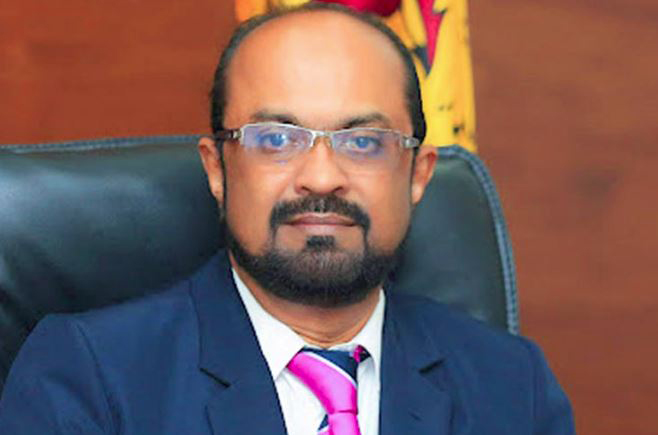
Colombo High Court has issued summons on Energy Minister Kumara Jayakody to appear in court today (27) to serve indictment in a corruption case filed by the Commission to Investigate Allegations of Bribery or Corruption (CIABOC). Action has been taken under Section 70 of the Bribery Act. The losses suffered by the government have been estimated at Rs. 8,859,708.
National List (NL) MP Jayakody is the first NPP minister or politician at any level to be indicted for corruption. The NPP parliamentary group consists of 159 including 18 NL members.
The summons has been issued by High Court judge Rashantha Godawalage.
Although CIABOC previously in many instances arrested those who had been under investigation and produced them before Magistrate courts, Minister Jayakody has been directly summoned by the Colombo High Court.
The investigation into alleged corruption in procurement during the time Jayakody served the Ceylon Fertilizer Corporation (CFC) started after the change of government in 2015.
According to the CIABOC investigation, the alleged instance of corruption took place in early 2014 towards the tail end of Mahinda Rajapaksa’s second term. At that time Jayakody was CFC’s Procurement Manager, and the CIABOC dragged the investigation until its current leadership under overall speeding up of the cases recently completed the inquiry.
Parliament recently announced that the debate on no-faith motion moved against Minister Jayakody over alleged irregularities in the procurement of substandard coal for the country’s only coal-fired power station at Norochcholai.
SJB MP Mujibur Rahman said that the NPP, having campaigned on an anti-corruption platform during presidential and parliamentary polls in 2025 couldn’t under any circumstances shield minister Jayakody. The indictment of Jayakody over a corruption case that had happened in 2014 and the failure on his part to fulfill obligations as Energy Minister under the current dispensation couldn’t be considered separately, the Colombo District MP said.
The issue at hand is whether the NPP would try to protect Jayakody at the expense of the government, MP Rahman said. Once the NPPer is formally charged in a corruption case the government would find it extremely difficult to keep him in the cabinet, the former UNPer said.
SJB lawmaker S.M. Marrikar recently warned Minister Jayakody that he should be prepared to serve a jail term. The warning was issued at a media briefing that primarily dealt with the alleged irregularities in the procurement of coal and their decision to move a no-faith motion against the minister. Marrikar explained how the crisis coupled with the growing diesel shortage could compel the government to increase electricity tariffs by as much as 18 percent next week. MP Marikkar said that they were eagerly waiting to see who backs Jayakody at the expense of the government during the upcoming vote on the no-faith motion.
There had been a previous case of a sitting minister being charged under the Bribery Act in respect of corruption perpetrated as a government servant. MP Rahman said that they intended to intensify the ongoing campaign against the government on the strength of the unprecedented corruption case and the outcome of the no-faith motion. “Of course, they have the numbers to defeat our no-faith motion. But, in doing so, they end up with egg on their face. That is the reality,” Rahman said, adding that those responsible for waste, corruption and irregularities whichever political parties they represented shouldn’t expect special status.
MP Rahman alleged that the CIABOC granted special status to Minister Jayakody. All those who had been indicted previously were first called to the CIABOC, recorded their statements and then arrested, handcuffed and produced in court. The media was afforded the opportunity to cover their humiliation, MP Rahman said, but in this case the powers that be paved the way for the accused to receive indictments directly from the Colombo High Court.
“Let us see whether the Bar Association of Sri Lanka responds to this development,” MP Rahman said.
By Shamindra Ferdinando

Presidential Suite at Sri Jayewardenepura General Hospital opened to the public

Cabinet Sub-Committee appointed to streamline the Public Service meets for the second time

PSL 2026: Teams allowed to submit two XIs and pick one after toss

Japan Premier League [JPL], building cricket from the ground up

Showers may occur at a few places in the Sabaragamuwa province and in Galle, Matara, Kalutara and Nuwara-Eliya districts in the evening

Energy Minister indicted on corruption charges ahead of no-faith motion against him

‘Dates have the highest sugar content to fight Coronavirus’

Sunday Island 27 December – Headlines

#SundayIsland 17th December – Headlines

Sunday Island – 28th March

Sunday Island Headlines – 21 March

Sunday Island – 21st February – Headlines
-

 News3 days ago
Senior citizens above 70 years to receive March allowances on Thursday (26)
-

 Features5 days ago
Trincomalee oil tank farm: An engineering marvel
-
 News17 hours ago
Energy Minister indicted on corruption charges ahead of no-faith motion against him
-

 News2 days ago
US dodges question on AKD’s claim SL denied permission for military aircraft to land
-

 Features5 days ago
The scientist who was finally heard
-

 Business2 days ago
Dialog Unveils Dialog Play Mini with Netflix and Apple TV
-

 News3 days ago
CEB Engineers warn public to be prepared for power cuts after New Year
-
 News3 days ago
Japanese boost to Sri J’pura Hospital, an outright gift from Tokyo during JRJ rule