
News
Chinese envoy warns ‘democracy’ and ‘human rights’ have been frequently manipulated by some countries to interfere and cause chaos


China would like to work with Sri Lanka and other countries to build democratic and political systems based on their own national conditions Qi Zhenhong, Chinese Ambassador to Sri Lanka said yesterday issuing a statement.
He said that Sri Lanka is the oldest democracy in Asia and that while democracy is universal, it is also specific. He added that democratic practices have developed under specific conditions. To examine the rich and diverse democratic institutions and practices of humanity from a monotonous Western perspective itself is undemocratic, the Chinese Ambassador emphasised.
“Sri Lanka is the oldest democracy in Asia while China is developing its socialist democracy with own characteristics. To foster broad-minded tolerance toward the understanding of democracy by different civilizations, and respect the explorations of different peoples to turn their understanding of democracy into reality, China would like to further exchange with Sri Lanka and other countries to build democratic and political systems based on their own national conditions. By doing so, the common values of humanity will be translated into the practice of individual countries to serve the interests of their own people in a concrete and realistic way,” he said.
Given below is the rest of his statement: “What is a true democracy? How can it be achieved? “Democracy” and “human rights” have been frequently manipulated by a few countries to exercise interference and hegemony, disturbing and disordering the world.
I would like to take this opportunity to share some of my thoughts on these questions. Democracy and freedom are shared value of humanity. Due to differences among countries in history, culture, institution and level of development, their peoples have naturally different understandings of democracy and various methods of achieving it. This determines that democracy is not Coca-Cola, which could be produced with one formula and taste exactly alike across the world. Democracy should be flowers blooming in the garden, all beautiful but different with their individual own features.
Roads to democracy are different too. It is not a privilege reserved to a small minority of countries, but the people’s legitimate right to choose their own road and decide how to walk towards the common destination. Democracy is not an ornament only to be used for decoration, but a way to solve the problems that the people are facing. Whether a country is a democracy or not depends on whether its people are really the masters of the country. If the people are awakened only for voting but have no say after the election, such a democracy is not a true democracy.
How to evaluate whether a country’s political system is democratic and effective or not? We believe in some important indicators: Will the country’s leadership be replaced in an orderly manner according to law? Are the people of the country able to manage state, social, economic, and cultural affairs in accordance with law? Do they have unimpeded channels to express appeals and complaints? Whether all people could participate in national political life effectively and the country make scientific and democratic decisions? Is it possible for talents to enter the national leadership and management system through fair competition? Whether the ruling party comply with the Constitution and laws to lead the country and their power be effectively restricted and supervised?
More importantly, the judgment on whether a country is a democracy or not should be made by their people, not be authenticated by the handful of others. Whether a member of the international community is democratic or not should be judged together by the international community, not by a self-righteous minority “lecturer of democracy”.
After the founding of the People’s Republic of China, under the leadership of the Communist Party of China (CPC), the Chinese people continues to explore and enrich the practices of people’s democracy. Since the 18th National Congress of the CPC, China has put forward the major approach of “whole-process people’s democracy”.
The “whole-process people’s democracy” in China not only has a complete set of institutions and procedures, but also full participation and practices. It exists in all steps of democratic election, consultation, decision-making, management, and supervision. It covers the practices of democratic exercise of state power, legislation, administration, supervision, justice, law-abiding, governance, and democratic autonomy. This approach enables unity of process and results, procedure and substance, direct and indirect democracy, as well as people’s democracy and the will of the state. It is the broadest, most genuine, and most effective socialist democracy. Based on people’s congress system, the deputies elected by people go deep among the masses, to observe their real life, listen to their suggestions, and promptly reflect the people’s concerns to the authorities through appropriate channels, so as to solve their problems. By doing so, the people can manage state, economic, cultural, and social affairs according to law and truly be the masters of the country.”

News
National SME Strategy Framework 2026 is critical because it brings policy consistency and stability to the sector – PM

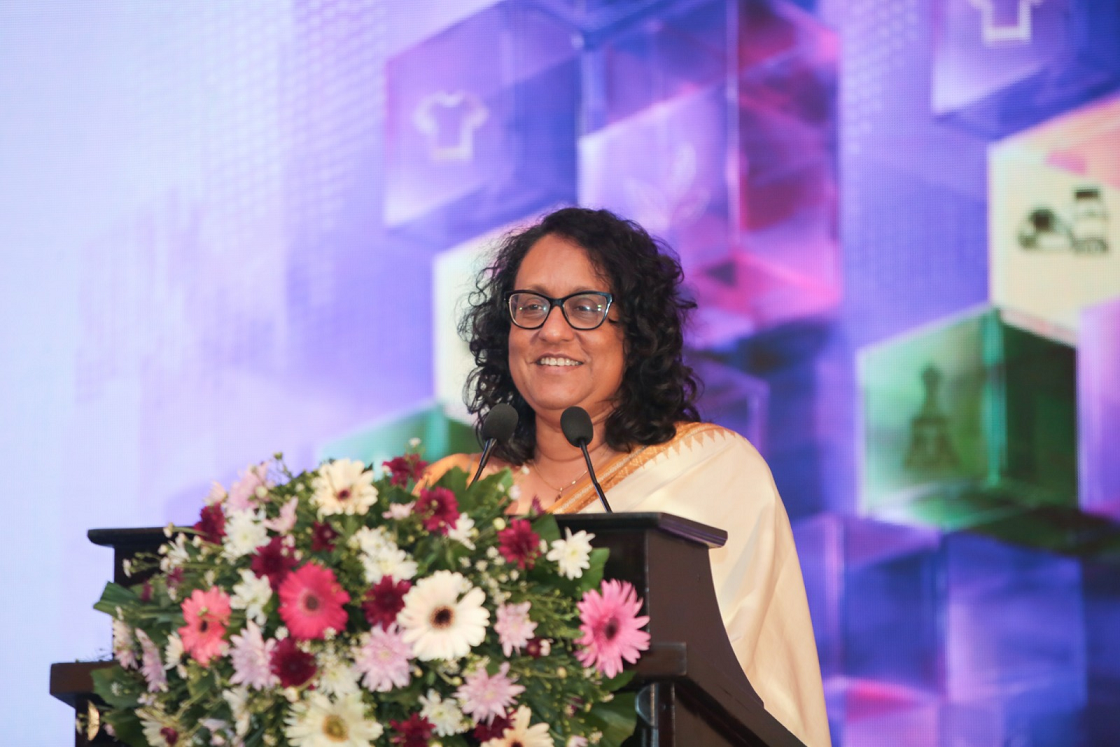
The Prime Minister Dr. Harini Amarasuriya participated in the 2nd day of the dialog on “National SME Strategy Framework 2026” organized by the Ministry of Industry and Entrepreneurship Development held on Thursday [14th of May].
The official launch of the “National SME Strategy Framework 2026” to empower Small and Medium Enterprises (SMEs), was held on Wednesday (13) under the patronage of the Minister of Industry and Entrepreneurship Development, Sunil Handunnetti, and Deputy Minister Chathuranga Abeysinghe.
The Framework has been developed by the Industry and Entrepreneurship Development Ministry, with input from the SME Advisory Committee and key system stakeholders in line with the national manifesto of “A Thriving Nation – A Beautiful Life.”
This framework creates the opportunity for the entrepreneurs to easily register their businesses, access modern technology, and obtain specialized financial facilities along with the advisory services that directly support the growth of entrepreneurs, departing from the traditional method free of charge.
The second day marks the dialog on the “National SME Strategy Framework 2026” focusing on the discussion into implementation and strategy to action featuring series of panel discussions.
During the event National SME Strategy Framework 2026 was presented to the Prime Minister by the Deputy Minister of Industry and Entrepreneurship Development Chathuranga Abeysinghe.
The Prime Minister stated that the country is implementing its transformative agenda during a period of global instability and disruptive global context stressing the importance of adaptation, sustainability and building resilience, particularly within the Small and Medium Enterprise (SME) sector in such context.
Underscoring the importance of the SME policy framework, the Prime Minister further stated that the government’s role is to ensure consistency, stability and collaboration within the sector.
The event was attended by the Minister of Industry and Entrepreneurship Development, Sunil Handunnetti, Deputy Minister Chathuranga Abeysinghe, Australian Deputy High commissioner to Sri Lanka, Ms. Ruth Baird and Secretary to the Minister of Industry and Entrepreneurship Development Mrs. J.M. Thilaka Jayasundara and develop and develop partners and representatives from business community.
[Prime Minister’s Media Division]

… calls for modernising Inland Revenue Dept.
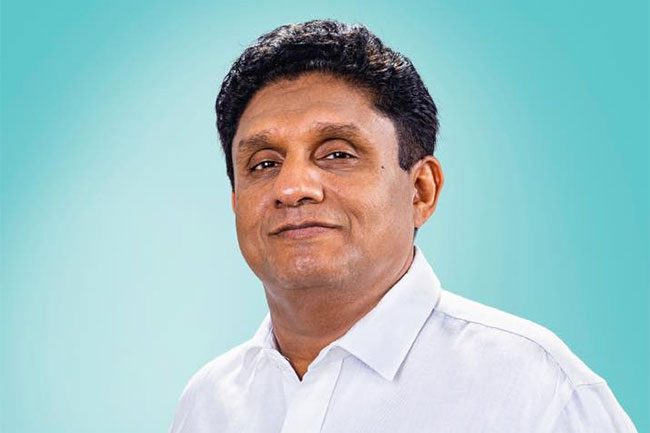
Opposition and SJB Leader Sajith Premadasa yesterday criticised the government’s proposed amendments to the Inland Revenue Act, claiming that a new provision in the draft legislation could unfairly lead to criminal action against ordinary citizens and small business owners over administrative tax-related matters.
In a statement, Premadasa said the public was “not angry about paying taxes” but was frustrated by what he described as unfair treatment under the proposed law.
He alleged that Section 185A of the proposed bill could make delays in filing tax returns or registration-related issues criminal offences, warning that struggling small-scale entrepreneurs could be treated in the same manner as individuals deliberately evading millions of rupees in taxes.
“That is wrong,” the Opposition Leader said.
Premadasa further accused the government of resorting to criminal action against people instead of reforming and modernising the Inland Revenue Department and simplifying tax compliance procedures.
He also questioned the government’s commitment to tackling corruption and financial crimes, asking why stronger measures had not been taken against money laundering, financial fraud and those accused of misappropriating public funds.
“Go after the corrupt. Punish real fraudsters. But do not weaponise the law against the common man,” he said.
Premadasa added that the Opposition would continue to resist legislation that undermined “fairness, proportionality, and the constitutional rights of the people.”
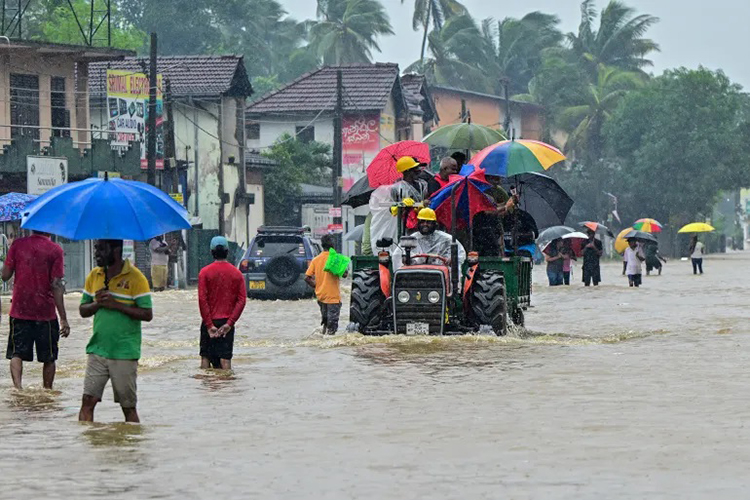
Adverse weather conditions prevailing across the country have severely affected 3,475 persons belonging to 1,113 families in seven districts, according to the Disaster Management Centre (DMC).The DMC said 1,310 individuals from 489 families had been relocated to eight temporary safety shelters due to the deteriorating weather situation.
The DMC also confirmed one death from the Koralepatthu South area in the Batticaloa District.
As of 10 am yesterday (14), a total of 88 houses and one business establishment had sustained partial damage as a result of the adverse weather conditions.
Authorities have urged the public in vulnerable areas to remain vigilant and follow safety instructions issued by disaster management and local officials as heavy rains continue to affect several parts of the country.
Meanwhile, the National Building Research Organisation (NBRO) yesterday extended landslide warnings for several districts across the country due to the prevailing adverse weather conditions.
According to the NBRO, Level 2 landslide warnings have been issued for Neluwa in the Galle District; Agalawatte, Baduraliya, Matugama, Horana and Walallawita in the Kalutara District; and Ratnapura and Pelmadulla in the Ratnapura District.
Level 1 landslide warnings remain in effect for several areas in the Badulla, Galle, Kalutara, Kandy, Kegalle, Kurunegala, Matale, Monaragala, Nuwara Eliya and Ratnapura districts.
The warned areas include Bandarawela, Passara and Hali Ela in Badulla; Thawalama, Elpitiya and
Niyagama in Galle; Ingiriya and Bulathsinhala in Kalutara; and multiple Divisional Secretariat areas in the Kandy District, including Poojapitiya, Deltota, Udunuwara and Pathahewaheta.
Warnings have also been issued for Bulathkohupitiya, Mawanella, Kegalle, Aranayake, Yatiyanthota, Warakapola and Rambukkana in the Kegalle District; Ridigama in Kurunegala; Rattota, Naula and Ambanganga Korale in Matale; and Wellawaya, Badalkumbura and Bibile in Monaragala.
In the Nuwara Eliya District, the warning covers Norwood, Ambagamuwa Korale and Kotmale, while Eheliyagoda, Kalawana, Kuruwita, Godakawela, Kiriella and Ayagama in the Ratnapura District have also been placed under alert.
The NBRO said the warnings were extended in view of further rainfall forecast by the Department of Meteorology and urged residents in vulnerable areas to remain vigilant and follow instructions issued by authorities for their safety.
Meanwhile, the water levels in several major river basins that had risen due to recent heavy rainfall are now receding following a decline in rainfall over the past 24 hours, the Department of Irrigation said.
Director of Irrigation (Hydrology and Disaster Management) L.S. Sooriyabandara said water levels in the Nilwala River, Gin Ganga, Kalu Ganga and Attanagalu Oya basins were showing a downward trend as rainfall eased.
He noted that water levels were declining in most areas, with the exception of the Millakanda area in the Kalu Ganga basin.
However, Sooriyabandara warned that the current improvement could be temporary, as the Department of Meteorology has forecast further rain in the coming days.
According to the Department, 18 of the country’s 73 major reservoirs are currently spilling over, while another 18 medium-sized reservoirs are also discharging water.
He stressed that the release of water does not indicate a major flood situation at present, but urged the public to remain vigilant and follow future advisories issued by authorities.
By Norman Paliahwadane and Chaminda Silva

LPL 2026 Opening Game between Jaffna and Galle

New Zealand’s Māori Queen meets King Charles at Buckingham Palace

Trump and Xi conclude ‘very successful’ talks but no deals announced

India hikes fuel prices as Iran crisis bites

Kuldip Yadav in for Khaleel; Gleeson for Thushara

Eyman Fatima powers Pakistan to series victory

‘Dates have the highest sugar content to fight Coronavirus’

Sunday Island 27 December – Headlines

#SundayIsland 17th December – Headlines

Sunday Island – 28th March

Sunday Island Headlines – 21 March

Sunday Island – 21st February – Headlines
-
 News6 days ago
Lanka Port City officials to meet investors in Dubai
-
 News3 days ago
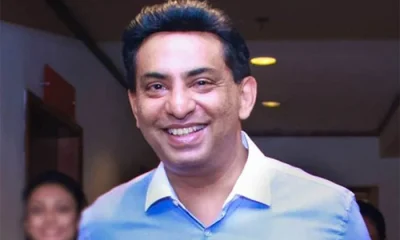
Ex-SriLankan CEO’s death: Controversy surrounds execution of bail bond
-

 News7 days ago
SLPP expresses concern over death of former SriLankan CEO
-
 News7 days ago
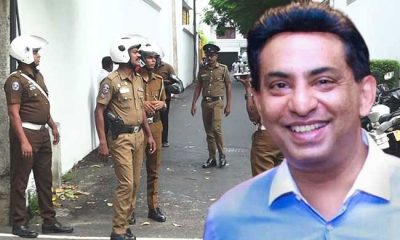
Police inform Fort Magistrate’s Court of finding ex-CEO of SriLankan dead under suspicious circumstances
-
 Features4 days ago
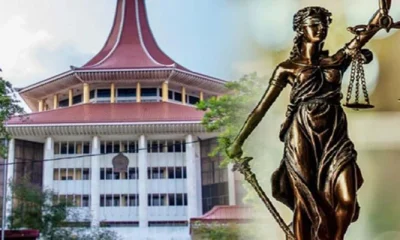
When University systems fail:Supreme Court’s landmark intervention in sexual harassment case
-
Features4 days ago
High Stakes in Pursuing corruption cases
-
 Midweek Review3 days ago
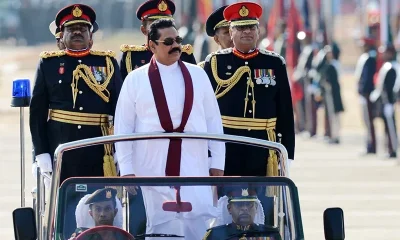
A victory that can never be forgotten
-

 News7 days ago
President of Vietnam and delegation departs Sri Lanka