
Features
Impediments to a better CEB

by Kumar David
It is a shame that CEB Chairman Vijitha Herath was happy to sell his professionals down the river for cheap popularity with his political bosses as in his interview in Ceylon Today (23 August, pA4). The sub-heading was “Corrupt Power Deals by last regime – CEB Chairman” and the opening summary statement by the interviewer reads “The power and energy sector in Sri Lanka, mainly the Ceylon Electricity Board is alleged to be one of the most corrupt and most negligent entities in the country. In the past even the state sector worked with the power sector in the most lackadaisical manner – cancelling competitive tenders and at the same time awarding them to those who curry favour with higher ups or private suppliers based on deals. There are accusations that CEB Engineers run a monopoly”. To my knowledge Mr Herath has issued no refutation disassociating himself from the interviewer’s implied attribution of views, nor has he rejected the association of his name and office from grossly untruthful slanders of his staff. Is this the man who is going to give leadership to the CEB? Does he not know that corruption in the power sector derives 90% from Presidents, the Cabinet, Power Ministers and Ministry Secretaries? Big time corruption in the power sector commenced in the 1990s in Chandrika’s time with the awarding of contracts to build and operate private power plants. Big money went to big players. Do they not teach corporate managers like Mr Herath about reciprocal confidence building? Managers who undermine and untruthfully publicly ridicule their staff will lose the trust of colleagues and the confidence of the institution.
In the mean time we have had this eight-hour all-Island blackout and an inability to restore full supplies for four or five days. One matter I want to especially complain about is the failure of the CEB or CEB-Ministry (erroneously named Power-Ministry) to issue a full, frank and transparent public statement. I appreciate detailed technical analyses will take time and highly placed fools who allege sabotage are doing damage. However, a simple summary would have sufficed to keep speculation at bay. Speculation on the grapevine says that a bus-bar was inadvertently energised by maintenance crew before a heavy earthing chain was removed which led to massive tripping of other circuits and the isolation of Norochcholai. After that it took ages to restart Norochcholai, a known problem which seems not to have been sorted out for 12 years.
Furthermore, there was something new that has not been encountered before. When units were brought back on-line and attempts made, in many different ways, to re-energise Colombo, the system repeatedly tripped. Is all this true? No official statement! Questions: (a) Three-phase to ground flashovers are not common but not unknown; systems should be robust to such events. (b) Why has something not been done for a decade about Norochcholai restarting? And (c) Repetitive tripping-on-re-energisation is a new phenomenon that CEB professionals can sort out given time. However, there has to be stringent outside review of their analyses and proposed solutions. Ministers who smell a saboteur-rat under every bed and Chairmen who undercut their staff will be of no help.
Renewable Energy
Renewable energy sourced technologies for the generation of electricity is one of the very best things that has happened to humanity. The problem is that the God Indira who commands the sun and wind was not equally generous to all corners of the earth. A one square kilometre site atop the Atacama Desert in Chile or Hardup in the Namib Dessert will produce about 350 GWh (gigawatt hours) and 230 GWh respectively per year. The output for a one square kilometre site in Puttalam, NCP, NP or Hambabtota will be about 150 GWh per year. [A GWh is 1,000,000 units or kWh]. A 1000MW coal power station will generate about 6300 GWh per year (Norochcholai is 900MW and extension to 1200 is planned). To match this, we will need 42 square kilometres of land, that is close to 10,000 acres! This is the problem! Only countries with large dessert landmasses can think big about solar powered electricity. Uninhabited and uncultivated portions NCP, NWP, NP and Hambantota District are good locations for big solar farms, but all together it will not be easy to put together more than about half-a-Norochcholai. As with big-hydro, with wind and solar too, once the best sites are used up it’s saturation; what after that? With other technologies (thermal, nuclear and future fusion power) new plant can be added without such restrictions.
An attraction of solar power is that prices are coming down steeply. After you factor in lifetime repayment of capital, the future cost of electricity generated from large solar farms will be about Rs 10 per kWh while coal or LNG cost between Rs 7 and Rs 9 depending on global coal and gas prices. Let us agree, prices are comparable. The CEB buys privately generated (IPP or Independent Power Producer) power, when it faces shortage, at about Rs 25 per kWh, again variable with world oil prices. [I won’t waste your time with fractions and decimals which will be out of date between one month and the next. When someone with a little subject knowledge writes media columns the duty is to convey useful and reliable information, not to impress readers with minutiae].
We are in our present predicament because of the stupidity and inanity, respectively, of President Sirisena and PM Ranil who ignored an Expert Committee Report in 2016 which warned that cancelling Sampur coal-fired power station would be ruinous. They had numerous warnings from other experts and CEB planners as well. As a member of the Committee I estimated, and included in the Report, that this blunder would cost the country Rs 220 billion. That now seems a bit of an underestimate and the crisis has arrived sooner than I forecast. I am not playing the usual “this regime”, “that regime” game that the media, corporate chairmen and politician are slick at. The two former Rajapaksa Administrations and the 2015-2019 government have all been grossly imprudent in respect of the long and short-term future of the country’s electricity sector. That’s that and QED!
I will not repeat the same story about wind generated electricity though I have jotted down some back of the envelope calculations for my own use. The scenario is similar to solar: It is, like solar, much less polluting and it is price comparable with coal or LNG and much less pricey (only capital costs, negligible running cost) than oil-fired private power. But availability of good sites is limited as with solar (once the best sites are used up as with major hydro, the story is finished – what to do after that?). A very important point is that renewables are big in the public popularity stakes and this is the great selling point for politicians who don’t know the difference between a kilowatt-hour and an LED lamp.
As per the most up to date information on the CEB website (2017) large-hydro supplied 24.6% of total energy while wind, mini-hydro and solar supplied 8.1% – of which mini-hydro was 5.2% all the others 3.9%. CEB thermal (coal and oil) was 52.2% and IPPs (all oil) 15.2% of energy. (It fluctuates a little annually depending on rainfall and unforeseen events like the August 2020 system outage). However, one needs to be ignorant of the basic laws of physics and not schooled in primary arithmetic to say that renewable source electricity will supply 80% of energy by 2030. If in 10 to 15 years demand doubles (say) and no large-hydro is added (only few medium-size projects are left to do) then its relative share will decline, as per trivial arithmetic, to 12.3%. To increase non large-hydro renewables (only 3.9% now) by a factor of five to 19.5%, energy supply must increase, as per trivial arithmetic again, tenfold within 10 years! Only knaves and politicians make such promises.
Has government (President/PM/Cabinet/Subject Ministry) corruption and incompetence been an obstacle to the faster implementation of renewable energy sourced electricity? When competent, rational and honest decision making about the country’s long-term generation expansion programme is undermined by government (all governments) it throws a spanner in the works. Government after government have been ‘playing pandu’; to-LNG or not-to-LNG; to have another coal fired unit or not; to embrace India or Japan or both. When mega private sector companies screw ministers and when nothing is decided properly, it throws the transmission plans out of kilter and demoralises planners. It stands funding including for renewable sources on its head. Therefore, in addition to the technical limitations that I discussed previously cock-up and corruption at the highest levels – not in the CEB Mr Herath but in governments – is an impediment to a sensible programme for increasing renewable source power generation.


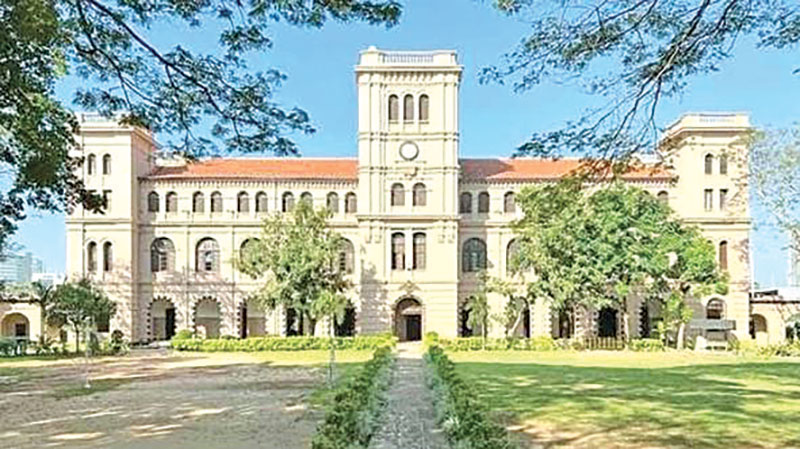
(Excerpted from In Pursuit of Governance, autobiography of MDD Pieris)
In January of 1956 I entered the second year university entrance form of St. Joseph’s College. There was a nice quiet atmosphere in the school. The discipline was good and the teaching excellent. Mr. Rajapakse who taught us European history was one of the best history teachers that I had encountered even counting the university. So was Mr. Kuruvilla who taught English literature. The English class being small we received personal attention from a fine teacher. I later found that there were few in the English Department in the University to match him, and this included a lecturer from Cambridge University attached for a period to the department.
Father Peter Pillai himself took classes on the constitutional aspects of government, where we had to read books such as “Constitutional Law” by Wade and Philips and “The Law and the Constitution” and “The Constitution of Ceylon” by Sir Ivor Jennings. Father Peter was a remarkable person. He was a Master of Arts, a Master of Science, a Doctor of Philosophy and a Doctor of Divinity. He had a clear and distinguished mind and in spite of his heavy responsibilities as Rector found the time to teach physics in one class, divinity in another and aspects of constitutional development and constitutional law in yet another.
I have been very fortunate in being taught by teachers with experience, skill and very good minds both at Thurstan and at St. Joseph’s. Just to cite one example from Thurstan, Mr. B.J. Perera who taught us history in the fourth form was a research scholar whose learned articles on Ceylon history were being published in “The Ceylon Historical Journal.” We owe a lot to these teachers.
Most schools of course had interesting teachers. They were what could be called “characters.” St. Joseph’s was not an exception. Space would not permit me to dwell at length on this subject. I would therefore mention only one such case. The teacher concerned, taught a language. It was not English. His approach to, as well as his use of the English language was innovative, picturesque and refreshing. Structure and syntax were too confining for his liking. One day therefore, he had requested a startled monitor of the class to “run up downstairs and bring the mark book,” which had been temporarily taken to the office. On another day, he had pounced upon a restless and irreverent class, and threatened them with dire consequences if they “laugh in front of my back!”
These kind of refreshingly interesting sayings naturally evoked a corresponding response from his pupils. Therefore, one day, during a more convivial moment, when this teacher had confessed to having three daughters, one of his more intrepid pupils had politely inquired, whether they were all girls! According to reports, all goodwill and conviviality had instantly vanished. He was not prepared to tolerate such detailed investigation.
Astrology
My father was a student of astrology. He pursued the subject occasionally in his spare time out of personal interest. Sometimes he used to look at my horoscope or my mother’s and say something which by and large, curiously turned out to be correct. Now, after the trauma of changing schools hurriedly he had looked at my horoscope, and one day, in his customary quiet tone said something disturbing. He said that I had entered a bad period which was going to last for five or six years. He predicted the arising of unforeseen difficulties and mental worry and went on to make the startling remark. “This is the worst period in your horoscope. After this, you will never have such a bad period right to the end.”
Finally he said “There is no threat to your life, and you will come through the difficulties, but you will undergo a great deal of mental suffering.” My parents and I have always had a frank dialogue and I understood that my father’s intention in saying all this was to forewarn me. Fortunately nature had given me a strong temperament. I was not one who could easily be demoralized.
I enjoyed a happy year at St. Joseph’s. I found the time whilst studying to play second XI cricket for the school, and thereafter to be selected to the rather small first X1 pool. Mr. John Pulle the well known All Ceylon Cricketer coached the second XI. We had a strong batting line up and he decided that my services would be more useful in the bowling department as I was tall and reasonably well built. He did not want to waste such a physique. One day at practice he took me to the middle of the pitch and said “Pieris, I am going to send you as last man.”
Then pointing to four well known land marks, he continued, “your job is to go out there and hit the ball into Darley Road, The Home for the Aged, Bonjean Hall and the swimming pool. I don’t want singles and twos.” Never had I been given such an open license for anything. He was a hard task master and was not totally satisfied with my subsequent performance. I managed to hit a few over the wall and into Darley Road, once hitting a passing bus. I also succeeded in hitting a few onto Bonjean hall. But the home for the aged and the swimming pool proved beyond me, to the disappointment of Mr. John Pulle.
A shock
With the entrance examination looming, I went for first XI practices and played in some third term matches against some clubs. The main school matches were due to commence in the New Year in January. In the meantime, I had an examination to sit. I had done steady and regular work and was reasonably confident that I would not fare too badly. In a competitive situation, whether it was sufficient to get me into the university was another matter. There perhaps some luck was also necessary.
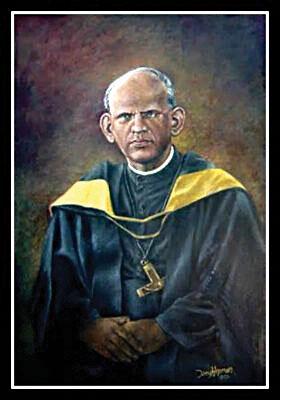
Father Peter Pillai
We were given two weeks study leave to be spent revising at home, and almost five days of this period had elapsed when one evening a classmate of mine turned up at home on his bicycle. What he had to tell me was most disconcerting. He said “Father Rector wants to see you first thing tomorrow morning.” When I anxiously inquired what the problem was, he was cagey, but under further questioning said vaguely “I think there is some problem about your subject combination for the examination.”
This was a stunning blow. Only the previous day I had quietly told my mother that I thought I was ready for the examination. Now this bolt from the blue had descended. All of us spent a tense and uncomfortable night. Early next morning I was outside the large door of Father Peter Pillars room. The time was about 7.30 a.m. Already, a queue had formed of parents and others who had come to see him. Sharp at 8.00 am. as was the custom, he personally opened the door. I stood out a little to be seen. He saw me and immediately called me in explaining to those ahead of me in the queue that this was an urgent matter.
When we were both seated, he said “I am very sorry, but your subject combination does not fit any of the combinations permissible for the examination. It is also our fault. We should have checked out your subjects, when you entered school. Evidently, Thurstan too had not checked. I have telephoned Balmond (Registrar of the University) and he says nothing can be done unless you change the combination. But it is clearly too late now. There are only a few days to go before the examination. I am really sorry.”
Then seeing the combination of shock and forlornness in my face, the Rector went on to say, “Apparently you cannot offer both Sinhalese and English as subjects for the examination. I do not know why that should be so, but those are the regulations.” Then viewing my complete stunned immobility, Father Peter Pillai, no doubt more to console me than anything else said “I notice that you had obtained a credit in Latin at the Senior School Certificate Examination. The Latin papers consist mainly of several passages in Latin and English for translation and comment. There are no text books to master. Would you like to drop Sinhalese, which is the weaker of your two subjects compared to English and try sitting for European History, Government, English and Latin? Although very late I can get Balmond to agree to a change.”
By this time I was slowly recovering from the blow and beginning to find my voice. I told Father Peter that I had substantially forgotten my Latin since I had not kept up with the subject and that I wouldn’t mind taking a shot at Ceylon History, since I believed I had a knack for History. The Rector appeared quite incredulous at this proposition and most emphatic in his reply. “You will have no chance whatsoever,” he said, adding “Do you know why we do not teach Ceylon history for the university entrance at St. Joseph’s, and teach Indian history instead?” Answering the question, he went on, “That is because of the very high failure rate in Ceylon history.”
Finally, he said, “I am sorry, but the best thing to do is to sit for the examination next year.” I had by now recovered my determination and fighting spirit. “I would like to sit for Ceylon History. In any case I have nothing to lose,” I said. The Rector looked at me in a manner of looking at a person who had completely lost all sense and judgement. “Do you realize,” he asked, “that you will have to sit for two papers of three hours each, the first paper covering the period from the very beginning to the arrival of the Portuguese in 1505, and the second paper covering the period from 1505 to the achievement of Independence in 1948? How are you going to cover two years work in a few days?” was his final and incredulous question.
I said, I realized the near impossibility but would still like to try. The Rector agreed more out of pity than any conviction. He promised to ring the Registrar and make the necessary arrangements. Since, I was in school, I met my history teacher Mr. Rajapakse and told him of my predicament. I was very good in my European history and he liked me as one of his best pupils. He spontaneously volunteered to help. He advised me to rapidly do whatever reading that was possible at home. He then gave me specific times to come to school, when he had free periods. He promised to get hold of the past papers for three years and suggested that we sit together and answer as many questions as possible in point form.
I was immensely grateful for this positive attitude and strong support. I returned home to the other pillar of strength, my mother. She had a temperament which refused to panic, which she seemed to have bequeathed to me. Her focus was not on what had happened, but what had to be done in a situation where every minute counted. Her advice was precise.
She said “Son, you told me a few days ago that you felt ready for the examination. Therefore, stop all work on the other three subjects and spend all your time on Ceylon history.” This kind of learning came later to be called total immersion. But immersion needed water. I had to quickly find some books. I searched diligently and found at home my old copies of Father S.G. Perera’s “A History of Ceylon for Schools” which included coverage of the Portuguese, Dutch and British periods, and Professor G.C. Mendis’ “Ceylon under the British.” Some of my friends found relevant books covering various aspects of the total period written by Ratnasabapathy and Horace Perera, as well as Codrington’s “Early History of Ceylon.” I also found a copy of Geiger’s translation of the “Mahawansa.”
I now gave up all thought of revision of the other three subjects and concentrated solely on Ceylon History. As I read, important sections and parts which I had studied years before came vividly to mind. Sitting with Mr. Rajapakse and answering previous question papers in point form focused attention on issues. more precisely and concentrated my mind. I was also hoping that the Ceylon history papers would come during the middle or towards the end of the examination giving me that much more time. But this was not to be. When the time table came, I found that these two papers came first out of the four subjects I had to sit, and on the same day, morning and afternoon! I was beginning to have an increased respect for my father’s reading of my horoscope!
During this difficult period my mother continued to play a pivotal role not only encouraging me, building up my confidence and providing me with extra nourishment, but also seeing to it that I did not overdo things and burn out. She strictly saw to it that I had eight hours sleep in the night. She used always to say “you must rest your brain. You must have a clear mind.” This calm support was invaluable. Ultimately when I finished sitting the two three hour papers, I felt that I stood a fighting chance of passing. So did my History teacher, who listening to me felt that I had done well enough to be at least on the border.
At that time, those who passed all four subjects at one sitting gained direct admission to the university without going through an interview. But those who had passed in three subjects and had narrowly failed in the fourth were called up before an interview board and those who fared well at the interview were admitted to the limited number of places that existed after the direct entrants were provided for. The question was, had I performed well enough in my Ceylon History to be at least called for the interview, and that too if I had done well in the other three subjects.
Strangely enough, the fact that I seemed to have done reasonably well, given the almost impossible odds added to the mental tension which indeed is a natural part of sitting for an important examination. If I had done badly, there would have at least been the relief of recognizing the inevitable. There would have been closure. But now there was the added tension, emanating from the feeling of being possibly so near, but yet so far.
It was a feeling inimical to the kind of mental stability that one would like to have had during an examination period. I sat for my two papers each, in European history and Government and was quietly confident of passing. Then, at last, amidst the gloom came a ray of light, and tidings of good cheer. At St. Joseph’s I had sat for the prize tests for the upper school history prize and the open English prize. Just the day before I was to sit for my two papers in English, which were my final papers, the school sent a message home to the effect that I had won The P.H.C. De Silva Memorial Prize for Upper School English. It was most thoughtful and kind of the school authorities to have done this.
The mental boost and the confidence it gave me just before my English papers were indescribable. Sitting in St. George’s Hall of the University of Ceylon, Colombo, I felt that I did really well. The anxious and somewhat demoralized student who sat this examination in various halls and rooms of the university did not know at the time, that over 30 years later he was to serve as a member of the governing council of the University of Colombo, a separate university by that time. Such are the twists and turns of life and fate.

by J.A.A.S.Ranasinghe
Productivity Specialist and Management Consultant
(The writer can be contacted at rathula49@gmail.com)
{An ageing population is not merely a demographic challenge; it is a strategic national resource—provided we know how to harness its accumulated experience.}
“Sri Lanka’s latest Population Census has delivered not only a demographic warning but also uncovered one of the country’s greatest untapped economic assets—the accumulated experience of its older citizens. “Sri Lanka continues to view its ageing population merely as a fiscal and social burden, it will overlook one of the nation’s greatest strategic assets. The challenge before policymakers is not simply to manage an aging society, but to transform it into a knowledge-rich, experience-driven economy where every year of accumulated wisdom becomes an investment in the nation’s future.
For decades, Sri Lanka regarded its young population as its demographic dividend. The latest Census suggests that this dividend is diminishing. The country’s next demographic dividend may therefore lie not in the number of young people entering the workforce, but in the wisdom, expertise and institutional memory of those leaving it. This ‘Experience Capital’ must be recognized, organized and productively deployed if Sri Lanka is to sustain its economic and social development.
The Census has change the context
It must be mentioned here that almost all the three eminent speakers, namely Professor Manori Weeratunga, Dr.Harischandra Yakandawala and Dr. Anoja Seneviratna of the Population Association of Sri Lanka at a workshop held at the Faculty of Indigenous Medicine emphasized the ill-effects of growing trend of the age population. They enlightened the audience that Sri Lanka is entering a completely new demographic era with the ageing as a growing fiscal burden, increased healthcare expenditure, shrinking labour force, declining tax base and a lower economic growth.
Is ageing population a burden to Sri Lanka?
It is true that the warning expressed by the experts are valid concerns, but they answered only one question. “What problems does an ageing society create?” What my concern is a much more important question. “How can an ageing society become a national asset, contributing to the much needed economic development process with the expertise they possess” without being a burden to the country at large. Hence my contention is that this ageing factor of the population trend must be looked from a total different perspective with a refreshing and constructive approach. Probably, this is the line of approach resorted by the government to retain the services of the judges of the Supreme Courts and the Courts of Appeal beyond their compulsory age of retirement,
Ageing population – Manna from heaven
It is not my contention to interpret this population conundrum as a conflict between two generations but to enlighten the policy makers and demographers the ageing syndrome as a manna from the heaven –a resource that should be harnessed for the development of the country. Undoubtedly, any country has four forms of capital – namely Financial Capital, Physical Capital, Human Capital and lastly Experience Capital. It is my honest and candid understanding is Sri Lanka has never measured or managed or utilized the fourth – Experience Capital.
Every year, thousands of highly experienced professionals – Doctors, Engineers, Administrators, Academics, Scientists, Military Officers, Teachers, Technicians, Craftsmen retire on the attainment of their compulsory age of retirement. With their retirement or along with them disappears 40 years of accumulated knowledge and expertise resulting in a massive drain of economic loss to the country. If the country shares 40 years of experience with a young entrepreneur, the country loses nothing but an added value addition. This is the only form of capital that increases when it is shared with the stakeholders. This is the central message I want to convey to the policy makers and the demographers.
An ageing population – not a demographic challenge
The recent population census is telling the policy makers that there will be fewer young citizen to drive the economy. But my strong message to the government is not to get disheartened and frustrated with this unforeseen development because Sri Lanka has a reservoir of experienced citizen even more valuable to drive the economy. It this sense, it could be definitely argued that an ageing population is not merely a demographic challenge: but a strategic national resource, provided the country knows how to harness its accumulated experience.
Policy Interventions for older people
Now my biggest concern is to make a policy proposal – national framework – to the government and demographers suggesting possible avenues for the utilization of experience capital of Sri Lankan older community, instead of simply encouraging older people to remain active.
The retired professionals of our country must step forward as catalysts of change in the face of this unbridgeable vacuum. The older people in Sri Lanka are highly qualified people in their respective fields and they, I would say, are the custodians of knowledge. They cannot remain passive observers in the light of the fact that the country expects you to discharge an inescapable duty is disseminating the knowledge they assimilated during their active period prior to retirement. They must re-imagine the delivery of higher education and practical knowledge to the larger interest of the society on the premise that the opportunity they got is not a privilege for the few but for the country and the younger generation. It Is earnestly believed that my proposal would avoid an unnecessary “young versus old” narrative and instead argue for a partnership between the two generations to strengthen national development.
Establishment of Board of Retired Experts
It is proposed to set up a Board of Retired Experts {BRE} under the purview of Department of National Planning so that the senior citizen by using this platform can disseminate the knowledge so that the following practical mechanisms which would eventually help converting experience into productivity. Every year thousands of highly experienced engineers, doctors, administrators, academics, entrepreneurs, military officers, teachers, technicians and craftsmen retire. Along with them disappears 40 years of accumulated knowledge. As the number of young workers declines, the country must deliberately cultivate an Experience Dividend—the economic and social value created when retired and semi-retired professionals continue to mentor, innovate, advise, teach, volunteer and support entrepreneurship. That is not simply a social policy; it is an economic strategy.
Knowledge Transfer Group by way of National Senior Knowledge Corps, National Skills Transfer Program, National Mentoring Network
Policy Advisory Group by way of Board of Retired Experts, Retired Professionals Advisory Service,
Innovation & Industry Group by way of Industry–University Mentor Program, Senior Volunteer Technical Corps
New dimension for the policy makers and demographers
It is to be explicitly stated here that the latest census has not merely counted people but has revealed the future of Sri Lanka. The findings of the Census have drawn our attention to two simultaneous realities.
· The country’s biological clock is slowing as fertility continues to decline.
· The proportion of older citizens is increasing at an unprecedented pace.
Much of the public discussion has understandably focused on the economic burden of an ageing population—higher healthcare costs, pension obligations, and a shrinking labour force. While these concerns are real, they represent only one side of the equation. The Census also reveals the emergence of a vast and largely untapped national resource: a rapidly growing population of experienced, educated and professionally accomplished senior citizens.
This is exactly that my concept of Experience Capital becomes more relevant and powerful. Instead of asking “How will Sri Lanka support an ageing population“, we should ask “How can an ageing population help Sri Lanka” when the population is at a crossroad. This entire question, I believe, changes the policy debate.
From Demographic Dividend to Experience Dividend
During the past 50 years, development economists and demographers spoke about the Demographic Dividend—economic growth arising from a large working-age population. Sri Lanka is now moving into a different phase.
As the number of young workers declines, the country must deliberately cultivate an Experience Dividend—the economic and social value created when retired and semi-retired professionals continue to mentor, innovate, advise, teach, volunteer and support entrepreneurship. That is not simply a social policy; it is an economic strategy. This article raises an equally important question “what should the nation do in the light of the ageing population. That progression from diagnosis to a practical national strategy is precisely what the policymakers and demographers should look for.
Gerontocracy and Wealth Accumulation – An Asset not a liability
Writing an article to a newspaper recently, Dr. Sarath Obeysekera recently argued how gerontocracy and wealth accumulation are in the hands of older generations in the United States. Drawing a parallel to the Sri Lankan situation, he contends that Sri Lanka has also become a society where wealth is increasingly concentrated among the older generation. His bone of contention is “Sri Lanka’s older generation accumulated wealth through a different set of circumstances unlike their counter parts in USA who accumulated wealth through financial markets, pensions, decades of capital appreciation etc.
“Unlike previous generations, today’s younger Sri Lankans often began life at a disadvantage. House prices have risen far beyond average incomes. Land values have become prohibitive. Many businesses are controlled by second or even third generations of established families. Without inherited assets, it has become increasingly difficult for talented young people to build capital. Consequently, wealth is becoming more concentrated rather than more widely distributed”. In addition I would go a further step more and contend that Knowledge Asset too belongs to a 60% of the generations- meaning older generation similar to the national wealth. Hence, our future will be bleak unless the knowledge asset is potentially harnessed for the benefit of the younger generation.
Today, many older Sri Lankans remain intellectually active, productive and continue making valuable contribution to the society and economy. Literally and gerontocracy “rule by the elderly”. Experience should never become a barrier to fresh ideas. Wisdom must guide the next generation rather than replace it.
Over the years, countries have spoken about Natural Capital, Human Capital, Social Capital, Intellectual Capital, and Financial Capital. It is my optimistic view that my article has the potential to introduce “Experience Capital” into Sri Lanka’s policy vocabulary as a distinct and measurable national asset. Finally, It has to be reiterated that the country’s next demographic dividend may therefore lie not in the number of young people entering the workforce, but in the wisdom, expertise and institutional memory of those leaving it.”
The future prosperity of Sri Lanka will depend not only on the children we raise today but also on the wisdom we preserve from those who built the nation yesterday. Countries that waste their experience capital impoverish themselves. Countries that harness it create a new demographic dividend founded not merely on numbers, but on knowledge, mentorship and innovation. The challenge before Sri Lanka is therefore not how to support an ageing population, but how to transform that population into one of the country’s greatest productive assets.
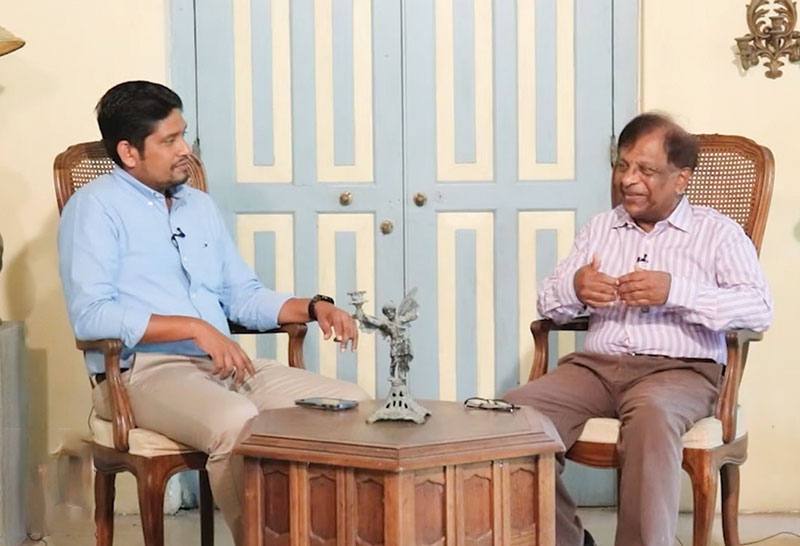
The following are excerpts from a recent interview with Lionel Bopage, who was in the 1971 JVP leadership, conducted in Sinhala by Sirasa TV’s Ten Questions program hosted by Wasantha Masinghege.
Lionel Bopage, the first General Secretary of the JVP, was here recently from Australia where he is domiciled. Now 82, Bopage was among the key figures involved in the formation of the JVP and was a member of its early ‘Committee of 21’ leadership.
He joined the movement at the age of 24, influenced by his father’s involvement in the Communist Party and his own commitment to left-wing politics. He later became increasingly critical of the JVP’s position on the national question and resigned from the party in 1983.
Following the 1983 ethnic riots, Bopage was detained for six months despite maintaining that he had no involvement in the violence. Amid death threats during the second JVP insurrection, he eventually fled Sri Lanka, first to Japan as a UN refugee and later to Australia, where he worked in research and development for the Australian Federal Government.
In the interview, Bopage reflects on the 1971 insurrection, the ideological differences that led to his departure from the JVP, his life in exile and the transformation of the movement into a political force now leading the NPP government. While expressing hope for the present administration, he stresses the need for long-term reforms, public consultation and a stronger role for civil society.
Q: You have returned to a Sri Lanka that is very different from the country you left. How do you feel about being back?
A:The climate remains the same, although the heat (climatic) is difficult after so many years in Melbourne. But what is more important is the change in the political atmosphere. I see a sense of change which is encouraging, although I remain cautious.
There is still a deep sense of community in Sri Lanka, despite the economic difficulties. But there is also considerable stress and what I would describe as a simmering anger in society.
Australia is a developed capitalist country with a large middle class and a significant immigrant population. Sri Lanka still has a large oppressed rural population and remnants of feudal social structures. The social values are also different.
For example, Sri Lankan families generally look after their elderly members at home. In Australia’s more individualistic and busy society, elderly people often move into aged-care facilities. Sri Lankan villages retain a strong sense of mutual dependence, whereas Australians tend to lead more private lives. Yet Australians are very willing to help when there is a crisis.
I also observe a great deal of impatience and aggression in Sri Lanka. You can see it particularly on the roads. Australians, despite not being a Buddhist society, generally display greater patience, calmness and willingness to listen to others.
Q: Looking back after more than five decades, how do you assess the 1971 JVP insurrection?
A:I now believe that the 1971 insurrection was a historical mistake and should not have happened.
I joined the JVP when I was 24. My father had been involved in the Communist Party, and I was influenced by progressive publications such as Nava Lokaya. During the early underground period, I used the alias ‘Laiya’ and was part of the Committee of 21, which formed the core leadership of the movement.
The JVP was being pushed towards armed struggle. The United Front government had established a committee specifically to suppress us, and this created a vicious cycle. The more we felt suppressed, the more we believed we had to arm ourselves.
The decision to attack on April 5 was a desperate one, particularly following the arrest of Rohana Wijeweera. But we had already lost the element of surprise because of the premature attack in Monaragala on April 4, which affected coordination.
Looking back, I believe the tragedy could have been avoided if the JVP had been provided with a legal and democratic avenue through which to express its grievances.
Q: You resigned from the JVP in 1983. What was the fundamental reason for your departure?
A:The central issue was the national question. While I was in prison in the early 1970s, I met Tamil youth who had been arrested after protesting, including over issues concerning language and university access. I came to understand that many of their grievances were legitimate.
Between 1972 and 1973, I was involved in developing the JVP’s position on the national question. Together with Rohana Wijeweera, I supported the right to self-determination. That did not mean supporting separation; it was a democratic principle.
However, after the 1982 Presidential election, some within the party blamed this position for the JVP’s poor performance among Sinhala voters. The party increasingly moved towards a nationalist position.
The situation became particularly difficult in 1983 when I issued a press statement condemning the killing of a Tamil fisherman by a southerner. The leadership asked me to stop speaking about self-determination.
I could not accept that. A General Secretary has to believe in the principles of the party he represents. I am a Marxist, and a Marxist accepts the principle of self-etermination. I could not call myself a Marxist while remaining in a party that rejected that principle.
Q: What ultimately forced you into exile?
A: By 1989, the situation had become lethal. I was facing death threats from more than one side. After the 1983 riots, I was detained for six months even though I had no involvement in the violence. During the second JVP insurrection, the threats became even more serious.
With the help of friends, I eventually fled to Japan as a UN refugee and later settled in Melbourne. My family joined me there, and we received assistance from a Christian community with accommodation and integration.
I subsequently worked in research and development for the Australian Federal Government until my retirement. I continue to live in Australia because my family is settled there. I have no property in Sri Lanka and depend on my Australian pension.
Q: Did you ever imagine that the JVP would one day become the leading force in government?
A:Honestly, no. I never expected to see a JVP-led government in my lifetime.
I supported Anura Kumara Dissanayake at the 2024 Presidential election because I considered his platform the most progressive one available at the time.
But we have to be realistic about what the present government is. This is not a socialist government. The NPP was not elected to establish socialism. It is operating within a capitalist framework and pursuing what can broadly be described as a social democratic program.
It is also constrained by the IMF agreements inherited from the previous government.
I hope the government succeeds because its success is ultimately the country’s success.
Q: How do you assess the present Opposition?
A:I am not happy with its current role. Parliament should not be a place merely for making wild allegations or exchanging verbal tirades. The Opposition should critically examine government policies, challenge proposals that are unrealistic or harmful to the people and stand up for people’s rights.
A large part of today’s Opposition has previously been in government, and many of the problems the country faces are the result of policies adopted by those governments. If the present administration is attempting to correct those problems, the Opposition has a duty to assist when the proposed measures are in the national interest.
So far, I have not seen an alternative program capable of addressing the country’s existing crises. I would welcome a political force that is better than the incumbent government. That would be good for the country. But at present, I do not see such an alternative force. If one is to emerge, it must ultimately come from the people.
Q: What would be your advice to the present government?
A:It must move away from what I call a ‘firefighting mode’. Governments inevitably have to respond to immediate crises, but temporary solutions cannot substitute for long-term systemic reform. The government should focus more on addressing the underlying causes of the country’s problems rather than simply dealing with one crisis after another.
Most importantly, it must consult the people and civil society organizations.
History has shown us what can happen when governments lose their connection with the people. We have seen examples in countries such as the Soviet Union and China where governments moved away from genuine engagement with society and eventually went down the wrong path.
The government should therefore listen more carefully to civil organizations and the public. I would also like to see the JVP and its political offshoots, including the Frontline Socialist Party, put aside personal animosities and work together where they can for the benefit of the country.
Q: After everything that happened, what is your hope for Sri Lanka?
A:I hope the present change in political direction succeeds. But no government should be given blind loyalty. People and civil society must remain engaged and continue to question governments. What matters is not whether a particular party remains in power, but whether the country moves towards a society in which people have greater freedom, dignity and opportunity.
The government must remain connected to the people. If it does that, it has a better chance of avoiding the mistakes of the past.

How India changed Sri Lanka’s IMF story: Former FM reveals Sitharaman’s behind the scenes role

Administrative error nearly cost me a year at University

Dinusha delivers an escape for the ages

The Biological Clock is ticking: Can Experience Save Sri Lanka’s future?

Giving children the right start: Dr Shine Nissar’s educational vision

JVP/NPP government as seen from outside by Lionel Bopage now domiciled in Australia

‘Dates have the highest sugar content to fight Coronavirus’

Sunday Island 27 December – Headlines

#SundayIsland 17th December – Headlines

Sunday Island – 28th March

Sunday Island Headlines – 21 March

Sunday Island – 21st February – Headlines
-
 Features7 days ago
From the First to the 22nd: A short history of Amendment Politics and Reform Frustrations
-

 News5 days ago
Missing doctor’s body found in Mahiyanganaya
-
 News5 days ago
Australia declines to release Finance Secy Suriyapperuma’s citizenship details
-
 News7 days ago
Ex- Atamasthanadhipathi uses Magistrate’s gate to enter court
-
 News5 days ago
22A: BASL suggests CJ recuse himself from hearing petitions
-

 News2 days ago
Eight politicians in drug kingpin probe
-

 Editorial6 days ago
Govts. drag feet as undergrads age
-
 Features4 days ago
Insights from Chieftains of Uva: Genealogy of two Kandyan Families – Part II