
Business
Sri Lanka urgently needs ‘National Consensus’ on deepening economic crisis, policy analysts and politicians say

The longer reforms are postponed, the worse the problem becomes which makes remedies even more difficult to implement
The only path out is for all parties, the government and the opposition to work together on a common minimum programme of reforms
The reforms are so difficult that no party will want to even contemplate let alone implement them fearing loss of popularity
Sri Lanka is already in one of the worst economic crises in its history
by Sanath Nanayakkare
We are no longer talking about a crisis that is about to engulf us. We are now in its midst, though not its depths. The hope that the 2022 Budget would give the right signals, has evaporated, Prof. Rohan Samarajiva, a leading policy analyst and an advisor of the Advocata Institute said, last week.
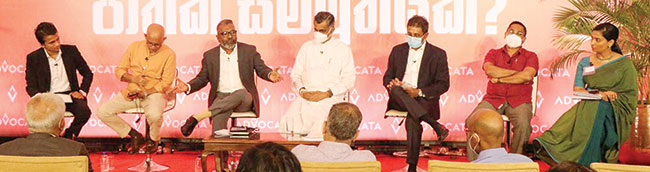
He made these comments at Advocata’s latest event , “A National Consensus for Economic Reforms or “ආර්ථිකයට ජාතික සම්මුතියක්?”.
Professor Samarajiva provided a breakdown of severe economic and social challenges facing the country. His keynote speech stressed on the importance of building a national consensus to implement immediate reforms to tackle a wide range of issues ranging from unsustainable debt to shortages of essential items in the country.
The present macroeconomic instability lies in the failure of the state to implement deep structural reforms to the economy for nearly twenty years. The COVID-19 pandemic has exposed Sri Lanka’s fundamental weaknesses that have plagued the economy for a long period of time. The event brought together politicians representing the main political parties to discuss the importance of a united course of action, to drive Sri Lanka’s economy towards a path of growth.
Prof. Rohan Samarajiva, explained the seriousness of the crisis. “We cannot get out of the crisis without taking some bitter medicine. It is increasingly becoming clear that debt restructuring in the context of an IMF (International Monetary Fund) programme is essential. Unlike in previous IMF programmes, we cannot afford to abandon discipline at the earliest opportunity. Unless we own the reforms, we will keep falling back”. He said, stressing that what we need is a common minimum program of reform agreed by many. ” We need an attention-grabbing action that will credibly communicate the intentions of the national government. Divesting Sri Lankan Airlines on the same lines as Air India is a good candidate. The objective is to protect the taxpayers of this country from having to continually cover the losses of this technically bankrupt state-owned company”. He said, highlighting the importance of immediate measures to improve public finances. The national carrier Sri Lankan makes a daily loss of LKR 129.03 Million rupees. In the last four years of operation it has cost the economy 137 billion in the form of accumulated losses.
MP Vijitha Herath of the JJB, reflected on the need for a national consensus. He remarked that “the Sri Lankan economy is in the ICU (Intensive Care Unit). We are right now using minor reforms to push back certain death. But we need surgery to help the patient”, highlighting the need for deep structural reforms. He further commented that there is space for all parties to come together and agree on such a programme of action for the benefit of the nation. However, he laid out conditions for this including the President shedding his executive powers for a collectively agreed upon period of time.
Prof. Ranjith Bandara, MP, SLPP commented that “We need to prioritise the issues we need to solve. We need to be policy consistent in the long term”. Highlighting another key aspect of policy reform to achieve long term stabilisation.
Trade reform is another area to boost productivity and achieve growth. Dr. Harsha De Silva elaborated on this aspect. “Import substitution mentality should be abandoned. We need to face and compete in the competitive international economy. We have been excluded from the global value chain because of our narrow mindset of import substitution and complete self sufficiency”.
Patali Champika Ranawakaa- MP, SJB, commented on the importance of energy sector reforms to address the present crisis. ” The power issue is the next crisis. If the rain dries out for 6 weeks then we are certainly headed to a big power crisis. Substitutes to generating electricity ( kerosene) are also scarce. This crisis could lead to a rift in society” highlighting the urgency of reforming the energy sector. Dr. Suren Ragavan- MP, SLPP, was of the opinion that ” We need national consensus which capitalises on the unique competencies and skills of the different communities” further emphasising on the need for national reconciliation to come out of the present economic crisis as one country shedding communal differences.

Corporate accolades underscore the alignment between its operational excellence and national development
In an era where national competitiveness is intrinsically tied to digital connectivity, strengthening the country’s digital backbone has become an urgent priority. Within this context, the evolving role of Sri Lanka’s leading telecommunications provider, SLT-MOBITEL, offers valuable insight into how technological infrastructure can underpin broader economic resilience.
Telecommunications and digital networks are foundational to economic transformation. By expanding high-speed broadband access, upgrading enterprise cloud capabilities, and bridging the urban-rural connectivity divide, SLT-MOBITEL helps reduce business transaction costs, streamline supply chains, and enable micro, small, and medium enterprises to reach global markets.
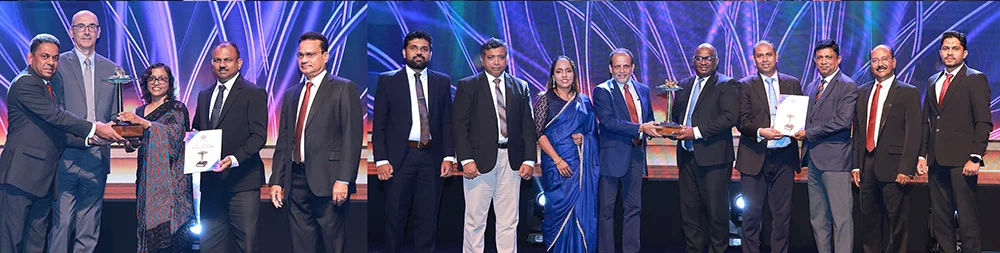
Recent corporate accolades further underscore this alignment between operational excellence and national development. SLT-MOBITEL’s triple triumph at the National Business Excellence Awards 2026 – winning in the Infrastructure and Utilities sector, Performance Management, and ICT Services categories – highlights its growing impact. Notably, the recognition of eChannelling’s contributions to digital healthcare reflects a broader strategic pivot toward integrated technology solutions.
“Institutional efficiency of this nature is critical for attracting foreign direct investment, as global partners increasingly assess a country’s digital maturity and systemic stability before committing capital,” noted industry observers.
Moreover, the company’s transition from a conventional telecom utility to a comprehensive digital solutions provider aligns seamlessly with Sri Lanka’s national digitalisation agenda. As the country pursues public sector modernisation, enhanced e-governance, and a competitive knowledge economy, the private sector must step up to deliver secure, scalable, and future-ready networks. Investments in data centres, cybersecurity frameworks, and advanced ICT infrastructure act as strategic buffers, ensuring that Sri Lanka’s economic apparatus remains agile and resilient amid future global uncertainties.
However, industry experts caution that while these achievements are commendable, SLT-MOBITEL still has a considerable distance to cover in fully enabling a truly digital economy.
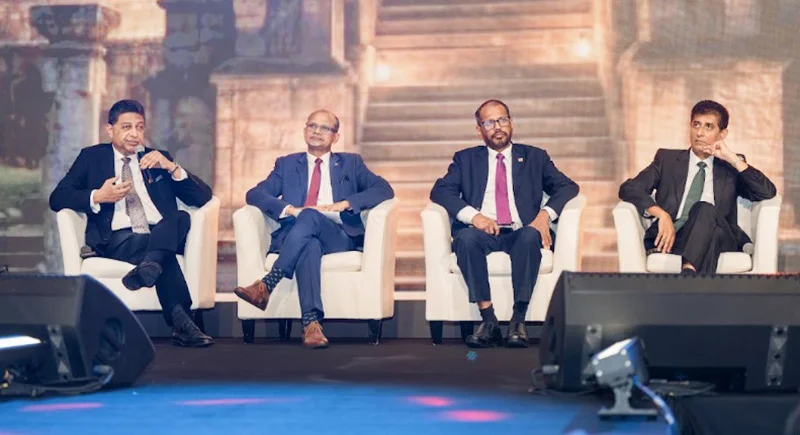
Port City Colombo (PCC) took a prominent role as Platinum Sponsor at the second edition of Sri Lanka Beyond Your Dreams, a high-level diplomatic and investment engagement hosted by the Consulate General of Sri Lanka in Dubai and the Northern Emirates. The event, held on 2nd September 2026 at the Hilton Dubai Al Habtoor City, brought together over 400 senior UAE-based business leaders, investors, diplomats, and institutional stakeholders, alongside Sri Lanka’s most senior government representatives.
The gathering was graced by Dr. Thani bin Ahmed Al Zeyoudi, UAE Minister of Foreign Trade, as Guest of Honour, and Vijitha Herath, Sri Lanka’s Minister of Foreign Affairs, Foreign Employment and Tourism. A high-level Sri Lankan delegation – including the Secretary to the Prime Minister, the Chairman of the Board of Investment, the Chairman of the Export Development Board, and the Director General of Commerce – underscored the government’s strong commitment to deepening economic diplomacy with the UAE.
In his keynote address, Minister Herath reaffirmed the centuries-old ties between Sri Lanka and the Arab region, emphasising the UAE’s vital role as a key economic partner. He stressed the urgency of finalising a Comprehensive Economic Partnership Agreement (CEPA) with the UAE, which would establish a robust framework to elevate trade, investment, and bilateral cooperation. Declaring Sri Lanka “open and ready for business,” he positioned Port City Colombo as the physical embodiment of this economic mission – a modern Special Economic Zone (SEZ) with a dedicated legal framework and competitive incentives, offering UAE investors a natural gateway to South Asia while maintaining strong Gulf connectivity.
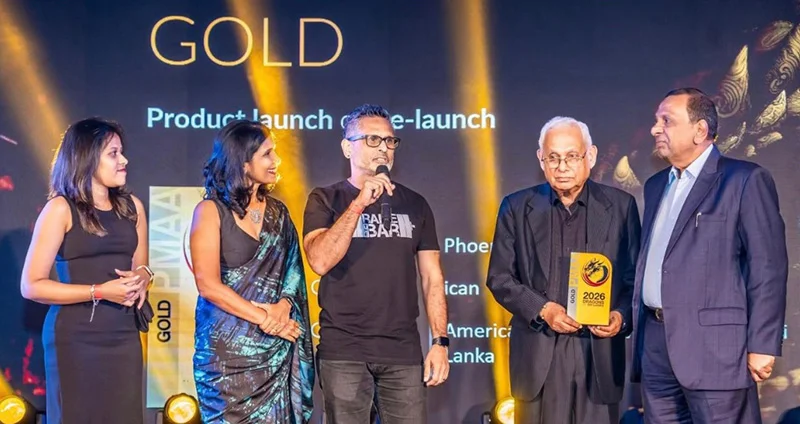
American Premium Water has secured four wins at Dragons of Sri Lanka Awards 2026, including three Gold Dragons and one Black Dragon, marking a significant milestone for the brand following its relaunch last year.
Part of the prestigious Dragons of Asia awards, Dragons of Sri Lanka brings the program’s regional platform to the local market, celebrating creative and effective marketing communications, with entries evaluated on strategic thinking, creativity, execution and impact. Established in 2000, Dragons of Asia is one of Asia’s premier results-driven marketing awards programs.
For American Premium Water, the achievements are particularly significant given that the company’s debut at the Dragons awards has resulted in four Dragons across four categories. In the distinction of Gold Dragons, American Premium Water was recognized across three categories including Product Launch or Re Launch, Cause, Environment or Sustainability and Creative Excellence while the Black Dragon was awarded in recognition of Small Budget.
Competing alongside leading brands and agencies in Sri Lanka, American Premium Water’s four wins demonstrate the strength and effectiveness of its recent work. Winning three Gold Dragons across three distinct categories highlights the breadth of the brand’s achievements, while the Black Dragon for Small Budget further emphasizes its ability to create meaningful impact through focused and efficient investment.

Pakistan seek revenge, Sri Lanka eye another Asia Cup final

Trump says every adult American will get $5,000 if Republicans win midterms

Protesters mistake Pakistan’s U-19 team for asylum seekers in Portsmouth

Steps are being taken to provide accommodation facilities for 16,000 university students – Prime Minister

Showers will occur in the Western and Sabaragamuwa provinces and in Kandy, Nuwara-Eliya, Galle and Matara districts.


‘Dates have the highest sugar content to fight Coronavirus’

Sunday Island 27 December – Headlines

#SundayIsland 17th December – Headlines

Sunday Island – 28th March

Sunday Island Headlines – 21 March

Sunday Island – 21st February – Headlines
-

 News6 days ago
Namal remanded until Sept. 18 over Airbus deal investigation
-

 Latest News5 days ago
Tharanga creates history with Diamond League crown in Brussels
-

 News5 days ago
Dispute which triggered listed company director being detained at BIA resolved
-

 Features4 days ago
After the parade: What a traffic OIC’s walk-out tells us
-
 Opinion7 days ago
In Memory of Dr Upatissa Pethiyagoda
-

 Editorial6 days ago
Power vs Equality
-
Editorial4 days ago
Arrests as theatre
-
 Latest News6 days ago
SLPP MP Namal Rajapaksa arrested by CIABOC