
Sports
Susantha reveals key to success of Ratnayake Central

by Reemus Fernando
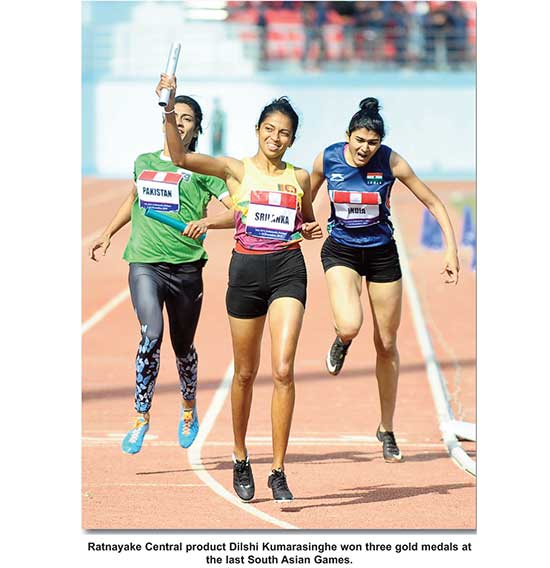
Dilshi Kumarasinghe, the golden girl of the last South Asian Games had been permitted to stay in the hostel of Sports School Ratnayake Central College, Walala for months after completing her education until she found employment, because of the far-sightedness of Central Province authorities, both past and present, Susantha Fernando, who trained her to win three Golds at the regional event, revealed in an interview with The Island. That was a decision the authorities of other Sports Schools or seats of learning, bound by various rules and regulation, would hesitate to take, he said.
With the restructuring and reinvigorating of Sports Schools in the country being discussed by the Ministry of Education and the Ministry of Sports, The Island interviewed Susantha Fernando, the coach behind the success story of Ratnayake Central Walala, the most successful Sports School of the country.
Fernando who culminated his three decades long coaching stint with t
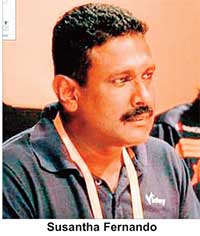
he Sports School recently, revealed that the special place of prominence given to sports by the Central Province education authorities and the individualized training plans were among the reasons behind the unprecedented success of Ratnayake Central.
Ratnayake Central dominated track and field sports for more than two decades. If title victories are of any indication to the success of a Sports School, then there was no school that could even come closer to beat the records set by Ratnayake Central. There are three major Schools Athletics Championships conducted yearly, namely the Sir John Tarbet Senior, All Island Schools Relay and the All Island Schools Games Athletics. They won both the Boys and Girls titles together in these championships on an unprecedented 19 occasions. Under Fernando’s stewardship Ratnayake Central athletes have gone on to win at Junior Asian Athletics Championship (seven medals), Asian Youth Games, Youth Olympic (1000m B grade 3rd), South Asian Junior Athletics Championships (7 medals at the last meet), Asian Athletics Championships, Asian Schools Games, South Asian Games (four goalds at the last edition) and many regional international events apart from representing the country at many World Youth, World Junior, Asian Championship, World Championships, Commonwealth Games and Asian Games. Here are the excerpts from the interview The Island had with Fernando.
What makes Ratnayake Central different from other Sports School?
“Ratnayake Central was selected as a Sports School because we performed better than any other school in the Central Province. We are the only Sports School that is run by Provincial administration. When the school was established Palitha Elkaduwa, the former Secretary of Education of the Central Province played a special role. The central province circular on the Sports School was a very strong one. There were two other sports schools in the Central Province (Poramadulla Central and Weera Keppetipola NS, Akuramboda). But they were taken over by the Ministry of Education later. The officials who made the school a Sports School understood the importance of sports. Even today the Department of Education of the Central province has no hesitation in going out of the way to help Sports programmes. We were also lucky to have a sports loving Director of Education in Thilak Ekanayake,” said Fernando.
Asked to be more specific Fernando compared and contrasted Ratnayake Central with other sports schools.
“Generally Sports Schools provide scholarships and recruit athletes for grade eight. But if we identify a future prospect who is in a higher grade we could take the athlete for that higher grade if there is a vacancy. That is not so with the Sports Schools that are under the Ministry of Education. They are strict. Dilshi’s case is another example. We knew that she is a future prospect. We could keep her in the hostel for months after she finished her Advance Level until she found employment in the Army. She went on to win three golds at the South Asian Games. We could do that because the Central Province Education authorities understood the need. I don’t think that would be possible with any other Sports School.”
Media had been highlighting the absence of a 400 metres track at Ratnayake Central for years. How could the school still perform better than the schools which had facilities.
“I had a plan for every athlete. At the school we maintained files for every athlete. There were over 70 files every year. The individual training plans were the secret. When others take leave for three months during school vacations we continued training. We conduct special training. Go for high altitude training. We send home sports scholarship holders for only ten days during vacation. My recommendation for other Sports Schools too is to continue training with probably ten days of leave during the school vacation. True we did not have a proper track. Not even a proper 200 metres track. The 200 metres track at Ratnayake Central has a 55% bend which is harmful for athletes. From 2018 we could take athletes for training to Digana where there is a good 400 metres track.
How do you compare the financial support Ratnayake Central received with other Sports Schools?
“The Central Province department of education has been good enough to understand the need for funds to run a proper programme. We’ll just take the case of competitions. You have to spend a lot of money on transport and food during competitions. There was no restriction on funds for Ratnayake Central in meeting expenses on transport or food for athletes. The other Sports Schools are given only rupees 25,000.00 for the entire year for transport and food to take part in meets. You have to travel to three or four national meets per year. It is important that the athletes we train take part in these meets and they are provided proper transportation, food and lodgings. I have seen sports officials of Sumana Balika (Sports School) preparing meals for their athletes when they go for national meets to save funds. That is pathetic.”
Central Province also increased the allowance paid to sports instructors to encourage them and provide a substantial scholarship money for athletes, when the sports instructors under the Ministry of Education receive a meager amount of rupees 1,000.00 monthly as an allowance.”
The Central Province education authorities promoted Fernando to the Assistant Director of Education – Sports and Physical Education post of the Wattegama Zonal in 2003 and was also responsible for monitoring sports progress of the zone which became one of the best zones of the country. Here are his views on the monitoring process of Sports Schools.
“There should be a proper monitoring system for Sports Schools. Some of the Sports Schools in the country became defunct because there was no proper monitoring system. There should also be qualified individuals to do that. Qualified officials who can advise the coaches of the Sports School and who could make recommendations on their coaching programmes. At present I don’t think that the Ministry of Education has enough qualified individuals to do that part.”
Many scholar athletes passing out from Ratnayake Central have gone on to become physical education teachers. How did Ratnayake Central looked after the education of scholar athletes.
“We provided free tuition to athletes after school when it was necessary. And there was continuous monitoring of the progress they made in education. We hardly had disappointments when results of exams came. Many have become Physical Education teachers. Currently there are over 400 physical education teaches who had their education at Ratnayake Central. They are serving at different schools. There are also good number of athletes who have gone on to become bank managers, Assistant Directors of Education to managers of leading private firms. For those who persevere a career in athletics there should be a system to look after them after they leave Sports Schools. The future prospects who are identified at Sports Schools should be looked after. The Sports Ministry should take the responsibility of these athletes after they leave schools.”
Often there are administration deadlocks between sports officials and principals leading to sports being given secondary status at schools. Fernando said that there were no such impasses at Walala but insisted that sports instructors should have some authority at Sports Schools. “In my opinion the head or the sports instructor of a Sports School should have some authority for him to run a successful programme.”
Fernando had a long stint (30 years) at Walala with the school and the old students association continuing to insist on acquiring his service. He continued as the head coach of Ratnayake Central while also functioning as the Assistant Director of Education – Sports at Wattegama Zone. This is his opinion on transfers.
“Teacher service requires teachers to be transferred according to vacancies that exist. There should be some leniency with regard to sports instructors. You cant change heads and expect good results in sports. There should be continuity for a training programme to be successful.”
He also insisted on the need to recognise the achievements of coaches and the need to provide suitable jobs for those passing out from would be Sports Universities as there is lack of suitable jobs even for those passing out from Universities with Sports Science and Physical Education Degrees at present.
While he has received praise for the yeoman service he has rendered to the field of sports, some national coaches have directed criticism at him citing that his trainees who had excelled at school level had not replicated those performances at senior national level.
“A coach can only help an athlete improve 30% of his performance level. Good performances are a combination of natural ability and proper coaching. A wast majority of athletes Ratnayake Central recruited were average athletes. Ratnayake Central is not situated in a town. Parents will opt for schools in Kandy when there is a choice between Ratnayake Central and a famous school in Kandy. Most athletes when they first came to the Sports School, were just winners at inter house meets, Divisional or Zonal meets. Inoka (many time marathon champion and first South Asian Games marathon medalist for SL) was just an inter house meet winner. She competed at national level for 20 years. I can give many examples. If there were special talents they had been trained accordingly to reach international level. For example Dilshi Kumarasinghe is a special talent and I am working on to help her reach top level. Indunil Herath (current national 800 metres record holder) was a long jump winner at Handaganawa when he was recruited. All athletes who came to Ratnayake Central underwent talent identification tests and later introduced to suitable disciplines which they had not even witnessed before. Herath had to leave the school for reasons beyond my control. Hadnt he successful? Raju (Geethani Rajasekara- first Sri Lankan marathoner at Olympics, trained by Sajith Jayalal after she left for Colombo) went to Colombo after marriage. Numbers will answer the critics. If those critics can tell of a single school which had produced more athletes to Senior National Athletics teams than Ratnayake Central then there should be some truth in their criticism. Ratnayake Central is the school that has produced the highest number of athletes to National Teams.”




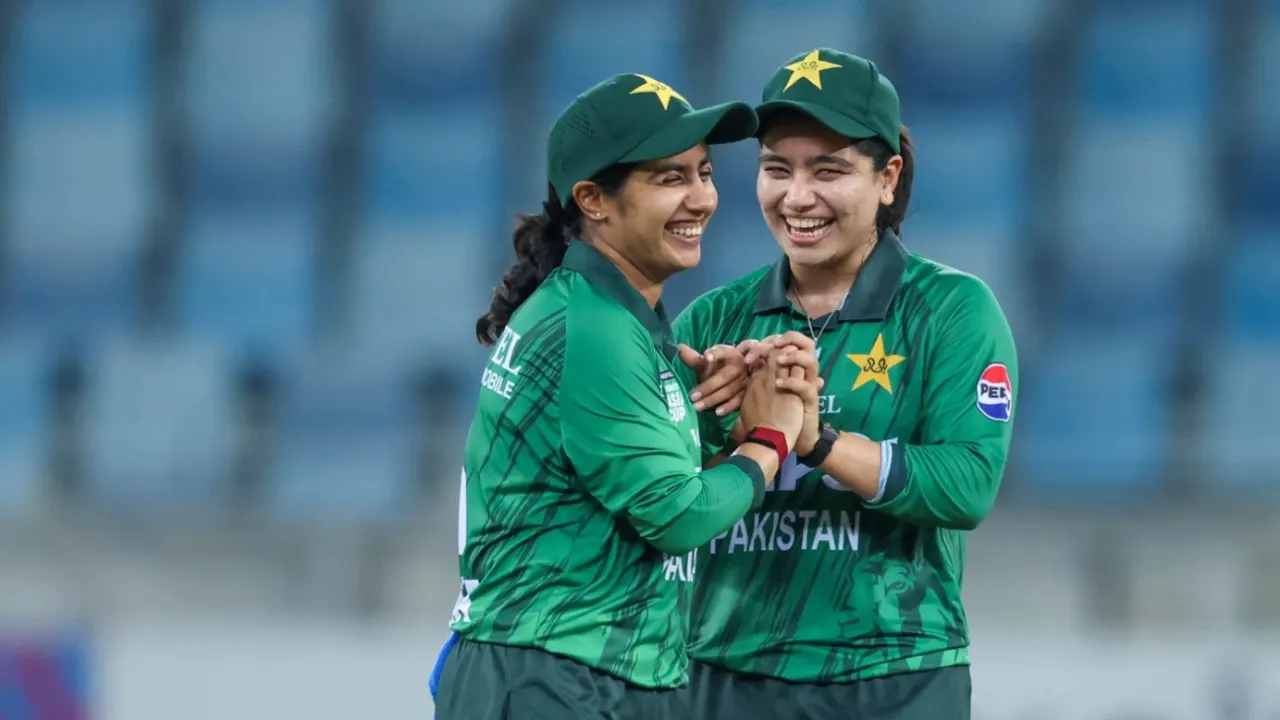
Pakistan will play Sri Lanka in the Women’s Asia Cup semi-final on Friday after they secured a thumping win over Hong Kong in the final Group A contest. They finished second in their group with a 72-run win set up by a record-breaking spell of 6 for 7 from Nashra Sandhu and a resolute 35-ball 47 from Shawaal Zulfiqar.
Pakistan scored 143 for 8 after electing to bat first for the third time in as many matches, with Ayessha Zafar and captain Fatima Sana making valuable contributions of 26 off 19 and run-a-ball 24, respectively, before an excellent display of bowling saw Hong Kong fold for 71 in 19 overs.
Zulfiqar lives up to expectations
Zulfiqar made a thumping comeback to the T20I side last month in Sri Lanka and it made Pakistan persist with her at the top of the order despite the return of experienced Gull Feroza, who slid down to one-down. She could not build on a start against India with the wickets tumbling from the other end and the pressure mounting. But the right-hander fought through on Monday, despite the dismissals of experienced batters around her in Muneeba Ali (6 off 7) and Feroza (3 off 4).
Despite batting on a challenging surface that played slow and gripped, Zulfiqar timed the ball well as she struck six boundaries. She hit a few sparkling cover drives and stitched a sparkling partnership of 47 off 34 with Zafar before the latter fell in the 10th over. No Pakistan batter, barring Zafar and Fatima, was able to emulate the 21-year-old in an innings which saw only four batters post in the double digits.
Zulfqar was eventually outsmarted b Joyleen Kaur as she smashed a flighted ball outside off right back to the bowler to be caught and bowled in the 12th over. Pakistan seemed well in control until she was at the crease, but could add only 51 runs in 8.4 overs after her dismissal.
Joyleen brings joy to Hong Kong
Pakistan’s bowlers too good for Hong Kong
Nashra Sandhu makes history
Pakistan Women 143 for 8 in 20 overs (Shawaal Zulfiqar 47, Ayesha Zafar 26; Fatima Sana 14; Iqra Sathar 2-27, Kary Chan 2-33, Joyleen Kaur 4-19) beat Hong Kong Women 71/10 in 19 overs (Yasmin Daswai 13, Kary Chan 30, Joyleen Kaur 10; Fatima Sana 1-07, Sadia Iqbal 1-08, Um e Sabi1 1-21 Nashra Sandhu 6-07, ) by 72 runs
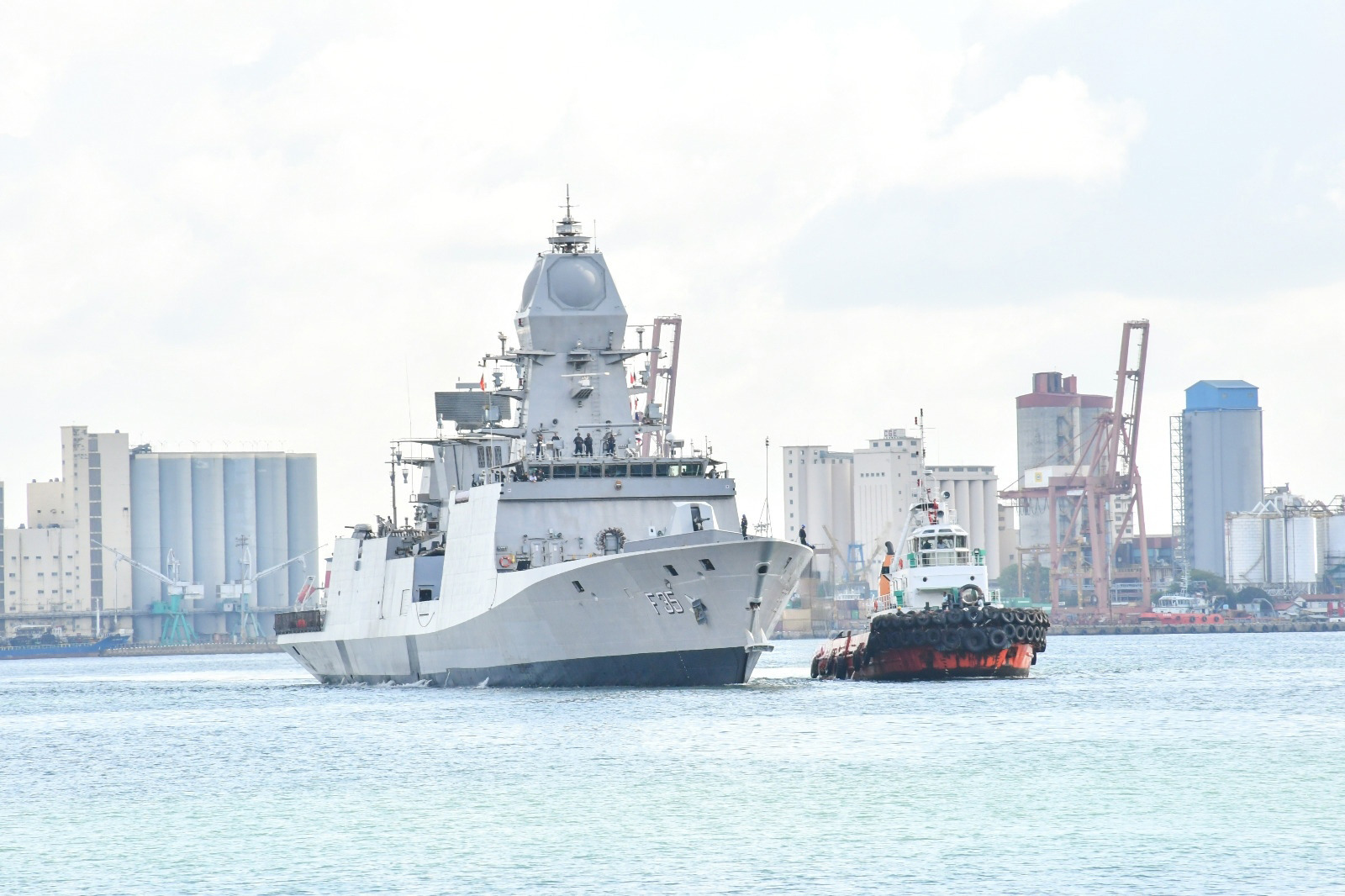
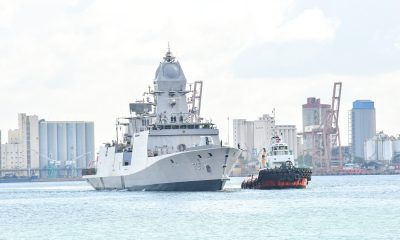
The Indian Naval Ship (INS) Udaygiri arrived at the Port of Colombo on an official visit today, 8 September 2026, where it was received by the Sri Lanka Navy in accordance with time-
honoured naval traditions.
INS Udaygiri is a 149.02m long Frigate, Commanded by Captain Vikas Sood. Meanwhile, the Commanding Officer of the visiting ship is scheduled to call on Commander Western Naval
Area, Rear Admiral Harsha De Silva at the Western Naval Command Headquarters.
Captain Sood served as the Defence Adviser at the Indian High Commission in Sri Lanka from July 2020 to October 2023.
During their stay in the island, the crew of INS Udaygiri will participate in several goodwill events organized by the Sri Lanka Navy to enhance camaraderie between the two forces.
The visiting personnel are also scheduled to visit prominent tourist and cultural locations across the island.
Additionally, Sri Lanka Navy personnel are expected to visit the ship for capability observation and knowledge sharing, and will conduct onboard training during its stay.
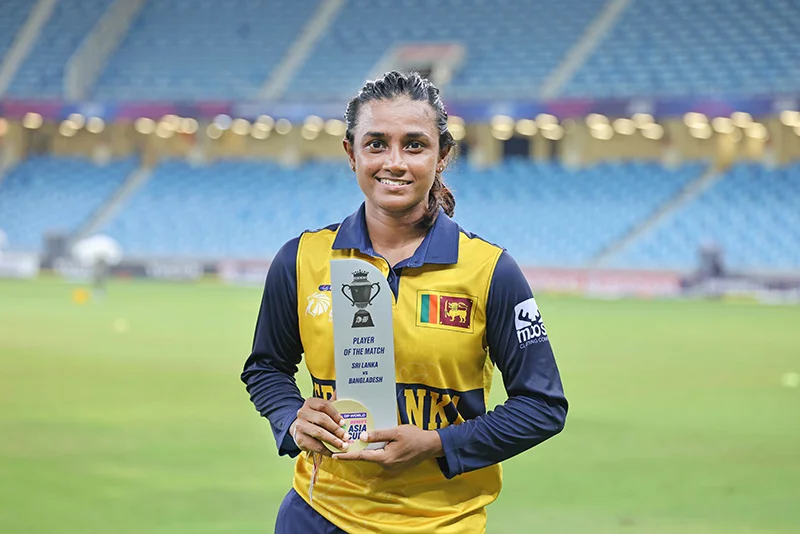
Sri Lanka’s women continue to provide compelling evidence that they could be genuine contenders for the next World Cup, while their male counterparts have, in recent years, largely been making up the numbers at global events.
The defending Asia Cup champions, who stunned formidable India in Dambulla two years ago to lift the title, marched into this year’s semi-finals with an unbeaten record.
Sri Lanka topped their group with three wins from three games and importantly, will avoid India in the semi-finals. Their opponents in Friday’s knockout clash will be either Pakistan or Thailand.
For years, Sri Lanka have leaned heavily on their talismanic captain Chamari Athapaththu, one of the greats of the women’s game. More recently, however, others have begun putting their hands up when the skipper has fallen cheaply. That growing depth has also given Chamari greater freedom to play her natural, attacking game.
Last week, Nilakshika de Silva produced a rescue act against Indonesia. On Sunday, after the captain fell to only her second ball, it was the turn of vice-captain Harshitha Samarawickrama to take charge and steer Sri Lanka home through choppy waters.
Chasing 115 to win their final group game against Bangladesh at Dubai Sports City, Sri Lanka were quickly in trouble as seamer Marufa Akter sent both openers packing cheaply. With wickets continuing to tumble at the other end, Harshitha kept her head while others were losing theirs.
At 44 for five, with half the side back in the pavilion, Sri Lanka were staring down the barrel. Harshitha and Nilakshika then began the repair job, adding 38 for the sixth wicket to drag the innings back from the brink.
Marufa has been an outstanding find for Bangladesh and they rely heavily on her for breakthroughs. With one over remaining in her quota, she was summoned back to break the partnership and did precisely that, removing a well set Nilakshika as she attempted to improvise.
There was, however, no stopping Harshitha.
She found a reliable ally in wicketkeeper Kaushini Nuthyangana and the pair calmly took Sri Lanka across the line with an unbroken 33 run stand for the seventh wicket. Harshitha finished unbeaten on 38 off 47 balls, striking four fours and two sixes.
Sri Lanka got home with four balls to spare, maintaining their perfect record in the competition. Yet beneath the celebrations there will be a nagging concern: the batting has collapsed too often, leaving one or two players with far too much heavy lifting to do. That is something they will need to address before the stakes rise further.
Sri Lanka will play the second semi-final on Friday, with the final scheduled for Sunday.

Sandhu’s 6 for 7 seals Pakistan’s semi-final spot

INS Udaygiri makes port call in Colombo

Showers in the Uva, Central and Eastern provinces and in Polonnaruwa district

22A: Exclusion of 8 petitions questioned, action filed against SC Registrar, others

Thailand shuts door on undesirables from Sri Lanka

Expertise France and the EU launch media project to strengthen environmental journalism in Sri Lanka

‘Dates have the highest sugar content to fight Coronavirus’

Sunday Island 27 December – Headlines

#SundayIsland 17th December – Headlines

Sunday Island – 28th March

Sunday Island Headlines – 21 March

Sunday Island – 21st February – Headlines
-

 News5 days ago
Denied of promotion to SC despite vacancies, justice Gurusinghe retires
-

 Latest News6 days ago
Grade 5 scholarship exam results released
-

 News5 days ago
22A: SC urged to suspend hearing, appoint full bench
-

 Midweek Review6 days ago
The local and global dynamics of Sri Lanka’s 22nd Amendment
-

 News3 days ago
Namal remanded until Sept. 18 over Airbus deal investigation
-

 Latest News2 days ago
Tharanga creates history with Diamond League crown in Brussels
-

 News5 days ago
Govt. seeks NATO assistance
-

 News6 days ago
40 professional organisations and TU oppose proposed 22A