
News
Indian High Commissioner hands over Padma Shri to Dr. Vajira Chitrasena

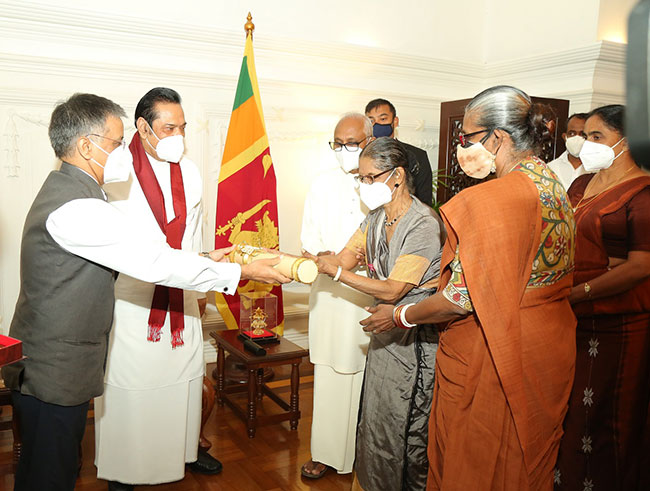
In a ceremony held at the Temple Trees on 17 November, the High Commissioner of India in Sri Lanka, Gopal Baglay delivered to Dr. Vajira Chitrasena the ‘Padma Shri’, Award conferred upon her by the President of India for the year 2020. Prime Minister and Minister of Buddhasasana, Religious and Cultural Affairs, Mahinda Rajapaksa, too, was present.
On November 08, 2021, a ‘Padma Awards Investiture Ceremony’ was held at Rashtrapati Bhawan, New Delhi at which the President of India presented the Padma awards to the awardees for the year 2020 in the presence of the Vice President, the Prime Minister of India and other dignitaries. Two eminent personalities from Sri Lanka, Dr. Vajira Chitrasena and Late Prof. Indra Dassanayake were conferred with the ‘Padma Shri’ for their seminal contributions in the field of Dance, and Literature and Education respectively.
Dr. Chitrasena is a veteran traditional dancer, choreographer and teacher. For her achievements, she has been adorned with one of Sri Lanka’s highest national awards ‘Deshabandu’, among many others. Dr. Vajira’s unique contributions to enriching India-Sri Lanka relations through the promotion of dance and blending the art forms of both countries, especially Kandyan and Odissi have been honoured with the ‘Padma Shri’. Since Dr. Chitrasena could not travel to India to accept the ‘Padma Shri’, the High Commission of India facilitated the handing over of the award at Colombo.
The other recipient of the ‘Padma Shri’ Award, Late Prof. Indra Dassanayake was a renowned Professor of Hindi at Kelaniya University. She had a close association with India as she was born in India and was an alumnus of the University of Lucknow. Her daughter, Vathsala Dassanayake Ishtaweera received the ‘Padma Shri’ at New Delhi from the President of India.
The Padma Awards are one of the highest civilian honours of India announced annually on the eve of Republic Day. The Awards which are given in three categories, Padma Vibhushan, Padma Bhushan and Padma Shri, seek to recognise achievements in all fields of activities or disciplines where an element of public service is involved. This year’s Padma Awards have celebrated the accomplishments and excellence of grassroot level achievers, and have, therefore, been hailed as the “People’s Padma”.
Recognition of the personal accomplishments of Dr. Vajira Chitrasena and Late Prof. Indra Dassanayake by the Government of India attests to the abiding cultural ties between India and Sri Lanka. Through their pioneering contributions, Dr. Chitrasena and Prof. Dassanayake have been instrumental in further strengthening the people-to-people ties between India and Sri Lanka. It may be recalled that, W.D. Amaradeva, Sri Lanka’s celebrated music maestro, was conferred ‘Padma Shri’ in the year 2002.

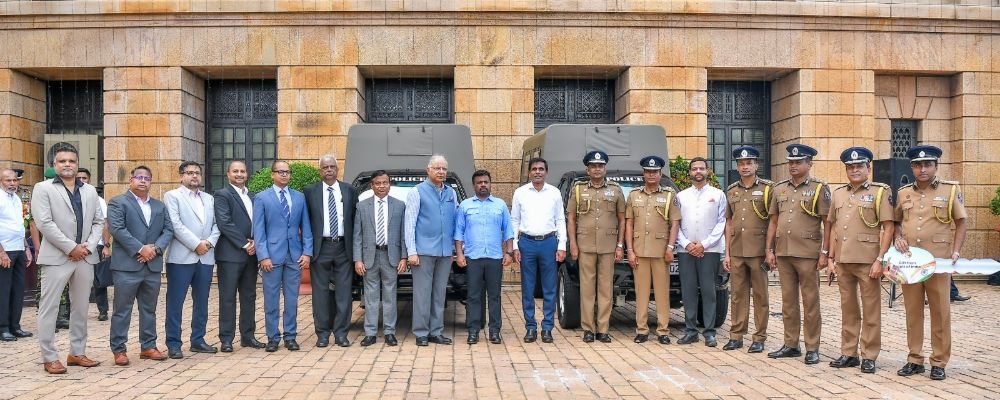
A consignment of 134 single cabs gifted by the Government of India under the Indo–Sri Lanka Friendship Programme for the use of the Sri Lanka Police was officially handed over to President Anura Kumara Dissanayake on Monday (25) morning at the Presidential Secretariat.
The Government of India has incurred an expenditure of approximately LKR.300 million for this initiative and the vehicles are scheduled to be distributed among police stations in the Northern Province.
Speaking at the occasion, Indian High Commissioner Santosh Jha stated that similar assistance would continue to be extended to Sri Lanka in the future.
In appreciation of this gift by the Government of India, Inspector General of Police Priyantha Weerasooriya presented a commemorative memento to Indian High Commissioner Santosh Jha.
Minister of Public Security and Parliamentary Affairs, Ananda Wijepala, Deputy Minister of Public Security and Parliamentary Affairs, Sunil Watagala, Secretary to the Ministry of Public Security Ravi Seneviratne, General Manager of DIMO Rajeev Pandithage, officials of the Indian High Commission and senior officers of the Sri Lanka Police were also present at the occasion.
(PMD)
Latest News
Landslide Early Warnings issued to the Districts of Colombo, Gampaha, Kalutara, Kegalle, Nuwara Eliya and Ratnapura extended till 1600 hrs on Tuesday [26]

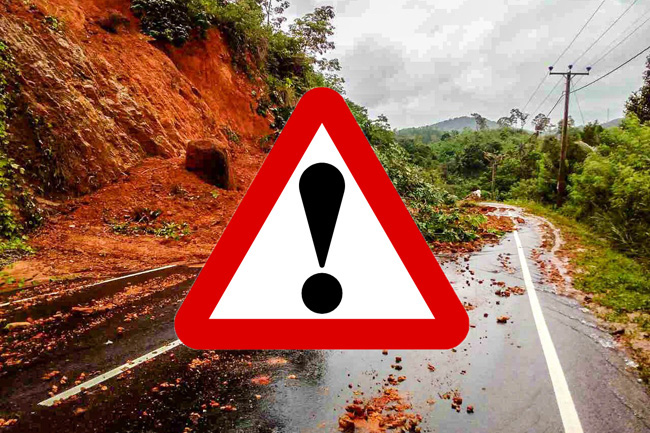
The National Building Reasearch Organisation [NBRO] has extended the landslide early warnings issued to the districts of Colombo, Gampaha, Kalutara, Kegalle, Nuwara Eliya and Ratnapura till 1600 hrs on Tuesday 26th May 2026.
Accordingly,
The LEVEL II [AMBER] landslide early warnings issued to the Divisional Secretaries Divisions and surrounding areas of Dehiowita, Deraniyagala, Ruwanwella and Yatiyanthota in the Kegalle district and Kuruwita, Ratnapura, Ayagama and Eheliyagoda in the Ratnapura district and
The LEVEL I [YELLOW] landslide early warnings issued to the Divisional Secretaries Divisions and surrounding areas of Seethawaka and Padukka in the Colombo district, Attanagalla in the Gampaha district, Palindanuwara, Mathugama, Bulathsinhala, Agalawatta, Ingiriya and Horana in the Kalutara district, Bulathkohupitiya in the Kegalle district, Ambagamuwa in the Nuwara Eliya district and Kiriella, Pelmadulla, Nivithigala, Elapatha and Kalawana in the Ratnapura district have been extended.

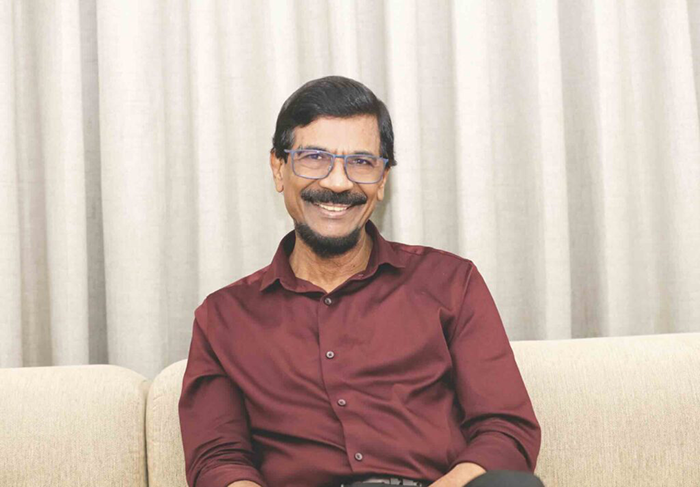
The much-delayed Provincial Council (PC) elections cannot be held this year due to financial and legal constraints, JVP General Secretary Tilvin Silva has said in Jaffna.Silva said so, fielding questions from journalists after the opening of the NPP coordination office in the Jaffna District on Saturday.
When asked whether the government was under Indian pressure to conduct the Provincial Council elections soon, Silva answered in the negative, claiming that Sri Lankan and Indian governments maintained close and friendly relations with a strong level of understanding.
He said budgetary allocations had been made for the PC elections, but the government had been compelled to divert resources for disaster relief following the impact of Cyclone Ditwah. According to Silva, nearly Rs. 500 billion had to be allocated for relief measures, making it difficult to hold the elections this year. He further said legal complications in the electoral reform process had also contributed to the delay in holding the PC elections, noting that a parliamentary committee had been appointed to determine the electoral systems under which the PC polls should be conducted. Once the committee submitted its report and if no further issues arose, the elections could possibly be held next year, he said.
Silva also said the government had taken measures to strengthen reconciliation and development in the North by releasing lands previously occupied by military camps and improving road infrastructure.He added that empowerment initiatives were being implemented under the Praja Shakthi programme and that both Sri Lanka and India were continuing to work in close cooperation.

Cambodia’s former opposition leader receives royal pardon for 27-year sentence

Death toll rises to four in Philippines building collapse; 17 missing

India gifts 134 cabs to Sri Lanka Police

Landslide Early Warnings issued to the Districts of Colombo, Gampaha, Kalutara, Kegalle, Nuwara Eliya and Ratnapura extended till 1600 hrs on Tuesday [26]

Attacks on Ebola centres intensify in eastern DRC amid outbreak fears

Oil prices fall amid mixed signals on US-Iran peace deal

‘Dates have the highest sugar content to fight Coronavirus’

Sunday Island 27 December – Headlines

#SundayIsland 17th December – Headlines

Sunday Island – 28th March

Sunday Island Headlines – 21 March

Sunday Island – 21st February – Headlines
-
 Features6 days ago
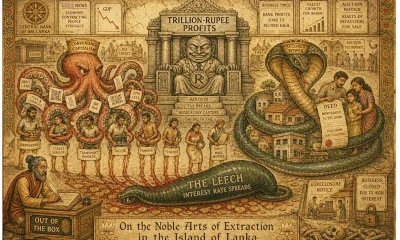
Octopus, Leech, and Snake: How Sri Lanka’s banks feast while the nation starves
-
 Sports6 days ago
Sri Lanka women’s volleyball team ready for Central Asian challenge
-
 Opinion5 days ago
Murder of Ehelepola family, Bogambara Wewa and Sightings of Wangediya
-
 News5 days ago
Steps underway to safeguard Sri Lanka’s maritime heritage
-
 Features2 days ago
The NPP’s pivot to the past
-

 Editorial5 days ago
A play without its protagonist
-

 Business4 days ago
Historic launch of CCWE Fashion Week & International Summit 2026
-

 Opinion4 days ago
The need to reform Buddhist ecclesiastical order