
News
Six Uva hospitals upgraded to meet Covid challenge with local and international support


At a time of national emergency, in early June 2021, Senior Medical Officer, Dr. Upul Ranasinghe of the Bandarawela Hospital saw a rising wave of Covid patients in the Uva Province which the hospitals there were ill equipped to handle.
He reached out to Dr. Nalaka Mendis (Emeritus Professor, Colombo University) who immediately responded by calling on Dr. Naj Nagendran (Foundation of Goodness- USA) and gathering together a like-minded collective of humanitarians from Sri Lanka and overseas to respond to the challenge.
They included Mr. Manik Jayakumar (Q Trade Teas & Herbs), Mr. Felix Stephen ((Volunteers to Assist Children with Disabilities Limited), Mr. S. Skandakumar (Oru Paanai Trust- SL & USA) , Mr. Kushil Gunasekera (Foundation of Goodness) and Dr. Erosha Premaratne (Australia Sri Lanka Medical Aid Team) to raise urgently needed funds.
With the number of Covid related deaths rising by the day and patients sleeping on the floor of over-crowded wards and corridors outside, the initial focus of the group was to quickly upgrade Covid facilities at the Bandarawela Hospital where the bed capacity was increased from 50 to 300, Kushil Gunasekera of FOG said.
Having acted fast to complete the first phase, the group was overjoyed to hear Dr. Roshan Piyarathna, Covid physician at Bandarawela Hospital, say “Thanks to your donations the hospital was able to treat and discharge over 1,500 positive patients”.
Encouraged by this success and supported by those who rose to the occasion of enhancing Covid handling capacity at Bandarawela, more funds were raised to extend the same help to five more Uva hospitals – Haputale, Haldumulla, Diyatalawa, Koslanda and Welimada.
A total of over Rs. 26 million was made by this group to upgrade the hospital facilities in the Uva not only made a strong impact on the treatment delivered during the pandemic under life or death comditions, but will also hold the hospitals in good stead long after the pandemic is overcome.
Doctors at the Koslanda Hospital noted that this was a significant donation in the 100-year history of the hospital which had been struggling to provide the best possible care with insufficient equipment and technology. This was made possible by private individuals and organizations assisting disadvantaged rural communities to rise to the pandemic challenge.
This project was delivered so successfully because of the support from the College of Internal Medicine lead by President Dr. Harsha Sathischandra who took on the responsibility to disburse the funds and oversee the purchase of equipment and its Treasurer, Dr. Priyamali Jayasekera’s voluntary role, in spite of the heavy demands on her time by her official duties. The fund utilization and equipment purchases were completed with absolute transparency, Gunasekera said.
Dr. Janitha Tennekoon- Provincial Director, Dr. Leelananda Gallage- DMO Bandarawela, and Dr. Roshan Piyarathna- physician in charge of the Covid unit, facilitated the process at the Bandarawela Hospital.
Dr. U M M Pushpalatha, MD, Welimada Hospital, Dr. Ranjith Amarakone – MS, Diyatalawa Hospital, Dr. Sanjeeva Samaraweera – DMO, Haputale Hospital, Dr. Vichithra Rathnayake – DMO, Haldumulla Hospital and Dr. Niroshan Thaminidu – DMO, Koslanda Hospital were invaluable in coordinating these efforts and successfully completing this endeavour.
We record with sadness and regret the passing away of one of our amiable donors Eddie Wijesuriya, during this exercise.
When difficulties arise, at most times there is a light at the end of the tunnel and one of the positive outcomes of this disastrous pandemic was that rural hospitals got upgraded unexpectedly, enhancing their facilities, which means that such hospitals especially in remote areas will be better equipped now to serve the needs of disadvantaged communities- a setback turned into a blessing, Gunasekera noted.


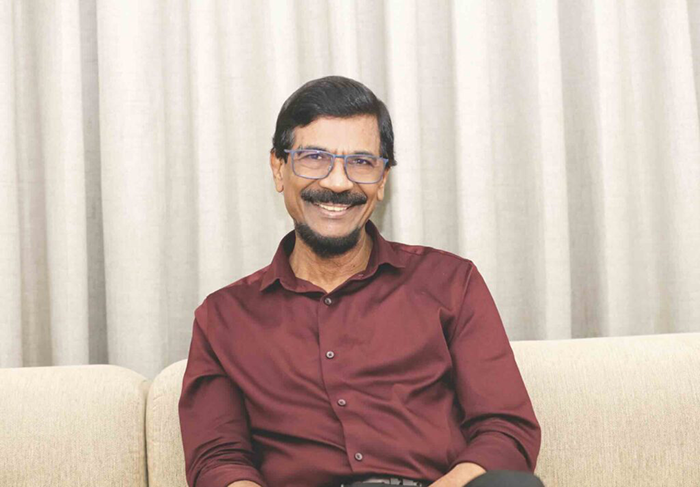
The much-delayed Provincial Council (PC) elections cannot be held this year due to financial and legal constraints, JVP General Secretary Tilvin Silva has said in Jaffna.Silva said so, fielding questions from journalists after the opening of the NPP coordination office in the Jaffna District on Saturday.
When asked whether the government was under Indian pressure to conduct the Provincial Council elections soon, Silva answered in the negative, claiming that Sri Lankan and Indian governments maintained close and friendly relations with a strong level of understanding.
He said budgetary allocations had been made for the PC elections, but the government had been compelled to divert resources for disaster relief following the impact of Cyclone Ditwah. According to Silva, nearly Rs. 500 billion had to be allocated for relief measures, making it difficult to hold the elections this year. He further said legal complications in the electoral reform process had also contributed to the delay in holding the PC elections, noting that a parliamentary committee had been appointed to determine the electoral systems under which the PC polls should be conducted. Once the committee submitted its report and if no further issues arose, the elections could possibly be held next year, he said.
Silva also said the government had taken measures to strengthen reconciliation and development in the North by releasing lands previously occupied by military camps and improving road infrastructure.He added that empowerment initiatives were being implemented under the Praja Shakthi programme and that both Sri Lanka and India were continuing to work in close cooperation.
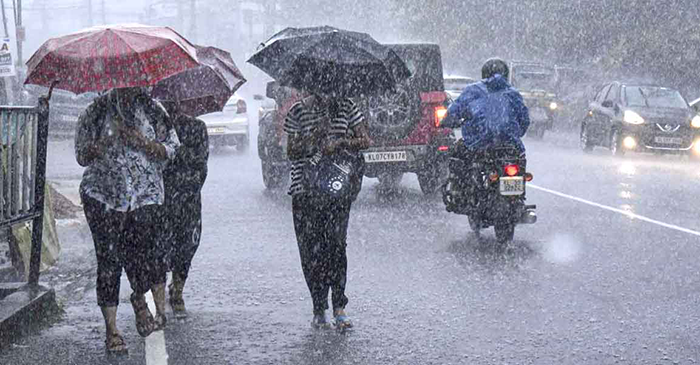
More than 31,000 people across Sri Lanka have been affected by worsening weather conditions, as the southwest monsoon intensifies ahead of its full establishment, raising fears of renewed flooding in vulnerable low-lying areas, the Disaster Management Centre (DMC) has warned.
The DMC has said 31,072 individuals from 7,983 families have already been impacted by persistent rain, strong winds and rising water levels across multiple districts, with the situation most severe in the Gampaha District where 15,313 people from 3,950 families have been affected and one death reported.
Officials have cautioned that the scale of disruption could worsen as the southwest monsoon is expected to fully establish over the island around May 26–27, bringing heavier and more sustained rainfall to the southwestern region.
At present, 18 safety centres are in operation, sheltering 1,724 displaced persons from 446 families. One person has been injured and 859 houses have been partially damaged. Two houses have been destroyed.
The Department of Meteorology has forecast increased rainfall over the coming days, warning that conditions are likely to deteriorate further as monsoon activity strengthens.
Flood-hit areas remain widespread, with river systems still under pressure despite a brief easing in rainfall on Saturday. The Kelani River has returned to normal levels, but minor flooding persists along the Kalu River basin, particularly in the Millakanda area, where tributary water levels remain elevated.
Low-lying areas in Bellapitiya, Horana, continue to be inundated, while traffic on the Bulathsinhala–Kalutara road remains disrupted due to flooding in Diyakaduwa. Authorities have also flagged continued risk in Putupawula and Ellagawa along the Kalu River.
The Attanagalu Oya basin is also slowly receding, though residents in Dunamale have been urged to remain on alert. Several homes in Ja-Ela remain underwater, with residents alleging that delayed repairs to a damaged canal embankment worsened the flooding.
In a fresh blow to infrastructure, the Swarna Hansa Podi Ela bridge in Ja-Ela collapsed on Saturday evening, further disrupting local transport links, while the main Ja-Ela–Gampaha bus route remains submerged in parts of Yakkaduwa.
Meteorologists have warned that rainfall is expected to intensify again from May 26 to 28, when the southwest monsoon is likely to be formally declared over Sri Lanka, raising the risk of further flooding and landslides in already saturated areas.
by Norman Palihawadane and Chaminda Silva
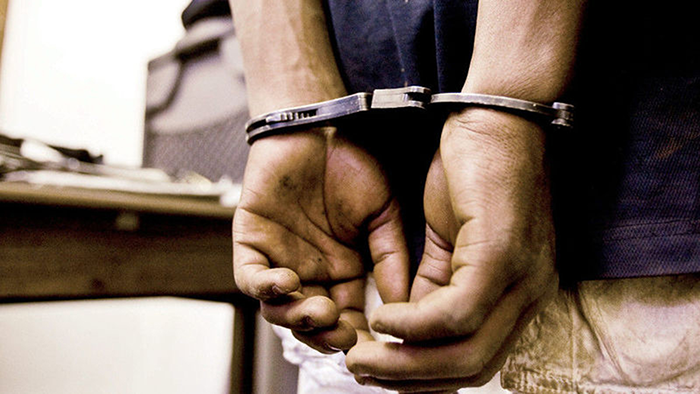
Police said a suspect wanted in connection with the murder of an elderly couple inside a shop in Dickoya town, Hatton, had been arrested on Saturday evening (23).
The arrest was made in the Bogawantalawa police area. Acting on a tip-off, the police arrested him while he was hiding in a house on a tea estate.
Police said stolen gold jewellery had been recovered.
Preliminary investigations revealed that the suspect, originally from Badulla, had been residing in Dickoya after his marriage.
Earlier on Saturday, Hatton Police released CCTV footage of the suspect and sought public assistance to trace and arrest him.
According to police, the suspect allegedly slit the throat of the elderly woman and killed her husband using a sharp weapon on Thursday (21) before fleeing with gold jewellery valued at around 18 sovereigns, including a necklace and earrings.
Investigations further revealed that the suspect had arrived in Dickoya town on the morning of May 21 and visited several jewellery shops claiming he intended to purchase a gold necklace, while loitering in the area.
Police said that around 1.15 pm, he entered the couple’s shop and remained concealed inside the premises before allegedly carrying out the attack.
Hatton Police added that the suspect is believed to have committed the murders and left the shop around 5.30 pm the same day before going into hiding.
by Norman Palihawadane

‘Dates have the highest sugar content to fight Coronavirus’

Sunday Island 27 December – Headlines

#SundayIsland 17th December – Headlines

Sunday Island – 28th March

Sunday Island Headlines – 21 March

Sunday Island – 21st February – Headlines
-
 Features5 days ago
Octopus, Leech, and Snake: How Sri Lanka’s banks feast while the nation starves
-
 Opinion4 days ago
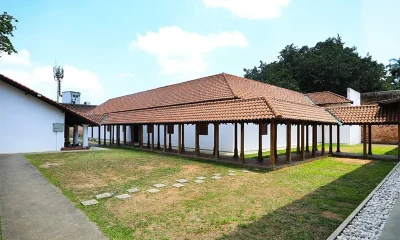
Murder of Ehelepola family, Bogambara Wewa and Sightings of Wangediya
-
 News4 days ago
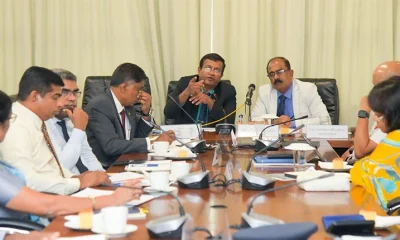
Steps underway to safeguard Sri Lanka’s maritime heritage
-
 Sports5 days ago
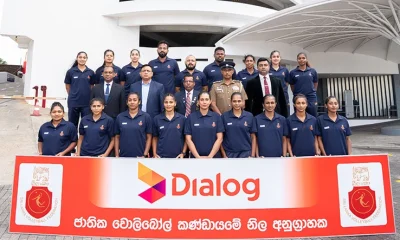
Sri Lanka women’s volleyball team ready for Central Asian challenge
-

 Editorial4 days ago
A play without its protagonist
-
 Midweek Review5 days ago
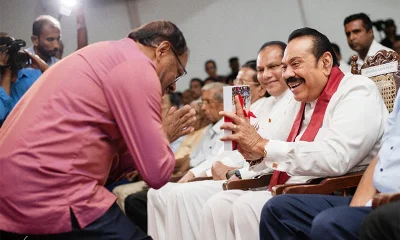
Overall SLPP failures stressed in new Aragalaya narrative
-
 Features1 day ago
The NPP’s pivot to the past
-

 Opinion3 days ago
The need to reform Buddhist ecclesiastical order