
News
Compromise formula: Gazette on Ven. Gnanasara’s PTF diluted; Sabry pacified

By Shamindra Ferdinando
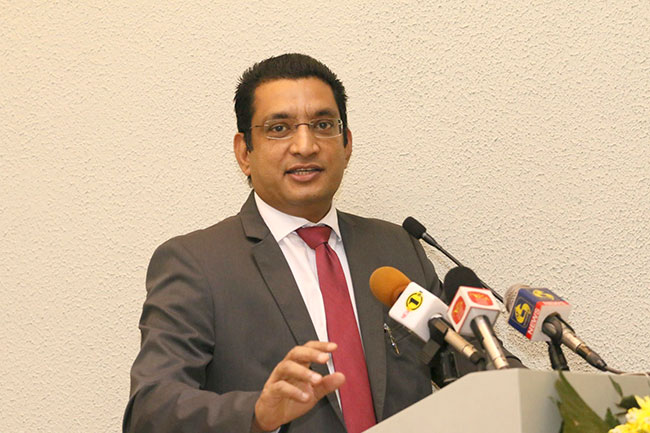
The government has amended a controversial Gazette dated Oct 26, 2021on the appointment of Presidential Task Force (PTF) headed by Ven. Galagodaatte Gnanasara to examine the implementation of ‘One Country, One Law’ principle and prepare a draft Act following strong objections by Justice Minister Ali Sabry, PC.
SLPP National List lawmaker Sabry declared that he couldn’t remain the justice minister unless the authority given to the PTF over the justice ministry was done away with. The PTF consisted of 13 persons.
In addition to being tasked with formulating a draft Act, Ven. Gnanasara’s PTF, in terms of the Oct 26,2021 gazette has been asked to study the draft Acts and amendments that have already been prepared by the Ministry of Justice in this regard and propose suitable amendments depending on the requirement.
The President’s Office has issued instructions to amend the relevant gazette following the Justice Minister discussing the grave issue with President Gotabaya Rajapaksa on Nov 05.
Subsequently, a new gazette dated Nov 06 wholly removed the terms of references as in the previous gazette and tasked the PTF to submit proposals for ‘formulating a conceptual framework ideally suited for Sri Lanka after making a study of the said concept taking into account the views and opinions held by various parties with regard to the implementation of the concept “One Country, One Law” principle.
President Gotabaya Rajapaksa has established the PTF in terms of Article 33 of the Constitution. The first meeting of the PTF took place at Ven. Gnanasara’s temple on the Rajagiriya-Nawala road.
According to the second gazette, two members of the original PTF namely Prof. Dayananda Banda and lecturer Mohomad Inthikab have quit the outfit and Ramalingam Chakrawarthy Karunakaran, Ms. Yogeswari Patgunarajah and Iyyampillai Dayanandaraja have since been included.
The original PTF didn’t include Tamils or at least a single woman. The new PTF comprises 14 including one woman.
Sources said that Minister Sabry, who had an opportunity to discuss the matter before President Gotabaya Rajapaksa left the country on Oct 30 to attend a UN event in Glasgow, Scotland made further representations on Nov 05, the day the President returned to the country.
Sources said that the issue could have been easily avoided if matters pertaining to the justice portfolio were at least discussed with the ministry.
President Rajapaksa told a public gathering at Weeraketiya last Saturday (6) why he invited Bodu Bala Sena (BBS) General Secretary Ven. Gnanasara to head that particular PTF as he was pushing for ‘One Country, One Law’ concept during the past four years.
Sources said that the issuance of the second gazette had effectively prevented the PTF interference in matters coming under the Justice Ministry. At the onset Minister Sabry offered to quit the portfolio if Ven. Gnanasara remained in the PTF. Compromise formula was for the President’s Counsel to remain and to dilute the gazette, they said.
The Bar Association of Sri Lanka (BASL) taking into consideration the appointment of a convicted person for contempt of court as Chairperson of the PTF, strongly criticized the move.
The BASL alleged that the PTF would usurp the functions of many institutions established under the Constitution, including Parliament as well as the Ministry of Justice.



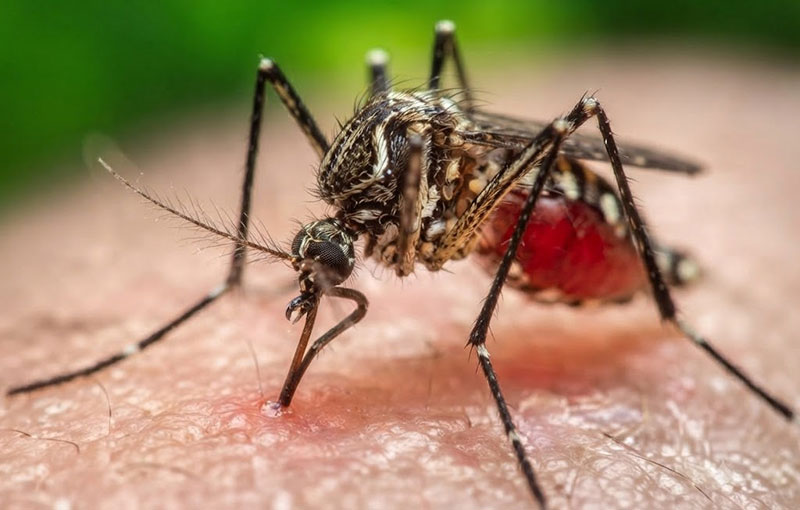
The countrywide dengue outbreak has intensified, with the death toll rising to 50, by July 16, as the number of reported infections surpassed 73,000, according to the National Dengue Control Unit (NDCU).
The country has recorded 73,455 dengue cases so far this year, with the case fatality rate standing at 0.07 percent, highlighting the severity of the ongoing outbreak.
The Western Province continues to remain the worst affected region, accounting for more than half of the total cases, with 38,700 infections. The Gampaha District has recorded the highest number of cases in the province with 15,341, followed closely by Colombo with 14,625.
The Southern Province has reported 11,382 cases, while the Sabaragamuwa and Central provinces have each recorded more than 6,000 infections.
Dengue cases have shown a sharp increase in recent months, with June recording the highest monthly total of 21,538 cases, while July has already reported 18,076 infections. In comparison, 8,590 cases were reported in May, and 5,651 in April.
Health authorities have identified 175 Medical Officer of Health (MOH) areas as high-risk locations during the 27th epidemiological week. An average of 2,677 new dengue cases are being reported daily, prompting authorities to intensify prevention and mosquito control measures.
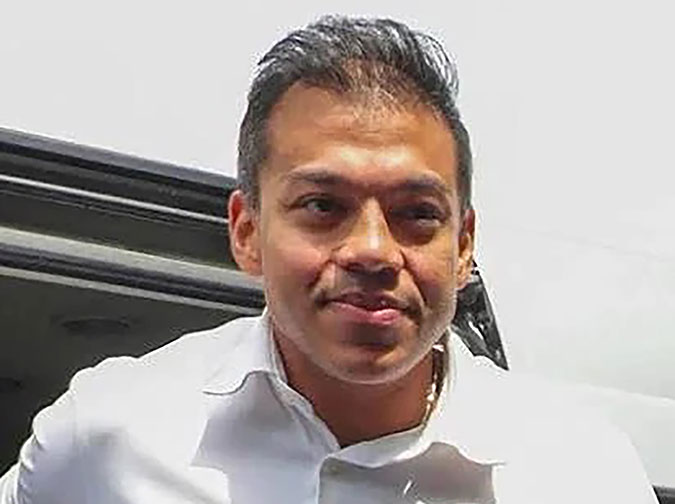
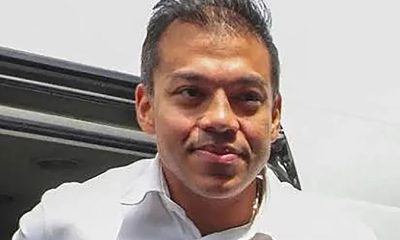
The Colombo High Court yesterday (17) resumed hearing the money laundering case filed against Yoshitha Rajapaksa, son of former President Mahinda Rajapaksa, under the Prevention of Money Laundering Act.
The proceedings were held before High Court Judge Udesh Ranatunga, where evidence was recorded from prosecution witnesses, under the direction of Deputy Solicitor General Janaka Bandara.
President’s Counsel Sampath Mendis, appearing for Yoshitha Rajapaksa, cross-examined the witnesses during the hearing.
After recording evidence, the court ordered that further examination of evidence be postponed until July 24.
The Attorney General has filed indictments, alleging that Yoshitha Rajapaksa committed an offence, under the Prevention of Money Laundering Act, by purchasing five plots of land in Dehiwala and Ratmalana, valued at more than Rs. 73 million.
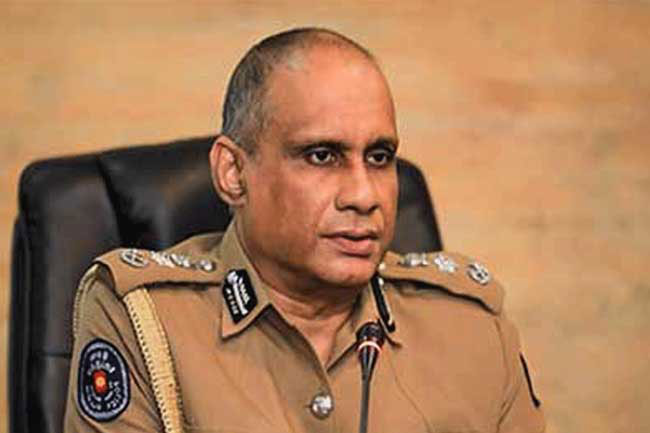
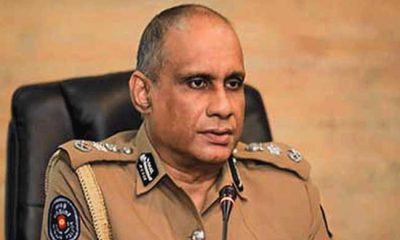
Former IGP Chandana Deepal Wickramaratne died after sustaining a gunshot injury at his residence, in Thalangama, yesterday (17), with police saying preliminary investigations indicate that the incident was a suspected suicide.
Kaduwela Magistrate Aruna Indrajith Buddhadasa, on Friday, ordered the Officer-in-Charge of the Malabe Police Station, Police Inspector Pradeep Ranasinghe, to conduct a formal investigation into the death and submit a report to court on its progress.
The order was issued after the Malabe Police Station presented facts before court regarding the incident.
According to police, the Malabe Police Station received information from the Police Unit of the Colombo East Base Hospital, in Mulleriyawa, that Wickramaratne, who resided in the Thalahena area, within the Malabe Police division, had died after being admitted to hospital, with gunshot injuries.
Police Spokesman ASP F.U. Wootler said Wickramaratne had allegedly used the firearm of his personal security officer and shot himself at his residence.
Police said the shooting had taken place at his residence on Parakum Road, Thalangama, on Thursday morning, before he was due to leave for his regular exercise routine. He was rushed to the Colombo East Base Hospital, in Mulleriyawa, with serious injuries but was pronounced dead upon admission, police said.
The deceased’s remains were placed at the Colombo East Base Hospital, where a post-mortem examination was scheduled to be conducted.
ASP Wootler said three police teams have been appointed to investigate the incident. Further investigations are being conducted by the Crime Division of the Western Province South Range and the Malabe Police Station.
Wickramaratne, 63, served as the 35th Inspector General of Police of Sri Lanka from November 27, 2020, to November 23, 2023.
He joined the Sri Lanka Police in 1986 as a Probationary Assistant Superintendent of Police and later served in several senior positions.
A graduate of the University of Colombo and the General Sir John Kotelawala Defence University, he also served as Acting IGP for more than a year, from April 28, 2019, before being appointed IGP, in November 2020.
He retired from the post of Inspector General of Police, in November 2023.
by Norman Palihawadane ✍️

Showers may occur in the Western, Sabaragamuwa and North-western provinces and in Kandy, Nuwara-Eliya, Galle and Matara districts

Dengue outbreak gallops ahead: Infections surpasses 73,455, leaving 50 dead

Evidence recorded in money laundering case against Yoshitha Rajapaksa

Former IGP C.D. Wickramaratne dies in suspected suicide

CAA sets aflatoxin limit for processed liquid milk from January 2027

Son of ex-Justice Minister further remanded till July 28

‘Dates have the highest sugar content to fight Coronavirus’

Sunday Island 27 December – Headlines

#SundayIsland 17th December – Headlines

Sunday Island – 28th March

Sunday Island Headlines – 21 March

Sunday Island – 21st February – Headlines
-
 Features6 days ago
Prison riots and politics: NPP’s biggest challenge and Sri Lanka’s biggest opportunity
-
 Features3 days ago
Dirty Money
-

 Editorial6 days ago
Much ado about crime: Fish or cut bait
-
 Features6 days ago
More on Saudi Arabia: ARAMCO and beyond
-

 News1 day ago
Money laundering case against Yoshitha, fixed for pre-trial conference
-
 Sports6 days ago
The banker who rescued Sri Lankan cricket
-
 Midweek Review3 days ago
The sordid tale of theft and tragedy at Finance Ministry
-
 Latest News4 days ago
Oil prices hit 1-month high as US-Iran attacks dim Strait of Hormuz outlook