
Business
Proposed coastal structures for Mawella Bay causing concern among investors

By Ifham Nizam
Tourism real estate investors recently expressed concern about some proposed coastal structures to be constructed in Mawella Bay.
They say the said constructions have not been decided on any scientific basis and are bound to cause massive destruction of the Mawella coastline.
An investor told The Island Financial Review that they are concerned as no Environmental Impact Assessment (EIA) was done but only an Initial Environmental Examination (IEE), which is not sufficient considering the fact that all stakeholders in this ecologically fragile landscape were not consulted.
Their fears were compounded in September and the early part of October when the sea came right up to the mangrove level taking over large portions of the beach. This is just after one part of the proposed constructions, i.e. an anchorage, was built in the bay area.
Zander Combe – part owner Halcyon Mawella Hotel said that it is high time the government considered seriously protecting Sri Lanka’s tourism areas as it is imperative that they are protected for the future generations and the economic future of Sri Lanka.
“There is no scientific evidence that building these coastal structures has any positive effect on the environment, quite the opposite in fact, he added.
He also said investors in the tourism industry need to be assured that their investments are safe going forward and areas like Mawella need to be protected so that tourism can grow and the local communities can benefit from the upcoming boom in Sri Lanka tourism.
They also say there is no real need for an anchorage because most of the fishermen in the area pull their boats on to the beach, adding to the tourist attraction.
Mawella Bay up to now remains one of Sri Lanka’s beautiful untouched beaches. It is two kilometers long, pristine and well suited for high- end tourism. This is one of the few beaches on the island’s southern coast that is calm, serene and is swimmable all year round. Leaving aside the tourism potential, the changes seen on the beach since these constructions began, show signs of people living in the area also being negatively affected as a result of these coastal protective hard structures.
The real estate investors point to three reports done by experts on the damages caused to coastal areas by man- made hard structures. The 1988 report on ‘Coastal Area Management in Sri Lanka’ by Kem Lowry of the University of Hawaii and H.J.M. Wickremeratne of the Coast Conservation Dept. which says some of the structures built by the CCD were without any scientific understanding of the local coastal dynamics, resulting in the ‘solution’ to prevent erosion in one area causing considerable erosion elsewhere. The report cites several examples where this occurred and says these were probably done under public pressure to prevent erosion but proved to be disastrous.
A more recent research project carried out by the Asian Development Bank Institute (ADBI) in March 2021 titled, ‘Are coastal protective hard structures still applicable with respect to shoreline changes in Sri Lanka?’, refers to human influence on nature. It says the application of hard structures is least able to control coastal erosion in a large area because while it may be good for the site it is not helpful for adjacent areas. It says the environment will remain under its natural conditions as long as humans introduce no alterations.
While both reports point to hard structures doing more damage than good, let’s explore another report presented by Professor Charitha Pattiaratchi, Professor of Coastal Oceanography at the University of Western Australia, who has done his research specifically on the proposed hard structures for Mawella Bay.
The proposed structure includes a 300 meters long stone anchorage which is already built and two offshore breakwaters to mitigate erosion. While the anchorage is already causing some concern among bay area landowners and residents, there is a contrary view on the two breakwaters from the eminent coastal scientist.
He says the construction of the two 60m offshore breakwaters is not recommended because they are located in a region with high waves and current activity.
‘The region for the proposed breakwaters is a highly complex region in terms of hydrodynamics and sand transport. The breakwaters will retain sand in the lee which will interrupt the alongshore transport of sand. As the sand retained would be from regions along the ~1.5 km length of beach there is a strong probability of extreme erosion in other regions of the Bay, says Professor Pattiarachchi.
Reopening of the tourism industry is absolutely necessary to protect livelihoods and businesses and beach tourism has a lot of potential in helping the country grow and boost the economy. If these natural locations that can serve the people aren’t protected, the country is throwing away opportunities that it then has to build up from elsewhere.



The inaugural Sri Lanka Fintech Summit 2025 concluded with industry leaders and regulators establishing two critical national priorities: a bold target to reduce physical cash usage and a push for consolidated regulatory oversight.
In a key decision, participants set a clear three-year goal to lower the ratio of cash in circulation to GDP from 4.5% to 3.5%. The strategy will focus on digitizing high-cash sectors like transport, utilities, and SME payments, while expanding digital access through post offices and cooperatives.
For the long-term health of the ecosystem, stakeholders agreed to lobby for the creation of a single, unified regulatory authority dedicated to fintech oversight. This aims to streamline approvals and provide clearer guidance for innovators.
“Our members needed to leave with concrete action points,” said Channa de Silva, Chairman of the Fintech Forum, Sri Lanka. The summit, designed as a series of closed-door roundtables with regulators including the Central Bank, produced actionable frameworks. “It was about defining KPIs, setting targets, and giving the industry a shared direction,” de Silva explained.
The outcomes signal a concerted shift from discussion to execution, aiming to build a more inclusive, efficient, and secure digital financial economy for Sri Lanka.
By Sanath Nanayakkare ✍️
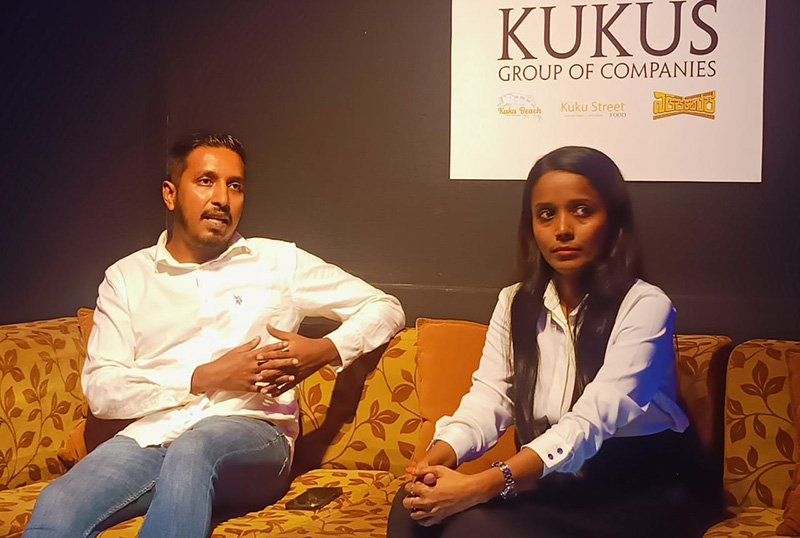
A new force in Sri Lanka’s food industry, Kukus Group, is gaining momentum with a clear vision to deliver authentic cuisine, high hygiene standards, and affordability. Founded by young entrepreneurs Nadeera Senanayaka, Lakmini Gurusinghe, and Randila Gunasinghe, the group has successfully launched its pilot outlet and is now preparing for a significant nationwide expansion.
The inaugural in Kotte has served as a successful proof of concept. Operating for five months, this modern street-food outlet has garnered a strong customer response, confirming market demand and providing the confidence to fund the group’s ambitious growth strategy.

The inaugural in Kotte
“The positive reception has been overwhelming and has solidified our plans,” said Lakmini Gurusinghe and Randila Gunasinghe. “Our Kotte outlet is the operational model we will replicate – ensuring consistent quality, disciplined operations, and excellent service across all future locations.”
The group’s expansion strategy is built on three distinct thematic brands:
Kukus Street: Targeting young urban customers, these outlets offer a vibrant, casual dining experience with a menu of Sri Lankan rice and curry, kottu, snacks, and BBQ, with most meals priced under Rs. 1,500. Services include dine-in, takeaway, and delivery.
Kukus Beach: Planned for coastal areas, beginning in the South, this concept will feature an urban-style beach restaurant and pub designed for relaxed social dining.
Kukus Bioscope: Celebrating Sri Lanka’s cinematic heritage, this dedicated restaurant concept will create a nostalgic cultural space inspired by the golden eras of Sinhala cinema, with the first outlet slated for Colombo.
The immediate plan includes transforming the flagship Kotte location into Kukus Pub & Bar, pending regulatory approvals. The long-term vision is to develop 18 outlets nationwide: 10 Kukus Street locations, 5 Kukus Beach venues, and 3 Kukus Bioscope establishments.
“Kukus Group is more than a hospitality brand; it’s a celebration of Sri Lankan flavors and culture,” the founders concluded. “Our mission is to build trusted, recognizable brands that connect deeply with communities and offer lasting cultural value alongside authentic cuisine. We are dynamic and excited to proceed with this strategic expansion,” they said.
By Sanath Nanayakkare

Fcode Labs marked its seventh anniversary by hosting its annual Awards Night 2025 at Waters Edge, celebrating team achievements and reinforcing its organizational values.
The event featured keynote addresses from Co-Founders & CEOs Buddhishan Manamperi and Tharindu Malawaraarachchi, who reflected on the company’s annual progress and future strategy. Chief Operating Officer Pamaljith Harshapriya outlined operational priorities for the next phase of growth.
Awards were presented across three key categories. Prabhanu Gunaweera and Dushan Pramod received Customer Excellence awards for partner collaboration. Performance Excellence awards were granted to Munsira Mansoor, Thusara Wanigathunga, Thushan De Silva, Adithya Narasinghe, Avantha Dissanayake, Amanda Janmaweera, Sithika Guruge, and Sandali Gunawardena. The Value-Based Behaviour awards were given to Thilina Hewagama, Udara Sembukuttiarachchi, and Kavindu Dhananjaya for exemplifying company values.

BCB’s integrity unit finds ‘credible suspicion’ during BPL

Devine’s 95 trumps Lee, Wolvaardt fifties in see-saw thriller

Fairly heavy showers about 75 mm are likely at some places in the Western, North-western and Sabaragamuwa provinces

President proposes; Speaker disposes

Sri Lanka loses Rs.7.5 bn due to coal tender irregularities: FSP

CID summons SJB MP for criticising education reforms

‘Dates have the highest sugar content to fight Coronavirus’

Sunday Island 27 December – Headlines

#SundayIsland 17th December – Headlines

Sunday Island – 28th March

Sunday Island Headlines – 21 March

Sunday Island – 21st February – Headlines
-

 News1 day ago
Sajith: Ashoka Chakra replaces Dharmachakra in Buddhism textbook
-

 Business1 day ago
Dialog and UnionPay International Join Forces to Elevate Sri Lanka’s Digital Payment Landscape
-

 Features1 day ago
The Paradox of Trump Power: Contested Authoritarian at Home, Uncontested Bully Abroad
-

 News6 days ago
Interception of SL fishing craft by Seychelles: Trawler owners demand international investigation
-

 News1 day ago
Level I landslide early warnings issued to the Districts of Badulla, Kandy, Matale and Nuwara-Eliya extended
-

 Features1 day ago
Subject:Whatever happened to (my) three million dollars?
-

 News6 days ago
Broad support emerges for Faiszer’s sweeping proposals on long- delayed divorce and personal law reforms
-

 News1 day ago
65 withdrawn cases re-filed by Govt, PM tells Parliament