
Sports
Alex Marshall’s war on corruption


Rex Clementine in Dubai
With the immense popularity of T-20 cricket and mushrooming franchise leagues all over the world, the game of cricket was under the threat of corruption. When the International Cricket Council was on the lookout to rope in someone to head its Anti Corruption Unit, they went for a high profile Scotland Yard police officer in Alex Marshall.
Marshall (59) is someone who is held in high esteem in the UK. Since joining the ICC, he has gone about his business meticulously and 22 individuals (five Sri Lankans) had been charged for breaching the Code of Conduct by the Anti Corruption Unit. What is important is that of all individuals the ICC charged, except one all others either accepted sanctions or the tribunal found them guilty. You can assume that the corruptors have been kept at arm’s length to a large extent, but eagle-eyed Marshall doesn’t take the foot off the gas. His war on corruption in cricket is very much fiercely focused.
“The participants who have been charged include franchise team owners, team managers, coaches and players,” Marshall said in an interview with a group of Sri Lankan journalists.
“Our effort is to keep the corruptors away. One of the ways to do it is to find out how the corruptors work. If they are going to approach you how are they going to do it? What are your weaknesses? What would you do in social media? Would you like to go to night clubs? Do you like going to casinos? Will 10,000 Dollars work or 30,000 Dollars work?
ICC’s vibrant Anti Corruption Unit has done well to educate players and Marshall gave a glimpse to the public how corruptors work during our interaction. “The most common way is that players get a strange social media exchange which goes like ‘I would like to sponsor your bat’ or ‘we are having an event and you can come along’ or ‘there is a franchise tournament coming along why don’t you come to Dubai and meet the owners’.
A few years ago, the Anti Corruption Unit had been heavily focusing on Sri Lanka investigating quite a few cases and Marshall was pleased with the way players have responded. “In Sri Lanka players have become very good at spotting and understanding how the corruptors are likely to get at you. It is hard for corruptors to get to the players if they phone us in the first sniff when they sense something dodgy. But if the corruptors go through an ex-player, whom they (current players) get on with and trust, they will get a conversation with them.”
It has been a real embarrassment for Sri Lanka as a nation to have so many corruption investigations going on but Marshall commended the tremendous improvement the country is making in fighting corruption.
“There is a big improvement. At one point it was 22 live cases. All I ever said was that is the highest number of investigations among all the cricket nations. I never said that Sri Lanka is the most corrupt.. But that has tumbled. Sri Lanka is not the leading number of investigations at the moment by a long way. We have seen a significant difference. As we have got through all those cases. Players have got better and better in reporting any sort of suspicions.”
One of the good things done by the previous government is making corruption in sport a criminal offence and a person can go to jail. Harin Fernando as Sports Minister put in a lot of effort to introduce the bill to the Parliament in 2019 and it was passed without any delay.
“Sri Lanka brought in legislation to make match fixing a crime. Top effort! They are the first country in the sub-continent to bring in that legislation. I think that message has gone across to most people. Anyone who is trying to ignore that legislation goes to prison. In England people have gone to prison for fixing cricket matches. In Sri Lanka, we have seen a shift where it’s considered a serious thing with the Police and government getting involved. The government has taken it seriously. My view is that playing group is switched on. The playing group is a good group. If someone tells them to play badly, they’ll tell us. They have been coming along to tribunal and giving evidence which is what they are supposed to do. Across the world of cricket, people are quite scared of doing it. They don’t like doing it. But in Sri Lanka, players have started doing it. So there is a massive improvement in Sri Lanka.”
Franchise cricket seems to be the most vulnerable of all formats with unknown owners coming through and there is a strong need for proper vetting of these entities. SLC initiated the Lanka Premier League last year and the dates for the second edition has been already announced this year.
“What we do know is where a franchise tournament goes wrong, it is very often through the franchise owners. So if we get the wrong people in charge of a team, you will get corrupt approaches. We have been working with IPG and SLC to say that we give them a list and ask them to go through this with every franchise owner. That process is going on at the moment. We don’t give anyone a clean chit. But if they share the details with us, we will say that person is a person of interest to Anti Corruption Unit. But they have to do the due diligence. SLC sanctioned it and it has been played under their code. IPG is the company that is running it. They both have to do diligence properly,” Marshall noted.
With legal implications involved, ICC has to be cautious about the process that they follow from the moment an individual is under the spotlight to where he is sanctioned. Marshall explained the process. “We name someone when someone is charged. We have investigated certain individuals in Sri Lanka for two years but we don’t mention the name to anyone. We don’t even tell the Sri Lankan board. When we complete an investigation, I might say that’s all the evidence we have gathered. Looks like they may be involved with something but I don’t have enough to recommend charges. Or when we have lots of evidence, we send a report to our lawyers saying we recommend that a person is charged for breaching the code. If the general counsel agrees, he consults with other people and we send a letter saying that we believe you have breached the code in these places. You can now go to a tribunal or you can accept and agree a sanction. That’s the first time we ever publicize that person’s name. We publish a statement but we don’t give any comments. Then we tell the whole story when the tribunal is finished or we reach a point where a sanction has been agreed.”
SLC has two individuals now working full time on their Anti Corruption Unit and there’s scope to recruit more people to make it a vibrant one given the challenges the sport has faced in the last five years. “The boards that are better off have the biggest and strongest Anti Corruption units. So Australia, England and India have pretty big anti corruption departments. Sri Lanka has two people. Zimbabwe has one, part time. We have a good relationship with them all. Pakistan actually has a good anti corruption unit too. It is variable across the world. It’s about what they can afford to spend on having people working in those roles.”
Several ex-Sri Lankan cricketers have featured in unsanctioned cricket events all over the world and Marshall warned the dangers of getting involved in these competitions. “To run a league it has to be approved by the cricket board. If you are an associate member and if it is going to involve some international players – more than four –then you need to get ICC approval to run the event. There have been events that we have refused to sanction. Then it is called unsanctioned cricket. If any player takes part in unsanctioned cricket, they can be banned from cricket. Mauritius had an unsanctioned league last year. Some Sri Lankan players went and played unsanctioned cricket. Those players when they came to thr T-10 tournament, they were thrown out. They were told you have been playing unsanctioned cricket without an NOC. Therefore you are thrown out of the tournament.”
After Parliament passed legislation, a police unit was established at Sugathadasa Stadium to investigate corruption in sports. ICC has been educating local police officers how to go about things. “We have sent two people to Sri Lanka to work with them. My chief investigator and another investigator spent a few days training them. We shared with them how we approach because they are not coming from a sports corruption background. They come from a police background. We come from a police background as well but we have been doing corruption in sport for many years. We have been working with them. Where we lost was because of COVID. We spent less time working with them than what we wanted. As soon as we can travel, we will be in Sri Lanka more often.”





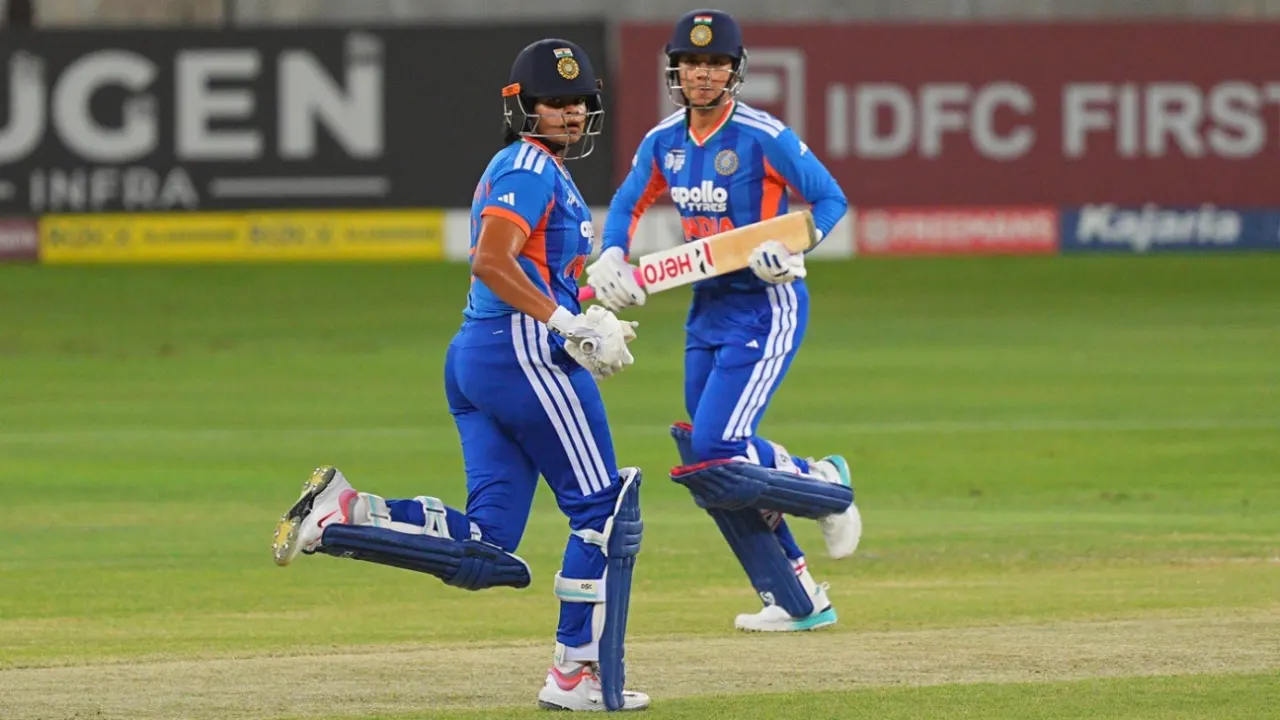
A commanding opening stand between Shafali Verma and Smriti Mandhana, followed by an excellent overall bowling effort, gave India their eighth Asia Cup title, fourth in T20 format, as they beat previous champions Sri Lanka by 72 runs in Dubai.
Shafali and Mandhana put up 129 for the first wicket, the highest partnership for any wicket in the Women’s T20 Asia Cup, to power India to 183 for 5. Sri Lanka’s chase never got going, despite India dropping as many as five catches, as the spin unit led by Deepti Sharmaand N Shree Charani kept them under control throughout. Chamari Athapaththu top-scored with 36, but Sri Lanka were eventually bowled out for 111. India now lead Sri Lanka 6-1 in Asia Cup final meetings.
Shafali set the tone after captain Harmanpreet Kaur opted to bat after winning the toss. When Sri Lanka introduced spin in the second over, both openers immediately attacked, picking up two boundaries. But Shafali combined power with placement in the third over, first using the pace on a short ball from outside off to guide it past short third, before clipping a length delivery through midwicket to make it back-to-back fours.
Athapaththu brought herself on in the fifth over but that brought little respite. Shafali got underneath a tossed-up delivery and launched it straight back over the bowler’s head before sending another ball in the slot over long-on. India raced to 57 without loss at the end of the powerplay.
The boundary-hitting continued after the powerplay too, with Shafali finding the ropes regularly on her way to a 24-ball fifty, the fastest half-century in Women’s T20 Asia Cup history. Mandhana, who had initially scored at around a run a ball, then joined in on the fun as she lofted a flighted delivery from Chamudi Praboda over long-on before bringing up her own half-century, off 36 balls, with a cut through the offside. India reached 98 without loss at the end of ten overs.
With India looking well on track for a 200-plus total, Sri Lanka finally made inroads in the 13th over when Praboda broke through, having Shafali mistime a shot to cover. India suffered another setback in the following over when Mandhana was run out for the third time in the tournament. Harmanpreet, coming in at No. 3, struck Athapaththu’s delivery straight to point and immediately set off for a single, but she hesitated midway before continuing, leaving Mandhana stranded as the throw came in. The mix-up ended Mandhana’s innings on 59, with Sri Lanka sending back both well-set openers in a space of six balls.
Sri Lanka could have had Richa Ghosh soon after but Kavisha Dilhari could not hold on to a difficult running catch. Ghosh had mistimed a slog sweep towards deep backward square leg, with Dilhari racing in and diving forward, only for the ball to slip from her hands as she hit the ground. Ghosh could not make the most of the reprieve as she scored 15 off 13 before picking out cover.
Sri Lanka did a better job at the death, restricting India and picking up the wickets of Harmanpreet and Deepti in successive deliveries in the 19th over. That brought G Kamalini, playing her first match in this Asia Cup and just her second T20I, to the crease and she managed a four and a six off the last two balls to take India to 183 for 5.
A chase of 184 was never going to be easy, but Imesha Dulani started the proceedings positively, shuffling across to a full delivery from Kranti Gaud and paddling it past short fine leg for four. But a similar attempt brought an end to her innings in the fourth ball of the over, with Dulani attempting a scoop only to miss the ball completely and watch it crash into the top of leg stump.
Earlier, Sri Lanka had suffered a setback when Vishmi Gunaratne appeared to roll her ankle while returning the ball and was carried off the field on a stretcher. She, however, came out to bat at No. 3, attempting to rebuild alongside Athapaththu. But fast bowlers Gaud and Nandani Sharma left the duo frustrated, with Athapaththu enduring a testing over from Gaud, getting off the mark only on the eighth delivery she faced.
She then showed off some of her big hitting, taking on Shafali for a six and a four, but despite the boundaries, she was only going at a run-a-ball at the end of the powerplay. Any hopes of Sri Lanka coming close to chasing the total ended with her dismissal in the tenth over.
Anticipating Athapaththu would look to attack, Deepti shortened her length, making her charge down the pitch. But the ball turned away sharply, beating Athapaththu’s attempted shot, and Ghosh completed a straightforward stumping, dismissing the Sri Lanka captain for 36. Deepti struck once more in the over, having Gunaratne bowled, leaving Sri Lanka needing 121 off the last ten.
As has been the case throughout the tournament, India’s spinners showed their prowess, never letting Sri Lanka even have a sniff at the game thereon. Wickets fell regularly, with Charani removing Harshitha Samarawickrama, the hero of the 2024 Asia Cup with a sharp return catch for 9.
Charani then picked up two wickets in the over. Kavisha Dilhari fell first, slicing a thick outside edge towards short third, following which Nilakshika Silva, who was playing with a broken finger, top-edged a shot towards deep square leg.
India were sloppy in the field, dropping five catches but it was too late for Sri Lanka to capitalise on the chances. Deepti finished with three wickets and Charani with four, finishing as the tournament’s top two wicket-takers, as India bowled Sri Lanka out for 111 on the last ball of the innings.
Scores:
India Women 183 for 5 in 20 overs (Smriti Mandhana 59, Shafali Verma 68, Harmanpreet Kaur 14, Richa Ghosh 17, Gunalan Kamalini 15*; Mithalia Ayodhya 1-33, Chamari Athapaththu 1-34, Chamudi Prabodha 1-40) beat Sri Lanka Women 111 all out in 20 overs (Chamari Athapaththu 36, Vishmi Gunarathne 20, Nilakshika Silva 22; Kranti Gaud 1-08, Shafali Verma 1-23, Shree Charani 4-20, Deepti Sharma 3-19, Prema Rawat 1-22) by 72 runs
[Cricinfo]

Rumesh Tharanga outsmarted a strong field including his closest rivals this season, Anderson Peters and Julian Webber to clinch the men’s javelin title of the inaugural Ultimate Championship in Budapest.
The Diamond League champion overtook Webber and Peters with his third round throw which was measured at 87.11 metres before further improving the distance to a colossal 91.01metres, the third time the 23 year old has exceeded the 90 meters mark this season.
The two-time world champion Peters finished second with 86.18m.
European champion Weber, who led in the first round, finished third with 85.89m. (RF)
Sports
Maris Stella Thimbirigaskatuwa, Lyceum Wattala clinch Western Province Schools Games athletics titles


Maris Stella College, Thimbirigaskatuwa and Lyceum International School, Wattala emerged as the boys’ and girls’ overall champions respectively at the Western Province Schools Games athletics championship, which concluded at Diyagama on Friday.
Maris Stella produced a strong all-round performance to secure the boys’ title, with St. Benedict’s College, Kotahena finishing runners-up and Maris Stella College, Negombo taking third place.
The Thimbirigaskatuwa school’s success was highlighted by an outstanding performance from Deesara Herath, who was adjudged the boys’ Best Athlete after producing a 7.49m effort in the Under-20 long jump.
Maris Stella also produced another Best Athlete through Akash Peiris, who claimed the Under-14 boys’ award with a 12.91m performance in the shot put.
The school further underlined its strength in sprinting by establishing a new meet record in the Under-18 boys’ 4x100m relay. The Maris Stella quartet clocked 42.4 seconds to take the gold.
Their depth was also evident in the relay events, where Maris Stella finished as the overall runners-up.
In the girls’ competition, Lyceum International School, Wattala secured the overall championship, with the school’s success spearheaded by Risansa Nirupama. She was named the girls’ Best Athlete following her impressive 24.49-second performance in the Under-20 200m.
The performances of Herath and Nirupama were among the standout individual displays of the championship, while Maris Stella’s meet record in the Under-18 4x100m added further gloss to their successful campaign.

Fast Attack Craft P 4447 recovered in successful salvage operation

Showers above 100 mm are likely at some places in the Western, Central, Sabaragamuwa, Southern, North-central and North-western provinces

Shafali, Mandhana power India to eighth Asia Cup title

Tharanga wins Ultimate Javelin title

CIABOC member’s appointment: Controversy over Speaker under probe heading selection process

GMOA: Countrywide cadre revision not done since 2015

‘Dates have the highest sugar content to fight Coronavirus’

Sunday Island 27 December – Headlines

#SundayIsland 17th December – Headlines

Sunday Island – 28th March

Sunday Island Headlines – 21 March

Sunday Island – 21st February – Headlines
-

 Sports3 days ago
DDS set to lose Test captaincy
-

 News6 days ago
Thailand shuts door on undesirables from Sri Lanka
-

 News3 days ago
Sri Lanka faces new grid challenge as rooftop solar surges: former CEB GM
-
 Business6 days ago
CEB successor company breaks into top three in competitive BESS tender
-

 Latest News3 days ago
Shafali, Deepti power India into sixth T20 Asia Cup final
-

 Opinion5 days ago
Navigating Sri Lanka’s Israeli Dilemma
-

 Latest News2 days ago
Sri Lanka thwart Fatima Sana challenge to secure Asia Cup final spot
-

 Features4 days ago
Lost for 90 years: Rare Goby resurfaces in Jaffna