
Features
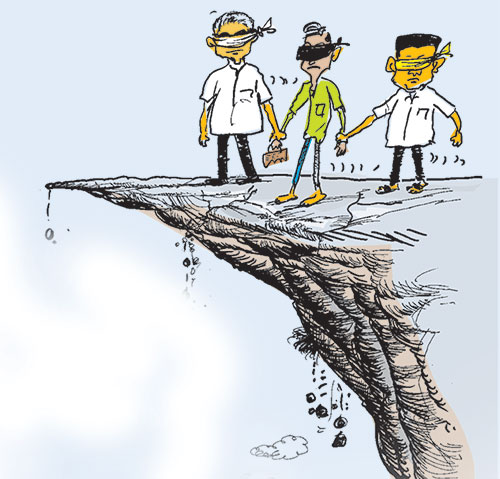
Sri Lanka heading for serious crisis!

By Dr. Laksiri Fernando
This is not a prediction, but the reality. Sri Lanka is already in a serious crisis in terms of people’s living conditions, the economy, foreign reserves, political system, government’s legitimacy, public administration, foreign relations and the government’s day to day decision making processes. While some are long standing, like the foreign reserves or debt, most of the others are quite recent, and are the results of unequivocal incompetence and bad management. Even the foreign debt situation has worsened under the present administration.
If one draws a balance sheet, the current administration can be credited for COVID-19 vaccinations, but almost all other endeavours are utter failures. At the presidential elections in November 2019, 6.9 million people voted with much hope, but all these are now shattered. The slogan touted was ‘Prosperity and Splendour.’ Prosperity has been acquired by the deal makers and fraudsters; no splendour to the country or the people. In economic policy, the government has zigzagged between ‘state-control’ and ‘free-market,’ and the economy and the people have suffered as a result.
Economy and inflation
What affects the people in general and their living conditions at present is the thumping inflation in essential commodities. Even according to the Central Bank, the national inflation rate has gone up from 3.7 percent in January 2021 to 7.6 percent in October 2021. As the Trading Economics website has noted, “Prices advanced at a faster pace for both food products (12.8 percent vs 10 percent in September) and non-food products (5.4 percent vs 3.8 percent).” Taking into account the piling up of hardships on people, Moody’s has downgraded Sri Lanka’s sovereign rating from Caa1 to Caa2. Corruption might be another reason for this downgrading.
People’s living difficulties cannot be fully gauged through official inflation rates. The newspapers and TV interviews with people on the ground have revealed more drastic conditions. Day by day the prices of essentials like rice, tea, milk powder, sugar, bread, coconut, lentils and vegetables have been going up. Men express their anger and women cry referring to their children’s and household needs. One reason for the price inflation is the rapid increase of fuel prices. Undoubtedly, world prices are going up, but in Sri Lanka, the gap between the fuel refinery costs and market prices is also high.
Of course, many countries have suffered economically during the COVID-19 pandemic. But to alleviate people’s suffering during the lockdowns and after, most countries (if democratic!) have taken measures to offer various payments and relief measures. It is understandable that Sri Lanka has serious public finance difficulties. However, most of these difficulties are the result of waste, corruption, and financial mismanagement. The stagnation of salaries in both public and private sectors has also contributed considerably to the people’s difficulties.
Zig-zag policies
There have been these zigzag policies and u-turns, particularly between August and October this year. First the government imposed a state of emergency with regard to essential food items, including rice and sugar, with controlled prices and started to raid hoarders. It created a huge black market and the prices shot up. The government did not have any control. It withdrew all the gazette notifications on controlled food prices, and the prices again went up!
Even before, since March 2020, import controls were imposed due to foreign currency shortages. Since then, and until last month the government went in the direction of a ‘closed economy’. After one year’s ‘experimentation,’ in April this year, Basil Rajapaksa was sworn in as the Minister of Finance to implement a change. It is that change we are experiencing at present!
Now, it appears that we are in an ‘open economy,’ more open than before to corruption and ‘money making’ by politicians, their families and cohorts. This is part of the controversy over the discreet deal between the government and the American New Fortress company.
The old dichotomous controversy over a ‘closed-economy’ and an ‘open-economy’ does not have much meaning today. While an economy should be open as much as possible in market sense and also in investments, the State has a definitive role in maintaining strategic enterprises like harbours, airports and the energy sector. In addition, the state also should offer welfare services to the needy and encourage people to work hard to contribute to the country’s welfare. To motivate people towards work and entrepreneurship, politicians should be exemplary, and free from corruption and misdeeds.
Fertilizer crisis
It was in April this year that the President suddenly declared a complete ban on chemical fertilizer importation. It was like a military order. That was the flaw. There is no question that high quality organic fertilizer is better for the environment and people’s health. However, that transition requires much time, planning, raising of awareness among farmers, and necessary arrangements to be made to produce (or import) reliable organic fertilizer.
The immediate effect was on the tea industry and vegetable cultivation. Then came the Maha paddy cultivation season in September. Without fertilizer, chemical or organic, farmers could not continue cultivation. Except in certain areas, the situation is the same today. Although the agriculture contribution to GDP is (under)estimated at eight percent, over 28 percent of the population depend on agriculture and 82 percent of the population live in rural areas.
In the President’s speech in April, he said, “the annual sum of USD 400 million spent on fertilizer imports could be used to uplift the lives of the people.” Now, what has happened? Perhaps realizing the lack of capacity to produce organic fertilizer locally, at such short notice, the government then decided to import 99,000 tonnes of ‘organic’ fertilizer (solid and liquid) from China. Perhaps there were other reasons.
This fertilizer has proved or is alleged to be more harmful than the chemical fertilizer! The government also decided to import 30,000 tonnes of potassium chloride from Lithuania, but called it ‘organic fertilizer.’ Sri Lanka also had to so far import 3.1 million litres of nano liquid fertilizer from India. Some politicians may have taken commissions from all these new foreign contracts.
Within the last three months, fertilizer costs have rocketed to nearly USD 150 million, and if calculated with previous imports (January to July), definitely exceed the previous annual cost of fertilizer imports ($ 400m) that the President quoted in April. If these figures are incorrect, it is up to the government to reveal the correct figures to the people.
Elevation of Gnanasara?
The government’s mistakes, blunders or offences are not limited to the mismanagement of the economy, cost of living, or the ‘commission seeking’ deals by ministers and appointed officials. The social and public policies are equally disastrous. A recent case in point is the appointment of (Ven.) Galagoda Aththe Gnanasara as the Chairman of the so-called Presidential Task Force on ‘One Country, One Law.’
‘One country, one law’ is not the correct formulation, if it refers to granting, the civil code or personal laws in the country, some uniformity or conformity. ‘Uniform civil code’ or ‘common civil code’ might be better formulations. ‘One country, one law’ should refer strictly to offering the validity and application of laws equally to the ‘powerful and powerless’; the ‘politicians and ordinary citizens’; and the ‘rich and poor’. This is the way the majority of the people must have understood the slogan at the last election.
Gnanasara undoubtedly is not suitable to perform either of the tasks. He is appallingly partial and aggressive. He is the leader of the Bodu Bala Sena (Buddhist Power Army) with proven discordant behaviour. He has been involved in many violent acts and was imprisoned for six months for threatening a woman in the courts. What kind of law reforms can one expect from this type of person? In addition to this dubious Chairman, this so-called 13-member task force does not include a single woman, Tamil or a Christian.
Conclusion
One wonders whether the purpose of the above moves, on the part of the government, is to instigate and fuel religious and ethnic tensions in the country. This is in order to possibly tighten a stronger military or authoritarian grip on the political system as the economic and political policies of the government have been utter failures.
However, in Sri Lanka, the democratic traditions of the country, people’s awareness, trade union movement, independent media and civil society organizations are stronger than the spoiled and corrupt political leaders. Let us keep our fingers crossed.

A catholic response to national pursuit of accountability
By Rev. Dr. Rashmi M.Fernando, S.J.
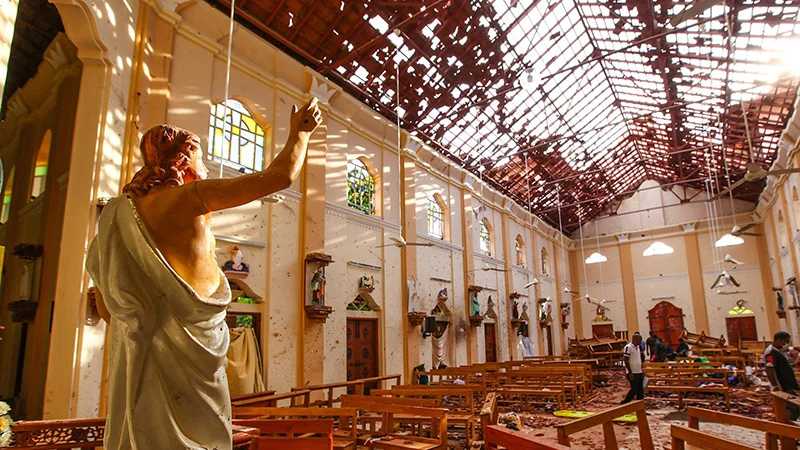
Sri Lanka appears to be entering a decisive chapter in its ongoing investigations regarding the Easter Sunday bombings, in 2019, and other accountability issues. For decades, our nation has carried the heavy burden of unresolved wounds: corruption, enforced disappearances, political assassinations, abductions, financial crimes, abuse of power, and the many forms of violence that have left individuals, families, and communities searching for truth and closure. Many citizens have cast their votes with the hope that a new political administration would have the courage to pursue accountability where previous governments have failed.
Why Justice if Forgiveness is a Christian Virtue?
As investigations continue and legal processes unfold, however, another familiar phenomenon has emerged. Those who fear accountability, or those who perceive themselves or their political allies to be threatened by investigations, increasingly appeal to religion—particularly the Catholic Church—to argue that Christians should simply “forgive and forget.”
Some have even criticized local Church leaders for continuing to seek the truth, suggesting that Christians should move on because forgiveness lies at the heart of the Gospel. If Christians are called to forgive, why continue investigating crimes? Why pursue accountability? Why insist on knowing who was responsible?
The argument sounds pious. But it is profoundly incomplete. It raises a fundamental question for Christians, and particularly for Catholics: Does forgiveness require us to abandon the pursuit of justice? If not, why?
The Cry of the Oppressed is the Cry of the Church Demanding Justice
The answer of the Christian tradition is unequivocal: No. Indeed, authentic Christian faith does not ask us to choose between forgiveness and justice. It calls us to hold them together. The Catholic tradition begins with a simple but profound conviction: every human being possesses an inviolable dignity because every human being is created in the image and likeness of God.
Consequently, any act of violence committed both personally and collectively is not merely a violation of a rule. It is ultimately a violation of God’s image and likeness and, consequently, the very dignity and nature of the whole of humanity. For this reason, Catholic Social Teaching (CST) reminds us that the common good is not simply whatever benefits the majority or those who possess power. The common good includes the social conditions that allow every person and community to flourish.
Moreover, CST has a particular concern for those whose voices are the weakest, those whose voices are made weak, and those whose dignity is most easily ignored. This is the foundation of the Church’s preferential option for the poor and vulnerable. When people are abducted, when families are denied the truth about disappeared loved ones, when public resources are stolen, when political power is abused, when the poor are exploited, when violence is permitted to go unpunished, or when institutions are manipulated to protect the powerful, something more than law is being violated. The dignity of persons and the moral foundations of society itself are being wounded.
That is why the Church cannot be indifferent when victims are silenced. Because they lack political power, the Church cannot remain neutral when families continue to live with unanswered questions. She cannot call for peace while ignoring the cry for justice of those who have suffered. A peace built upon silence is not necessarily peace. Often it is a sign that the poor and the wounded have cried without anyone to hear them. That is why the Christian faith requires a voice, a voice that cries out for truth, dignity, responsibility, the common good, solidarity, and restoration.
Promotion of Justice is an Absolute Requirement of the Service of Faith
The Church does not seek political power by standing with victims. She stands with them because the God she worships is the God who hears the cry of the needy. The God of the Scriptures repeatedly hears the cry of the poor, the widow, the orphan, the stranger, and the oppressed. The Jesus of the Gospels consistently moves toward those whom society pushes to the margins.
The Second Vatican Council gave Catholics a renewed understanding of the Church’s relationship with the world. Gaudium et Spes famously reminds us that the “joys and hopes, the griefs and anxieties” of the people of our time are also the joys and hopes, griefs and anxieties of Christ’s followers. The Church, therefore, cannot isolate herself inside sanctuaries while society suffers outside her doors. When injustice wounds society, silence is not always neutrality. Silence itself becomes a moral decision.
The conviction of the Council has particular significance for the Society of Jesus. The 32nd General Congregation of the Society of Jesus, in 1975, articulated one of the defining principles of contemporary Jesuit mission: “The service of faith, of which the promotion of justice is an absolute requirement.”
The wording matters. The promotion of justice is not presented as an optional consequence of faith—as though some Christians might be interested in justice while others might simply concentrate on prayer and personal holiness. It is an absolute requirement of authentic faith. The Jesuit understanding of mission subsequently developed around the inseparable relationship between faith, justice, reconciliation, and dialogue. Later General Congregations of the Society emphasised reconciliation with God, with one another, and with creation.
Reconciliation here does not mean dismissing, forgetting, or unnoticing. Neither does it mean protecting perpetrators from accountability. Nor does it mean asking victims to sacrifice truth for the convenience of society. Forgiveness without truth becomes sentimentality. Justice without forgiveness can become vindictiveness.
The Reality of Social Sin Beyond Individuals
The distinction between faith and justice becomes even more important when we recognise that sin is not always merely individual. Catholic Social Teaching (CST) speaks of structures that can perpetuate injustice. Pope John Paul II, particularly in Sollicitudo Rei Socialis, developed the language of “structures of sin” to describe social, economic, political, and cultural arrangements in which sinful choices become embedded and reproduced. This means that Christian responsibility does not end with asking, “Who committed the individual wrong?” We must also ask: What structures allowed it to happen? Who benefited from it? Who was silenced? Which institutions failed? What must change so that it does not happen again?
For this reason, the liberation theologians in the Church, such as Gustavo Gutiérrez, Jon Sobrino, and Ignacio Ellacuría, insisted that the Gospel requires Christians to confront structures that perpetuate human suffering. Ellacuría, the Jesuit theologian murdered in El Salvador, in 1989, spoke of the need to “take the crucified people down from the cross.” The phrase is powerful because it reminds us that Christian compassion cannot remain merely emotional. It must become transformative. To stand beside the crucified is also to ask why they were crucified in the first place—and what must change so that others are not crucified tomorrow.
Archbishop Óscar Romero of El Salvador, who was assassinated while celebrating Mass after courageously speaking against violence and social injustice, once observed that there are things that can be seen only through eyes that have cried.
This is a profound theological truth. Those who have never experienced disappearance may speak casually about “moving on.” Those who have never lost a loved one to political violence may find accountability inconvenient. Those who have never lived with poverty may speak easily about patience. Those who have never been abused by power may find it easy to preach forgiveness to those who have.
But the Christian tradition insists that we listen first to the wounded. This is not because victims are always right about every question. It is because justice begins with hearing. Before reconciliation, there must be truth. Before truth can become healing, the wounded must be permitted to speak. And before society asks victims to forgive, society should have the humility to ask what it has done—or failed to do—to protect them.
Forgiveness Never Cancels Justice—and Justice Never Cancels Forgiveness
One misunderstanding about Christian faith is the assumption that forgiveness demands silence, and silence demands complicity. It does not. Forgiveness is, first and foremost, an interior act of the human heart. It is a personal process through which a victim gradually refuses to allow hatred, resentment, and the desire for revenge to imprison the soul. To forgive is to surrender the desire for vengeance and to place oneself, and ultimately the offender, into the merciful hands of God. But forgiveness does not mean that the injustice committed is dismissible, acceptable, or justified. A victim may freely choose to forgive, but that person cannot and should not, by personal forgiveness, absolve wrongdoers from their responsibility to protect others from being harmed in the same way. Society has a responsibility to establish the truth, protect the innocent, hold wrongdoers accountable, and prevent the repetition of injustice.
While forgiveness is personal, justice is communal and, as such, it has meaning because human beings do not live as islands or isolated individuals. We live together—as families, communities, institutions, and nations. What one person does to another can affect an entire community. A crime committed against one human being is a wound caused in the entire social fabric. Justice, therefore, seeks to protect the common good, uphold the dignity and rights of every person, establish equity, repair what has been broken, and ensure accountability.
If a person steals from the public, forgiveness does not eliminate the obligation to restore what can be restored.
If a person abuses public office, repentance does not automatically remove the need for accountability. If a person participates in violence, forgiveness does not require society to abandon the pursuit of truth. If someone has disappeared, forgiveness does not mean that the family should stop asking what happened. A Christian victim, as in the case of the Easter Bombing, may forgive. But mere seeking truth, on behalf of that victim, both individually and communally, is an act of solidarity with the wounded and the suffering.
Speaking on the side of the wrongdoers, if a person sins privately, the Christian faith requires that that person reconcile with God and with his or her own conscience. But if he or she commits a crime against another person, while forgiveness of God and reconciliation with the self is always a personal job, and available upon genuine remorse, request, and change of heart, there is a social dimension that the offender should fulfill, as given in the constitution or the law. Religious language must never become a shield behind which perpetrators escape accountability.
Forgiveness, Justice, and Mercy
The life of Jesus makes the distinction among forgiveness, justice, and mercy quite unmistakable. When Jesus encountered sinners, He repeatedly offered forgiveness. To the woman caught in adultery, He said: “Neither do I condemn you. Go, and from now on do not sin anymore” (Jn 8:11). Notice the two dimensions of this encounter. Jesus forgives, but He does not deny sin. He does it with great mercy and calls for conversion. The past is not rewritten. Instead, the sinner is offered a new future. Mercy does not erase truth; it makes transformation possible.
The same Jesus, who forgave individuals, also confronted social and structural wrongdoing. He overturned the tables of those who had transformed the Temple into a marketplace (Mt 21:12–13). He publicly challenged religious leaders who exercised authority while neglecting the weightier matters of the law: justice, mercy, and faith (Mt 23:23). Jesus did not remain silent simply because He was preaching forgiveness. He confronted hypocrisy. He challenged the abuse of authority. He defended the dignity of the vulnerable. He challenged structures that placed religious burdens upon ordinary people while those in authority protected themselves.
And at the very moment of His own execution, Jesus prayed: “Father, forgive them, for they know not what they do” (Lk 23:34). Yet His forgiveness did not make the crucifixion just. The Cross remains one of history’s most profound revelations of human violence, injustice, and the abuse of power. Jesus forgave His executioners without declaring their actions righteous. That is the foundation and the meaning of the Christian Cross and suffering, and that’s where the Church’s concern for justice becomes particularly important.
A Call
Christian theology cannot simply comfort victims while leaving intact the structures that produce suffering. The Church’s preferential option for the poor requires Catholics to stand with those whose voices are least likely to be heard. While solidarity with them requires us to recognise that the suffering of another is not simply “their problem,” forgiveness demanding victims to remain silent is a distortion of the Gospel. Prayer and worship that do not concern justice could become mere sentimentality. The Eucharist we celebrate at the altar must eventually lead us to the human being who suffers beyond the walls of the church.
Hailing from St. Sebastian’s Parish, Katuwapitiya, Negombo—where alone 117 people were killed in the Easter Sunday bombing in 2019—and as someone who continues to accompany the victimised children and families in their ongoing journey of grief, healing, and the search for truth, ever since that unfortunate day and to this day. I reckon that our greatest danger should not be that justice may fail. Rather, our greater danger should be that, in the pursuit of justice, we may lose our souls. Jesus asked, “What profit would there be for one to gain the whole world and forfeit his life?” (Mk 8:36). When adapted these words to our own context here, one might ask: What does it profit us if we, one day, obtain every political victory, every judicial judgment, and every public apology, but in the process lose our peace, fill our hearts with anger, hatred, and resentment, and surrender our capacity to forgive and to pray for those who persecute us?
The pursuit of justice must never cost us our humanity or our place in heaven. We must seek the truth, demand accountability, and work for justice with courage—but without allowing the wounds inflicted upon us to transform us into what we oppose. We can pursue justice without hatred, demand accountability without vengeance, and seek truth while leaving room for mercy. For the Christian, the ultimate victory is not merely that justice is done, but that, in seeking justice, we do not lose the capacity to love. The Gospel never asks us to choose between faith and justice. Rather, it calls us to practice a faith that does justice—for the greater glory of God and for the greater dignity of every human person. Forgiveness heals the heart. Justice heals the social wound. Mercy makes both possible. The Christian vocation is to pursue a deeper synthesis: truth with mercy, justice with forgiveness, accountability with the possibility of redemption.
Author
Rev. Dr. Rashmi M. Fernando, S.J., is a professor at the College for Business Administration (CBA), Special Assistant to the Provost, and Cabinet Fellow for Global Affairs at Loyola Marymount University (LMU), Los Angeles, California; and Pastoral Coordinator for the Sri Lankan Catholic Community (SLCC) in California, USA.
by Jehan Perera
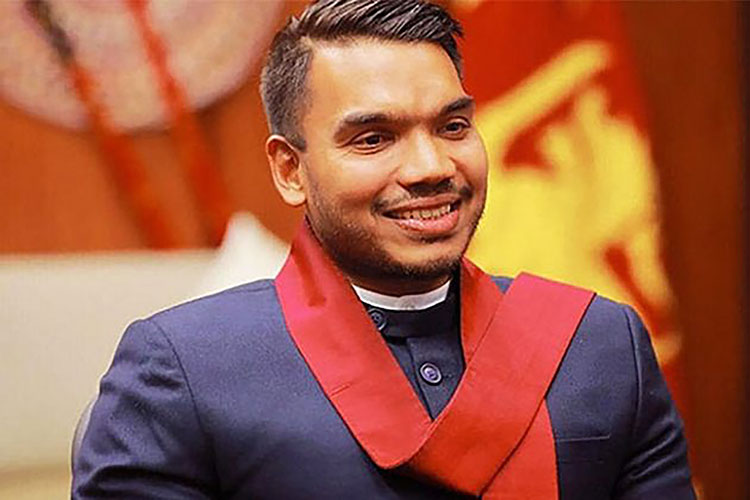
The arrest of SLPP National Organiser and Member of Parliament Namal Rajapaksa on corruption charges related to the massive Airbus purchase scandal of 2013 has captured the centre stage of public attention. He was arrested by the Commission to Investigate Allegations of Bribery or Corruption (CIABOC) on September 4 and remanded until September 18. The allegations concern an alleged payment of US$800,000 connected to the procurement of Airbus aircraft by SriLankan Airlines. Opposition political parties working together with the SLPP have condemned the arrest as being politically motivated. They point to the mass opposition public rally to be organised by the SLPP on September 12 as being the reason for the arrest.
The SLPP together with other opposition political parties have been trying to get back to the public eye as being viable opposition political parties after the drubbing they received at the last presidential and general elections held in 2024. However, they face a daunting task. They face a government with a 2/3 majority in Parliament and a President who currently enjoys a 75 percent approval rating with the people as indicated in the recent CPA survey. The main issue that led to the electoral watershed in 2024 was corruption and abuse of power that was widely believed to have fed into the collapse of the national economy in 2022. The arrest of the SLPP National Organiser and the charges against him bring back the issue of past corruption to the fore.
There is a strong public case for pursuing accountability for corruption, irrespective of the political status of those being investigated. President Anura Kumara Dissanayake has claimed that if all alleged corruption and wrongdoing uncovered by the government were fully investigated, hardly anyone among those responsible would be left untouched. The fact that an alleged wrongdoer in the Airbus scandal is the scion of one of the most formidable political dynasties in the country and is the leader of a major political party is not deterring the government.
Enormous Scale
The present government is demonstrating a greater determination coupled with political will to push the accountability process forward compared to previous governments. This is not the first occasion on which Namal Rajapaksa has been arrested as part of government investigations into corruption. In 2015, the government headed by President Maithripala Sirisena and Prime Minister Ranil Wickremesinghe launched a major investigation into the Airbus deal as the amounts at stake were enormous. In 2013, SriLankan Airlines had contracted for six A330-300s and four A350-900s, with further A350 leases arranged for a fleet renewal programme valued at over US$2.5 billion. That figure is comparable in size to the US$3 billion IMF bailout and shows the scale of exposure the loss-making state-owned carrier was taking on. SriLankan Airlines decided to exit the leases starting in 2015–2016 following the change of government. The penalties paid exceeded US$100 million.
After the catastrophe, the Sirisena-Wickremesinghe government appointed a high powered investigation body. Despite the Board of Inquiry’s recommendation that former executives face criminal prosecution, no one named in the report was ever successfully prosecuted. The Airbus case is particularly important because what is at stake is not simply the size of the alleged bribe. What is more troubling is the deliberate commitment of scarce public resources to a loss-making enterprise, for a personal gain far smaller than the cost imposed on the national budget. Corruption is not only about what an individual allegedly gets as a commission or bribe. It is also about the public resources committed, institutions weakened, and opportunities lost when decisions serve private rather than public benefit.
Having completed two years in power, like past governments, the NPP government is still trying to define who was responsible for the current state of affairs in the country. Instead, they need to shift their thinking on what institutions and systems must be changed so that past problems cannot easily recur. This means moving from anti-corruption politics to systems reform. This distinction is crucial. One can prosecute a set of corrupt individuals and still leave behind a system that produces another set. Conversely, if procurement, appointments, public finance, political financing, policing and judicial processes and reconciliation are redesigned properly, opportunities for corruption and political abuse will be reduced. For the NPP, therefore, the real measure of success should not simply be how many former politicians are investigated or prosecuted. It should be whether, by the end of its term, Sri Lanka has become a country in which it is substantially harder for any future government to abuse public power.
Broader Accountability
This broader understanding of accountability is particularly important because financial crimes and corruption, grievous though they be, are not the only set of gross misdeeds that plunged the country to the bottom rungs of development in the world. There is another issue of accountability that needs to be pursued. This is to find out what happened to the tens of thousands of missing persons due to political violence in the past four to five decades which has put Sri Lanka in the second spot internationally for the number of missing persons. Amnesty International has estimated that at least 60,000 and possibly as many as 100,000 people have been subjected to enforced disappearance in Sri Lanka since the 1980s.The numbers are so large that they should shock the conscience of the country. It is telling that the disappearance of a person does not attract the same public attention as the disappearance of money.
A missing million dollars matters because it belongs to the people. A missing person matters because that person belongs to a family, a community, a country. Both are failures of the same underlying obligation that the state apply accountability equally, to money and to people, regardless of who is harmed or who is implicated. While lost public money weakens the economy, disappeared people weaken the body politic itself. In the case of Sri Lanka, the disappeared are disproportionately Tamil, though people of all communities have vanished during the country’s cycles of violence. The question this raises is whether ethnic minority citizens believe the state cares for them as it does the ethnic majority. A citizen should not have to ask whether the state cares about the disappearance of a person because that person was Tamil, Muslim or Sinhalese. Nor should a family have to wait for decades for an answer simply because the disappearance occurred during a period of political violence. This needs to be pursued with the same political will that is now being demonstrated in relation to corruption. The pursuit of accountability for corruption can therefore become an opportunity to demonstrate that accountability is not selective. It needs to apply to financial wrongdoing, abuse of power, violations of rights and the failure of institutions to protect citizens.
The government has an opportunity to show that accountability is not about settling political scores with the previous rulers. It is about establishing a standard of public responsibility that applies to everyone and every institution.This is also important for national unity, both in name and in spirit. If ethnic minority citizens are to feel a sense of belonging to the Sri Lankan state, they need to know that their suffering matters as much as the loss of public money. Otherwise, unresolved grievances will remain a wound in the body politic and continue to weaken it. The missing people matter as much as the missing millions. In fact, people matter more than money in our society. The real test of accountability is whether Sri Lanka can build institutions and systems in which neither public money nor people can disappear without consequence.
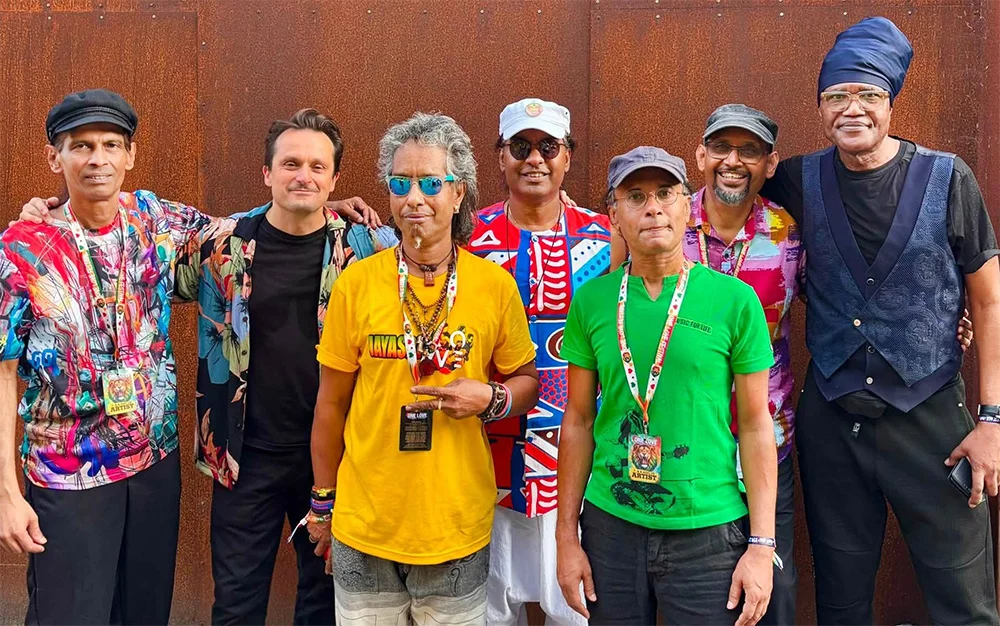
 Last month, Sri Lankan’s reggae stars, Rohitha and Rohan, along with the band JAYASRI, took Austria by storm at the One Love Festival — Austria’s biggest reggae event and one of Europe’s most iconic.
Set against the stunning natural backdrop of Wiesen in Burgenland province, the two-day festival drew thousands of fans and featured a lineup that read like a reggae hall of fame.
And right there, on stage, before the headliners, were Rohitha and Rohan with JAYASRI.
Then came the legends Alpha Blondy and the Solar System, The Wailers, Dawn Penn, Alborosie, Queen Omega, The Congos, Culture, and more. It was, by all accounts, a beautiful night under the stars — and JAYASRI made sure Sri Lanka’s flag flew high.
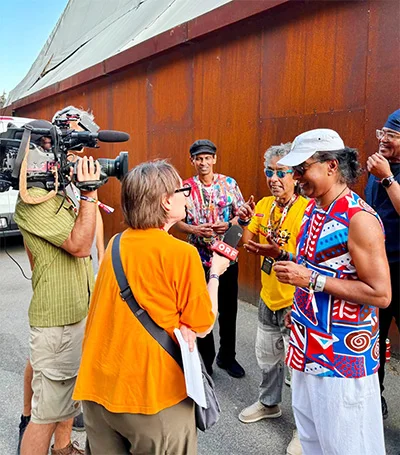
TV interview with the members of JAYASRI … at the
Festival
On stage were: Rohitha on vocals, rhythm guitar and percussion, Rohan on vocals and bass, Bidu on keyboards, Moses on percussion, Milosz on lead guitar, Chiran on drums, and Ruwan on keyboards.
They delivered a powerful set of originals in both English and Sinhala — but with a JAYASRI twist no one else has.
“From Roots Reggae moving to Asian Dub, Ska, Rocksteady, Dancehall and Afro Beat, Funky — it was a unique mixture of our own, and people loved it,” Rohitha said.
Friends and fans flew in from Italy, Switzerland, Hungary and Germany just to join JAYASRI’s ever-growing “Vienna Family” of reggae lovers and cheer them on.
But the real magic happened backstage, according to Rohitha.
“It was great to meet and share the stage with some of the biggest world legends from our genre,” said Rohitha, adding that it was doubly exciting chatting with Alpha Blondy and The Wailers, backstage.
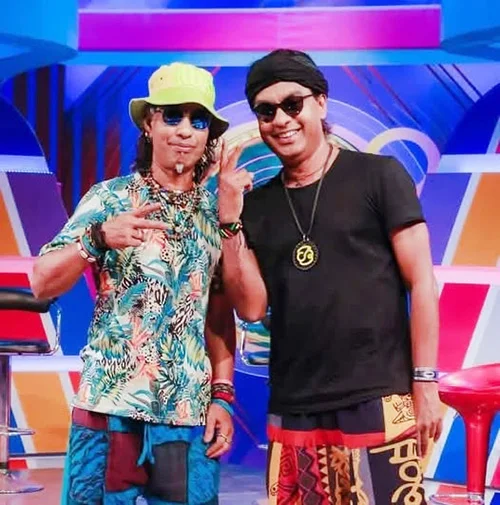
Sri Lankan reggae twins – Rohan and Rohitha
“It was heartening to have their blessings and respect towards our unique style, and to hear them say ‘You people have done some great things to our music’ — that meant everything.”
As the European summer fades, the twins Rohitha and Rohan will be back, in familiar surroundings … yes, Colombo, for the season; and they also have concerts lined up in Japan, Australia, New Zealand, the Middle East, and beyond.
“It’s always great to be back in Colombo for the season,” Rohitha emphasised.
From Wiesen to Colombo, from local roots to global stages — JAYASRI are proving that Sri Lankan reggae has a sound, a soul, and a place in the world. And the world is listening.

INS Udaygiri makes port call in Colombo

Showers in the Uva, Central and Eastern provinces and in Polonnaruwa district

22A: Exclusion of 8 petitions questioned, action filed against SC Registrar, others

Thailand shuts door on undesirables from Sri Lanka

Expertise France and the EU launch media project to strengthen environmental journalism in Sri Lanka

CLA questions non-inclusion of senior judges on five-member SC bench hearing 22A petitions

‘Dates have the highest sugar content to fight Coronavirus’

Sunday Island 27 December – Headlines

#SundayIsland 17th December – Headlines

Sunday Island – 28th March

Sunday Island Headlines – 21 March

Sunday Island – 21st February – Headlines
-

 News5 days ago
Denied of promotion to SC despite vacancies, justice Gurusinghe retires
-
 Latest News6 days ago
Grade 5 scholarship exam results released
-

 News5 days ago
22A: SC urged to suspend hearing, appoint full bench
-

 Midweek Review6 days ago
The local and global dynamics of Sri Lanka’s 22nd Amendment
-
 News3 days ago
Namal remanded until Sept. 18 over Airbus deal investigation
-

 Latest News2 days ago
Tharanga creates history with Diamond League crown in Brussels
-
 News5 days ago
Govt. seeks NATO assistance
-

 News6 days ago
40 professional organisations and TU oppose proposed 22A