
Features
Colvin Stories

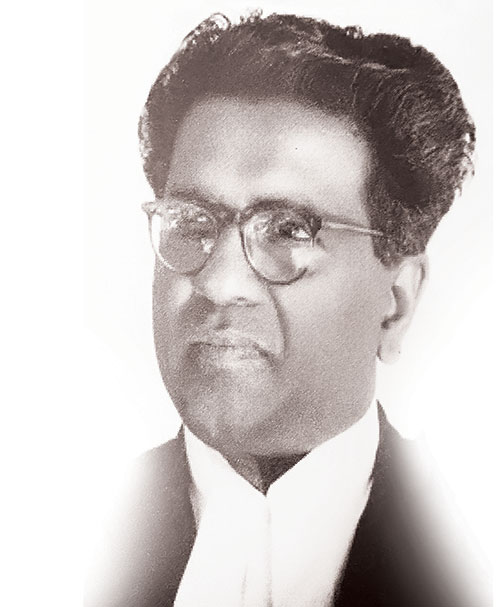
One day, soon after the trade union of Wellawatta Spinning and Weaving Mills, which broke the back of A. E. Goonesinghe’s trade union, was formed, Colvin was travelling in a bus. At the time his face was not well-known and he was merely a name. He found himself sandwiched between two rough looking men. “Ah bung…” said one of them speaking across Colvin. “Who is this Colvin R. De Silva and where does he live?” “I don’t know bung,” replied the other and went on to describe with lurid, blood curdling detail, the horrible things they would do to Colvin, if ever they found him! They happened to be very loyal to Goonesinghe.
***
The shooting of Govindan, a worker of the Wewassa Estate, set off a wave of strikes all over the hill country estates. The small police party that went to the estate to restore law and order were manhandled by the workers who later released them on the ground that both parties were wage-slaves. Later in the day, the enraged police were back, heavily reinforced and armed to the teeth and 208 estate workers were rounded up and arrested, Colvin appeared for all of them at the Badulla Courts and got them released on personal bail.
***
 During World War II, Colvin and his friends knew that one day, before long, they would be arrested. But they did not want to give the impression that the leaders were hiding in safety and comfort while the innocent party men were harassed. One day Colvin appeared in a court case, when a man, placing a hand on his shoulder, in a grim and familiar voice said, “Colvin! You will have to come with me. You are under arrest!” It was Inspector of Police Poulier, a classmate of Colvin at Royal. “Just a minute Poulier,” Colvin said. “I can’t come just like that. I have a client to defend right now. But the moment that is done, I am all yours.” Once the case was over, Colvin left the courthouse with Inspector Poulier. Within days N.M. Perera, Philip Gunawardena and Edmund Samarakkody joined him in jail. And two years later they made their jailbreak and fled to India.
***
Colvin went to jail for the sake of the workers of his country and for the country’s freedom from the foreign yoke. He also made tremendous sacrifices, professionally and physically, for the cause he believed in. While in India, evading re-arrest, Colvin, then Govindan, grew a moustache. One day Bernard Soysa was ordered to contact him, at a specific spot in Madras and Bernard was looking all over for him when he heard Colvin’s famous drawl and found Colvin next to him sporting a walrus moustache. “Colvin!” Bernard had said, “I don’t mind a leader who looks like Karl Marx but not one looking like Groucho Marx.”
***
One day, Colvin said that when he was barely two years old his mother died. A few years later, his father married Colvin’s mother’s younger sister. “Those detestable words ‘step mother’ were never used in our home. And, had she lived, I wonder what form my political career would have taken. She loved us very much and wouldn’t bear to see any of us suffer the most minor injury, discomfort or face the slightest danger. Also, had she seen me dragged off to jail and the awful conditions there, and known when I escaped from jail, went underground and was carrying my life in my hands, she might very well have entreated me to give up politics!”
***
At the 1947 general elections, Colvin contested the Wellawatte-Galkissa seat from his Bolshevik Leninist Party of India (BLPI) of whose local faction, he was leader. In the course of canvassing, he went to an imposing Walawwa of a Gate Mudaliyar and knocked at the door. The laird himself opened the door. “Yes” he barked. Introducing himself, Colvin solicited his vote. “I’ll be damned if I vote for you!” “My dear sir, can I please canvass your wife’s and daughter’s votes?” So in soft measured tones he explained the policies of his party, with the mother and the daughter asking intelligent and penetrating questions from him, like the party’s attitude to Buddhism. All this time, the Gate Mudaliyar was seated in an armchair, within hearing distance, puffing a cigar. Tea was served and the candidate rose to leave. The Mudaliyar accompanied him to the gate and said, “I am going to vote for you.” Colvin bowed and said “Thank you sir!”
During one of those bouts for the Wellawatta-Galkissa seat in Parliament, between Colvin and S. de S. Jayasinghe, S. de S., speaking at one of his election meetings, said confidently “Nonawaruni! Mahathwaruni! I am winning this election, for my name begins with ‘Jaya’, Jaya for victory!” Speaking at one of his meetings a few days later, Colvin said “Come election day, I shall be the winner, for my name ends with ‘Win’, Col-Win!”
***
During the 1947 General Elections, a large number of independent candidates contested, whom Colvin labelled ‘three-headed donkeys’. Colvin was once asked what the best election poster he had ever seen was. He had said that it was the poster Dr. A.P. de Zoysa had published against his rival E.A. Cooray for the Colombo South seat in 1936. His one liner was ‘Eeye Cooray Ada Zoysa’ (punning on Cooray’s initials E.A.).
***
Once Manori de Silva presided over an election meeting in Galle. She announced the next speaker thus, “Meelangata mage piyawana Colvin sahodaraya katha karanawa etha: (The next speaker is my father, Comrade Colvin). This reminds me of a Communist MP from the South, who once addressed his father “sahodara piyathumani” (Comrade father).
The Sathasivam case had an impact on Colvin’s political fortunes, when some women voted against him, for defending the cricketer Sathasivam who was accused of murdering his wife.
***
It must be quite a record that a father-in-law, Colvin (Agalawatta), and his two sons-in-law, Sarath Muttetuwegama (Kalawana) and Weerasinghe de Silva (Balapitiya), were sitting together in the same Parliament, along with Colvin’s brother-in-law K. C. de Silva (Katana) in 1970.
***
One day Colvin was making a speech in the House, when a fledgling MP kept on interrupting him. At last, his patience exhausted Colvin paused, gazed at the young MP in a most thoughtful manner, and said in that devastating drawl of his, “You know Mr. Speaker, in our village a creature with one ‘Molliya’ (hump) is called a buffalo. But I do not know what to call one with many ‘Molliyas’. The heckler was Stanley Molligoda, then MP for Nivitigala.
During the 1977 General election, JR was keen to have two of his friends, Colvin and N.M. in Parliament. So, he fielded two weak candidates for Agalawatta and Yatiyantota electorates. But the two UNP candidates rode on the tidal wave and both were elected with convincing majorities. One day Dr. Arnolis de Silva, father of Colvin, went to meet the Registrar of the Land Registry, Galle, to find that he was on leave. He visited the Registrar again and told him that he came there on Wednesday too. “Yes!” the Registrar said, “I took leave to go to court to watch the famous advocate Dr. Colin R. de Silva defend an accused in a murder case. And, what an experience it was!” The doctor smiled and said “I am Colvin’s father.” The Registrar was delighted to hear it.
***
One day Colvin argued an appeal in a case of profiteering in sugar, and for some inexplicable reason, he kept using the term ‘red sugar’ when ‘brown sugar’ was the more popular one.
When he continued to use this term, the Supreme Court Judge, who hailed from Colvin’s own village, commented drily “Dr. Silva, there is too much red in this court.” And gazing pointedly at the Judge’s red robe, Colvin cracked back: “Yes my lord, and that’s the colour that gives much grace and dignity to your lordship.”
***
Colvin was defending an accused in a murder trial and had addressed the court for three consecutive days. As he concluded his address on the third day, Colvin said, “My lord, I hope to finish my address tomorrow.” “You are hoping, Dr. Silva” said the presiding judge E.H.T. Gunasekera, “I am praying.”
***
Colvin had a flair for Johnsonian English of learned length and thunderous in sound. He would use the word ‘pagination’ for a page in a book or the word ‘testification’ for the evidence of a witness. One day Colvin was making submissions in a case at the Nuwara-Eliya magistrate’s court, defending some estate workers of Agarapathana who were indicted, when the trial judge who was an Englishman found it difficult to understand him. So the judge politely told him to use simpler language. “Your honour! I am speaking in your mother tongue and not mine.” “That is so, but please use simple language. Colvin then proceeded to use simpler language but in long sentences, when a red-faced judge postponed the case and adjourned court. At the next trial date, Colvin used simpler language and won the case.
***
I. W. Panditha who was a leading lawyer in Galle, was once the private secretary of P.H. William Silva, the first MP for the Ambalangoda-Balapitiya seat in 1947. At the elections held that year, several persons, including Panditha, were charged with damaging the motorcar of a rival candidate. And they were all found guilty in the magistrate’s court. They appealed against the verdict and Colvin, a comrade-in-arms of the BLPI and also a fellow MP of William Silva, was retained to appear in the appellate court. On the morning of the date of appeal William Silva and Panditha went to Colvin’s house. He was getting ready to go to court. He asked them whether they had had their breakfast, but did not discuss any matter pertaining to the case. Colvin got the conviction of the accused quashed in the appellate court, as not all persons mentioned in the complaint to the police had been charged in the magistrate’s court.
***
In another case, Colvin admitted that his clients sold sprats at the price stated in the plaint, but certainly not ‘sparts’, whatever it may be, as referred to in the Gazette notification.
***
Colvin once said that H.V. Perera K.C. was one of the best lawyers he had known. One day he had been at the Law Library when H.V. had come up to him and said “Colvin! I have just been having a very heated argument with (mentioning the name of a leading member of the Bar at the time) over the interpretation of a certain law. And he said, ‘H.V., your view may be correct, but so is mine!’ Surely Colvin, there are not several correct views of the law? There is only one correct view, and that is the view that fits into the general fabric of the law!” Colvin then could not but think of a more brilliant definition than that of what the law is all about? And that it is the genius of H.V. Perera, that gives him the ability to express the most profound thoughts with utmost clarity.
***
Here are some more H.V. stories. H.V. was one of the most brilliant students to pass through the portals of Royal College, and at the London Inter Arts Exam he won a scholarship to Cambridge. H.V.’s father was a surveyor, who had done a lot of survey work for Sir Solomon Dias Bandaranaike. Meeting him one day, H.V.’s father had told Sir Solomon this good news. “Cambridge? Your son is going to Cambridge? I say Perera don’t be damned silly, ask your son to do what he can over here in Ceylon. Oxford and Cambridge are for the Bandaranaikes and the Obeysekeras!” said an arrogant Sir Solomon.
***
As mentioned above H.V.’s father was a surveyor. One day, when in court, he saw some of his father’s surveyor friends. He then walked up to them and asked why they were in court. They had then said that they were there on a charge of contempt of court over some court commissioned surveys. After getting the facts of the case, H.V. appeared for them and got them out. H.V. once appeared before Justices Garvin and Akbar and had come to the appellate court fully prepared for a case which, if taken up, would last a few days. However, this case was allowed to stand down and another case of his was taken up. It was a case which he had not studied. Undaunted, he then summarised the plaint to the Bench and read the defendant’s answer and the issues involved. When one of the judges asked him what the trial judge held on issue 4, he proceeded to read the entire judgement, saying that it would be best to do so. Thereafter, he put his brief aside and argued a matter of law and won his case.

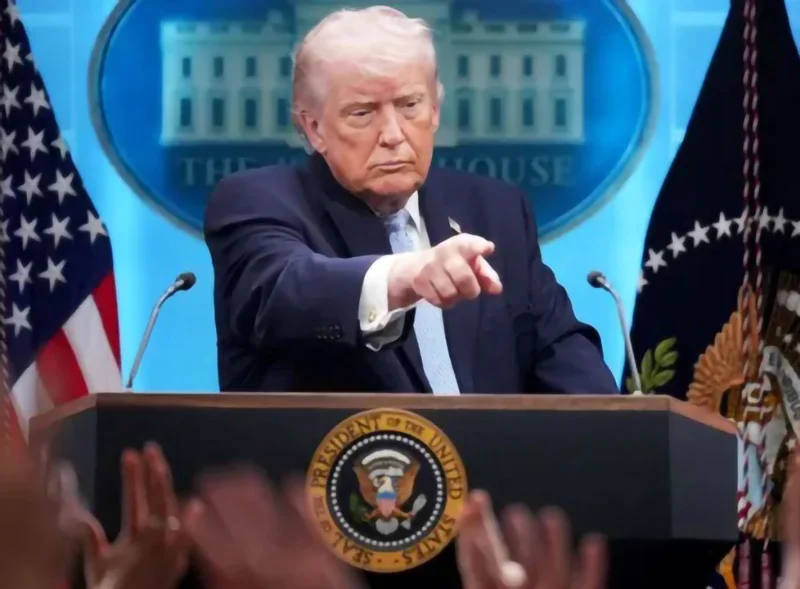
 Some fundamental freedoms seen to be at the heart of democracy in the US – religion, speech, the press, assembly and the right to petition the government – are at risk of being undermined at present by the country’s Executive President. However, the latter is being legally challenged on this score by some sections of the US media and the citizenry of the country could take heart from this notable defense of media freedom.
In fact this is good news for the world of democracy. The push back is coming from organizations such as CNN, ABC, CBS, Fox, NBC who constitute the nucleus as it were of the US media and their solidarity no less than their resourcefulness calls for commendation.
Following a recent White House decision to suspend CNN from what was referred to as ‘participation in presidential pool coverages’, the other media organizations mentioned refused to replace it in the pool. Their position was that the public had a right to receive ‘accurate and independent information about the government.’
Earlier, the White House decided to bar MS NOW and Politico from entering its premises following the restrictions imposed on CNN. The organizations were accused of publishing “FAKE NEWS’ , ‘Fiction’ and ‘lies’ in respect of the administration. These organizations lost no time in initiating a federal lawsuit accusing the central administration of violating their rights guaranteed by the First Amendment.
However, the latter litigating organizations could now consider themselves as having been vindicated because the federal court hearing their case has ordered the Trump administration to temporarily restore White House press access to journalists from the mentioned media institutions. Notably, the court has declared that the ban is ‘likely unconstitutional’. The case is proceeding.
The mass media of the most vibrant democracies of the West ought to be no strangers to such inspirational acts of solidarity and exemplifications of independence but there are lessons here for the democracies of the South that could stand them in good stead. Minus the right of a people to be informed, the rest of fundamental rights featuring in Southern Bills of Rights and legislation of the kind are bereft of substance and meaning.
It is informed decision-making on the part of a citizenry that makes for democratic vibrancy and on this score many a Southern democracy fails. While Southern publics generally demand of their governments continuous economic well being and substantive material benefits they are not equally desirous of being informed and knowledgeable.
This lacuna in the consciousness of many Southern publics enables their governments ‘to get off the hook’, so to speak and govern, or more often misgovern, their countries with impunity. Among other factors, this species of mass ignorance makes it possible for governments to dismantle democracy and rule in perpetuity.
Accordingly, an educated and constantly informed public is an essential precondition for the flourishing of democracy and independent media are integral to this process. Minus an independent mass media sector that meets the knowledge needs of the people responsibly, democracy is as good as dead.
Needless to say, those sections of the US media that are currently taking the Trump administration to task over its media curbs are acutely aware of the cruciality of these fundamental knowledge requirements.
The hope of democratic opinion worldwide and locally is likely to be that media independence would thrive in the manner in which it is flourishing in the most vibrant and accountable democracies of the West.
Southern countries such as Sri Lanka that lay claim to democratic credentials, but are democracy-deficient in many ways, need to be particularly cognizant of these requirements. The publics of these countries need to go the extra mile to ensure the thriving of an independent but responsible mass media sector.
In fact it is veritably a matter of life and death. It is only an independent media sector that could, while ensuring the existence of an informed public, impress on the latter the need to protect and perpetuate its fundamental rights. In the absence of these campaigns, such publics could be eventually having on their hands governments that boast of ruling in perpetuity.
Taking a leaf from the sections of the US media referred to independent media organizations in Southern states need to act in solidarity as well. They would need to act on the basis of the principle that acts of victimization suffered by members in their fold at the hands of governments, for instance, are in fact inimical acts directed at their collectivity and which call for united remedial action. In short, no independent mass media institution could see itself as ‘an island’.
Besides some general guidance on the importance of media independence and solidarity, the message coming from the US with regard to media praxis is that power must be stood-up to unblinkingly. The mentioned sections of the US media are primarily in a struggle to ward off encroachments on their independence in the areas of policy and practice by the political executive, that is the President.
The latter would ride rough-shod over the media in the absence of robust opposition by the media itself to inimical executive action of this kind.
While media independence needs to be seen as crucial to democratic development, an obligation is cast on the media to ensure that it uses such independence responsibly and constructively.
The worst that could afflict a media sector is for it to fall prey to the clichetic ‘freedom of the wild ass’. In fact recurring irresponsibility on the part of the media could lend credence to the perception that a tightly regulated media is best for a country. It is a short step from this misguided view to the position that political authoritarianism is best for a state. That turn of events would be of course catastrophic for a democracy.
The issues discussed thus far point to the need for a broad discourse among Southern democracies in particular on what is best for them in this connection. Given the risks underscored earlier for Southern countries in particular a broad discussion on the matters at hand, which includes the public, emerges as a must for Sri Lanka. Besides, media solidarity within democratic countries and internationally is a must.

by Prof. M. W. Amarasiri de Silva
Following public controversy over an inappropriate web link found in an English study module, the Sri Lankan government formally deferred the full rollout of the Grade 6 curriculum reforms to January 2027. In the interim, state schools will maintain the existing syllabus, reverting to standard eight-period daily timetables and previous textbooks to ensure uninterrupted instruction. Prime Minister and Minister of Education Dr. Harini Amarasuriya emphasized that this temporary pause allows the Education Ministry to thoroughly review all instructional materials, fix editorial flaws, and conduct scientific impact assessments across pilot schools prior to nation-wide implementation.
To address the oversight, an expert committee evaluated the flawed materials, completed necessary amendments, and finalised discussions to resubmit corrected modules for printing. Beyond revising written texts, the Ministry established a broader preparation roadmap—allocating funds for extensive teacher training programs set to begin mid-year, alongside scheduled informational briefings for parents, teachers, and students. Prime Minister Amarasuriya reaffirmed that none of the valid first-term modules were completely discarded or scrapped, preserving state resources while systematically rebuilding public trust and strengthening quality assurance protocols.
In this respect, this article reviews the current grade 6 syllabus comparing it with similar syllabi of India and the USA, with a view to make recommendations for the upcoming grade 6 syllabus revision.
Architecture of nation’s future
Education is the quiet architecture of a nation’s future. It is the unseen scaffolding upon which generations build their character, their intellect, and their capacity to contribute meaningfully to society. In Sri Lanka, the Grade 6 syllabus occupies a particularly important place in this architecture. It is the bridge between primary learning and the more demanding intellectual terrain of secondary education. It is the moment when children begin to move from learning basic facts to understanding concepts, from memorising information to applying knowledge, and from passive reception to active engagement. Yet, despite its importance, the Grade 6 curriculum in Sri Lanka has long struggled with issues of breadth, depth, relevance, and pedagogy. As global education systems evolve, Sri Lanka must examine what lessons can be learned from international models—particularly India and the United States—to strengthen its own curriculum and prepare students for a rapidly changing world.
The first lesson Sri Lanka can learn is the value of conceptual clarity. India’s NCERT curriculum, especially in Mathematics and Science, is globally respected for its logical progression and conceptual depth. Indian students are introduced early to the idea that mathematics is not merely a set of procedures but a language of reasoning. They learn why a ratio works, not just how to compute one. They understand the structure of an equation, not merely the steps to solve it. In Science, they explore the properties of materials, the structure of plants, and the principles of motion with a clarity that encourages curiosity rather than rote memorisation.
Sri Lanka’s Grade 6 syllabus, while competency-based, often leans heavily toward content coverage. Students are expected to learn many topics, but the time allocated for each is limited, and the teaching culture often emphasizes memorisation over understanding. If Sri Lanka wishes to improve the quality of its syllabus, it must embrace the idea that fewer topics taught well are better than many topics taught superficially. Conceptual mastery builds confidence, and confidence builds lifelong learners.
Lesson from the US
A second lesson comes from the United States, where the curriculum is built around skills rather than content. American students in Grade 6 are expected to read complex texts, analyse arguments, write essays supported by evidence, conduct experiments, and engage in collaborative projects. The emphasis is not on how much they know but on what they can do with what they know. This skills-based approach encourages critical thinking, creativity, and independence—qualities essential for success in the modern world.
Sri Lanka’s syllabus, by contrast, often rewards students for reproducing information rather than interpreting it. The exam culture reinforces this tendency, as students are assessed primarily through written tests that measure recall. To improve the syllabus, Sri Lanka must integrate more opportunities for students to think, question, debate, and create. The classroom should become a space where students learn to solve problems, not just memorize solutions.
Another important lesson comes from the breadth of Sri Lanka’s own curriculum. One of the strengths of the Sri Lankan system is its inclusion of cultural and religious education. Subjects such as Buddhism, Hinduism, Islam, and Christianity provide moral grounding and cultural identity. Art, Music, Drama, and Health contribute to holistic development. These subjects remind students that education is not merely about academic achievement but about becoming a balanced human being. However, breadth without depth can become burdensome. Grade 6 students in Sri Lanka often juggle more than ten subjects, each with its own textbook, competencies, and assessments. This creates pressure not only for students but also for teachers, who must rush through content to meet syllabus requirements. The lesson here is not to reduce cultural subjects but to integrate them more meaningfully. Religious education can be taught through ethical discussions, community projects, and reflective writing. Art and Music can be connected to history, literature, and social studies. Health can be linked to science and physical education. Integration reduces overload while enriching learning.
Another lesson from India
India offers another valuable lesson in the form of standardised textbooks. NCERT books are used across the country, ensuring consistency in quality and content. They are written by subject experts, reviewed rigorously, and updated periodically. Sri Lanka’s textbooks, while generally well-structured, vary in quality and often lag behind modern pedagogical standards. Some are dense, text-heavy, and lacking in visual aids or real-world examples. To improve the syllabus, Sri Lanka must invest in high-quality textbooks that are engaging, accessible, and aligned with contemporary educational research. Textbooks should not merely transmit information; they should inspire curiosity. They should include stories, diagrams, experiments, and activities that make learning enjoyable and meaningful.
The United States provides a lesson in inquiry-based science education. American students conduct experiments, build models, observe natural phenomena, and engage in engineering design challenges. They learn science not as a set of facts but as a process of discovery. Sri Lanka’s science curriculum includes experiments, but many schools lack the resources, laboratory facilities, or teacher training to implement them effectively. Improving the syllabus requires improving the ecosystem around it. Schools need laboratories, equipment, and teacher development programs that empower educators to teach science through inquiry. A syllabus is only as strong as the environment in which it is taught. ***
International models
Another area where Sri Lanka can learn from international models is language education. In India, students often learn three languages—English, Hindi, and Sanskrit or Urdu. This heavy language load has its challenges, but it also produces students with strong linguistic skills. In the United States, English Language Arts emphasises reading complex texts, writing arguments, and analysing literature. Sri Lanka’s English curriculum, while improving, still struggles with uneven implementation across schools. Many students reach secondary school without adequate proficiency in English, limiting their access to global knowledge. To improve the syllabus, Sri Lanka must strengthen English instruction through better teacher training, more reading opportunities, and a shift from grammar-heavy teaching to communication-focused learning. At the same time, Sinhala and Tamil instruction should be modernised to include creative writing, literature appreciation, and critical reading.
Social Studies is another area ripe for improvement. Sri Lanka’s curriculum includes History, Geography, and Civics, but the teaching often emphasises memorization of dates, definitions, and facts. India’s Social Science curriculum, while also content-heavy, provides clearer conceptual frameworks. The United States, however, excels in teaching civics and citizenship. American students learn how governments function, how laws are made, how communities solve problems, and how citizens participate in democracy. Sri Lanka can strengthen its Civics curriculum by incorporating more discussions on governance, rights, responsibilities, and community engagement. Students should learn not only the structure of government but also the values that sustain it—justice, equality, and participation.
One of the most important lessons Sri Lanka can learn is the value of reducing exam pressure. In both India and Sri Lanka, exams dominate the educational landscape. Students are judged primarily by their ability to perform on written tests. The United States, while not free from assessment challenges, uses a wider range of evaluation methods—projects, presentations, portfolios, and continuous assessment. These methods allow students to demonstrate learning in diverse ways. Sri Lanka should consider adopting a more balanced assessment system that values creativity, collaboration, and practical skills alongside academic knowledge.
Technology integration is another area where Sri Lanka can improve. The United States incorporates digital literacy, coding, online research, and digital citizenship into the curriculum. Sri Lanka’s ICT syllabus is well-structured, but implementation varies widely. Many schools lack computers, internet access, or trained ICT teachers. Improving the syllabus requires improving infrastructure. Students must learn to navigate the digital world safely and effectively. They must learn coding not as a luxury but as a basic skill. They must learn to evaluate online information critically, a skill essential in an era of misinformation.
Teacher training
Teacher training is perhaps the most critical lesson of all. A syllabus is only as effective as the teachers who deliver it. India invests heavily in teacher training through national programs, workshops, and online platforms. The United States emphasises professional development, peer collaboration, and instructional coaching. Sri Lanka must strengthen its teacher training programmes, ensuring that educators understand not only what to teach but how to teach it. Teachers should be trained in inquiry-based learning, differentiated instruction, formative assessment, and classroom management. They should be empowered to adapt the syllabus to the needs of their students rather than follow it mechanically.
Sri Lanka must learn the lesson of relevance. A syllabus must prepare students not only for exams but for life. It must teach them how to think, how to communicate, how to solve problems, and how to work with others. It must prepare them for a world where knowledge is abundant, but wisdom is scarce. It must help them navigate a future shaped by technology, globalisation, environmental challenges, and social change. To improve the syllabus, Sri Lanka must ask: What kind of citizens do we want to produce? What kind of thinkers? What kind of leaders? The answers to these questions should shape the curriculum.
Lastly, improving the quality of Sri Lanka’s Grade 6 syllabus requires learning from both international models and local strengths. From India, Sri Lanka can learn the value of conceptual clarity and standardised textbooks. From the United States, it can learn the importance of skills, inquiry, and creativity. From its own traditions, it can preserve cultural education, moral development, and holistic learning. The goal is not to copy another country’s system but to build a uniquely Sri Lankan curriculum that is modern, relevant, and empowering. A curriculum that honours the past while preparing students for the future. A curriculum that nurtures thinkers, creators, and compassionate citizens. A curriculum worthy of a nation with immense potential and a proud educational heritage. If Sri Lanka embraces these lessons, the Grade 6 syllabus can become not just a bridge to secondary education but a foundation for national progress.

 Melloney Dassanayaka is certainly a familiar name here, and abroad, as well, having represented Sri Lanka at the Miss Universe 2024 pageant, held in Mexico.
A former National Basketball player, she is also involved in several projects, beneficial to the community, including financial literacy for single women-headed families in the country.
A banker by profession, Melloney hold a Bachelor’s Degree in Business Administration.

Melloney with Asanka de Mel of Lovi Sri Lanka
This extremely talented old girl of Holy Family Convent, Bambalapitiya, was in the limelight, once more, when she was seen on the ramp at Colombo Fashion Week.
It was her very first experience, at this prestigious event, and she loved every minute of it, she said, and, what’s more, she was featured on three consecutive days.
 According to the itinerary, on day 01 she walked for Lovi Sri Lanka; day 02 Rizwan Beyg (Pakistan designer), Arsath Furkhan (Indian designer), Haoyi Yan (Chinese designer) and Samant Chauhan (Indian designer); and on day 03 Vaishali Shandangule (Indian designer).
In today’s edition of The Island SceneAround, we spotlight Melloney, on the ramp, at Colombo Fashion Week.
Melloney will also participate at Miss Grand All Stars to be held later in the year, in Thailand, as Miss Universe Sri Lanka 2024.

England call up Crane and rest Archer for Pakistan series

ICC introduces pink-ball daytime Test trial, new time-wasting penalties

Discussion on Anuradhapura Sacred City Development Plan

India enter Asian Games final after Kishan and Bumrah ride roughshod over Sri Lanka

I extend my heartfelt wishes to all the sons and daughters of our country for a Happy World Children’s Day – President

Sri Lanka bowl first in semi final clash against India

‘Dates have the highest sugar content to fight Coronavirus’

Sunday Island 27 December – Headlines

#SundayIsland 17th December – Headlines

Sunday Island – 28th March

Sunday Island Headlines – 21 March

Sunday Island – 21st February – Headlines
-

 Editorial6 days ago
Birth of a bad law
-

 News4 days ago
Police remove Thileepan statue in Jaffna
-

 Features7 days ago
Beyond traditional jobs: Why Sri Lanka needs to facilitate the gig economy
-

 News6 days ago
TIN mandatory for key transactions from Nov. 1
-
 Latest News7 days ago
Kusal, Wellalage star as Sri Lanka defend 322 in Headingley thriller
-

 Features4 days ago
The 22nd Amendment, constitutional recovery and illiberal slippage
-

 Features4 days ago
Of foreigners as CEOs of Lankan ventures
-

 News4 days ago
Sajith rejects Jt. Opp. protest sabotage claim; SJB TU chief demands remedial action