
News
China says its new land border law will not affect existing border treaties


BY S VENKAT NARAYAN Our Special Correspondent
NEW DELHI: China said on Thursday that its new land border law will not affect the implementation of existing border treaties, and urged relevant countries to avoid making “undue speculation” about a “normal legislation”.
China’s national legislature — the National People’s Congress (NPC) — on October 23 adopted the new law on the protection and exploitation of the land border areas. This drew sharp reaction from India as it was passed amid the protracted military standoff between the two sides in eastern Ladakh region.
On Wednesday, India hit out at China for bringinmg out the new land border law, and said it expects China to avoid taking any action under the “pretext” of the legislation that could “unilaterally” alter the situation in the border areas.
External Affairs Ministry Spokesperson Arindam Bagchi described China’s decision to bring out the law as a matter of “concern” as it can have implications on the existing bilateral pacts on the management of the border and the overall boundary question.
“China’s unilateral decision to bring about a legislation which can have implication on our existing bilateral arrangements on border management as well as on the boundary question is of concern to us,” he said.
“Such unilateral move will have no bearing on the arrangements that both sides have already reached earlier, whether it is on the boundary question or for maintaining peace and tranquillity along the Line of Actual Control (LAC) in India-China border areas,” he said.
Responding to questions on the Land Border Law, Chinese Foreign Ministry spokesman Wang Wenbin said: “It is a normal domestic legislation that serves our realistic needs and also confirms to international practice”.
“This law has clear stipulations on China’s cooperation with its neighbouring countries and the handling of the land border issues,” he said at a regular foreign ministry briefing in Beijing.
In an apparent response to India’s concerns, Wang said: “It will not affect China’s implementation of existing border treaties. Nor will it change existing practice in our cooperation with neighbouring countries. It does not mean that there is a change in our position on the border development issue.”
To a specific question about India’s criticism of the law, Wang said: “I just briefed you on the considerations behind the law. We hope relevant countries can avoid making undue speculation about the normal legislation in China.”
Earlier, elaborating on the provisions of the new law adopted by the NPC last week, Wang said President Xi Jinping signed decree No. 99 on the same day announcing that the law will come into effect from January 1, 2022.
“The Article 62 of the law identifies the leading mechanism and duties of departments of military and localities in implementing the law. It sets the rules for the demarcation procedures and also covers the areas of defence and management of borders as far as international cooperation,” he said.
“China has 22,000 kms of land borders. It has 14 land neighbours. The promulgation of the law is to coordinate and have unified standards for strengthening border management and advance relevant cooperation,” he said.
“This is an important measure in advancing the rule of law. It is a normal domestic legislation that serves our realistic needs and also confirms to international practice,” Wang said.
India and Bhutan are the two countries with which China is yet to finalise the border agreements, while Beijing resolved the boundary disputes with 12 other neighbours.
While India-China border disputes cover 3,488-km along the Line of Actual Control, the China-Bhutan dispute covers about 400 km.
India and China have already held over 20 rounds of border talks under the framework of the Special Representatives dialogue which was set up to find an early solution to the border dispute.
Both sides have been maintaining that pending the final resolution of the boundary issue, it is necessary to maintain peace and tranquillity in the border areas.
The eastern Ladakh border standoff between the Indian and Chinese militaries erupted on May 5 last year following a violent clash in the Pangong lake areas and both sides gradually enhanced their deployment by rushing in tens of thousands of soldiers as well as heavy weaponry.
The tension escalated following a deadly clash in Galwan Valley on June 15 last year. As a result of a series of military and diplomatic talks, the two sides completed the disengagement process in the north and south banks of the Pangong lake in February and in the Gogra area in August.
The last round of military talks on October 10 ended in a stalemate following which both sides blamed each other for the impasse.


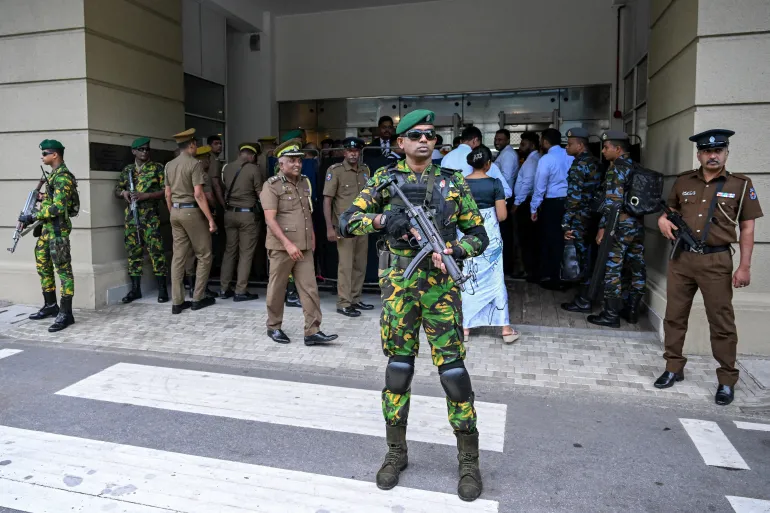
The High Court has convicted 14 of the 24 men accused of being directly involved in the 2019 Easter Sunday bombings, which killed 279 people.
The three-judge bench read out its decision on Tuesday after a five-year trial and said sentencing would take place later, the AFP news agency reported.
The charges included murder and conspiracy to commit terrorism.
Nine others were acquitted, while another defendant was found guilty of only some of the charges, the court said.
[Aljazeera]
By Shamindra Ferdinando
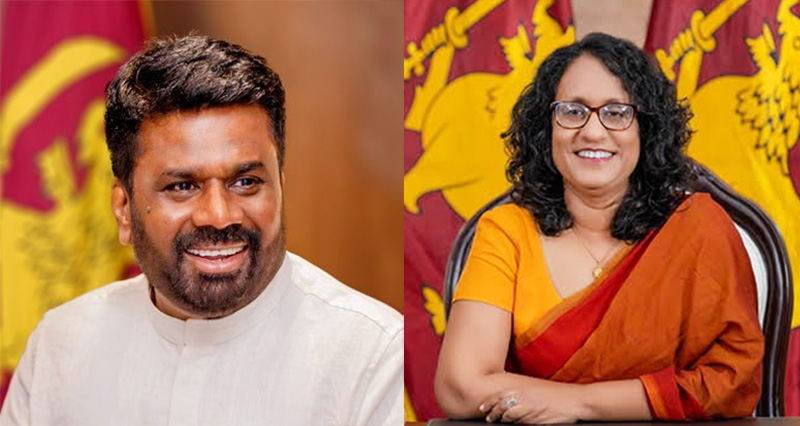
The ruling NPP yesterday (21) dismissed claims of a widening rift, within the government, over the proposed 22nd Amendment. Asked whether the NPP was concerned over a section of the Opposition alleging Prime Minister Dr. Harini Amarasuriya and two dozen MPs taking a view contrary to that of the party in this regard, authoritative party sources said some persons were propagating speculation for their own interest.
Declaring that there was absolutely no issue regarding the controversial Amendment, sources emphasised once it was tabled in Parliament, it would be passed with 2/3 majority.
Sources dismissed claims that out of its 159-member parliamentary group a section of NPPers was opposed to the government move. According to an influential Opposition activist, there are 57 JVPers and 66 NPPers in the government group and the rest contested the last parliamentary polls, having aligned with the JVP.
Ministerial sources told The Island that the government was confident of going ahead with the 22nd Amendment and Judicature (Amendment) Bills. Sources said that the NPP was not bothered about the Opposition protests in and outside Parliament.
Speaker Dr. Jagath Wickremaratne is expected to disclose the confidential ruling that he received from the Supreme Court in respect of more than 65 petitions for and against the 22nd Amendment and Judicial Amendment Bills. The enactment of the 22nd Amendment would pave the way for extending the retirement age of Supreme Court judges, from 65 to 67 years, and Court of Appeal judges, from 63 to 65 years.
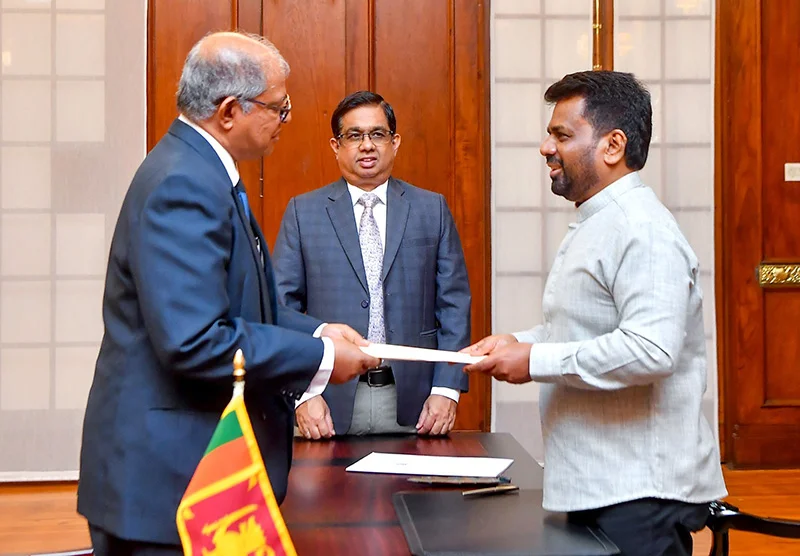
President Anura Kumara Dissanayake has appointed Court of Appeal Judge Mayadunna Sri Mevan Anthony Edirimannasuriya Corea as the Acting President of the Court of Appeal.
The appointment has been made as President’s Counsel Nalin Rohantha Abeysuriya, who currently serves as President of the Court of Appeal, will be overseas until the 24th.
Accordingly Justice Mayadunna Corea was sworn in as Acting President of the Court of Appeal before President Anura Kumara Dissanayake at the Presidential secretariat last morning (21).
Secretary to the President Dr Nandika Sanath Kumanayake was also present at the occasion.

High Court convicts 14 over deadly Easter bombings

Mandhana, Shafali and Ghosh lead dominant India to Asian Games gold

Fatima Sana and Umm-e-Hani secure bronze for Pakistan in Asian Games

India bat first in Asian games womens cricket final

Showers about 100mm will occur in the Western, Sabaragamuwa, Central and North-western provinces and in Galle and Matara Districts

Govt. confident of 2/3 majority despite NPP split speculation

‘Dates have the highest sugar content to fight Coronavirus’

Sunday Island 27 December – Headlines

#SundayIsland 17th December – Headlines

Sunday Island – 28th March

Sunday Island Headlines – 21 March

Sunday Island – 21st February – Headlines
-

 News6 days ago
US embassy won’t comment on IGP’s probe into joint drug raid
-

 News4 days ago
Shanakiyan urges urgent action over reported death sentence for Lankan in Saudi Arabia
-

 News5 days ago
Bid for Basil’s extradition nears final stage: Police
-

 Business6 days ago
All-new Bolero MaXX unveiled in Sri Lanka
-

 News3 days ago
Namal Rajapaksa Buddhist gambit fails, bail denied
-

 Opinion6 days ago
A journalist who wrote across the divide
-

 Editorial7 days ago
More fuel price shocks shrouded in secrecy
-

 Features3 days ago
Why the spelling Sri Lankan names in English vary