
News
UNDP: Technology critical to transform Lanka’s education sector

With the onset of COVID-19, the world has seen disruptions to traditional forms of education. In Sri Lanka, since the first wave and the resulting lockdown in March 2020, schools have been largely dysfunctional with the levels of online learning varying between public and private institutions.
To this end, the United Nations Development Programme (UNDP) in Sri Lanka convened a virtual discussion recently, for the second in a series of three policy discussions on inequalities and human development.
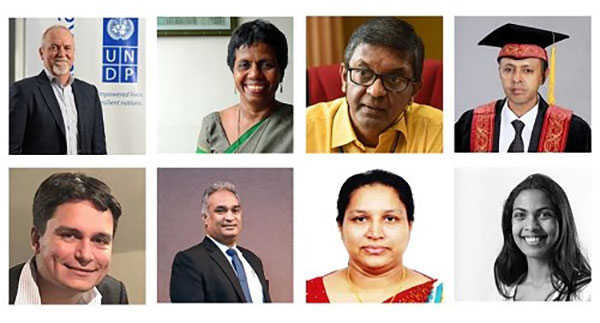
The session focused on ‘Accessing Education: Technology’s Potential for Divergence and Convergence’, a paper commissioned by UNDP and authored by Prof. Ajith de Alwis, Dean, Faculty of Graduate Studies and Professor of Chemical and Process Engineering at the University of Moratuwa. The paper examines the use of technology in the education sphere and the future of education in a post-COVID context.
Turning the lens on Sri Lanka, Prof. de Alwis stated, “The world is shaped by technology. Education must provide for this changing world. There is a race between education and technology – if technology is lagging within the education system, we will be positioning students for a world of work that they will not be suitable for”. The paper calls for a focus on blended learning, remote labs and flipped classrooms to enable students to prepare for a future in which technology will be predominant.
Addressing participants at the discussion, Robert Juhkam, Resident Representative, UNDP in Sri Lanka, stated, “Embracing technology helps ensure continuity and resilience; it allows the education system to carry on in the face of external shocks such as the COVID-19 pandemic and other unforeseen exigencies. More importantly, bridging the digital divide will help tackle a range of other social inequities such as the gender divide, urban-rural disparities and challenges faced by the urban poor. However, let us not forget technology’s potential to create divergence. It is an integral aspect to be carefully understood in the process of equitable education for all. Bridging the digital divide will open access to quality education to all and reinforce other national efforts towards SDG attainment, leaving no one behind.”
Joining the dialogue, Prof. Kapila Perera, Secretary, Ministry of Education stated “Education is a primary driver for sustainable development. By ensuring inclusive and quality education for all, we also have the potential to catalyze the achievement of the SDGs.”
The panel discussion included insights from Himali Athaudage, Additional Secretary, Ministry of Skills Development, Vocational Education, Research and Innovation; Indika De Zoysa, Vice President, Enterprise Business Group, Huawei Technologies Lanka Co (Pvt) Ltd; Dr. Sujata Gamage, Senior Research Fellow, LIRNEasia; Dr. Frank Van Capelle, Education Specialist, UNICEF Regional Office for South Asia and was moderated by Ayushka Nugaliyadda, Economist and Systems Design Lead of the Citra Social Innovation Lab.
The discussion paves the way to strengthen the final recommendations of the policy paper, which will discuss key nuances pertaining to intersections between education and technology in Sri Lanka, to support policy makers and other stakeholders in this space. The third policy discussion of the inequalities and human development series will take place in the coming months under the theme of ‘Gender Inequalities: Between social norms and power imbalance’.

… reminds AKD led over 560 protests during Yahapalanaya
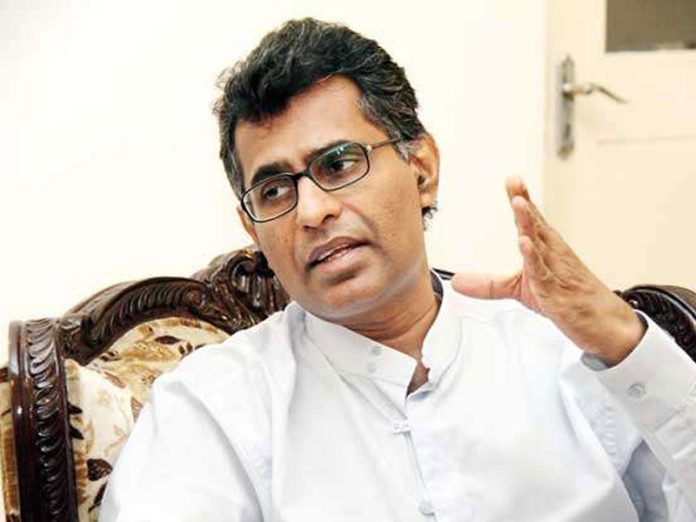
Former Yahapalana Minister and United Republican Front (URF) leader Patali Champika Ranawaka yesterday (19) alleged that the JVP, which carried out over 560 protests during the 2015-2019 period, was now bent on preventing the Opposition from exercising its democratic right to protest.
Recalling the declaration made by the JVP at the height of the violent protest campaign in July 2022 that it would set the Parliament ablaze, the former parliamentarian lashed out at the JVP-led administration for using the police excessively to curb political opposition. Ranawaka said this while addressing the media at the former President Ranil Wickremesinghe’s Flower Road Office .
Commenting on the protest campaign launched by the Maha Sangha, demanding presidential pardon for General Secretary of the Bodu Bala Sena (BBS) Ven. Galagotaatte Gnanasara, the ex-Colombo District lawmaker alleged that President Anura Kumara Dissanayake used a combination of police, investigative units and JVP cadres to break up the monks’ protest. The government went to the extent of compelling the JVP/NPP-run Colombo Municipal Council (CMC) to deprive the peaceful protesters of basic toilet facilities, he alleged.
The government’s actions proved that only those with prior approval from JVP Pelawatte headquarters could launch protests in Colombo, its suburbs or in the provinces. The police have become a political tool in the hands of the JVP, the ex-Minister said. (SF)

By SK Samaranayake
Six people were killed and seven others injured when a speeding bulker lorry carrying cement and concrete ploughed into several vehicles and a shop on the Kandy-Jaffna A9 road at Kurugoda, Akurana, yesterday (19).
Four of the victims, two women and two men, died on the spot in the accident which occurred around 10.30 am, according to Alawathugoda Police.
Police said the bulker, travelling at high speed from the Matale direction, collided with three three-wheelers, two motorcycles and two lorries before veering off the road and crashing into a commercial establishment.
Five of the injured were rushed to the National Hospital of Kandy, where hospital sources said two remained in critical condition.
The bodies of the four victims were placed at the Akurana Hospital, where two others, who suffered minor injuries, were also receiving treatment.
The driver of the bulker was arrested by the Alawathugoda Police Traffic Division and is to be produced before court.
Investigations are being conducted under the supervision of Central Province Senior DIG Lalith Pathinayake.

By Shamindra Ferdinando
owledging that there had been an administrative lapse on the part of the President’s Office in 2019 when Maithripala Sirisena granted presidential pardon to Ven. Gnanasara Thera, Convener of Janathawadi Joint Opposition Prof. G.L. Peiris yesterday (19) urged President Anura Kumara Dissanayake to rectify whatever those shortcomings and release the General Secretary of Bodu Bala Sena.
Addressing the media at the former President Ranil Wickrekmesinghe’s Flower Road Office, Prof. Peiris emphasized that it was not fair to hold Ven. Gnanasara accountable for lapse or technical fault of others at the Presidential Secretariat during President Sirisena’s tenure.
Prof. Peiris was flanked by UNP Chairman Wajira Abeywardena and United Republican Front (URF) leader Patali Champika Ranawaka.
The fresh appeal was made on behalf of Ven. Gnanasara in the wake of President Dissanayake and JVP heavyweight Anura Kumara Dissanayake ruling out fresh presidential pardon for the monk. Minister Lal Kantha declared that the government couldn’t under any circumstances meet the continuing monks’ protest demanding Ven. Gnanasara’s release. President Dissanayake dismissed repeated appeals for Ven. Gnanasara’s release when he addressed the NPP really in Badulla.
Sirisena granted presidential pardon in May 2019 even before he completed a year of his six-year term of rigorous imprisonment for contempt of court during proceedings of the media personality Prageeth Ekneligoda’s 2010 January disappearance in the Homagama Magistrate’s court.
At the onset of the regular weekly briefing, Prof. Peiris said that he would report to the Commission to Investigate Allegations of Bribery or Corruption (CIABOC) today (20) morning as requested by the commission. “The CIABOC wanted to record my statement regarding a meeting I chaired at the ministry after the conclusion of the war in 2009 pertaining to an ongoing investigation.”
Commenting further on the imprisonment of Ven. Gnanasara, the former parliamentarian said that President Sirisena intervened following a spate of requests made on behalf of BBS General Secretary by the Mahanayakes, Anunayakes and other Maha Sangha.
The Supreme Court on 10 September, 2026 rescinded the presidential pardon granted in late May 2019.

Heavy showers about 100 mm are likely at some places in the Northern, North-central, Central, Eastern, North-western and Uva provinces

Molineux, Dunkley enter WPL 2027 auction with top base price of INR 50 lakh

Ranawaka accuses govt. of using JVP cadres and police to suppress political opponents

Six killed as speeding bulker crashes into vehicles, shop in Akurana

Prof. Peiris, summoned by CIABOC, appeals for Ven. Gnanasara’s release

Tusker Agbo found safe and in good health

‘Dates have the highest sugar content to fight Coronavirus’

Sunday Island 27 December – Headlines

#SundayIsland 17th December – Headlines

Sunday Island – 28th March

Sunday Island Headlines – 21 March

Sunday Island – 21st February – Headlines
-

 Latest News7 days ago
Nissanka’s return headlines Sri Lanka’s Test squad against Pakistan
-

 News6 days ago
Sri Lanka, India caught in US-Iran ship crisis
-

 Features2 days ago
Kotahena:A Small Enclave, An Extraordinary Legacy
-
 Latest News7 days ago
Imran Khan’s PTI braces to fight federal takeover of Khyber Pakhtunkhwa
-
 News3 days ago
Asgiri Mahanayake calls for immediate release of Gnanasara Thera
-

 Latest News6 days ago
Missiles intercepted near Riyadh after Saudi coalition hits Yemen fuel depot
-
 Latest News6 days ago
Kusal Mendis’ unbeaten 87 hands Sri Lanka consolation win
-
 Latest News7 days ago
Former Zimbabwe player and umpire Sarah Dambanevana dies aged 36