
News
Party leaders confident Speaker will act impartially, protect all MPs’ rights and privileges

By Saman Indrajith
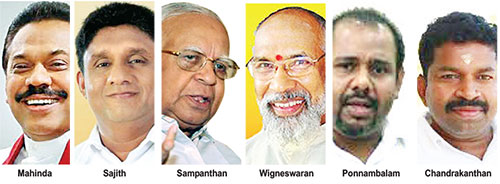
With a total of 15 different political parties represented in the Ninth Parliament of Sri Lanka, there were early indications on Thursday during the brief speeches made to congratulate the newly appointed Speaker Mahinda Yapa Abeywardena of the balancing act that would be needed to ensure the smooth functioning of the legislature.
Prime Minister Mahinda Rajapaksa led the House in congratulating the newly elected Speaker and said that with more than three decades as a legislator, Parliament will be in safe hands under him. “You will be mindful that you are the third citizen of this country now. You have the will and strength to be an impartial and fair Speaker,” he said.
Leader of the Opposition Sajith Premadasa said the newly elected Speaker had always acted with dignity, integrity and honour and the House was extremely honoured to have him in that exalted position. “We believe you will be just and fair. This is indispensable for a flourishing democracy,” Premadasa said.
“This institution represents the will of the people. The voice of the voiceless. And you as guardian angel of Parliament, we believe you will ensure that the people’s sovereignty is protected and enhanced.”
TNA parliamentary group leader R. Sampanthan said that with the Speaker, with his long experience as a legislator would act efficiently and effectively in an impartial manner. He said the TNA would extend its maximum cooperation to the Speaker.
Former Northern Province Chief Minister, C V Wigneswaran, who was elected as the Jaffna District MP from the Tamil People’s National Alliance or TMTK, in his speech, noted that there was a very powerful government now, similar to the one constituted under the late J. R. Jayewardene in 1977. It was during that regime that we had the 1983 pogrom. “Certainly, this government too could follow the example of the Elephant of that time, and end up as today, reduced to a single member in the future, but I’m sure they would not. They would prefer to learn from the mistakes of the past and usher in a period of peace and prosperity where all communities would feel equal to each other and walk with dignity and pride as children of Mother Lanka.”
Wigneswaran said, “Freedom and equality could only dawn if we shed the false historical perspectives of the past and recognise the rights of the people living in the North and East of Sri Lanka who are entitled to the right of self-determination as per Article 1 of Chapter 1 of the International Covenant on Civil and Political Rights, in addition to their hereditary and traditional right to be recognized as a nation.
“We are sure you will guide us all without fear or favour if any such impasse comes to past.”
Tamil National People’s Front (TNPF) Jaffna District MP Gajan Ponnambalam said: “In a House that is so heavily weighted on one side, it is the responsibility of the Speaker to ensure that as debates that reflect different mandates given to parties by voters are respected and treated with fairness.
“We must not forget that all parties represented in this House come here today with their respective mandates. Those mandates must be respected, those mandates must be voiced, the mandate must be respected and due place must be given.”
Thamil Makkal Viduthalai Pulikal (TMVP) Batticaloa District MP Sivanesathurai Chandrakanthan who came to Parliament from remand prison pledged to work in cooperation with the government during his speech congratulating the new Speaker.
He also sought the Speaker’s intervention to ensure that he was allowed to attend Parliament without any hindrance. “The Attorney General (AG) has said I will need to get permission from the Court each day I want to attend Parliament but this is not possible. I hope I will be allowed to attend sittings without any hindrance.”

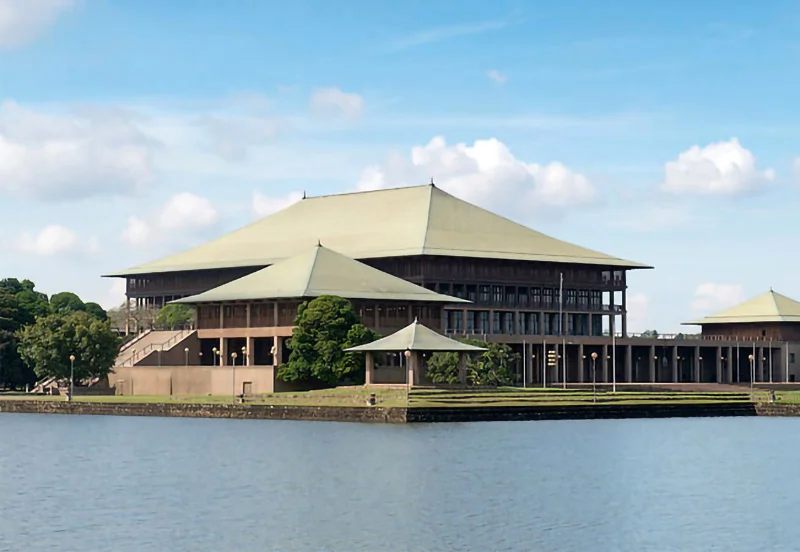
Easter Sunday carnage:
Investigations into the 2019 Easter Sunday terror attacks will not be halted due to protests, demonstrations or Satyagraha campaigns, Minister of Public Security Ananda Wijepala told Parliament yesterday (10), while alleging that investigators had gathered sufficient evidence to establish the involvement of former State Intelligence Service (SIS) Director, retired Major General Suresh Sallay, in a conspiracy linked to the attacks.
Making a special ministerial statement in the House, the Minister said that evidence uncovered during ongoing investigations indicated that Sallay had prior knowledge of the planned attacks and related extremist activities before the coordinated bombings that claimed more than 270 lives and injured hundreds of others, on April 21, 2019.
Wijepala claimed that three weeks before the attacks, Sallay had deployed four Muslim individuals to gather intelligence, including information on the number of worshippers attending mass at a church in Negombo.
According to the Minister, the principal individual among the four had been identified by witnesses to the CID as an ISIS extremist and had subsequently gone missing following the Easter Sunday attacks.
“There is evidence suggesting that Major General Sallay met the informant who had tipped off Army Intelligence regarding the attacks at a hotel in Colombo,” Wijepala said.
The Minister maintained that investigators had uncovered evidence indicating that Sallay had taken steps to prevent the disclosure of information that could have revealed crucial details relating to the attacks and the events leading up to them.
Referring to allegations that Sallay had been subjected to inhumane treatment while in custody, Wijepala rejected such claims, describing them as false and misleading.
He told Parliament that the former intelligence chief had been afforded all facilities and privileges due to a primary suspect under the law, including unrestricted access to legal counsel.
“The Magistrate personally visited Sallay to ascertain his health and wellbeing. At no stage did he complained of any inhumane treatment. Neither has he lodged complaints with any other relevant authority in that regard,” the Minister said.
Wijepala also disclosed that Sallay had thus far declined to provide investigators with the passwords to his laptop computer and mobile phone, a move he described as an attempt to obstruct the investigative process.
“He is acting in a manner that hinders the progress of investigations,” the Minister alleged.
The Public Security Minister maintained that the government remained committed to uncovering the full truth behind the Easter Sunday attacks and bringing all those responsible before the law, irrespective of their status or position.
Emphasising that the investigation would continue without interference, Wijepala said attempts to exert pressure through public protests or Satyagraha campaigns would not influence the course of the inquiry.
“The investigations into the Easter Sunday attacks will not be halted by any protests or Satyagraha,” he said.
By Saman Indrajith

A total of 267,138 children dropped out of the school system between 2018 and 2024, Prime Minister and Minister of Education Dr. Harini Amarasuriya informed Parliament yesterday (10).
Responding to a question raised by SJB Ratnapura District SJB MP Hesha Withanage, the Prime Minister said that the government did not possess definitive data on school dropouts from 2010 to the early part of 2017.
She explained that the figures for the period from 2018 to 2024 had been derived from annual school census reports using an internationally recognised methodology that takes into account student enrolment figures and dropout rates from Grade One to Grade Ten.
According to the statistics presented to Parliament, 38,839 students dropped out of school in 2018,
while the figure increased to 41,503 in 2019. In 2020, the number stood at 32,540 before declining further to 25,492 in 2021.
However, a sharp increase was recorded in 2022, when 52,596 students were identified as having left the school system. The figure remained high in 2023 at 50,345 before declining to 25,823 in 2024.
The Prime Minister cautioned that the figures did not necessarily indicate that all students classified as dropouts had completely discontinued their education.
She noted that some students may have transferred to schools in other provinces, enrolled in international schools, or migrated overseas with their families while continuing their studies.
Dr. Amarasuriya said that such cases could not be separately identified under the methodology used to compile the statistics and were, therefore, included in the overall dropout figures.
Addressing the causes of school dropouts, the Prime Minister said a range of factors contributed to students leaving the formal education system.
These included personal circumstances, school-related issues, family and economic difficulties, social influences, as well as students opting for alternative educational pathways and training opportunities, she said.
By Saman Indrajith
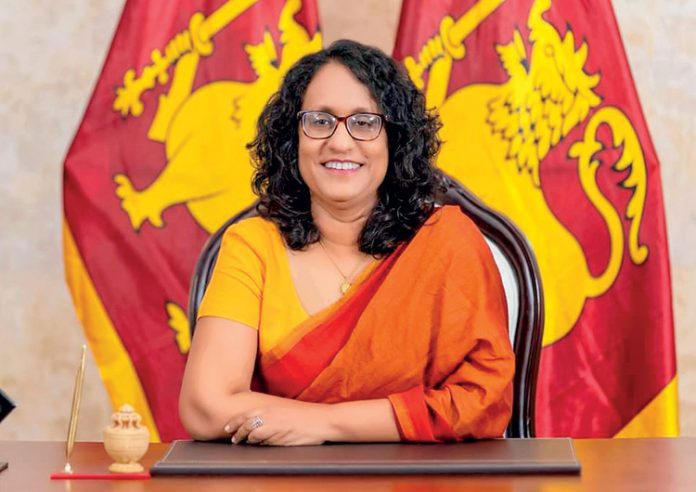
Prime Minister Harini Amarasuriya told Parliament yesterday that Provincial Council elections would not be conducted under the existing proportional representation system and would instead be held under a new electoral system.
Responding to a question raised by MP Ravi Karunanayake, the Prime Minister said there was no justification for holding elections without ensuring adequate representation for women and youth in Provincial Councils.
She said that the government’s position was to first finalise reforms to the electoral system before proceeding with polls.
The Prime Minister also provided a detailed breakdown of when the terms of Provincial Councils expired, noting that all nine councils had been without elected administrations for several years. According to her, the Sabaragamuwa Provincial Council term ended on September 29, 2017, followed by the Eastern and North Central Councils on September 30 and October 1, 2017 respectively.
The Central and North Western Provincial Councils ended their terms on October 08 and 10, 2018, while the Northern Provincial Council term ended on October 24, 2018. The Southern Provincial Council term expired on April 10, 2019, followed by the Western Provincial Council on April 21, 2019, and the Uva Provincial Council on October 8, 2019.
Amarasuriya said that under Section 10(a) of the Provincial Councils Elections Act No. 2 of 1988, the Election Commission was required to publish a notice of intention to hold an election within one week after the dissolution or expiry of a council, following a direction from the President.
However, she noted that the Election Commission had not issued such notices due to the absence of enabling legal provisions following subsequent amendments.
She further explained that under Section 3A of the Provincial Councils Elections (Amendment) Act No. 17 of 2017, the holding of elections is linked to the completion of a delimitation process. This requires the appointment of a Delimitation Committee by the President to define electorates within administrative districts and submit its report to Parliament, with elections to be held only after parliamentary approval.
The Prime Minister said the delimitation process has not yet been completed, which has prevented the conduct of Provincial Council elections under the revised framework.
Amarasuriya also informed Parliament that a parliamentary select committee had been appointed to examine and make recommendations on whether Provincial Council elections could be conducted under the previous electoral system through further amendments to existing legislation.
The committee, titled the “Select Committee of Parliament to look into and report to Parliament on the matter of selecting the Electoral System under which the Provincial Council Elections should be held and submit its proposals and recommendations in that regard,” comprises MPs Vijitha Herath (Chairman), Nizam Kariapper, Chandana Sooriyarachchi, Darmapriya Wijesinghe, Samanmali Gunasingha, Shanakiyan Rasamanickam, Lakshman Nipuna Arachchi, Mano Ganesan, Ranjith Madduma Bandara, Arun Hemachandra, Sunil Watagala and Muneer Mulaffer.
She said further decisions regarding the holding of Provincial Council elections will be taken based on the recommendations of the parliamentary select committee.

‘Investigations won’t be stopped due to protests’

267,138 Lankan children dropped out of school system between 2018 and 2024

PM declares PC polls only under new electoral system

No decision on extending retirement age of judiciary – govt.

From UAE heartbreak to fresh hope in England

Magistrate calls for report on Sallay’s health, protest called off

‘Dates have the highest sugar content to fight Coronavirus’

Sunday Island 27 December – Headlines

#SundayIsland 17th December – Headlines

Sunday Island – 28th March

Sunday Island Headlines – 21 March

Sunday Island – 21st February – Headlines
-

 Latest News7 days ago
Kusal Mendis, Pathum Nissanka, bowlers put Sri Lanka 1-0 up
-
 Features6 days ago
Power crept into the Sangha and is now tearing it apart
-

 Features6 days ago
Kondachchi wind farm and battery storage project to boost energy security, says Power Ministry Secretary
-

 News4 days ago
Women’s T20 World Cup 2026 warm-up: Chamari Athapaththu’s 94 helps Sri Lanka beat Pakistan
-
 Features6 days ago
Saudi Arabia sets new benchmark in Hajj management as 1.7 million pilgrims complete sacred journey
-

 News5 days ago
Asst. Manager, security officer arrested over Rs 30 mn snatch at Horana PB branch
-

 Editorial3 days ago
Probe Sallay’s complaint
-
 News4 days ago
Lankan-Canadian inducted to Toronto Sports Hall of Fame