
News
Lankan Agriculture at crossroads?

By Lasitha Duminda
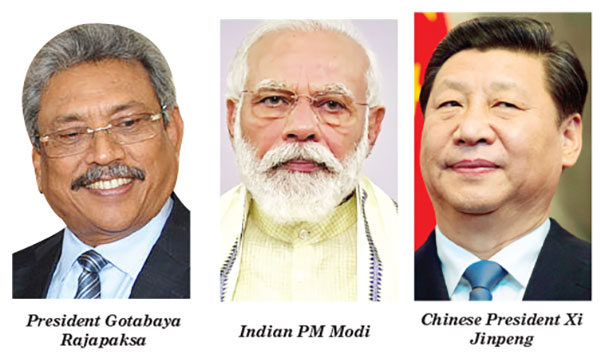
President Gotabaya Rajapaksa undoubtedly would leave a legacy behind three critical decisions he has made.
• Rapid Vaccination carried out and ongoing with one of the world’s best percentage of population covered (As of Oct 6, fully vaccinated is 54.6% and at least one dose is 66.7%) is one.
• Renewable energy drive currently underway to generate as much as 70% of the nation’s power requirement from renewable sources which is another revolution making Sri Lanka a catalyst towards a greener world and putting the name of our country on top of the list of most countries if not all.
• Carbonic agriculture is the third bold initiative taken amidst all odds gaining lot of global praise for the President and Sri Lanka.
There were lot of quarters who wanted to sabotage all above ground breaking initiatives spending lot of time and effort to discredit Gotabaya Rajapaksa regime. It is not a secret that the opposition is not coming simply from the opposition. Currently the one that is at the biggest risk is converting Sri Lanka to organic farming that would pave the way for a healthier nation void of lot of diseases such as chronic kidney complications and cancer.
The threat seems to be not coming only from the chemical fertilizer associated mafia so to say. The amount of negative publicity given in media and the amount of people involved in the sabotage mission clearly suggests that it has become more or less a geopolitical operation.
The Chinese samples are getting rejected leaving lot of gaps in the credibility aspect of such reports to a level the matter getting referred to even the criminal investigation department.
Surprisingly, these reports reach media even before they are ready. Ironically so many different labs both in Sri Lanka and overseas report contradictory results. Sri Lankan authorities that claim the presence of certain harmful bacteria, are not willing to get the legitimate samples attested by independent international laboratories.
Yet another interesting point is the absence of any kind of intervention by the Chinese Diplomatic mission in Sri Lanka letting the people to believe that it is the Chinese that are behind the contamination of fertilizer.
India on the other hand, emerged all of a sudden short circuiting the available procurement process and becoming the favorites of the agencies responsible for the application of organic fertilizer with no knowledge of the public as to how Indian companies entered the procurement process while the contract between the Chinese supplier and the government is still valid.
Public has the right to know as to who is playing what? Who wants to discredit the President and fail him? Is it only the people in the frontline or have they become a cat’s paw for someone else? If so, who is it actually behind this game changer?
If Chinese are innocent, why are they not coming forward to prove their innocence or is someone deliberately blocking that process?
Mr. President, this is worth of your immediate attention as it is the food security of Sri Lanka is at compromise otherwise with the ‘Maha’ season approaching within a matter of few weeks.

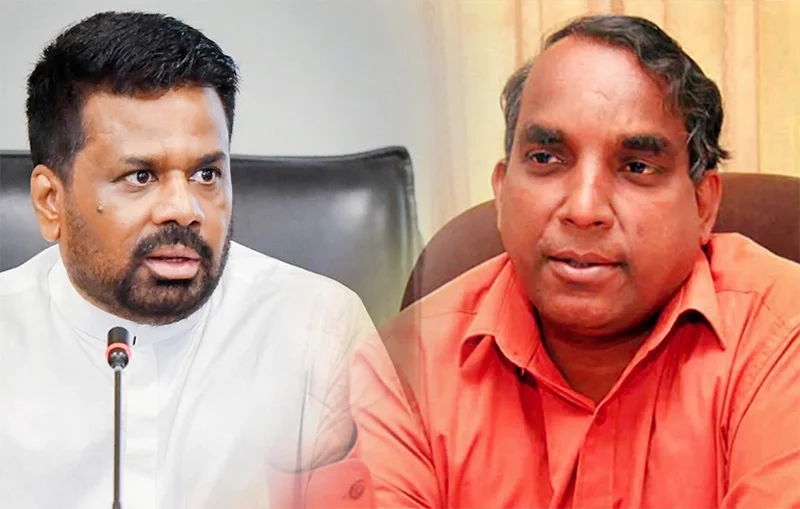
Executive Director of People’s Action for Free and Fair Elections (PAFFREL) Rohana Hettiarachchi yesterday (28) said that there were three major concerns regarding the Anti-Corruption (Amendment) Bill 2026. Acknowledging the recent Supreme Court determination, in respect of the above-mentioned Bill, that three of the provisions were not consistent with the Constitution, requiring a special majority in Parliament, with one clause requiring approval by the people at a Referendum, Hettiarachchi said nonetheless PAFFREL had decided to bring their concerns to the notice of President Anura Kumara Dissanayake.
Responding to The Island queries, Hettiarachchci said that PAFFREL sent a letter, dated 24 Sept., to President Dissanayake, regarding the issue at hand.
Petitions against the Bill was heard before a three-judge Bench of the Supreme Court, comprising Justices Shiran Gooneratne, Mahinda Samayawardena and Sampath Wijeratne.
PAFFREL and Transparency International Sri Lanka (TISL) were among the petitioners who challenged the proposed amendments to the Anti-Corruption Act No. 9 of 2023. “We did so in public interest,” Hettiarachchchi said, adding that three major concerns were (i) the breadth of the proposed redaction power and the proposed criminalisation of certain uses of publicly accessible redacted asset declarations, particularly in relation to freedom of expression, and the public’s right to meaningfully receive and impart information (ii) raising of the State or public-corporation shareholding threshold for certain asset declaration obligations from 25% to 50%, as this could exclude officers of State-linked entities in which the State holds less than 50%, in spite of such entities exercising public functions and managing public resources and (iii)role of the Director General Ranga Dissanayake.
Hettiarachchchi emphasised that though the PARREL appreciated the way CIABOC DG handled his responsibilities, centreing of power on one person was not acceptable.
Hettiarachchi urged President Dissanayake and the 159-member government parliamentary group to pay attention to concerns raised by those who moved court against the controversial Bill and address their concerns though the Parliament received the SC determination.
An International Monetary Fund mission that visited Colombo recently warned that the proposed amendments could weaken the country’s anti-corruption framework.
The mission, led by Evan Papageorgiou, was in the country from 10 to 23 September for discussions on the seventh review of the Extended Fund Facility and the 2026 Article IV consultation. (SF)
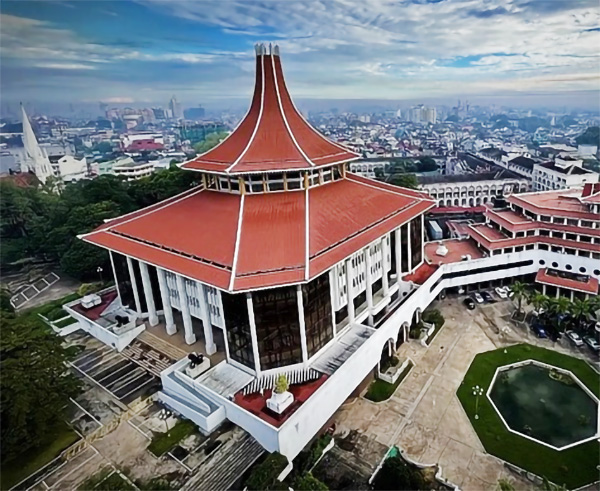
The Supreme Court yesterday (28) dismissed two petitions filed by retired Flight Lieutenant Shantha Jayathilake against Deputy Inspector General of Police of the Criminal Investigation Department (CID) Shani Abeysekara and Secretary to the Ministry of Public Security Ravi Seneviratne, and Rev. Father Cyril Gamini, alleging them of committing contempt of court.
They were the first cases dealt by the Supreme Court after the enactment of the 22nd Amendment to the Constitution.
The recipient of gallantry medal alleged that contempt of court had been committed through an affidavit previously submitted to the Supreme Court by Shani Abeysekara and Ravi Seneviratne.
The other petition alleged that contempt of court had been committed through the contents of a complaint submitted to the Criminal Investigation Department by Rev. Father Cyril Gamini.
The Supreme Court ordered that both petitions be dismissed without being taken up for hearing.
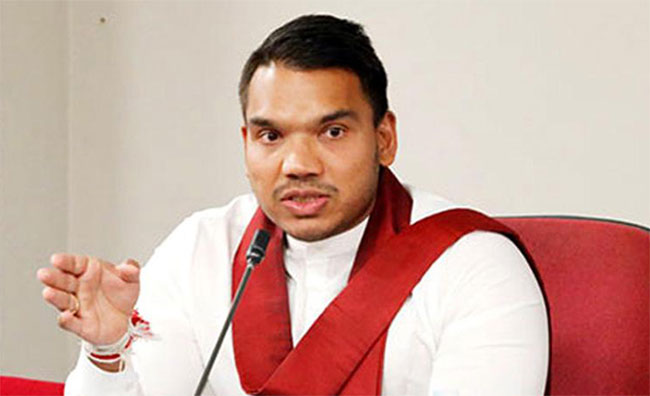
The Commission to Investigate Allegations of Bribery or Corruption (CIABOC) yesterday (28) named former Minister and leader of the SLPP parliamentary group Namal Rajapaksa as the fourth suspect in the Krrish case before the Colombo Chief Magistrate’s Court.
The MP was named as the fourth suspect in the wake of the arrest and remanding of former Executive Officer and Director of the Krrish Group, Janaki Siriwardena, regarding the payment of Rs. 70 mn to Namal Rajapaksa to facilitate the land transaction. Police arrested Ms. Siriwardena on 24 September and she was remanded till 6 Oct. pending investigations.
The investigation focuses on 4.3 acre land development in the Fort area that began in the 2013-2014 period. Investigations were launched in 2016 by the Yahapalana government, following a complaint lodged by Wasantha Samarasinghe, now a Minister in the current Cabinet.
The Indian company in this controversy is Krrish Transworks Colombo (Pvt.) Ltd .
The CIABOC named Namal Rajapaksa as a suspect in the Krrish case while he was remanded over two cases in respect of Airbus bribery probe. (SF)

Sri Lanka to face India in semi-finals after washout

Bangladesh to take on Pakistan in semis after another washout

OpenAI scraps rollout of new model over safety concerns

Iran’s Araghchi meets Qatari mediators as US calls for nuclear talks

Showers above 50 mm expected in Uva, Eastern and Central provinces and in Polonnaruwa and Mullaittivu districts after 2.00 p.m.

PAFFREL raises concerns over Anti-Corruption (Amendment) Bill

‘Dates have the highest sugar content to fight Coronavirus’

Sunday Island 27 December – Headlines

#SundayIsland 17th December – Headlines

Sunday Island – 28th March

Sunday Island Headlines – 21 March

Sunday Island – 21st February – Headlines
-

 News6 days ago
Mastermind Naufer Moulavi among 15 found guilty
-

 Midweek Review6 days ago
Thileepan’s fast unto death: An authentic narrative that many missed
-
 Latest News5 days ago
Showers above 100 mm are likely at some places in the Western, Sabaragamuwa, Central and North-western provinces and in Galle and Matara Districts
-

 Editorial6 days ago
Big Bad Bills
-
Editorial5 days ago
Crimes punished and unpunished
-

 Features4 days ago
Beyond traditional jobs: Why Sri Lanka needs to facilitate the gig economy
-

 News6 days ago
No referendum needed for passage of 22 A: SC
-
 Latest News6 days ago
Ms. P. M. Jayadeera (Engineer) appointed Director General of Irrigation