
News
South Asia immigration barriers hindering industrial hub potential


ECONOMYNEXT – Could South Asian administrations put aside political differences to pave the way for a common industrial hub?
As a panel of experts opined recently, it is not that the region is lacking in natural and human resources, both skilled and unskilled, in the case of the latter category.
However, a common platform in terms of policy as well as change of attitude amongst the peoples is critical if South Asia is to attract manufacturers to set up shop in the region.
It’s time,observed the panel, that intra-regional capacities areleveraged to benefit South Asia as a whole.
Wansapriya Gunaseela, the Managing Director of Buildtek Consultants (pvt) Ltd., Sri Lanka,pointed out that even though the region’s labour force is primarily made up of youth, only about half of these young people are actively engaged in industry, therefore, it is important to motivate the other half.
The panel discussion on ‘Unlocking the Region’s Potential: Labour Mobility in South Asia’, held on September 20, was moderated by Waqar Rizvi, a Canadian-Pakistani TV Host and socio-political analyst.
Joining Gunaseela on the panel were Ms. Bhawani Rana, Chairperson of the Fortuna Group, Nepal and Mr. Asim Jamal, CEO of SANOFI, Pakistan. The webinar is part of the ‘Restart Asian Economies’ series organised by the Friedrich Naumann Foundation for Freedom (FNF), South Asia.
Gunaseela said that if South Asia is to effectively compete with other markets, it must increase productivity.
But first, the region must look at the different strengths and resources of neighbouring countries and build a common framework.
COVID 19, he said has increased dependence on digitalisation and automation, and South Asia must seize that opportunity to redesign training modules and upgrade skills, so that a five hundred member workforce would be able to do the work that is now carried out by a thousand workers.
Such improvements he said would result in increased productivity and higher wages for workers.
COVID 19, says Bhawani Rana, has brought many migrant workers back to their home countries. They are mostly skilled workers who have already been exposed to a work culture overseas. South Asia must act now to attract these and other members of the labour force to find employment within the region.
As she points out, though wages may not be equivalent to what workers may earn in foreign countries, awareness must be raised on the advantage of working closer to their homes and on the shared cultural practices and safety aspects of staying within the region. However, she stresses, if labour migration within the region is to be attractive, governments must introduce better and easier cross-border travel.
Says Jamal, the SAARC region is home to more than 20percent of the world’s population; they are mostly young, with good skills.They are comfortable moving between countries.
For decades, he says, there have been Pakistanis working in Bangladesh’s garment sector. It is the same with Sri Lankans.
Moreover, he cited examples from his own organisation where staff was sent from Pakistan to Bangladesh and India on a temporary basis to resolve various situations.
However, staff face issues around ease of movement, and they are also required to report to a police station throughout their stay, which, unfortunately takes up a good part of the day.
While SAARC has expressed the need for a common agenda, it is now up to the administrations of each country to begin a dialogue at all levels, he points out. Joint initiatives, he says, should open up opportunities for research and development in the field of pharmaceuticals, for instances; to make the region a centre of excellence.
Jamal also stated that the pandemic provided the perfect opportunity for South Asia to share their knowledge on vaccine production. Such an endeavour would have produced cost effective vaccines for the people of the region.
Retaining the workers, particularly the women in the region is key, says Rana.
“We need to develop a strategy by which the women workers do not go to the Middle East or West Asia. We need to emphasize the advantages of living and working closer to home. Connectivity among South Asian countries has improved there are many roads, highways, railway lines even sea lines.”
These are the advantages that should be showcased.
While making it attractive for South Asians to remain within the region, Jamal points out that the right of individuals to determine whether they should seek employment outside the region, such as in the Gulf nations must be recognised.
Echoing his co-panelists, Gunaseela says administrations must identify individualneedsand strengths, and irrespective of political differences introduce policies that will promote South Asia as the industrial ‘one stop shop.’
Cricket, he says is the common denominator that binds South Asians. Why, he asks, is that not reflected in building a common industrial agenda, opening doors for companies to hire the best in the trade from across the region.
Such a strategy would improve quality and standards, and pose a challenge to European businesses; in fact the sharing of resources and ease of movement should be the same as in the European Union.Workers may however, consider employment overseas as opportunities to earn better wages in foreign currencies.
Says Rana, if the labour force is to remain within regional boarders they need to understand the value in that; in Nepal for instance the social security fund should be another attraction, apart from the safety factor.
Gunaseela adds, that especially the skilled and unskilled labour force see an opportunity of working long hours to remit money home, though they themselves would actually be left with only a small portion of their wages to survive on in a foreign land. That should be compared against the opportunity to live and work closer home.
To achieve all that policies on education too need a change, where vocational training or business studies are also given importance.
Most importantly, a change of attitude amongst South Asians is necessary; it is time to value products manufactured within the region, instead of believing that ‘foreign made’ goods are of higher standards.
As Gunaseela pointed out, garments and other goods sold in European and Western markets are produced in South Asia and meet those standards. Yet, South Asians continue to subscribe to the myth that goods produced in the region and available in the local market are sub-standard.
Private sector stakeholders obviously see the benefits of promoting regional cooperation in building a strong industrial hub in South Asia. They are ready to tap into the natural resources and the fairly substantial labour force to make this a reality.
However, for workers in South Asia to seek opportunities in neighboring countries would require the mutual lowering of barriers by the countries in the region to that type of migration. For millennia the peoples of these countries have traded their goods and interacted with each other.
Yet barriers, a throwback from Colonia rule, which mostly revolve around security concerns, competing political ideologies and historical reasons, continue to hamper strengthening of ties and building a common industrial agenda.
Other regional groups such as the European Union and the Association of South East Asian Nations are countries which warred against each other for centuries. Although there is still the occasional spat, and statements critical of neighbouring countries are made, on the practical matters of trade and mutual profit and advancement they show solidarity.
It is time that South Asia followed those examples.

By Shamindra Ferdinando
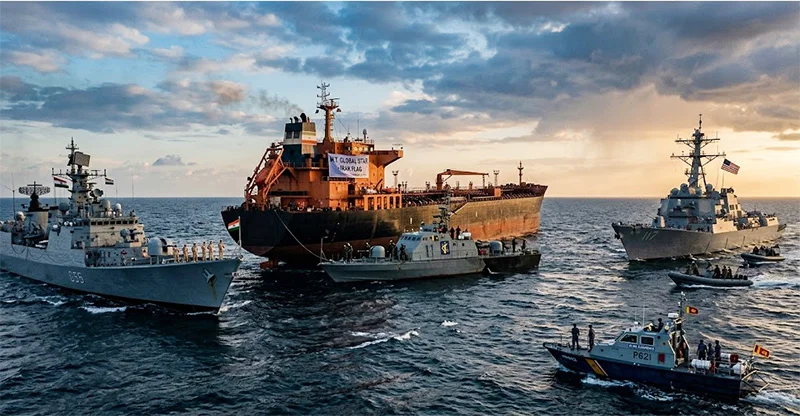
Iran has sought the Indian intervention, at the highest level, to provide lifesaving support to the crews of empty Iranian vessels stranded just outside Sri Lanka’s 12-nautical mile territorial waters off Galle.
Sources familiar with the issue said that Iran had brought the developing situation to the attention of New Delhi as the crews of almost 20 vessels, included Indian nationals. Sources stressed that the group of vessels that unloaded crude oil a couple of months back were now stranded within Sri Lanka’s Exclusive Economic Zone (EEZ).
The US Navy torpedoed an unarmed Iran frigate, returning from India, on 04 March, 2026, about 19 nautical miles off the Galle coast. The unprovoked attack killed nearly 100 Iranians.
The Iranian Embassy in Colombo has inquired from the Indian High Commission of their response to the situation, sources said. The US has issued a global warning against providing food, water, medicine and other services to the Iranian vessels. The outcome of Iran-India talks on the issue at hand was not known, though sources asserted India may not throw its weight behind Iranian efforts to address the issue.
Responding to The Island queries, sources said both Sri Lanka and India were in a dilemma due to the US warning. India couldn’t ignore the plight of the Indian crew members and the Iranian vessels in its backyard.
The Sri Lankan government remains tight-lipped about the vessels stranded in its EEZ. Our efforts to elicit a response from relevant authorities were in vain. In addition to Indians, there are Bangladeshis among the crew members. Iran has explicitly stated the responsibilities of the countries concerned to provide assistance in terms of international law.
The Iranian position was articulated by its Ambassador to Sri Lanka, Dr.Alireza Delkhosh, recently. In a special statement, Ambassador Delkhosh emphasised that in terms of the Convention on the Law of the Sea (Article 98) as well as SOLAS and SAR
Conventions, Sri Lanka couldn’t refrain from providing the needs of the Iranian vessels stranded in its EEZ.
SLMC leader Rauff Hakeem lambasted the NPP government in Parliament for failing to provide assistance to the Iranian ships. The former Minister alleged that the government was simply carrying out dictates of the US. He strongly criticised the way Foreign Minister Vijitha Herath was handling the issue.

MP Namal Rajapaksa, who is in remand custody over the controversial Airbus deal, was further remanded until October 27 by the Colombo Magistrate’s Court yesterday (13).
Colombo Chief Magistrate Asanga S. Bodaragama made the order after considering submissions by officers of the Commission to Investigate Allegations of Bribery or Corruption and lawyers representing Rajapaksa.

Sri Lanka’s economy is expected to sustain its recovery over the next two years, although growth is projected to moderate amid mounting global uncertainties, according to the International Monetary Fund’s (IMF) latest World Economic Outlook.
In its World Economic Outlook 2026: Resilience Under Strain, Urgent Choices, the IMF projects Sri Lanka’s economy to expand by 4% in 2026, slowing to 3.7% in 2027, following estimated growth of 5% in 2025.
Inflation, meanwhile, is forecast to rise to 5.3% in 2026 and 5.4% in 2027, reversing the average deflation rate of 0.5% recorded in 2025.
Unemployment is expected to remain steady at 3.9% throughout the forecast period.
The projections come amid growing pressure on the global economy from the ongoing conflict in the Middle East, elevated energy prices, geopolitical tensions and trade disruptions.
Sri Lanka’s external position is also expected to weaken, with the current account balance projected to shift from a surplus of 1.6% of gross domestic product (GDP) in 2025 to deficits of 0.5% in 2026 and 0.3% in 2027.
The IMF’s outlook points to continued economic expansion in Sri Lanka, but with slower growth, rising inflation and a narrowing external surplus giving way to current account deficits over the forecast period.

Heavy showers above 100 mm are likely at some places in the Western, Sabaragamuwa, Southern, Central, and North-western provinces and in Anuradhapura district.

Sri Lanka, India caught in US-Iran ship crisis

Namal further remanded

IMF projects Lankan economic growth to moderate amidst mounting global uncertainties

Major Gen Pushpakumara assumes command of 56 Infantry Division

Dickwella axed, Bandara earns maiden Test call up

‘Dates have the highest sugar content to fight Coronavirus’

Sunday Island 27 December – Headlines

#SundayIsland 17th December – Headlines

Sunday Island – 28th March

Sunday Island Headlines – 21 March

Sunday Island – 21st February – Headlines
-

 Features6 days ago
The Sri Lankan who made Scottish history
-

 Sports6 days ago
Nissanka absence opens door for Sri Lanka’s young guns
-

 News5 days ago
NDB fraud Rs 60mn more than reported
-

 News5 days ago
Removing monk’s robes matter for Sangha to decide: Mahanayake Theras
-
 News6 days ago
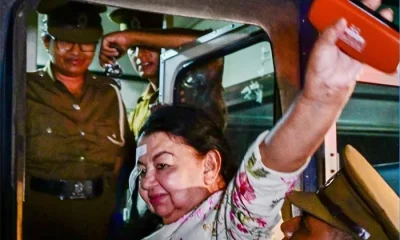
Shiranthi R remanded until 13 Oct.
-

 Features6 days ago
Future of Sri Lanka’s state university system: Should it be shut down and reopened?
-

 News3 days ago
Sri Lanka escalates anti-graft drive with Shiranthi’s jailing
-

 Latest News4 days ago
Farhan, Sadaqat help Pakistan ace 183 chase to go 1-0 up