
News
Questionable deal with US energy firm: Professionals’ National Front asks whether govt. received AG’s consent

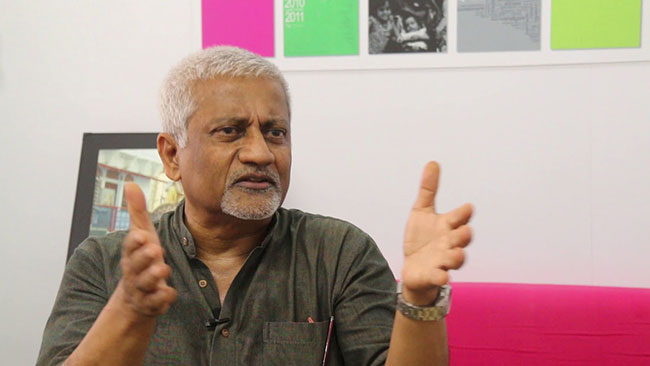
Prof. Samarajiva concerned about some sections of agreement
By Shamindra Ferdinando
Professionals’ National Front (PNP) Spokesperson Kapila Renuka Perera yesterday warned of dire consequences of going ahead with the government’s controversial agreement with the US energy firm New Fortress Energy. The grouping questioned the rationale behind losing state control/responsibility in ensuring uninterrupted fuel supplies to power stations.
The agreement with the New York based US firm would result in a catastrophe and the loss of state control of the energy sector could pose a threat to national security, Perera said.
Perera pointed out that the agreement had been finalised in a way that it didn’t come under the purview of Sri Lankan law. Responding to another query Perera said that it would be pertinent to ask whether the government had consulted the Attorney General on the questionable agreement.
Pointing out the danger of agreeing to international arbitration in respect of the US energy agreement, Perera said the issue at hand should be examined against the backdrop of the debt trap and the crisis in sharply weakened foreign reserves. The PNP spokesperson said that successive governments pursued agendas inimical to the country. The SLPP government was no exception, Perera alleged, urging all stakeholders to reach consensus on matters of national importance. “The US deal is nothing but a disaster. Government cannot act in such an irresponsible way,” Perera said.
 Meanwhile, Prof. Rohan Samarajiva says he is supportive of PPPs (private and public partnerships) to bring in foreign capital and expertise, but PPPs should be based on a transparent process to secure the best possible price. “A transparent process whereby we know that the best possible price has been paid and the technical criteria have been satisfied.” He said it was certainly not the case as regards what he called a cloudy transaction involving the government of Sri Lanka and the US-based gas-to-power developer New Fortress Energy.
The one-time Director General of Sri Lanka Telecom (SLT) and political analyst said so when The Island sought his opinion on the US investment on the Yugadanavi power plant aka Kerawalapitiya power station operated by the West Coast Power Limited and the New Fortress Energy receiving the right to build a new LNG plant off Colombo.
The 300MW plant is owned by the country’s largest power supplier LTL Holdings, which is under government control.
Commenting on the recently concluded power deal, Prof. Samarajiva expressed serious concerns over certain provisions in the agreement. One-time DG, Sri Lanka Telecom recalled how exclusivity provisions given to Japan’s Nippon Telegraph and Telephone Corp (NTT) in respect of SLT caused serious issues. Prof. Samarajiva said: “In respect of the agreement with New Fortress Energy, the exclusivity provisions that have been reported are worrisome. I had enormous problems with the five year exclusivity given to NTT when they entered into a PPP on SLT in 1997. The excuse was that it was war time (true) and the rate rebalancing had to be completed (somewhat true). There is no war now, and there is no reason to give a broad exclusivity. If it is not time bound, it’s a recipe for disaster.”
Commenting on the challenges faced by Sri Lanka, Prof. Samarajiva said now that Chinese leader Xi Jinping has announced that China will no longer build coal plants abroad, there wouldn’t be any more additions to Norochcholai. “We need baseload capacity, so I guess LNG is the right fuel. But this must be placed in the larger context of the potential use for cooking and automotive uses. This seems disconnected from a larger plan. Should this be in Kerawalapitiya or in Hambantota/Trinco? Perhaps the right answer is Kerawalapitiya, but the assessment should have been done.”
The Island: At a time, the government has invited foreign investment with the focus on the Colombo Port City, how do you see the growing opposition to the US firm investing in the energy sector here?
Prof. Samarajiva: “The government is hobbled because of the cheap sloganeering while in opposition. But if they admit fault and speak the truth to people I believe it’s possible to marginalize Minister Wimal Weerawansa and his ilk.”
The Island: Do you think the government and the Opposition should seek a consensus on vital national matters such as foreign investments in key sectors?
Prof. Samarajiva:”Absolutely. We need bipartisan approaches to infrastructure.”
The Island: What should be the role of the parliament in such an endeavour?
Prof. Samarajiva: “I believe the crisis has reached a level where a national government should be formed. Parliament is where we should start.”
Prof. Samarajiva said that with the national economy in tatters in the wake of unprecedented devastation caused by the raging Covid-19 epidemic, the country was in such a deepening crisis the Parliament should move as an institution.







The NPP government has not taken a final decision regarding filling of the vacancies in the judiciary.
A group of Opposition MPs, led by SJB leader Sajith Premadasa, on 12 June, requested Speaker Dr. Jagath Wickremeratne to take up the issue of judicial vacancies with President Dissanayake. Opposition sources said that there were four vacancies, each in the Court of Appeal and the Supreme Court, and the inordinate delay had adversely affected the judiciary.
Government sources indicated that there was no change in the status quo as regards filling of vacancies. Referring to the government proposal to extend the retirement age of judges, authoritative sources said that no final decision had been taken yet.
SJB lawmaker Dayasiri Jayasekera told The Island that they would raise the issue in Parliament this week.
He said that the deliberate delay in making appointments to superior courts and the move to extend the retirement age couldn’t be taken separately.
The MP noted that the Bar Association of Sri Lanka, the Lawyers’ Collective, the Colombo High Court Lawyers’ Association, Colombo Magistrate’s Court Lawyers’ Association and the Bar Association of Badulla had opposed the government move.
There hadn’t been any public statements in support of the government move, MP Jayasekera said, urging the government to end uncertainty in the judiciary.
by Shamindra Ferdinando
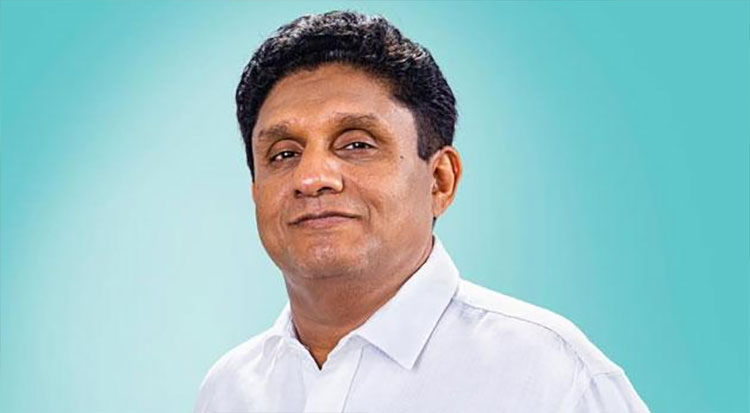
SJB leader Sajith Premadasa has invited the UNP and other political parties to join his party. Premadasa, who is also the leader of the Opposition, has emphasised that the UNP and the SJB could reach a consensus on policies but his party wouldn’t, under any circumstances, accept whatever formula to share positions. Premadasa said so, speaking to the media over the weekend, after meeting the Mahanayaka Thera of the Malwatta Chapter of the Siyam Nikaya Most Venerable Thibbatuwawe Sri Siddhartha Sumangala Thera.
A statement issued by the Opposition Leader’s Office quoted MP Premadasa as having extended an invitation to all political parties to give up extremist policies and join the SJB.
The SJB leader alleged that the NPP government feared facing elections and that was the reason for the inordinate delay in holding Provincial Council polls. PC polls were last held in 2012, 2013 and 2014, on a staggered basis. Premadasa said that if PC polls were held his party would definitely win the majority of PCs.Premadasa also urged the government to reduce electricity tariffs and fuel prices.
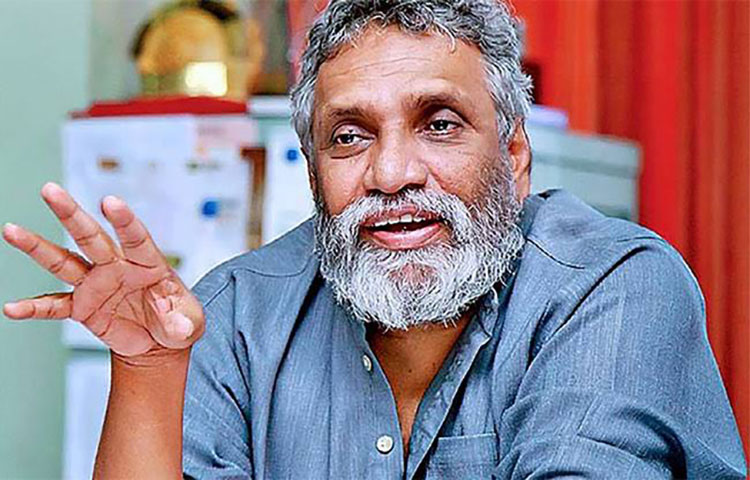
Former Chairman of the Election Commission, Mahinda Deshapriya, on Saturday, strongly criticised the continued postponement of local government elections, declaring that every day without elections constitutes a violation of both the Constitution and democratic principles.
Speaking during an interview with journalist Bhanuka Rajapaksa, on Hiru TV, on Saturday, Deshapriya described the current administration of local government institutions by unelected officials as fundamentally undemocratic and contrary to the spirit of representative governance.
Deshapriya said local authorities, across the country, are presently being managed by secretaries and bureaucrats rather than elected representatives, depriving citizens of their democratic right to be governed by individuals, chosen through the electoral process.
“If the Constitution recognises and provides for local government institutions, then it is the responsibility of the State to ensure that elections are held and that these bodies are administered by representatives, elected by the people,” he said.
Deshapriya rejected attempts to justify the prolonged delay, arguing that responsibility for the situation rests with the government.
He noted that while various political parties have publicly stated their readiness to face elections, the ruling administration possesses the authority to resolve any issues relating to the electoral system.
The former Election Commission chief pointed out that the government enjoyed a two-thirds majority in Parliament, enabling it to enact any legislative amendments required to facilitate the conduct of elections. Instead, he said, successive committees and review processes had been used to postpone a final decision.
He also referred to efforts by opposition legislators who have moved motions seeking to address concerns relating to the electoral framework and expedite the holding of local government polls.
Deshapriya warned that any attempt to appoint a fresh delimitation committee could further delay the electoral process, making it unlikely that local government elections would be held within the current year.
He also dismissed claims that financial constraints have prevented the conduct of elections. Expressing surprise at such assertions, he questioned how funding shortages could be cited as a reason for postponement while expenditure continues in other sectors.
According to Deshapriya, the existence of laws establishing local government institutions imposes an obligation on the State to ensure that those institutions are populated through democratic means.
“The legal framework exists. If elected representatives are not appointed through elections and institutions continue to function under unelected administrators, that is a failure of the State,” he said.

Largest ever cocaine bust in Australia after police raid underground bunker

Mohamed Salah scores as Egypt beat New Zealand for first World Cup win

Lamine Yamal scores first World Cup goal as Spain thrash Saudi Arabia

Shahidi sanctioned for running on the pitch during Chennai ODI

Kapp’s 81* seals South Africa’s come-from-behind win against India

Belgium see red in goalless World Cup draw with Iran in Los Angeles

‘Dates have the highest sugar content to fight Coronavirus’

Sunday Island 27 December – Headlines

#SundayIsland 17th December – Headlines

Sunday Island – 28th March

Sunday Island Headlines – 21 March

Sunday Island – 21st February – Headlines
-

 News7 days ago
Beijing Capital Airlines to resume flights to Colombo signalling boost to tourism
-

 Features6 days ago
Killing of Colombo’s ancient trees — a warning on UN’s World Desertification Day – 17 June
-

 News4 days ago
Creditor receives USD 2.5 mn as Lankan public bears loss from theft of Treasury funds
-

 News3 days ago
Creditor not yet paid
-
 News3 days ago
Consumers bearing 22% tax burden despite 18% VAT claim: Dr. Harsha de Silva
-

 Opinion5 days ago
Beyond diagnosis: A strategic design for 7% growth by 2029 (Part I)
-

 Opinion7 days ago
Fifty years after Soweto uprising
-
 News6 days ago
India provides military stores worth USD 5.5 mn to SL