
News
Taking contradictory stand on 2015 Geneva Resolution


‘Govt. seeking credit for accountability mechanisms set up by previous administration’
UNHRC 48th sessions:
By Shamindra Ferdinando
Attorney-at-law Sudarshana Gunawardena has alleged that the government’s stand on accountability issues at the Geneva-based United Nations Human Rights Council is contradictory to its much publicised opposition to the Geneva Resolution 30/1 co-sponsored by the previous administration.
Sri Lanka co-sponsored 30/1, on Oct 1, 2015. The then Foreign Minister the late Mangala Samaraweera is on record as having said that the UNP-led government had President Maithripala Sirisena’s consent to go ahead with the co-sponsorship.
Former Prime Minister Ranil Wickremesinghe’s media spokesperson Gunawardena yesterday (17) pointed out that the government, at the ongoing 48th sessions of the UNHRC, has reiterated its commitment to key accountability mechanisms set up in terms of the Geneva Resolution.
Civil society activist Gunawardena, who also functioned as the Director General, Information Department during the previous administration said that the assurance given by Foreign Minister Prof. G.L. Peiris last Tuesday (14) should be examined against the backdrop of Sri Lanka’s withdrawal from 30/1 resolution.
Prof. Peiris’ predecessor, Dinesh Gunawardena announced Sri Lanka’s withdrawal at the Feb-March 2020 sessions.
The Sri Lanka Podujana Peramuna (SLPP) owed an explanation, Gunawardena stressed, urging the government to take the public into confidence. “Stop playing politics at the expense of our international relations,” Gunawardena said, underscoring the need for what he called a national consensus on the post-war reconciliation process.
Responding to another query, Gunawardena said that FM Prof. Peiris in his address to the Geneva sessions discussed the progress in what he described as a domestic process in respect of accountability issues. Reference was made to the Office on Missing Persons (OMP), the Office for Reparations (OR) and the Office for National Unity and Reconciliation (ONUR). However, the FM conveniently failed to acknowledge that the OMP, OR and ONUR had been established in keeping with the 2015 Geneva Resolution that covered broader understanding of transitional justice.
The SLPP, while taking credit for the ongoing transitional justice process, continued to publicly reject 30/1, the very basis of the solution, Gunawardena said. “In other words, the SLPP’s actions are very different from their pledges before the electorate in the run-up to presidential and parliamentary polls in 2019 and 2020, respectively.
Referring to the assurance given by Prof. Peiris at the UNHRC that Sri Lanka Human Rights Council was carrying on its mandate, Gunawardena challenged the government to prove its sincerity by allowing no holds barred investigation into SLPP lawmaker Lohan Ratwatte’s raids on Welikada and Anuradhapura prisons on Sept 6 and 12, respectively.
The announcement made by the HRCSL regarding its decision to initiate an inquiry of its own in the absence of police investigation received public attention and appreciation, Gunawardena said.
Commenting on the declaration that Sri Lanka was engaged in an integrated process to bring the Prevention of Terrorism Act (PTA) in line with international norms and best practices, lawyer Gunawardena urged the government to study the work done by the previous government in that regard. Referring to statements made by then Prime Minister Ranil Wickremesinghe in that regard, Gunawardena said that the then Joint
Opposition quite maliciously rejected the move. “They should be ashamed of theirconduct,” relevant ministers and the Attorney General Department couldn’t be unaware of the agreement on new anti-terrorism law.
Gunawardena said that the SLPP administration shouldn’t hesitate to appreciate the previous government’s achievements. “We are quite pleased that mechanisms accepted by the previous government continue to be in operation even though the progress seems slow. However, the SLPP cannot deprive the UNP-led administration of the credit it deserved,” lawyer Gunawardena said.
Gunawardena urged the government to examine the report of the Committee appointed by then Premier Wickremesinghe to develop what he called the policy and legal framework of the proposed Counter Terrorism Act of Sri Lanka. He said that a politically motivated campaign derailed that effort whereas the Opposition propagated the lie the yahapalana government intended to deprive Sri Lanka of anti-terrorism law.
Asked to comment on the revelation of the SLPP government having talks with a group of civil society activists to explore ways and means to strengthening the reconciliation process, Gunawardena said that a 13-page Foreign Ministry note dated Aug. 31, 2021 addressed to Colombo-based diplomatic missions acknowledged the pivotal role played by the civil society. Having always accused the civil society of being part of a Western strategy, the same lot exposed their duplicity by meeting a group of civil society activists.
Gunawardena was referring to President Gotabaya Rajapaksa and Ministers, Basil Rakapaksa, Prof. Peiris, Dinesh Gunawardena, Ali Sabry, PC, and Namal Rajapaksa having separate meetings with SLCC (Sri Lanka Collective for Consensus) in the run-up to the Geneva confab. SLCC comprises 16 individuals.
Gunawardena noted the Human Rights Commissioner Michelle Bachelet, too, in her hard-hitting Sept 13 statement on Sri Lanka referred to President Rajapaksa’s meeting with the SLCC.
Gunawardena said that in addition to the SLCC, another group styled itself as the Civil Society Platform (CSP) in a statement issued on Sept. 13 made its position clear on a range of accountability issues as well as stepped up pressure on the civil society. CSP consists of 30 organizations and 36 individuals.
Responding to declarations by FM Prof Peiris and Foreign Secretary Admiral Jayanath Colombage that external investigations wouldn’t be acceptable, lawyer Gunawardena said that instead of rejecting the investigation the government should furbish whatever information in its hands or had access to the new investigative mechanism. The government couldn’t ignore the fact that the UNHRC authorized the fresh investigative mechanism at the 46th session with an overwhelming majority with 22 countries voting for the resolution, 11 against and 14 missing the vote.
Gunawardena urged the government to take a realistic view as Sri Lanka didn’t have time and space to engage in silly maneuvers. The bottom line was that the March 2020 announcement that Sri Lanka withdrew from 30/1 was nothing but a farce, Gunawardena said.

‘Bar Association must reveal its stand’
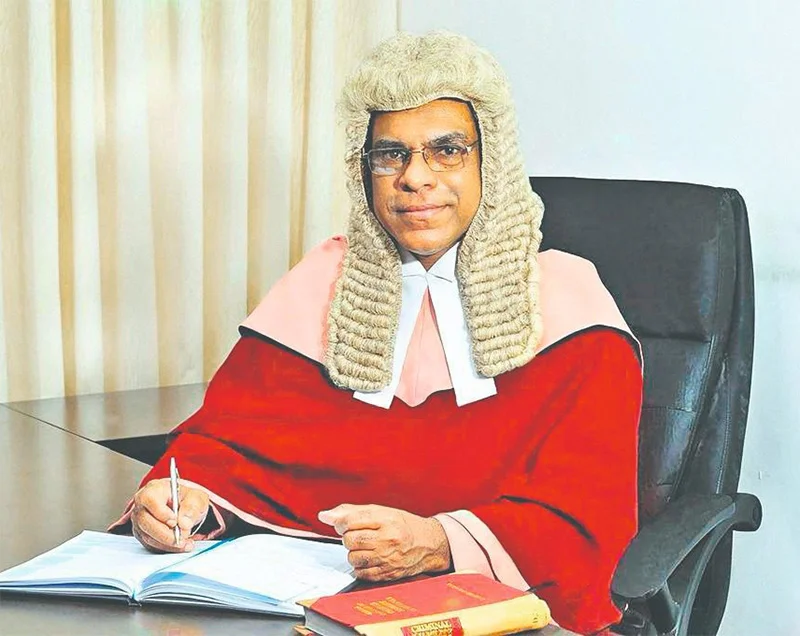
Civil society group ‘Free Lawyers’ has requested Chief Justice Preethi Padman Surasena to probe whether political pressure was brought on a Magistrate, or a High Court Judge, in respect of an ongoing high profile case.
Speaking to The Island on behalf of ‘Free Lawyers,’ Rajith Keerthi Tennakoon said that they felt the urgent need to seek the CJ’s intervention, following the May Day declaration by President Anura Kumara Dissanayake that the verdict of a case that was heard on 30 April would be given on 25 May. Tennakoon said that addressing the NPP’s main May Day rally at Maharagama, the President asked the people to be ready to celebrate that verdict. The President couldn’t have said so if he hadn’t been aware of the impending verdict, Tennakoon said, while emphasising the responsibility on the part of the Bar Association to state its position on the issue.
‘Free Lawyers’ recently captured pubic attention following its exposure of the theft of USD 2.5 mn from the Treasury.
Responding to a query, Tennakoon said that on behalf of ‘Free Lawyers,’ Maithri Gunaratne, PC, on Monday, 4 April, wrote to both CJ Surasena and President of the Bar Association Rajeev Amarasuriya.
 Alleging that President Dissanayake’s declaration caused immense harm to the independence of the judiciary and raised controversy over the judgement that would be given on 25 May, ‘Free Lawyers’ organisation also asked the CJ to inquire into whether the entire judicial process was under political pressure.
Tennakoon said that they expect the Bar Association to reveal its position on President Dissanayake’s statement. Tennakoon pointed out that during the May Day address, President Dissanayake made reference to 15 cases that were to be taken up during this month, whereas Transport, Highways and Urban Development Minister, as well as Leader of the House Bimal Rathnayake, mentioned nearly 10 names of politicians, both sitting and former lawmakers, to be summoned beginning, May.
Tennakoon said that the NPP appeared to have used May Day to counter growing accusations over the Colombo port container controversy, coal scam, Rs 13.2 bn NDB fraud and theft of USD 2.5 mn from the Treasury and USD 625,000 from the Sri Lanka Postal Service.
By Shamindra Ferdinando

The Canadian High Commissioner to Sri Lanka and the Maldives, Isabelle Martin over the last weekend met representatives of the Ilankai Tamil Arasu Kachchi (ITAK) in the East. Tamil Guardian reported that talks focused on the challenges facing the Tamil people.
The meeting was held at the office of ITAK Member of Parliament Kaveendiran Kodeeswaran and brought together parliamentarians representing the Batticaloa and Ampara districts, alongside local government officials including divisional council chairpersons.
Discussions centred on a range of pressing issues, including livelihoods, access to education, employment opportunities and ongoing human rights concerns, as well as the broader state of democratic governance in the region.
High Commissioner Martin sought updates on prevailing socio-economic conditions, particularly the challenges confronting local communities in the East. She noted the concerns raised and indicated that she would follow up on the matters discussed.
Among those present were ITAK MPs Kaveendiran Kodeeswaran, Gnanamuthu Sirinesan and Dr Elayathamby Srinath, along with several local council representatives.

A section of residents of Keppapilavu, in Mullaitivu, on May Day protested. demanding the release of lands still occupied by the military, 17 years after the end of the armed conflict.
They reiterated their longstanding demand for the return of lands seized by the military, in 2009, to establish a camp, sources in the North said. For over 17 years, Keppapilavu residents have sustained a continuous campaign of protests, petitions and advocacy efforts, calling for the right to resettle on their original lands, they said.
Despite limited releases under successive governments, protesters stressed that substantial areas remain under military control. They highlighted that 171 acres were yet to be returned, including 59.5 acres of residential land and 111 acres of agricultural land. The residential areas once supported over 55 families and included homes, schools, places of worship and shared community spaces.
Holding placards and chanting slogans, demonstrators said that their struggle extends beyond land ownership, framing it as a fight for dignity, livelihood and the restoration of a community life disrupted since 2009.
Residents declared that since the current government assumed office, multiple appeals have been made through formal channels, including submissions to the Presidential Secretariat and the Mullaitivu District Secretariat. However, they stated that these efforts have yielded no meaningful progress toward the release of the remaining lands.
Protesters called on Sri Lankan and the local authorities to take immediate and concrete steps to return the entirety of the occupied land, enabling displaced families to resettle and rebuild their lives without further delay.

Showers or thundershowers will occur at most places of the island after 1.00 pm.

CJ urged to inquire into AKD’s remarks on May 25 court verdict

ITAK MPs representing East take their woes to Canadian HC

People demand release of Keppapilavu land

Sajith calls VAT hike extortion, demands relief for the public

Cricket and the National Interest

‘Dates have the highest sugar content to fight Coronavirus’

Sunday Island 27 December – Headlines

#SundayIsland 17th December – Headlines

Sunday Island – 28th March

Sunday Island Headlines – 21 March

Sunday Island – 21st February – Headlines
-
 News6 days ago
Treasury chief’s citizenship details sought from Australia
-

 News5 days ago
Rooftop Solar at Crossroads as Sri Lanka Shifts to Distributed Energy Future
-
 News4 days ago
“Three-in-one blood pressure pill can significantly reduce risk of recurrent strokes”
-

 News6 days ago
Central Province one before last in AL results
-

 Sports6 days ago
Well done AKD!
-

 News4 days ago
Alarm raised over plan to share Lanka’s biometric data with blacklisted Indian firm
-
 News2 days ago
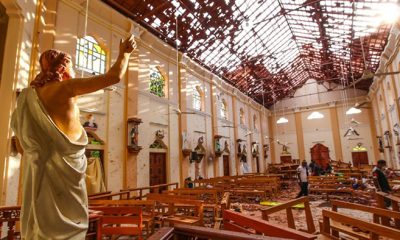
Easter Sunday Case: Ex-SIS Chief concealed intel, former Defence Secy tells court
-

 News4 days ago
USD 2.5 mn fraud probe: Interdicted MoF official found dead at home