
News
National Policy on recruitment of teachers out soon


By Saman Indrajith
Leader of the House and Education Minister Dinesh Gunawardena said that a national policy to recruit teachers to the school system was being formulated and it would be introduced to the country soon.
Speaking at the Consultative Committee on Education held in Parliament on Friday (10), Minister Gunawardena said that the need for a national policy to recruit persons to the teaching service had been there for decades.
He also pointed out that there was a need to formulate a proper system to fill the vacancies of principals in schools with qualified teachers.
While claiming that resolving the current teacher salary anomaly is a serious problem, State Minister Susil Premajayantha said that the process of locating teachers should also be streamlined. The State Minister also stated that a programme was underway to transform the teacher training National Colleges of Education into Universities.
Minister Premajayantha said that there were 240,000 teachers in 10,155 schools across the country teaching 4,300,000 children. The student to teacher ratio was 17:1. Although that ratio was for the national level, there was a disparity when it came to schools which had less than 100 students. There the student- teacher ratio was 7:1, the State Minister pointed out.
Addressing the committee through online technology, Minister Vasudeva Nanayakkara said that the official languages are in a state of decline. He also drew the attention of the Committee to the fact that English was becoming the language of education in the country at present.
It was revealed at the Consultative Committee on Education that the report of the technical committee for the inclusion of law as a subject in the school syllabus would be submitted to the relevant subcommittee within two weeks. It was also suggested that law should be included not as a separate subject but as part of the subject of Civic education. Member of Parliament Dr. Harini Amarasuriya said that it was very important to include children’s rights in it as well. She pointed out that the relationship between law and society should also be reflected in it.
It was also discussed at this Committee that a proper programme should be implemented to make permanent the graduate trainees attached to schools. MPs brought to the notice of the committee that out of 60,000 graduates, 18,000 were currently attached to schools and the methodology proposed to make them permanent was problematic.
State Minister Jayantha Samaraweera stated that some of the graduates who were currently attached to schools do not like the methodology.
MP Chandima Weerakkody pointed out the need to implement a proper programme to protect the dignity of teachers.
Further discussions were held at the Committee on the School Selection Programme for the project to establish 1000 National Schools. The Committee Chairman informed the Secretary to the Ministry of Education, Prof. Kapila Perera to take measures and explain the matter to the Committee.
State Minister Sitha Arambepola, Members of the Ministerial Consultative Committee on Education, MPs Anupa Pasqual, Yadamini Gunawardena and Premanath C. Dolawatta were also present at the Committee Meeting. Meanwhile Minister Douglas Devananda, State Ministers Vijitha Berugoda and Piyal Nishantha as well as Parliamentarians Upul Mahendra Rajapaksa and Gevindu Kumaratunga joined the Committee via online technology.
Officials of the Ministry of Education and related institutions also participated in this committee meeting through online technology.
The Committee which met after a six months lapse was the first Ministerial Consultative Committee Meeting of the Ministry of Education held after the appointment of Dinesh Gunawardena as the Minister of Education, Parliament sources said.

News
If we are to live fulfilling and happy lives, we need unity, mutual understanding, harmony, as well as art – PM

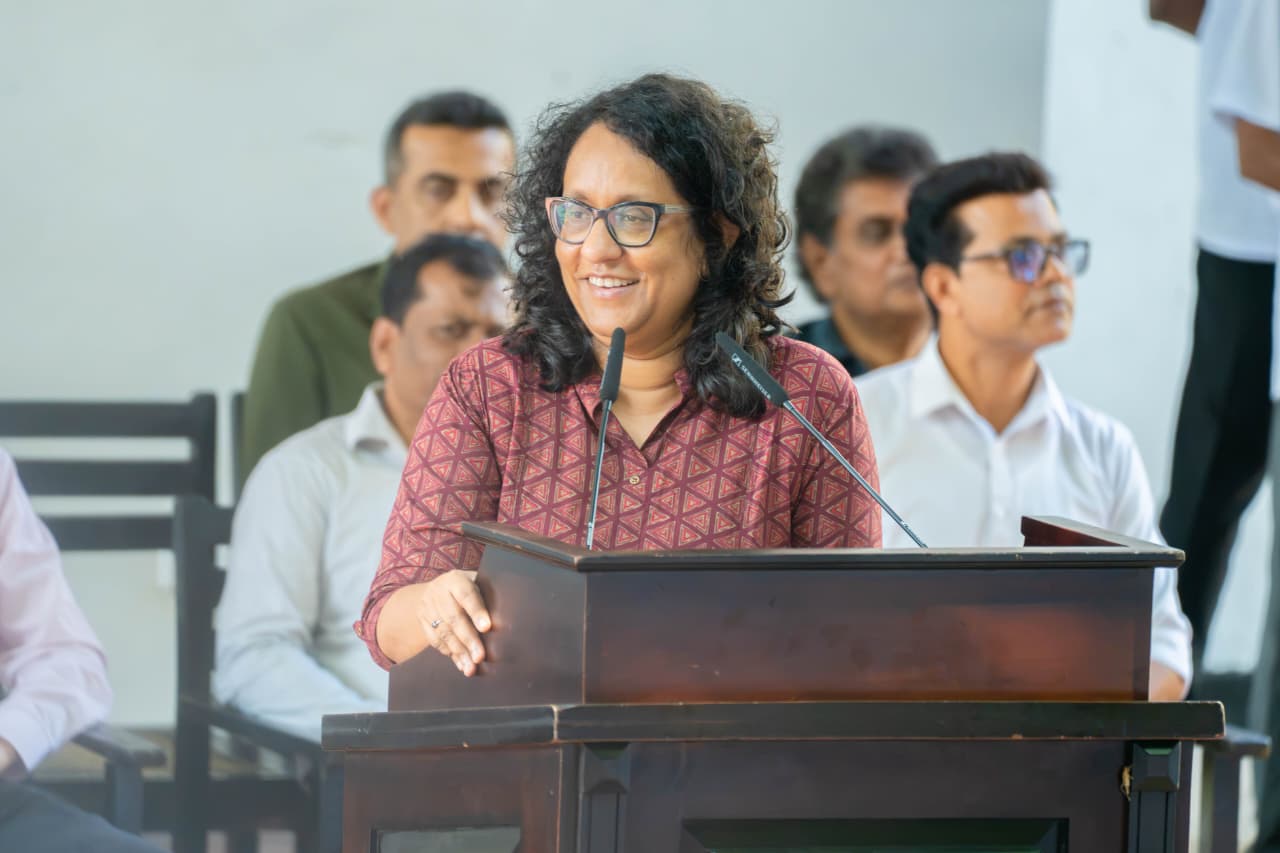
Prime Minister Dr. Harini Amarasuriya stated that art, together with unity, mutual understanding and harmony, is essential for people to lead fulfilling and happy lives. She further emphasized the importance of preserving our identity while remaining open-minded and prepared to face the challenges of a rapidly changing society.
The Prime Minister made these remarks while participating in the opening ceremony of a special educational and cultural trade exhibition and festival organized jointly by the Wayamba Janakala Foundation and the Siyapatha Kala Sangamaya, with the vision of revitalizing the artistic heritage of the Seven Korales and creating a culturally empowered individual who appreciates the arts. The event was held at the Wayamba Janakala Centre on Saturday, 12 September 2026.
The exhibition will be held from 12 to 18 September, from 10.00 a.m. to midnight. The cultural festival has been organized for school students, teachers, youths, and adults.
At the commencement of the exhibition, the Prime Minister opened the exhibition stall of the Department of Education and officially launched the website of the Janakala Foundation.
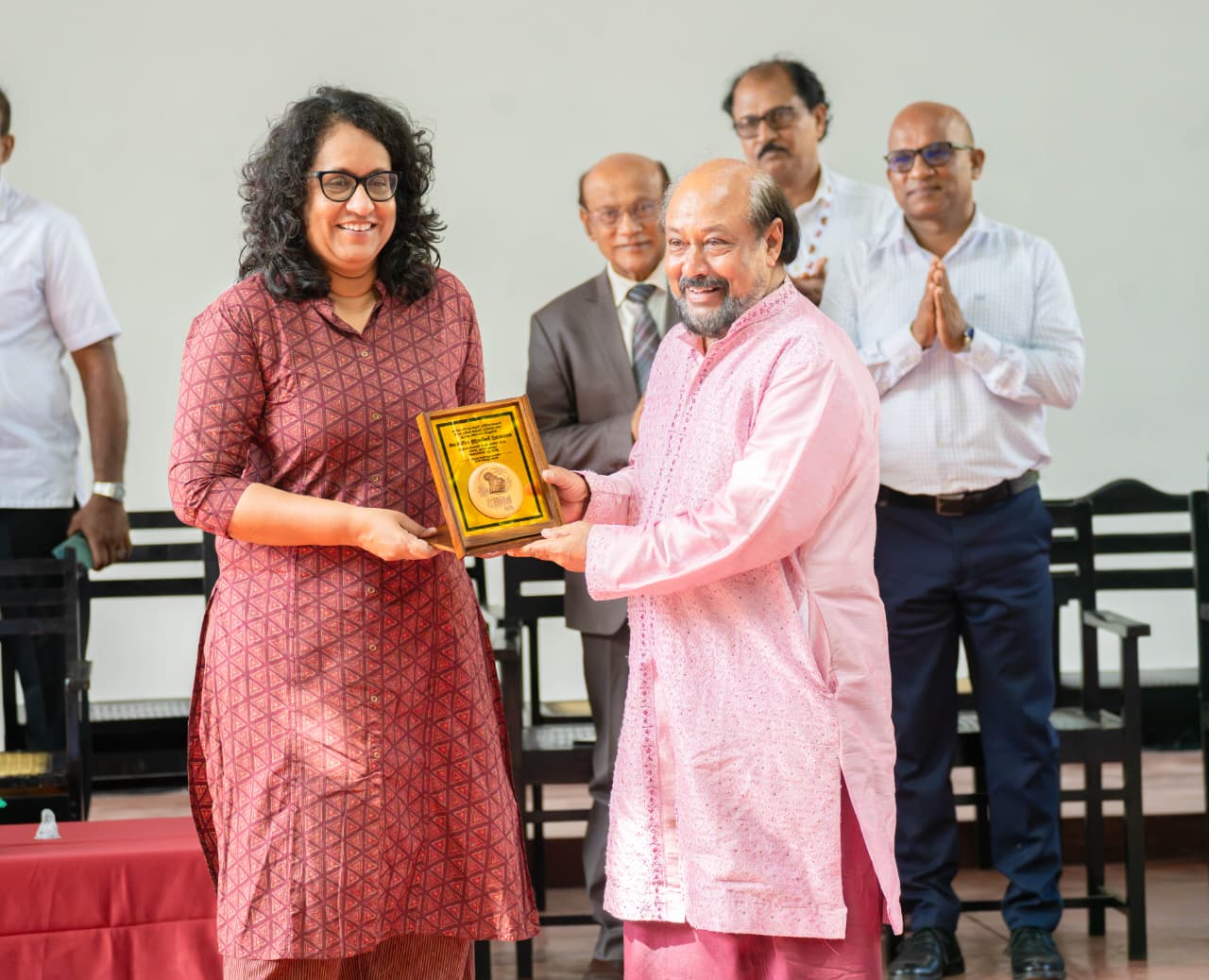
Veteran artists representing the North Western Province who have made an outstanding contribution to the field of art, including Professor Mudiyanse Dissanayake, Nibiriyagama Bandara, Anton Coorey and Charitha Wickramasinghe, were also felicitated by the Prime Minister on this occasion.
Addressing the occasion, the Prime Minister further stated:
“We believe that art and culture, both are important in realizing the thriving nation and beautiful life that we aspire. It is equally important to see and learn about the heritage of our country and, through our experiences, engage in a dialogue on how we can take these traditions forward by incorporating them into our lives in ways that are relevant to the present day.
As the Member of Parliament mentioned to me, films are being screened here, educational programmes and workshops are being conducted, and there are a number of performing arts presentations. Through all of these activities, what we hope to achieve is to enrich the lives of the people of the North Western Province. Being ‘rich’ does not mean economic prosperity alone. Building roads, constructing buildings and developing housing facilities are all necessary. But these alone are not sufficient. We can build a modern city out of concrete and still live empty lives devoid of happiness, sensitivity or fulfilment. If we are to truly make our lives fulfilling and create happiness, however, we need things such as these. We need unity, mutual understanding and harmony.
We must also learn through experience how to conduct ourselves in public spaces and how to remain safe within society. We cannot assume that we can protect ourselves simply by separating ourselves from everything and remaining closed off. While preserving our identity, we must be prepared to face the challenges ahead with an open mind if we are to learn how to live safely in a complex society that is changing rapidly due to technology.
Therefore, today, I encourage you to speak to someone you have never spoken to before. Try to understand their life. Share your ideas and experiences with someone who has come from a place far away from you, someone who does not speak your language, or someone who belongs to a different religion or culture. It is through such interactions that our lives become broader and we gain an understanding of new things.
That is also why art and culture are essential to our lives. A good book can take us to places we have never been. A good work of art or a film can bring us closer to another person’s experience in a way that allows us to feel it ourselves. Therefore, I invite everyone to enjoy and appreciate the arts today with a very open mind and a sense of enthusiasm.
I am grateful to everyone who worked hard and dedicated themselves to making this event possible. I wish for these seven days of programmes to be highly successful and to provide everyone with seven days of memorable experiences.
The occasion was attended by the Governor of the North Western Province Tissa Warnasuriya, Deputy Ministers Namal Karunarathna and Namal Sudarshana, Member of Parliament Dharmapriya Dissanayake, other Members of Parliament, the Mayor of Kurunegala, Chairpersons of Pradeshiya Sabhas, Chairman of the Janakala Foundation Anil K. Senadheera, government officials, school students, residents of the area.


(Prime Minister’s Media Division)
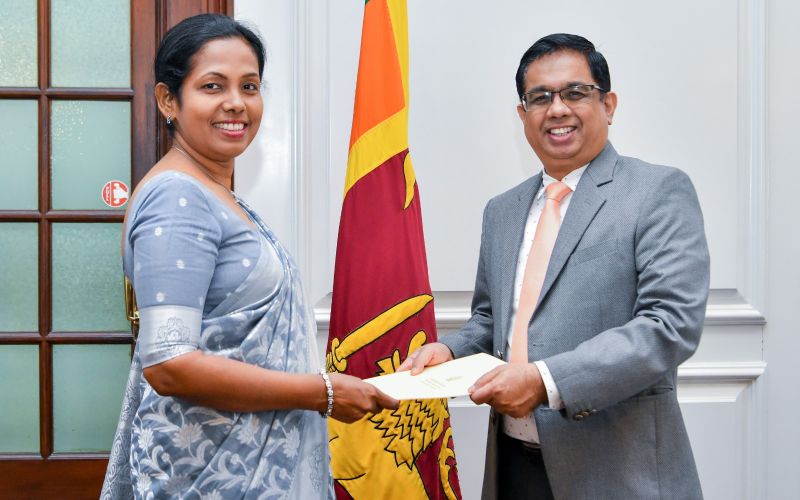
President Anura Kumara Dissanayake has appointed Dr. Roshanie Dissanayake as the Secretary to the Ministry of Science and Technology.
The letter of appointment was handed over to Dr. Dissanayake by Secretary to the President Dr. Nandika Sanath Kumanayake at the Presidential Secretariat on Friday (11) morning.
Dr. Roshanie Dissanayake has also served as an Additional Secretary (Sri Lanka Administrative Service – Special Grade) at the Ministry of Public Administration, Provincial Councils and Local Government.
President’s Media Division (PMD)

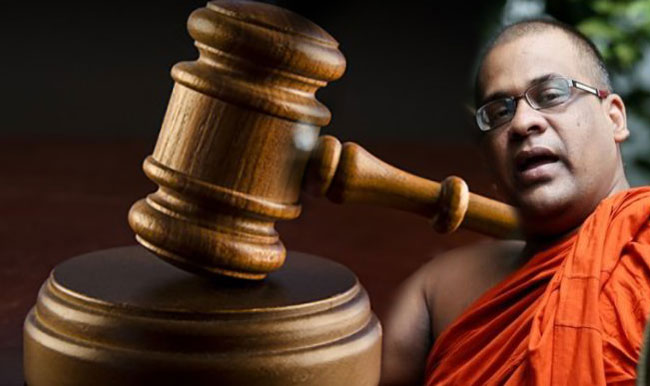
Ven. Galagoda Aththe Gnanasara Thero was not at his temple in Rajagiriya when prison officials visited the premises yesterday to take steps following the Supreme Court ruling that nullified the presidential pardon granted to him, police sources said.
Prison officials who visited the temple on Nawala Road, Rajagiriya, were reportedly informed by those present that the Thero’s whereabouts were unknown. The development comes a day after the Supreme Court declared former President Maithripala Sirisena’s 2019 pardon of Gnanasara Thero null and void.
The three-member Supreme Court bench comprising Justices Janak De Silva, Dr. Sobhitha Rajakaruna and Sampath B. Abayakoon held that the pardon was arbitrary, violated the public trust and principles of natural justice, and was made beyond the proper exercise of the President’s constitutional discretion.
The case arose from Gnanasara Thero’s conduct at the Homagama Magistrate’s Court in January 2016 during proceedings relating to the disappearance of journalist and political cartoonist Prageeth Eknaligoda.
The Court of Appeal convicted him on four counts of contempt of court in 2018 and imposed concurrent prison terms amounting to six years. He had served about nine months when Sirisena granted him a presidential pardon on May 23, 2019.
The Supreme Court found that although Article 34 empowers the President to grant pardons, that power is held in trust for the people and is subject to constitutional limitations and judicial review. The Court concluded that Sirisena had effectively acted on the recommendation of the Additional Secretary (Legal) without demonstrating that he had independently considered the relevant material.
Justice De Silva held that the pardon was “arbitrary”, violated public trust and the rules of natural justice, and was ultra vires the President’s powers. The Court consequently found that the decision violated the fundamental right to equality guaranteed by Article 12(1) of the Constitution.
The ruling effectively restores the legal position under the original conviction, leaving Gnanasara Thero without the benefit of the 2019 pardon. The Supreme Court also clarified that a pardon does not erase a conviction or sentence, but merely relieves an offender from serving the sentence to the extent specified in the pardon.
Gnanasara Thero, the General Secretary of the Bodu Bala Sena, had been convicted over his conduct during proceedings concerning the disappearance of Eknaligoda, who went missing in January 2010 and has not been located.
Sandhya Eknaligoda, Prageeth Eknaligoda’s wife, was among those who challenged the presidential pardon before the Supreme Court, alongside the Centre for Policy Alternatives and its Executive Director Dr. Paikiasothy Saravanamuttu.
The detailed account of the judgment indicates that the Court’s ruling primarily nullified the pardon and restored the legal effect of the original sentence, with the implementation of the sentence falling to the relevant authorities.
Police sources said that the Supreme Court, however, did not permanently close the door on executive clemency. It held that a future President could grant Gnanasara Thero another pardon, provided the power is exercised lawfully and after proper consideration of all relevant material.
The Supreme Court has so far overturned three presidential pardons granted to two former Presidents. In January 2024, the Court declared former President Gotabaya Rajapaksa’s pardon of former MP Duminda Silva unlawful and invalid. In June 2024, it invalidated two pardons granted by former President Maithripala Sirisena to Royal Park murder convict Jude Shramantha Anthony Jayamaha — the first in May 2016, which commuted his death sentence to life imprisonment, and the second in October 2019, which released him from prison. Jayamaha, who was convicted of the murder of 19-year-old Yvonne Johnson, remains at large. Most recently, on September 10, 2026, the Supreme Court declared Sirisena’s 2019 pardon of Ven. Galagoda Aththe Gnanasara Thero null and void, ruling that it was arbitrary and inconsistent with the Constitution.

If we are to live fulfilling and happy lives, we need unity, mutual understanding, harmony, as well as art – PM

Dr. Roshanie Dissanayake appointed Secretary to the Ministry of Science and Technology

Death toll from Philippines ferry fire rises to 76, with more still missing

Anthropic boss Dario Amodei calls for AI development to slow down

It’s spin vs spin as India and Sri Lanka battle for Asia Cup title

Atmospheric conditions are favorable for afternoon thundershowers in most parts of the Island today [13]

‘Dates have the highest sugar content to fight Coronavirus’

Sunday Island 27 December – Headlines

#SundayIsland 17th December – Headlines

Sunday Island – 28th March

Sunday Island Headlines – 21 March

Sunday Island – 21st February – Headlines
-

 Sports3 days ago
DDS set to lose Test captaincy
-

 Features7 days ago
After the parade: What a traffic OIC’s walk-out tells us
-

 Editorial7 days ago
Arrests as theatre
-

 News6 days ago
Thailand shuts door on undesirables from Sri Lanka
-

 Latest News7 days ago
Harshitha’s composed knock seals Sri Lanka’s semi-final berth
-

 News3 days ago
Sri Lanka faces new grid challenge as rooftop solar surges: former CEB GM
-
 Business6 days ago
CEB successor company breaks into top three in competitive BESS tender
-

 News7 days ago
‘Choka Malli’ slips out of country before travel ban