
News
Scale-up routine immunisation along with COVID-19 vaccination: WHO

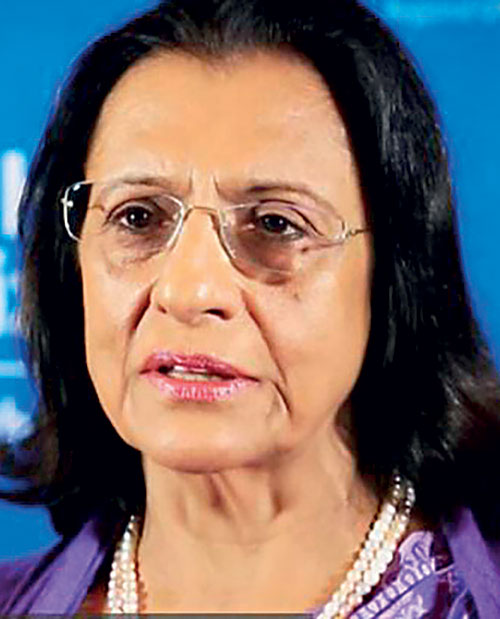
The World Health Organization has urged countries in South Asia Region to enhance routine immunization along with the ongoing efforts to rapidly increase COVID-19 vaccination coverage.
“The vulnerability to vaccine preventable diseases has increased with the pandemic disrupting essential immunization services and surveillance for vaccine preventable disease. Though efforts are being made, much more needs to be done specially at the sub-national levels and to reach the unreached and underserved population,” said Dr Poonam Khetrapal Singh, Regional Director, WHO South Asia, at the Seventy-Fourth Regional Committee meeting.
Recalling the strong progress made until the onset of the pandemic, the Regional Director said, by 2019 the Region was in a historically best position related to vaccine preventable disease control with 91% coverage with three doses of DTP vaccine (DTP3). Ten of 11 countries had achieved more than 90% DTP3 coverage.
Though routine immunization services were among the first essential services that countries began to restore during the pandemic, the DTP3 coverage in the Region dipped to 85% in 2020. The number of unvaccinated or partially vaccinated children increased to 4.9 million as against 3 million in 2019. Surveillance of vaccine preventable diseases was also affected.
The COVID-19 pandemic has also impacted implementation of strategies for measles and rubella elimination, a flagship priority in the Region. The estimated coverage with the first dose of measles-containing vaccine (MCV1) in the Region declined to 88% in 2020 compared with 94% in 2019. Similarly, coverage with the second dose of measles-containing vaccine declined to 78% in 2020 compared with 83% in 2019. The COVID-19 pandemic has also resulted in surveillance gaps in several countries and has delayed implementation of mass vaccination campaigns and other immunization-related activities.
“There is an urgent need to repair the damage caused by COVID-19, to regain the momentum achieved in the previous decade, and to protect infants, young people and adults with life-saving vaccines,” Dr Khetrapal Singh said.
The ongoing Regional Committee meeting discussed the Strategic Framework for the South-East Asia Regional Vaccine Action Plan 2022−2030 which focuses on the roll-out of COVID-19 vaccination and restoration of immunization systems and vaccine-preventable disease surveillance from the impact of the COVID-19 pandemic.
We need to ensure strategies are in place to maintain and enhance routine immunization without impacting the efforts to increase COVID-19 vaccination rates, the Regional Director said. Adequate human resources for routine immunization and COVID-19 vaccination, efforts to build confidence among people to access immunization services and having Standard Operating Procedures in place for enhancing immunization activities immediately following cessation of lockdown periods, are some of the critical measures that need to be taken, she said.
“Implementation of the framework will need high-level political and programmatic commitment and partner collaboration to which WHO is committed,” the Regional Director said.
Countries in the Region are making unprecedented efforts to expand COVID-19 vaccination coverage with over 915 million doses administered across the Region. The availability of more vaccine doses in recent weeks has helped scale up coverage.
Despite the challenges posed by the pandemic, the Region has maintained its status of having eradicated polio and eliminated maternal and neonatal tetanus. Measles elimination has been achieved and maintained in five countries, while two of these countries have also achieved rubella elimination. Four countries have been verified as having achieved hepatitis B control through immunization.
The Regional Committee meeting is the annual governing body meeting of WHO South Asia Region. Being hosted by Nepal, the meeting is being held virtually for the second consecutive year in view of the pandemic.

Approval of the Cabinet of Ministers was granted to the preparation of the Appropriation Bill for the financial year of 2027 at their meeting held on 30.06.2026.
Accordingly, clearance of the Attorney General has been given to the Appropriation Bill prepared by the Legal Draftsman.
Therefore, the Cabinet of Ministers approved the resolution furnished by the President in his capacity as the Minister of Finance, Planning and Economic Development to publish the aforementioned draft bill in the government gazette notification and thereby submit the same to the Parliament for its concurrence.
Latest News
Cabinet approves aditional Rs. 2,500 million to the Paddy Marketing Board to purchase 2026 Yala harvest

The Cabinet of Ministers has approved the resolution furnished by the Minister of Agriculture, Livestock, Land and Irrigation to provide an additional Rs. 2,500 million to the Paddy Marketing Board on a reimbursable basis from the Rs. 7,500 million additional allocations granted to the Ministry to implement
the expedited paddy purchasing program for the 2026 Yala harvest.
Latest News
Cabinet nod to host the 8th Asian Regional Conference of the Commonwealth Parliamentary Association and the 3rd Joint Asian and South-East Asian Regional Conference of the Commonwealth Parliamentary Association
The 8th Asian Regional Conference of the Commonwealth Parliamentary Association (CPA) and the 3rd Joint Asian and South-East Asian Regional Conference of the CPA are planned to be held over three days in Colombo during April/May 2027.
Approximately 90 delegates including speakers, Deputy Speakers, Member of Parliamentarians, and Parliamentary officers representing member countries of the Commonwealth Parliamentary Association, in the Asian and South-East Asian regions, are expected to participate in these conferences.
The Cabinet of Ministers has approved the resolution furnished by the Prime Minister of the Parliament of Sri Lanka to host the said conferences considering the opportunities to strengthen parliamentary diplomacy and regional cooperation, as well as to enhance international recognition of the Parliament of Sri Lanka within the Commonwealth Parliamentary Association.

Draft of the Appropriation Bill for the Financial Year 2027 su mitted to the Parliament
Cabinet approves aditional Rs. 2,500 million to the Paddy Marketing Board to purchase 2026 Yala harvest
Cabinet nod to host the 8th Asian Regional Conference of the Commonwealth Parliamentary Association and the 3rd Joint Asian and South-East Asian Regional Conference of the Commonwealth Parliamentary Association

SAARC Training Workshop on Financial Modeling for Renewable Energy Projects from 5th to 7th October in Colombo
National Children’s Week from 25th September to 01st October

Nairobi and Munich to host 2029 and 2031 World Athletics Championships

‘Dates have the highest sugar content to fight Coronavirus’

Sunday Island 27 December – Headlines

#SundayIsland 17th December – Headlines

Sunday Island – 28th March

Sunday Island Headlines – 21 March

Sunday Island – 21st February – Headlines
-

 Sports5 days ago
DDS set to lose Test captaincy
-

 News5 days ago
Sri Lanka faces new grid challenge as rooftop solar surges: former CEB GM
-

 Latest News5 days ago
Shafali, Deepti power India into sixth T20 Asia Cup final
-

 Opinion7 days ago
Navigating Sri Lanka’s Israeli Dilemma
-

 Latest News4 days ago
Sri Lanka thwart Fatima Sana challenge to secure Asia Cup final spot
-

 News3 days ago
Gnanasara Thero absconding after SC ruling
-

 Features6 days ago
Lost for 90 years: Rare Goby resurfaces in Jaffna
-

 News4 days ago
Ammunition cache found in old Kandy bungalow