
Sports
Domestic cricket overhauled

by Rex Clementine
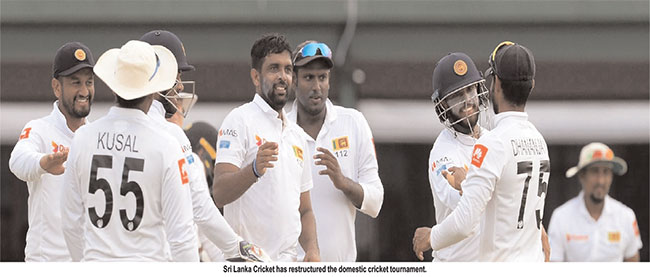
Sri Lanka Cricket on Saturday conducted an Extraordinary General Meeting (EGM) and the stakeholders of the game unanimously ratified a new domestic tournament structure.
The new competition that has been drafted with the blessings of Cricket Advisory Committee is expected to remain in the system for ten years but there are fears of interference when relegation is around the corner.
At present, we have 24 teams playing First Class cricket and many former greats had raised their concerns for having too many teams playing at the highest level resulting in the competition being diluted and the gap between Test cricket and First Class cricket widening.
What we have right now is instead of teams being stripped of First Class status, two more teams being added to the system with 26 teams enjoying First Class cricket. What that means is that the country will have more than 300 players engaging in First Class cricket which is way too much.
With a relegation system, the authorities expect to cut down two teams by next season and eventually will be left with a system where only 15 teams play First Class cricket. But there lies the problem. Over the last few years, we have seen that clubs not playing by the rule book and once they are relegated underarm tactics being used to remain in the elite league.
Smaller clubs like Baduraliya for example points out it’s unfair on them as they play with limited resources while bigger clubs like NCC have a prestige problem. These are just two teams who have made behind the scene moves to remain in the top league. It has happened once and you can be assured that it will happen again and there are enough politicians in our part of the world to promote these causes.
When NCC was facing relegation, the team’s iconic player Kumar Sangakkara was Sri Lanka’s Test captain. He was also world’s number one ranked batsman at that point. It would have been embarrassing for Sangakkara not to be representing a team that plays First Class cricket but the great man he is, Sanga vowed to remain at Maitland Place. “NCC was my first club and NCC will be my last club,” he said.
According to the new system, the 26 teams will be divided into two groups and each team will play 12 games in a season. The top two teams will play the final while the bottom two side will be relegated.
The inter-club tournament is expected to be completed by January next year with SLC hoping to get Ministry of Health permission to continue with the season.
This will be followed by the much looked forward to Inter-Provincial tournament. That will be the highest standard of domestic cricket. The yardstick for selection for Provincial teams will be the performances of the club tournament while Sri Lanka selections are expected to be made on the performances of the Provincial tournament.
The restructuring of the domestic tournament was one of the urgent needs in putting the sport back on track and it is hoped that this structure addresses many troubles facing our cricket.


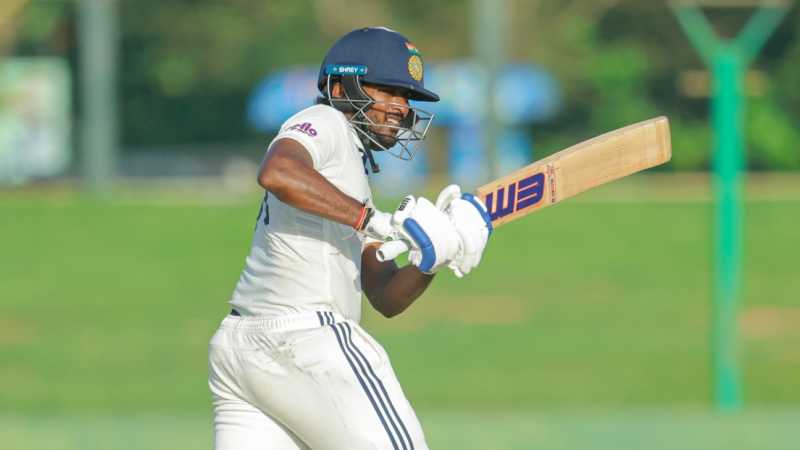
B Sai Sudarshan strengthened his case to retain the No.3 spot for the upcoming Test series in Sri Lanka, with his 168 for India A against Sri Lanka A in Galle. Sudharsan converted his overnight 104 not out into his career-best score for India A, helping his side stretch their lead to 175 by the end of the third day’s play. India A closed out the day on 541 for 8 in response to Sri Lanka A’s 366.
Devdutt Padikkal failed to add to his overnight 94 and Ruturaj Gaikwad retired hurt on 13, but India A zoomed ahead thanks to Sai Sudharsan, captain Dhruv Jurel (53), Shaik Rasheed (45) and Saransh Jain (68*).
Jurel’s innings was cut short when he was trapped lbw by left-arm spinner Dilum Sudeera, who also claimed the wicket of Sai Sudharsan. Allrounder Keshara Nuwantha, meanwhile, claimed the wickets of Padikkal and Shaik Rasheed, and Gurnoor Brar late in the day. Overall, he had figures of 4 for 158 in 50 overs.
Sri Lanka A toiled away, using as many as eight bowlers, but only Sudeera and Nuwantha were among the wickets until captain Sahan Arachchige struck late in the day.
India A’s bowling allrounders Saransh and Auqib Nabi (30) combined for an 81-run stand to take the visitors past 500.
Scores:
India A 541 for 8 in 142 overs (B Sai Sudharsan 168, Devdutt Padikkal 94, Druv Jurel 53, Saransh Jain 68*, Shaik Rasheed 45; Keshara Nuwantha 4-158, Dilum Sudeera 3-101) lead Sri Lanka A 366 in 110 overs (Sahan Arachchige 127; Gurnoor Brar 4-77, Saransh Jain 4-92) by 175 runs
(Cricinfo)
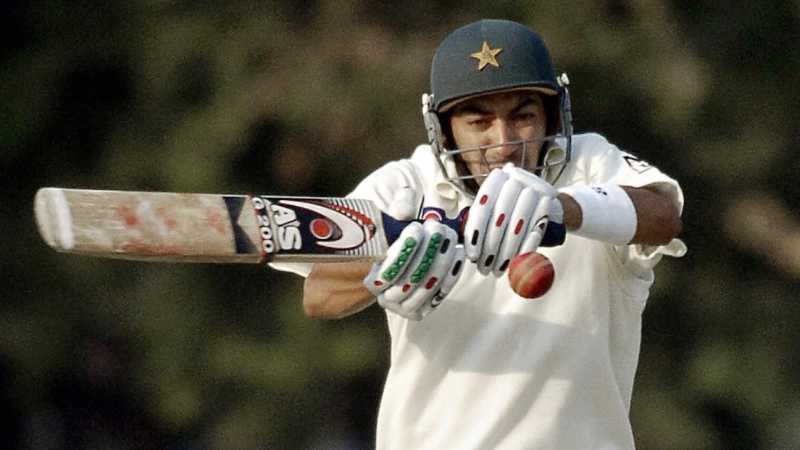
Vaobhav Sooriyavanshi at just 15 years and 99 days, has become the second youngest cricketer to play for a Full Member men’s team*, making his debut against England in Manchester. He enters a list of other precocious talents who had burst on to – and sometimes, gone away – from the international stage in their teenage years.
Hasan Raza (Pakistan), 14y 227d
Hasan Raza was a wonderful timer of the ball. He took the field against Zimbabwe before turning 15 in October 1996, and batted once, scoring 27 off 48 deliveries from No. 5.
Doubts, however, later emerged about his age, and the PCB withdrew the claim that Raza was the youngest men’s Test debutant in the history of the game.
Whether he was 14, or 15 as some claimed, he showed tenacity at the international stage but without the results. He played just one more Test before the turn of the century, and then was dropped from the side. A recall in 2002 resulted in his only two Test fifties, against Australia – slow knocks of 54* and 68. However, he never quite found the same success as he did in first-class cricket, where he scored 13,949 runs in a 20-year career.

Jhon Arias scored the only goal as Colombia beat Ghana 1-0 in sweltering conditions in Kansas City on Friday to reach the World Cup round of 16, continuing a quietly impressive campaign that has established them as dangerous outsiders.
Arias struck in the 14th minute, guiding home a cross from substitute Luis Suarez, and Colombia’s disciplined defence did the rest as Nestor Lorenzo’s side extended their unbeaten run and booked a meeting with Switzerland in the next round.
Colombia had largely flown under the radar at the tournament, despite going undefeated against Portugal, Uzbekistan and DR Congo to top Group K.

Their breakthrough on Friday came from two players who had not been expected to combine, as Suarez, thrust into action after Jhon Cordoba was forced off with an apparent groin injury in the eighth minute, delivered a pinpoint cross to the back post where Arias had somehow drifted unmarked.
With time and space to pick his spot, Arias calmly guided the ball into the bottom corner to hand his side a deserved lead.
The stadium felt more like Barranquilla than Kansas City as tens of thousands of Colombia supporters turned the clash with Ghana – a team ranked 60 places behind them – into a de facto home game, giving the South Americans a level of support rarely seen so far from home.

The stands were a writhing, dancing sea of yellow jerseys, twirling scarves and black-and-white sombrero vueltiao hats, that many used to fan their faces in the oppressive 30-degree Celsius (86-degree Fahrenheit) heat.
They bounced in unison, roared their team forward with every attack, and regularly broke into chants of “Vamos Colombia! Esta noche tenemos que ganar!” (Spanish for ‘Let’s go Colombia, tonight we have to win!’).
They need not have worried. Colombia were the better team by some distance.
Luis Diaz had numerous scoring chances. He fired into the side netting in the first half, then celebrated what he thought was the game’s second goal early in the second half when he slotted home Arias’s cross, but it was disallowed for offside.
Lorenzo’s men continued to push for a second goal, and Ghana goalkeeper Lawrence Ati-Zigi, who was excellent all night, made one terrific save after another in the dying minutes as Colombia’s fans cheered every one of their team’s touches of the ball.

Antoine Semenyo was Ghana’s biggest attacking threat, yet Colombia’s disciplined defence denied him a clear sight of goal.
Colombia became the fourth South American team to reach the last 16, joining surprise package Paraguay, who stunned Germany, along with Brazil and Argentina, both of whom survived scares of their own.
Colombia – whose best finish was reaching the quarterfinals in 2014 – play the Swiss on Tuesday in Vancouver.
[Aljazeera]

India A grow lead after Sai Sudharsan hits 168

Boys among men – Sooryavanshi joins Tendulkar, Aaqib and Hasan Raza

Brutal heat cancels Fourth of July events, from DC to Philadelphia

Arias sends Colombia into World Cup last-16 with 1-0 win over Ghana

Messi scores again but Argentina given World Cup upset fright by Cape Verde

Anguished families left to identify Venezuela quake victims at makeshift morgue

‘Dates have the highest sugar content to fight Coronavirus’

Sunday Island 27 December – Headlines

#SundayIsland 17th December – Headlines

Sunday Island – 28th March

Sunday Island Headlines – 21 March

Sunday Island – 21st February – Headlines
-

 News6 days ago
LAWASIA warns against ad hoc initiative to increase judges’ retirement ages
-

 Features5 days ago
Climate action to bring South Asia together
-
 News5 days ago
Chamuditha to seek removal of injunction on Youtube programme
-

 News18 hours ago
Freedom 250: US Embassy celebrates America’s 250th Independence Day through magic of American cinema
-

 Features7 days ago
People’s Bank expands digital banking network with 125th cheque deposit kiosk
-

 News2 days ago
CIABOC to question Harak Kata on Rs. 200 mn bribery allegation
-
 News2 days ago
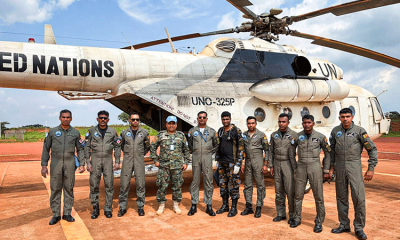
SLAF conducts successful rescue mission under UN command in Central African Republic
-

 News5 days ago
CPRP alleges another death in custody, seeks protection for witness