
Business
Addressing misconceptions on agricultural practices in Sri Lanka’s tea plantations


By Dr. Roshan Rajadurai
The recent move by the government to ensure the availability of fertiliser critical for the country’s agriculture sector is welcomed by all industry stakeholders – including the Regional Plantation Companies (RPCs), which cultivate tea, rubber and other plantation crops. This is a crucial source of support at a time the tea industry in particular, is facing numerous challenges. Hence, the government’s actions are appreciated and commended by all RPCs.
However, recent discussions on fertiliser have brought to the fore certain misconceptions held by certain critics and members of the public on agricultural practices in Sri Lanka’s tea plantations – which produce the world-renowned ‘Ceylon Tea’, one of Sri Lanka’s largest exports and foreign exchange-earners.
Hence, this article will address such myths and misconceptions and put the record straight on the practices with regard to fertiliser and agro-chemical usage in tea plantations managed by Regional Plantation Companies (RPCs).
At the onset, it should be noted that more than 70% of Sri Lanka’s tea is produced by the smallholder sector, which does not come under the management of the RPCs. RPCs can only comment on practices adopted on plantations managed by Regional Plantation Companies.
Adherence to ‘Integrated Agriculture’
Integrated agriculture practices refer to the use of a combination of traditional and modern methods for cultivation, done with due focus on social and environmental factors (beyond mere commercial considerations), with the intention of ensuring long-term sustainability.
Sri Lanka’s tea plantations have been producing output of the highest quality, meeting highly rigorous international quality standards for more than 150 years, which would clearly not have been possible without the use of integrated agriculture practices.
To provide an example of how this is practised operationally, for weed management, RPC plantations use various biological methods (for instance, predators which consume and control the population of harmful insects) and do not rely exclusively on synthetic/chemical inputs. Similarly, all activities related to cultivation, plant protection etc., use a combination of traditional practices, organic material and recommended agro-chemicals used in prescribed quantities.
International accreditations and certifications
Some appear to be of the view that RPCs apply agro-chemicals liberally in large quantities. Firstly, this would be highly imprudent and would go against the very interests of the RPCs. Agro-chemicals are a notable component of the cost of production (CoP), and over-application would simply increase costs.
This myth is also dispelled by the fact that the tea industry of Sri Lanka is by far the most environmentally and otherwise certified tea industry in the world. RPC plantations have been accredited and certified by numerous internationally-reputed organisations such as Rainforest Alliance, Forest Stewardship Council, Fairtrade International and adhere to Good Agricultural Practices (GAP).
In addition, Sri Lankan tea has been recognised as the world’s ‘cleanest’ tea since 1975 by the Food and Agriculture Organisation (FAO) of the United Nations (UN).
95% of Sri Lanka’s tea production is exported. Shipments of tea produced in Sri Lanka are exported to countries, including European countries, with stringent standards in terms of maximum residue limit (MRL), which refers to the highest level of a chemical residue legally allowed in food and beverages.
Robust local framework on agro-chemical usage
Baseless allegations on high agro-chemical usage by tea plantations are also a disservice to the invaluable contributions of globally respected organisations such as the Tea Research Institute (TRI) of Sri Lanka. TRI follows a rigorous testing and approval process in allowing the use of agro-chemicals for tea cultivation.
Following trials, often conducted over several years, agro-chemicals have to be approved for use by an independent professional committee.
While some have claimed in the past that certain chemicals used in tea plantations contributed to health issues in non tea-growing parts of the country, reputed local bodies such as the National Science Foundation has refuted such baseless claims.
Multiple safeguards at the producer, national, international and buyer level ensure strict compliance of the RPCs with best practices in agro-chemical usage.
Niche markets are not a viable option
Some on the other hand, have speculated on the possibility of avoiding agro-chemical usage in Sri Lankan tea plantations by opting for organic cultivation.
Unfortunately, the biggest deterrent to organic tea cultivation is completely beyond the control of growers, as it is the preference of buyers of Ceylon Tea. Ceylon Tea is known and preferred due to certain properties such as aroma, taste and colour. These properties are impacted by the type of plant nutrients applied. When organic inputs are used, the final products tend to differ significantly in terms of appearance, taste, aroma etc. from Ceylon Tea that buyers prefer and are accustomed to. While few plantations have attempted cultivation of organic tea, a number of such experiments have failed due to lack of buyer demand.
There is certainly a small niche market globally for organic tea – which is less than one percent of the total market. However, Sri Lanka’s tea industry, which is already facing severe challenges on multiple fronts, is in absolutely no position to completely re-align itself (including by finding new markets and buyers) to switch and cater to this small segment. An industry which exceeds USD 1.2 billion in value (in terms of total export earnings in 2020) cannot sustain itself by catering to a small niche.
It should be noted that RPCs are responsible for providing employment to 105,000 workers in total and for providing various facilities for a total resident population of approximately one million. Beyond commercial considerations of individual companies, it would be highly irresponsible for the RPCs to ‘bet’ the wellbeing of nearly five percent of the country’s population resident on RPC plantations on a highly niche and a still emerging sector.
In addition, practically, adoption of entirely organic cultivation would be highly challenging. At Rs. 1,900 per kilogram, the estimated production cost of one kilogram of organic tea would be equivalent to nearly three times the cost of production of one kilogram of tea produced via conventional methods.
Greater possibility of disease under organic methods
Another consideration which cannot be ignored is the probability of greater disease, if 100% organic cultivation methods were to be adopted. Many Sri Lankans would have heard of the famous ‘coffee leaf rust’ which commencing in 1869 entirely wiped out Sri Lanka’s significant extent of coffee plantations at the time.
Due to lack of ability (in terms of availability of agro-chemicals etc.) at that time to treat the fungal disease, the entire industry was wiped out. Now, while thanks to advances in agriculture and technology it is possible to address such challenges, it would be extremely difficult to do so, without the use of agro-chemicals to any degree.
For instance, at times of high humidity in plantations, it can be necessary to apply fungicides. If not, due to fungal diseases 20% to 30% of the crop could be lost within a relatively short period of time. Hence, while the coffee leaf rust example is an extreme scenario, it is not one which can be ruled out. Anywhere in the world where conventional agriculture is practiced, agro-chemicals are critical in dealing with such challenges.
Unlike fungicides, lack of application of suitable fertiliser in sufficient quantities may not be immediately apparent in tea. However, given that tea is perennial crop, with tea bushes being able to produce output for 30 or 40 years or more, once the changes start to manifest within a period of perhaps six months, the impact could potentially be long-term and last throughout the life of the tea bush.
Critics can perhaps make invalid comparisons to dispute the above, such as stating that even in midst of fertiliser shortages, national tea production has increased thus far this year, compared with the previous year. This is simply due to last year being unfavourable for tea production, with the drought resulting in a massive 40% crop loss.
RPCs invested in the industry’s future growth
In conclusion, despite certain claims to the contrary, Sri Lankan tea plantations managed by Regional Plantation Companies adhere to all necessary safeguards with regard to responsible agro-chemical usage at both national and international level. If not, the Ceylon Tea brand would not be as strong and internationally-acclaimed for its quality.
RPCs have actively and voluntarily adopted measures such as integrated agriculture practices, to minimise usage of agro-chemicals and incorporate organic elements and biological methods. However, there is an extent to which this can be done and converting to organic tea cultivation for the industry as a whole is not a feasible solution, considering that organic tea is a small, highly niche sector. In addition, converting entirely to organic creates other risks, including greater prevalence of disease.
RPCs have been part of the Ceylon Tea industry for many decades and are not looking to make a ‘quick buck’ and endanger the industry’s sustainability, our own and the livelihoods of our workers, by irresponsible usage of agro-chemicals. RPCs have made a significant contribution to the development of the Ceylon Tea industry and the long-term growth of the industry is very much in our interest. Hence, I would urge all industry stakeholders and members of the public to not be swayed by myths and misconceptions on the practices of RPCs with regard to agro-chemical usage.

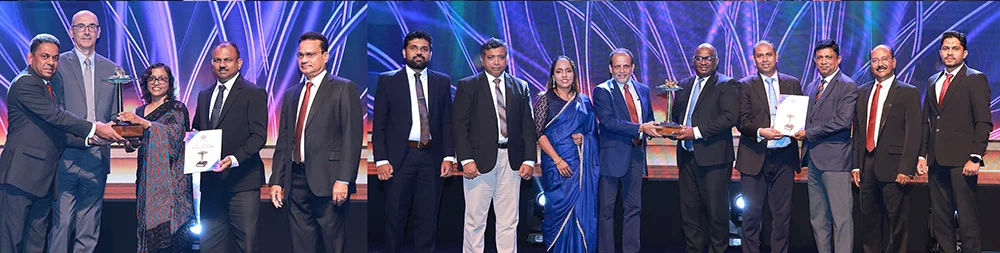
Corporate accolades underscore the alignment between its operational excellence and national development
In an era where national competitiveness is intrinsically tied to digital connectivity, strengthening the country’s digital backbone has become an urgent priority. Within this context, the evolving role of Sri Lanka’s leading telecommunications provider, SLT-MOBITEL, offers valuable insight into how technological infrastructure can underpin broader economic resilience.
Telecommunications and digital networks are foundational to economic transformation. By expanding high-speed broadband access, upgrading enterprise cloud capabilities, and bridging the urban-rural connectivity divide, SLT-MOBITEL helps reduce business transaction costs, streamline supply chains, and enable micro, small, and medium enterprises to reach global markets.
Recent corporate accolades further underscore this alignment between operational excellence and national development. SLT-MOBITEL’s triple triumph at the National Business Excellence Awards 2026 – winning in the Infrastructure and Utilities sector, Performance Management, and ICT Services categories – highlights its growing impact. Notably, the recognition of eChannelling’s contributions to digital healthcare reflects a broader strategic pivot toward integrated technology solutions.
“Institutional efficiency of this nature is critical for attracting foreign direct investment, as global partners increasingly assess a country’s digital maturity and systemic stability before committing capital,” noted industry observers.
Moreover, the company’s transition from a conventional telecom utility to a comprehensive digital solutions provider aligns seamlessly with Sri Lanka’s national digitalisation agenda. As the country pursues public sector modernisation, enhanced e-governance, and a competitive knowledge economy, the private sector must step up to deliver secure, scalable, and future-ready networks. Investments in data centres, cybersecurity frameworks, and advanced ICT infrastructure act as strategic buffers, ensuring that Sri Lanka’s economic apparatus remains agile and resilient amid future global uncertainties.
However, industry experts caution that while these achievements are commendable, SLT-MOBITEL still has a considerable distance to cover in fully enabling a truly digital economy.

Port City Colombo (PCC) took a prominent role as Platinum Sponsor at the second edition of Sri Lanka Beyond Your Dreams, a high-level diplomatic and investment engagement hosted by the Consulate General of Sri Lanka in Dubai and the Northern Emirates. The event, held on 2nd September 2026 at the Hilton Dubai Al Habtoor City, brought together over 400 senior UAE-based business leaders, investors, diplomats, and institutional stakeholders, alongside Sri Lanka’s most senior government representatives.
The gathering was graced by Dr. Thani bin Ahmed Al Zeyoudi, UAE Minister of Foreign Trade, as Guest of Honour, and Vijitha Herath, Sri Lanka’s Minister of Foreign Affairs, Foreign Employment and Tourism. A high-level Sri Lankan delegation – including the Secretary to the Prime Minister, the Chairman of the Board of Investment, the Chairman of the Export Development Board, and the Director General of Commerce – underscored the government’s strong commitment to deepening economic diplomacy with the UAE.
In his keynote address, Minister Herath reaffirmed the centuries-old ties between Sri Lanka and the Arab region, emphasising the UAE’s vital role as a key economic partner. He stressed the urgency of finalising a Comprehensive Economic Partnership Agreement (CEPA) with the UAE, which would establish a robust framework to elevate trade, investment, and bilateral cooperation. Declaring Sri Lanka “open and ready for business,” he positioned Port City Colombo as the physical embodiment of this economic mission – a modern Special Economic Zone (SEZ) with a dedicated legal framework and competitive incentives, offering UAE investors a natural gateway to South Asia while maintaining strong Gulf connectivity.
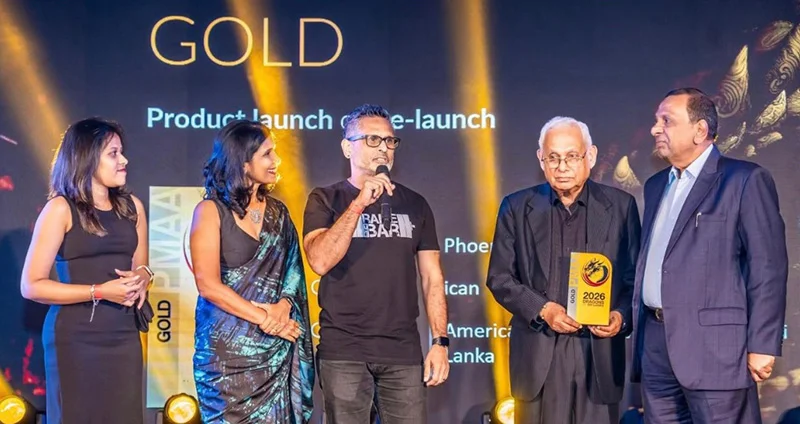
American Premium Water has secured four wins at Dragons of Sri Lanka Awards 2026, including three Gold Dragons and one Black Dragon, marking a significant milestone for the brand following its relaunch last year.
Part of the prestigious Dragons of Asia awards, Dragons of Sri Lanka brings the program’s regional platform to the local market, celebrating creative and effective marketing communications, with entries evaluated on strategic thinking, creativity, execution and impact. Established in 2000, Dragons of Asia is one of Asia’s premier results-driven marketing awards programs.
For American Premium Water, the achievements are particularly significant given that the company’s debut at the Dragons awards has resulted in four Dragons across four categories. In the distinction of Gold Dragons, American Premium Water was recognized across three categories including Product Launch or Re Launch, Cause, Environment or Sustainability and Creative Excellence while the Black Dragon was awarded in recognition of Small Budget.
Competing alongside leading brands and agencies in Sri Lanka, American Premium Water’s four wins demonstrate the strength and effectiveness of its recent work. Winning three Gold Dragons across three distinct categories highlights the breadth of the brand’s achievements, while the Black Dragon for Small Budget further emphasizes its ability to create meaningful impact through focused and efficient investment.

Trump says every adult American will get $5,000 if Republicans win midterms

Protesters mistake Pakistan’s U-19 team for asylum seekers in Portsmouth

Steps are being taken to provide accommodation facilities for 16,000 university students – Prime Minister

Showers will occur in the Western and Sabaragamuwa provinces and in Kandy, Nuwara-Eliya, Galle and Matara districts.


Sri Lanka reiterates its territory won’t be used against India

‘Dates have the highest sugar content to fight Coronavirus’

Sunday Island 27 December – Headlines

#SundayIsland 17th December – Headlines

Sunday Island – 28th March

Sunday Island Headlines – 21 March

Sunday Island – 21st February – Headlines
-

 News5 days ago
Namal remanded until Sept. 18 over Airbus deal investigation
-

 Latest News4 days ago
Tharanga creates history with Diamond League crown in Brussels
-

 News4 days ago
Dispute which triggered listed company director being detained at BIA resolved
-

 Features3 days ago
After the parade: What a traffic OIC’s walk-out tells us
-

 Opinion6 days ago
In Memory of Dr Upatissa Pethiyagoda
-

 Editorial5 days ago
Power vs Equality
-

 Latest News6 days ago
SLPP MP Namal Rajapaksa arrested by CIABOC
-
Editorial3 days ago
Arrests as theatre