
Business
Central Bank of Sri Lanka tightens monetary policy stance

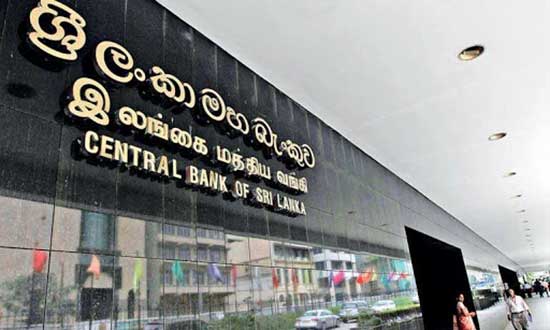
Monetary Policy Review: No. 06 – August 2021
The Monetary Board of the Central Bank of Sri Lanka, at its meeting held on 18 August 2021, decided to increase the Standing Deposit Facility Rate (SDFR) and the Standing Lending Facility Rate (SLFR) of the Central Bank by 50 basis points each, to 5.00 per cent and 6.00 per cent, respectively. In addition, the Monetary Board decided to increase the Statutory Reserve Ratio (SRR) applicable on all rupee deposit liabilities of licensed commercial banks (LCBs) by 2.0 percentage points to 4.00 per cent, with effect from the reserve maintenance period commencing on 01 September 2021.
These decisions were made with a view to addressing the imbalances on the external sector of the economy and to preempt the buildup of any excessive inflationary pressures over the medium term, amidst improved growth prospects. The global economy is set to make a gradual recovery in 2021, although normalisation of economic activity would largely be uneven across regions As per the July 2021 update to the World Economic Outlook (WEO) of the International Monetary Fund (IMF), the global economy is projected to grow by 6.0 per cent in 2021 and 4.9 per cent in 2022. Economic prospects have diverged across regions and access to COVID-19 vaccines has emerged as the principal factor that drives the global economic recovery in the period ahead.
Most countries have experienced transitory price pressures due to supply-demand mismatches amidst the pandemic. Such transitory pressures could become more persistent, thereby warranting preemptive action by central banks in order to ensure stability in the period ahead. Accordingly, some central banks have already commenced tightening monetary policy while several others have signalled a possible tightening of monetary policy in the period ahead. The Sri Lankan economy is on a recovery path despite the pandemic related disruptions
Supported by fiscal and monetary stimulus measures, the Sri Lankan economy is gradually making headway following the setback in 2020. As per the estimates published by the Department of Census and Statistics (DCS), the economy witnessed a stronger than expected recovery during the first quarter of 2021, recording a real growth of 4.3 per cent, year-on-year. The economy is poised to record a higher growth rate during the second quarter of 2021, partly due to the sharp contraction observed in the corresponding quarter of the previous year. Possible disruptions to domestic economic activity from the re-emergence of the COVID-19 pandemic and related preventive measures could weaken the recovery to some extent during the second half of 2021. Nevertheless, with the successful rolling out of the national COVID-19 vaccination programme and the Government’s strategy to impose only selective mobility restrictions, the momentum of activity is expected to sustain in the period ahead. Available indicators and projections suggest that the real economy would grow over 5 per cent in 2021, and this momentum would be sustained over the medium term.
Most market interest rates have reached low levels resulting in the expected acceleration in credit flows to the private sector With the gradual transmission of accommodative monetary policy measures, most market deposit and lending interest rates declined to their historic low levels. Supported by the low interest rate environment, credit to the private sector expanded notably during the first half of 2021, surpassing the annual expansion of credit observed in 2019 and 2020. The momentum of credit expansion is expected to continue in the period ahead, with increased credit flows to productive and needy sectors of the economy. Meanwhile, credit obtained by the public sector from the banking system, particularly net credit to the Government, also increased notably thus far during the year, amidst the impact of the pandemic on government revenue and recurrent expenditure. Reflecting the impact of increased domestic credit, the growth of broad money (M2b) continued to remain elevated. The external sector continued to face a multitude of challenges requiring coordinated measures The implementation of the essential growth-conducive stimulus measures, which resulted in the availability of low cost credit to the private sector, led to a sustained increase in the demand for merchandise imports since mid-2020. With the increase in import expenditure outweighing the improvements observed in earnings from exports, the trade deficit continued to widen during the first half of 2021 over the corresponding period of last year. Moreover, the expected recovery in the tourism industry could be further delayed due to uncertainties associated with the resurgence of the pandemic globally. Workers’ remittances, which recorded a significant growth in 2020 as well as in the first few months of 2021, have also displayed some deceleration. Limited conversion by exporters and the advancing of imports together with some speculative activity, prompted by anomalies between interest rates on the rupee and foreign currency products in the financial market, exerted undue pressure on the exchange rate in the domestic market. Amidst these developments, all debt service obligations of the Government, including the settlement of the International Sovereign Bond (ISB) of US dollars 1 billion in late July 2021, have been duly met thus far in 2021. Gross official reserves were estimated at US dollars 2.8 billion with an import cover of 1.8 months by end July 2021. This, however, does not include the bilateral currency swap facility with the People’s Bank of China (PBoC) of CNY 10 billion (equivalent to approximately US dollars 1.5 billion). Measures are being taken by the Government and the Central Bank to secure foreign financing from several sources in order to reinforce the level of official reserves in the near future. Meanwhile, the Government continued to aggressively explore avenues to enhance non-debt creating foreign inflows, by strengthening the domestic production economy, which would help strengthen the external sector in the period ahead. Possible upside pressures on inflation are being addressed through preemptive policy measures Inflation, which remained moderate during early 2021, accelerated somewhat in recent months due to high food inflation and some acceleration in non-food inflation. Inflation is projected to hover around the upper bound of the desired 4-6 per cent target range in the near term. The envisaged improvements in aggregate demand conditions and the likely increases in global energy and other commodity prices may generate some inflationary pressures in 2022, requiring preemptive policy measures to ensure the maintenance of inflation in mid-single digit levels over the medium term.
Tightening of monetary policy stance is expected to support greater economic stability In consideration of the current and expected macroeconomic developments as highlighted above, the Monetary Board decided to rollback some extraordinary support provided to the economy at the onset of the COVID-19 pandemic. Accordingly, with effect from 19 August 2021, the Board decided to increase the policy interest rates, i.e., the Standing Deposit Facility Rate (SDFR) and the Standing Lending Facility Rate (SLFR), of the Central Bank by 50 basis points each, to 5.00 per cent and 6.00 per cent, respectively. This would also result in the Bank Rate, which is linked to the SLFR with a margin of +300 basis points, automatically adjusting to 9.00 per cent.


By Ifham Nizam
A potentially dangerous El Niño is gathering strength across the Pacific, with the World Meteorological Organization (WMO) warning that the climate event is expected to become very strong and continue into February 2027, raising the risks of drought, floods, extreme heat and major disruptions to rainfall patterns worldwide.
The warning has particular significance for Sri Lanka, where communities in several agricultural districts are already facing severe drought, depleted water sources and shrinking farm incomes.
The WMO said yesterday that forecasts from its Global Producing Centres show an “exceptionally high likelihood of nearly 100%” that El Niño will persist through February next year. The organisation said this is the first time one of its El Niño/La Niña updates has been so unequivocal, reflecting strong agreement among forecasting systems.
The event, driven by exceptionally warm waters in the tropical Pacific, is expected to strengthen further in the coming months, reach very strong intensity and peak towards the end of this year. Its climate impacts, however, are expected to continue well into 2027.
According to Meteorological Organization
Sri Lanka is already experiencing the consequences.
A Reuters report published on Wednesday from drought-affected areas said rainfall deficits of between 85% and 100% have been recorded in important farming regions including Ampara and Monaragala.
Wells, tanks, rivers and lakes have dried up, while tens of thousands of people are depending on government water deliveries, with some remote communities reportedly waiting up to 23 days for supplies.
The drought is also rapidly becoming an economic problem for rural communities. Croplands have withered, livestock operations have been affected and farmers who have lost their harvests are being forced to seek daily-paid employment to survive.
The latest WMO outlook also warns that the consequences of El Niño will not necessarily be uniform. The severity and timing of impacts in individual countries depend on geography, season and other climate drivers, including conditions in the Indian and Atlantic oceans.
For Sri Lanka, the Indian Ocean Dipole (IOD) will therefore be crucial. The WMO expects a positive IOD to develop, with a September-November seasonal mean of about 0.9°C. This could modify the normal influence of El Niño on rainfall over the region.
That creates another potential risk for Sri Lanka: the country may have to prepare not only for continued drought but also for episodes of intense rainfall, flooding and landslides later in the year. Climate variability increasingly means that a prolonged water shortage can be followed by sudden and destructive rainfall rather than a gradual return to normal conditions.
For Sri Lanka, the warning should therefore be viewed as an economic and national-planning issue, not simply a meteorological forecast. Agriculture, drinking water, electricity generation, food imports, public expenditure and rural livelihoods could all be affected.
Business
ABC Trade & Investment – All-China Environment Federation partner to drive Sri Lanka’s green infrastructure and investment


ABC Trade & Investments (Pvt) Ltd, a leading homegrown conglomerate in Sri Lanka’s ICT distribution and diversified business landscape, has formally entered into a strategic Memorandum of Understanding (MoU) with the All-China Environment Federation (ACEF). The partnership establishes a collaborative framework aimed at accelerating new-energy development, water management, and environmental protection projects across Sri Lanka.
The agreement bridges advanced Chinese engineering capabilities, equipment, technical expertise, and investment resources with ABC Trade & Investments’ local operational strength, market insight, and project implementation skills. By pairing international technology with on-the-ground execution, the initiative is designed to address Sri Lanka’s long-term environmental and civil infrastructure priorities.
The MoU was signed by Amalrajah Jayaseelan, Director/CEO of ABC Trade & Investment (Pvt) Ltd, and Shi Xiang, Secretary-General of the Belt & Road Eco-Industry Cooperation Working Committee of ACEF. The signing took place during the China–Sri Lanka Environmental & Energy Exchange and Cooperation Meeting at the Nondescripts Cricket Club Grounds in Colombo, held under the theme “Empower Green Development, Jointly Build a New Pattern of China–Sri Lanka Environmental & Energy Industry.”

By Hiran H. Senewiratne
The CSE yesterday was very active at the outset but later slowed down due to heavy buying interest noted for select stocks.Amid those developments both indices moved upwards. The S and P SL20 went up by 23.73 points. Turnover stood at Rs 2.44 billion with 10 crossings.
The crossings were: Renuka Foods 19 million shares crossed for Rs 502 million; its shares traded at Rs 25.30, Dipped Products 1.9 million shares crossed to the tune of Rs 117 million; its shares traded at Rs 60.50, JKH 3.9 million shares crossed for Rs 78 million; its shares sold at Rs 19.70, Dialog Axiata 1 million shares crossed to the tune of Rs 46.6 million; its shares traded at Rs 46.40, Tokyo Cement 500,000 shares crossed for Rs 39.5 million; its shares sold at Rs 79 and Watawela Plantations 800,000 shares crossed for Rs 34 million; its shares were Rs 42.50 each.
In the retail market companies that mainly contributed to the turnover were; Vallibel Finance Rs 281 million (3.3 million shares traded), Dipped Products Rs 114 million (1.9 million shares traded), Haycarb Rs 90 million (424,000 shares traded), Alumax Rs 42 million (2.6 million shares traded), HNB Rs 38.5 million (102,000 shares traded), Swisstec Rs 30 million (506,000 shares traded) and Sierra Cables Rs 34 million (880,000 shares traded). During the day 118 million share volumes changed hands in 17802 transactions.
It is said that mixed market reactions were noted during the day. Financial sector, especially Vallibel Finance, performed well, while the manufacturing sector, especially JKH and Hayleys , performed significantly.
Meanwhile, Co-operative Insurance Company announced the redemption of 1,100,000 cumulative redeemable preference shares issued in December 2020 to the Health Department Co-Operative Thrift & Credit Society.
The total redemption consideration of Rs 16.61 million, including a 9 percent per annum cumulative dividend, is set for settlement on August 31, 2026.
Yesterday the rupee was quoted at Rs 328.25/35 to the US dollar in the spot market, stronger from Rs 328.30/60 the previous day, while bond yields were somewhat steady, dealers said.

Prime Minister of Sri Lanka holds a bilateral meeting with Minister for Education and Skills Development of Bhutan

Prime Minister Meets His Majesty the King of Bhutan

Kusal Mendis, Binura Fernando ruled out of T20I series in England

SLPP MP Namal Rajapaksa arrested by CIABOC

Devapathiraja clinch U15 Division I title with 33-run win over Royal

Mandhana’s record ton powers India into semi-finals

‘Dates have the highest sugar content to fight Coronavirus’

Sunday Island 27 December – Headlines

#SundayIsland 17th December – Headlines

Sunday Island – 28th March

Sunday Island Headlines – 21 March

Sunday Island – 21st February – Headlines
-

 Features6 days ago
“Wrap Me Up in My Blazer”— A Gentlemanly Bradby Reminiscence
-

 Features5 days ago
When Sri Lankan stories find their own voice
-

 Features6 days ago
JVP/NPP government as seen from outside by Lionel Bopage now domiciled in Australia
-

 News5 days ago
BASL takes exception to Justice Ganepola being denied a place in SC
-

 Editorial7 days ago
Govt. trying to dupe UN Rapporteur?
-

 Features6 days ago
Prof. Savitri Goonesekere: What has she done?
-

 News2 days ago
Denied of promotion to SC despite vacancies, justice Gurusinghe retires
-

 Latest News2 days ago
Grade 5 scholarship exam results released