
Editorial
From Saigon to Kabul

Wednesday 18th August, 2021
The US had its Saigon moment over the weekend in Kabul. The Americans have left behind another unfinished war. The US and its allies invaded Afghanistan two decades ago, promising to wipe out the Taliban, which harboured al-Qaeda, and bring order out of chaos. But today that country is back to square one. The Taliban are now in power, and their return to their old ways is only a matter of time. Although they have pledged, as part of the peace deal with the US, that they will respect human rights, it is not possible for them to honour this pledge because what drives them is religious extremism. Capturing territory is one thing, but running a country is quite another. The Taliban are desperate for some international legitimacy and claim to have no links to terrorist organisations. Ironically, what they have been doing all these years—executing dissenters, torture, violent suppression of people’s rights, especially those of women, etc— is terrorism in itself!
The US, which declared, after the 9/11 attacks, that it would never talk to terrorists, started making overtures to the Taliban. Washington would never have done so if it had not been convinced that it was fighting a never-ending war and had to get out of the Afghan imbroglio.
It has been reported that a whopping sum of USD 88 billion was spent on building the Afghan military to fight the Taliban, but its members surrendered en masse without a fight. All the money, mostly from the US taxpayers, has gone down the gurgler! This reminds us of the fate that befell the Tamil National Army (TNA) here after the withdrawal of the Indian Peace Keeping Force (IPKF); the TNA cadres ran away just like the Afghan soldiers, unable to face the LTTE. Ironically, both the LTTE and the TNA were created by India, which, too, lost more than 1,400 of its military personnel at the hands of the LTTE.
The US wanted to give the Russians their Vietnam in Afghanistan, and succeeded in its endeavour in the late 1980s, when the Russian troops had to withdraw, unable to defeat the US-backed Afghan guerrillas. The US owes an apology to the people of Afghanistan fleeing the Taliban, formed by a group of hardcore Mujahideen guerrillas, who, backed by the CIA, fought the Russians in the 1980s. If Washington had continued to help Afghanistan and developed the vital sectors there, especially education, after Russia’s pullout, the Taliban would not have emerged. If it had done so, bin Laden, created by the CIA during America’s proxy war against the Russians, would not have been able to use Afghanistan as a base later to launch his terror attacks, and perhaps the World Trade Centre complex would have been safe.
The US has been hoist with its own petard. It was able to have the Russians humiliated and driven out of Afghanistan, but a little over three decades on, had the same degrading experience; it had to swallow its pride, negotiate with the Taliban and make a tail-between-the-legs exit. Worse, the US had not assessed the Taliban properly even after fighting them for 20 years; it had made the same mistake in Vietnam about six decades back. Last month, President Joe Biden declared: “There’s going to be no circumstance where you see people being lifted off the roof of an embassy of the United States in Afghanistan … The likelihood there’s going to be the Taliban overrunning everything and owning the whole country is highly unlikely.” He was left with egg on his face when the Taliban captured Kabul with ease.
While a red-faced Biden administration is trying to have the world believe that the humiliating US retreat from Kabul was not its Saigon moment, the success of the Taliban is sure to inspire other extremist outfits all over the world. The US and its allies have demonstrated that they are not equal to the task of fighting terror in spite of their military might.
One only hopes the Taliban have learnt their lessons and will mend their ways without turning Afghanistan into a hellhole again.


Tuesday 5th May, 2026
The JVP-NPP government turned its recent May Day rallies into a propaganda counteroffensive against the Opposition, which has effectively targeted its good governance credentials. The ruling party leaders, including President Anura Kumara Dissanayake, went ballistic, condemning their rivals as utterly corrupt politicians. Claiming that 2026 would be remembered as the year when the corrupt and thieves were sent to jail, President Dissanayake said 15 high-profile cases would come up in the current month itself.
The Executive President can have himself briefed on cases to be filed and the progress therein, but it is unbecoming of him or her to leverage privileged access to such information for political expediency. Lashing out at President Dissanayake for having told his supporters, at a public rally, that they will be able to hail a judgement to be delivered in a corruption case later this month, the Joint Opposition yesterday said at a media briefing that by saying so, the President had undermined the integrity of the judiciary. Former Minister of Justice and Constitutional Affairs Prof. G. L. Peiris told the media yesterday that by claiming to have prior knowledge of the judgement to be delivered on 25 May, the President had assailed the very foundation of the Constitution. One cannot but agree with Prof. Peiris that in the civilised world, judicial decisions are not meant to entertain a third party, and the President’s statement at issue is tantamount to exerting political pressure on the judiciary. Prof. Peiris said the Opposition would make representations to the Chief Justice on the matter. The Bar Association of Sri Lanka must also take it up.
The political undertone of the aforementioned presidential declaration is disturbing, for it betrays a vested interest in the cases the President has referred to, and it is therefore only natural that he is seen to be ramping up pressure on the judiciary to be mindful of the government’s desire to have its political opponents incarcerated for corruption somehow or other. When he insists that the government politicians are not corrupt, and corruption cases would come up against their Opposition counterparts, the subtext of his statement is that he believes that the Opposition members concerned deserve punishment and expects them to be jailed. This can be considered a thinly veiled message intended to influence the judiciary.
The JVP/NPP came to power partly resorting to a false dichotomy. It divided politicians into two broad categories––clean individuals who supported it and others it portrayed as deserving imprisonment for corruption. One may argue that the government’s vested interest in prosecuting its political opponents, and its public declarations that they must be jailed, hang over the judiciary like the sword of Damocles.
The presidential declarations with the potential to erode public trust in the judiciary should be viewed against the backdrop of a controversial claim made by a Minister that the JVP-NPP government would devolve judicial powers to some committees to be set up at the village level. Is the JVP/NPP working according to a plan to undermine the judiciary and reduce it to a mere appendage of the government?
The JVP was critical of the Executive Presidency, while out of power, and even launched aggressive campaigns, seeking its abolition. The JVP/NPP promised to introduce a new Constitution, inter alia, “abolishing the executive presidency and appointing a president without executive powers by the Parliament” (A Thriving Nation: A Beautiful Life, NPP Election Manifesto, p. 109). Today, the JVP/NPP is silent on this solemn pledge which enabled it to garner favour with the public to win elections, and President Dissanayake is accused of undermining the cherished constitutional doctrine of the separation of powers. Worse, JVP General Secretary Tilvin Silva has declared that the incumbent government will be in power indefinitely. Senior public administrators have protested against a government move to plant JVP cadres in the District and Divisional Secretariats on the pretext of implementing the Clean Sri Lanka programme. One can only hope that the unfolding events are not ominous signs of an Orwellian nightmare.


Monday 4th May, 2026
Rice farmers are in a paddy. They are complaining that they have been left without fertilisers for the current cultivation season. The government has reportedly announced that it will not be able to meet the paddy farmers’ fertiliser requirements fully due to the current global supply disruptions. It has thus contradicted itself. Previously, it said there were adequate fertiliser stocks in the country, and there would be no shortages. It should not have given such an assurance amidst a global fertiliser crisis.
The West Asia conflict, especially the closure of the Hormuz Strait, has adversely impacted the global fertiliser supply. The Persian Gulf is a major hub of global fertiliser production and exports. Iran, Qatar, Saudi Arabia and Oman are among the world’s leading exporters of nitrogen fertilisers, including urea and ammonia, amounting to 30-35 percent of global urea exports and around 20-30 percent of ammonia exports, according to the Food and Agriculture Organization (FAO) of the UN. The FAO has said that overall, up to 30 percent of global fertiliser exports pass through the Hormuz Strait, the closure of which has disrupted the global fertiliser supply chains. Production cuts and shipping constraints have stalled an estimated 3-4 million tonnes for fertiliser trade per month, and the global fertiliser prices could average 15-20 percent higher during the first half of 2026 if the present crisis continues. Even the American Farm Bureau Federation has complained of fertiliser woes. It has written to President Donald Trump and the Congressional leaders, emphasising the severe economic pressures facing America’s farmers and ranchers. Falling crop prices, skyrocketing expenses, etc., due to rising fertiliser prices are creating conditions that are too much for farm families to bear, it has pointed out.
Anger blinds people to reason. It is therefore possible for politicians and political parties to weaponise farmers’ woes, food shortages and hunger to unsettle, if not topple, governments that fail to ensure an uninterrupted agrochemicals and food supplies even during crises. The fate of the SLFP-led United Front (UF) government in the 1970s is a case in point.
The early 1970s saw a severe world grain shortage. A run of poor harvests in the food producing regions, and a rising demand left many countries with no alternative but to adopt stringent measures to face the situation. An oil crisis in the early 1970s drove up the cost of fuel, fertilisers, and transport, increasing the cost of food production and distribution. Low global grain reserves aggravated the situation, and Sri Lanka was among the worst hit. Reeling from the food crisis, with food import bills increasing, the countries in the Global North scrambled to obtain supplies and remained focused on increasing domestic agricultural production, food security planning and seeking international cooperation to maintain buffer stocks. They had to ration some imported food items that were in short supply.
The UF government became hugely unpopular due to the extreme measures it adopted to curtail hoarding and increase domestic food production through import restrictions. It suffered a humiliating defeat in the 1977 general election. One may recall that the reduction of rice subsidy almost brought down a UNP government in 1953. Sri Lanka was experiencing the ill-effects of a severe grain shortage in Asia in the early 1950s. It was among the former colonies that had prioritised cash crops over subsistence farming and found rice production insufficient for rapidly growing populations. But those who were opposing the then UNP government’s decision to curtail the rice subsidy and increase rice prices ignored the aforementioned aspects of the problem, and organised public protests, triggering the 1953 hartal, which resulted in several deaths of protesters and the resignation of Prime Minister Dudley Senanayake. The then Opposition effectively harnessed public anger against that beleaguered government to engineer a regime change.
Sri Lankans tend to expect their governments to act as beneficent agencies. This mindset has arisen from decades of patronage-based politics, promoted by political parties, including the JVP. So, it is therefore only natural that when a government fails to deliver even during crises, it faces public anger.
If the current fertiliser shortage persists, it could lead to an ironical turn of events, with the farming community having to adopt biological soil amendments, such as compost, farmyard manure, etc., as they did during the Gotabaya Rajapaksa presidency for want of a better alternative. Gotabaya’s ill-planned organic farming experiment created a situation where the JVP was at the forefront of farmers’ protests, demanding fertilisers. Some JVP seniors were seen clutching clumps of withering paddy seedlings and urging the SLPP government to make fertilisers available. They made the most of farmers’ resentment and gained a turbo boost for their political campaigns to win elections. Today, the boot is on the other foot.

Another May Day was drawing to a close, and the moon was waxing at the time of writing. A rare overlap of the International Labour Day and Poya, this year, left the public confused, with the second Poya in the current month being officially declared Vesak. Opinion is however divided on the issue. It is being argued in some quarters that Vesak fell yesterday. The ongoing debate on this issue is not likely to fizzle out.
On watching various political circuses that passed for the International Labour Day events yesterday, one might have recalled the closing line of an epigram that mocks the writers who display technical control but not substance or vitality: “They use the snaffle and the curb all right/But where’s the bloody horse?” As for this year’s main International Labour Day events in Sri Lanka, one might have asked oneself: “Where’s the bloody worker?”
Yesterday’s May Day events were full of theatrics, and the worker as well as his cause was only an excuse for politicians to bellow rhetoric and score political points. Their May Day rally themes and sloganeering effectively gave away their political game.
The SJB’s May Day rally, held under the theme, Pacha Madiwata Horu (“Lies and Theft”), in Colombo, was a frontal propaganda attack on the government. It had little or nothing to do with workers’ cause. Lies and theft are bound to continue under future governments as well in this country, and propaganda attacks alone will not serve any purpose for workers. The SJB is an offshoot of the UNP, which crushed workers’ struggle in a brutal manner. In 1980, a powerful UNP government unflinchingly sacked tens of thousands of strikers overnight. The suppression of labour rights is part of the SJB’s political legacy. The SJB invited the UNP to join its May Day rally yesterday, as part of a plan to form a common electoral front, but the latter opted to take part in religious activities instead.
The JVP-led NPP’s main May Day rally was held in Nuwara Eliya yesterday under the theme, People’s Power for A People’s Government. The people, especially workers, enabled the incumbent government to secure a two-thirds majority in Parliament, expecting it to eliminate corruption and waste, develop the country and improve their lot. But the JVP/NPP leaders are riding roughshod over trade unions and even issuing veiled threats to resort to mass sackings to crush strikes. They have apparently borrowed a leaf out of the LSSP’s book in suppressing trade union struggles. One may recall that the LSSP, which emerged powerful with the help of trade unions, broke a bank employees’ strike in 1972 under the SLFP-led United Front government.
The NPP government has read protesting doctors the riot act. It chose to wear down the Government Medical Officers’ Association (GMOA) during a recent trade union battle. Time was when the JVP leaders shouted slogans, such as Death to imperialism––Liberation to the People and Death to Capitalism––Victory to Socialism. The JVP’s 36-page Revolutionary Policy Declaration with its founder Rohana Wijeweera’s imprimatur is full of promises to safeguard workers’ interests; it carries a quotation from The Communist Manifesto on its back cover. But today, the JVP-led NPP has prioritised the interests of the rich and the corporate sector over those of the ordinary people and workers. Some big-time rice millers are importing Rolls-Royces and helicopters while paddy farmers are pawning their valuables, unable to recover production costs due to exploitation at the hands of the millers’ Mafia and the soaring prices of agricultural inputs. The government has allowed the millers to fleece rice consumers as well.
The promised biannual salary revisions have become pie in the sky for state employees, and their private sector counterparts’ predicament is even worse. The NPP government did not care two hoots about workers’ views and protests, when it dismembered the Ceylon Electricity Board. What the JVP/NPP has done to trade unions, after being ensconced in power, is a textbook example of kicking the ladder.
Workers’ woes remain unaddressed, but the May Day political circuses go on, with politicians shedding copious tears for the working class.

INS Sindhukesari arrives in Colombo

Minister of Health of the Russian Federation attends the Sri Lanka–Russia Medical Forum

Members of Sri Lanka Cricket Transformation Committee Officially Appointed

Three prison guards arrested following the death of an inmate

Showers or thundershowers will occur at most places of the island after 1.00 pm.

CJ urged to inquire into AKD’s remarks on May 25 court verdict

‘Dates have the highest sugar content to fight Coronavirus’

Sunday Island 27 December – Headlines

#SundayIsland 17th December – Headlines

Sunday Island – 28th March

Sunday Island Headlines – 21 March

Sunday Island – 21st February – Headlines
-

 News7 days ago
Treasury chief’s citizenship details sought from Australia
-

 News6 days ago
Rooftop Solar at Crossroads as Sri Lanka Shifts to Distributed Energy Future
-
 News5 days ago
“Three-in-one blood pressure pill can significantly reduce risk of recurrent strokes”
-

 News7 days ago
Central Province one before last in AL results
-

 Sports7 days ago
Well done AKD!
-
 News2 days ago
USD 3.7 bn H’tota refinery: China won’t launch project without bigger local market share
-

 News5 days ago
Alarm raised over plan to share Lanka’s biometric data with blacklisted Indian firm
-
 News15 hours ago
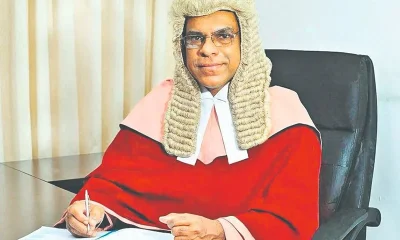
CJ urged to inquire into AKD’s remarks on May 25 court verdict