
News
Expect newer variants with rapid spread of COVID-19 in many parts of South Asia, medical experts say


The uncontrolled spread of COVID-19 in many parts of South Asia implies that newer variants will continue to emerge, a research paper titled ‘Stronger together: a new pandemic agenda for South Asia’ by top South Asian medical experts state.
Among the medical experts is Prof. Neelika Malavige of the Department of Immunology and Molecular Medicine, University of Sri Jayewardenepura.
The paper said that it is estimated that by 1 September 2021, approximately 1.4 million in South Asians will die due to COVID-19 alone. They also said the total number of excess deaths will be much higher—including non-COVID causes, as health systems are on the brink of collapse. With 33.4% of South Asians being extremely poor and the large-scale loss of livelihood being reported, the region faces a potentially catastrophic future for the ongoing decade.
“However, countries in South Asia continue to remain divisive. This differs from other geographic ‘blocs’ that frequently cooperate on mutual interest issues. Tensions in South Asia are shaped by complex domestic, bilateral, intra-regional and international geopolitical factors, despite the region’s obvious geographic, economic and cultural interdependence,” they claim.
A key lesson from the current pandemic is that countries need to share lessons and actively coordinate, complement, and supplement each other’s public health responses, especially between neighbours. The experts then presented a pragmatic ‘Stronger Together’ agenda on critical areas of concern for political, social, medical, and public health leaders in South Asia to consider and build on.
Given below the suggested action plan
“Cross-national surveillance for the
SARS-CoV-2 variants
“The uncontrolled spread of COVID-19 in many parts of South Asia implies that newer variants will continue to emerge. Some variants will inherently display increased transmissibility, infectivity and vaccine/antigenic escape capability, making it difficult for us to track and intelligently act on them. Rapidly scaling up capacity for genomics and rolling out countrywide surveillance systems require increased time and resources. Regional collaborative efforts within existing facilities and building a regional network similar to the Indian SARS-CoV-2 Genome Sequencing Consortia are feasible. The network can also build capacity within each country in the long run making countries self-sufficient to collect data and strengthen regional surveillance. Linking genomic data with clinical and public health data as well as enabling environmental surveillance will provide a more comprehensive picture of circulating SARS-CoV-2 variants. This is an investment, not only for the ongoing pandemic but also for other endemic pathogens and emerging infectious diseases.
“Interconnected and resilient health systems
“Health system capacity and human resources for health remain a major regional challenge. Healthcare worker density in the region is well below the suggested threshold of 44.5 healthcare workers per 10 000 population to achieve universal health coverage. National averages hide the disparities that exist across various geographic, demographic and socioeconomic population groups. The possibility of interconnected and collaborative health systems holds enormous potential, specifically for border areas. Setting up mechanisms for cross-border patient management (relaxed barriers or visa requirements on sharing medical documentation) and regional medical missions is essential from a humanitarian standpoint. Facilitating cross-border teleconsultation by designing more flexible mutually agreed upon regulations will also further boost capacity. At the minimum, peer support groups and tele-mentoring should be put into place. For this, mutual recognition of medical licenses and healthcare qualifications is essential. While close collaborations will be needed for the pandemic response, forming functional mechanisms of public health networking between countries under a long-term regional strategy will be required for developing a shared resilience and preparedness plan.
“Addressing COVID-19 supplies shortage
“There is a dependency on aid from the diaspora and from bilateral, multinational and humanitarian aid agencies to secure COVID-19 supplies during the current surge. This is neither sustainable, nor secure, nor without consequences. South Asian countries need to jointly invest in the augmentation of dedicated production capacities of essential medicines and other supplies. Much has been said about India’s tremendous capacity as the ‘pharmacy of the world’, not recognising manufacturing capacity in Bangladesh, Sri Lanka, Pakistan, Nepal and other countries in the region. Nationalistic policies and hoarding of active pharmaceutical ingredients by high-income countries (HICs) impede access and scale-up. However, such power imbalances can be mitigated to an extent if South Asia acts as a ‘bloc’. Production augmentation alone would not be sufficient—there is a need to agree on shared technology ownership/transfer and an equity-based regional distribution model based on priority groups defined based on assessment of risks and vulnerability.
“COVID-19 vaccines specifically remain a crucial challenge for South Asia. In the short term, South Asian countries must act as a bloc to request excess vaccines from HICs, using a collective needs assessment and a diplomatic approach. In the long term, there is a need to re-invent global health mechanisms such as COVID-19 Vaccines Global Access (COVAX). Equity—the defining purpose of COVAX—has been subverted by HICs who had brought vaccines directly from manufacturers and built stockpiles. The South Asian bloc, together with others, needs to shift COVAX from a neo-colonial purchase-donate model to a model with regional manufacturing hubs. Access to vaccines or essential medicines, a vital component of the right to health, should not be dependent on charitable inclinations, economic or political interests of HICs, or private corporations—a regional effort is required to change the status quo.
“Cooperation between scientific, professional organisations and associations
“Clinical providers (e.g., doctors, nurses), scientists and public health professionals in South Asia must recognise that there is much context-specific knowledge to be learnt from one another and that collaboration is valuable. Shared challenges include low value, irrational clinical care, unregulated home-grown medical solutions and medical misinformation. Many South Asian countries do not develop their own clinical practice guidelines or the ones that are developed are not of high-quality. There is an urgent need for medical associations to collaboratively develop contextually relevant clinical practice guidelines at par with global standards. Advocacy for more significant investments in health and health workers is needed. The social conscience needs to realise that pathogens do not understand nationalism, populism or respect borders. There is also an urgent need to fight against irrationality and anti-science in the region. Drawing on the diverse experiences of countries regarding public health responses, vaccine roll-out, diagnosis and treatment capacity would be highly advantageous in designing effective pandemic responses both immediately and for the long term.
“The way forward
“Focusing on a ‘Stronger Together’ future is a necessary step for tackling health security challenges beyond COVID-19, such as the climate crisis. The longer COVID-19 stays uncontrolled, even in a single country in South Asia, all other countries will be in immediate danger from novel variants and other social, economic and political consequences. Beyond the immediate benefits of addressing the pandemic, a collective regional approach, with global knowledge-exchange collaborations, will be vital for re-imagining the global health structure with equity at its centre.”

News
Big fossil fuel companies are responsible for climate crisis but poor countries like Sri Lanka are battered by it – Greenpeace South Asia

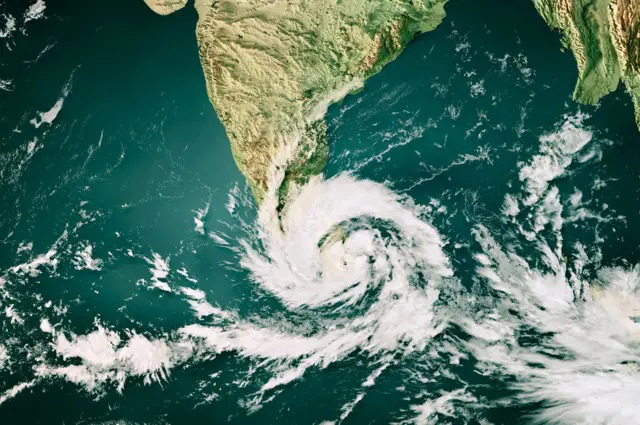
Greenpeace South Asia yesterday sounded a renewed alarm after a rapid analysis by World Weather Attribution (WWA) confirmed that human-induced climate change significantly intensified the extreme rainfall that battered Sri Lanka during Cyclone Ditwah and fuelled severe flooding across the Malacca Strait.
Greenpeace South Asia said that according to the study, the five-day rainfall extremes, like those unleashed by Ditwah, are now 28% to 160% more intense due to the 1.3°C of global warming already driven by greenhouse-gas emissions. Warmer sea surface temperatures in the North Indian Ocean — 0.2°C above the 1991–2020 average — supplied the additional energy that powered the cyclone’s rapid strengthening and heavy downpours.
WWA researchers stressed that Sri Lanka’s existing vulnerabilities magnified the disaster’s impact. Steep highlands funnelled water into densely populated floodplains, while unplanned urbanisation in flood-prone areas heightened exposure. Breakdowns in ICT systems meant early warnings failed to reach many, leaving low-income and marginalised communities to absorb the worst of the cascading disruptions to transport, electricity and essential services.
Avinash Chanchal, Deputy Director of Greenpeace South Asia, said the human toll was worsened by forces far beyond the island’s control.”During Cyclone Ditwah, we saw people coming together — neighbours rescuing neighbours, volunteers working through the night,” he said. “But while ordinary Sri Lankans showed up for each other, the real culprits were nowhere to be seen. The WWA study confirms what we already knew: this disaster was intensified by the carbon pollution of the world’s biggest fossil fuel companies. They caused the crisis, yet it’s the frontline communities who pay the price.”
Greenpeace warned that events like Ditwah signal a dangerous new normal for the region.”With increasing incidents, like Cyclone Ditwah, it is clear that extreme weather events are no longer isolated,” said Kumar. “Communities in South Asia will continue to struggle to cope with such conditions.”
The organisation urged countries most responsible for historic emissions to respond decisively. “This is high time that developed-country governments stop pretending this is normal,” Greenpeace said. “They must immediately cut emissions, phase out fossil fuels, and deliver real finance for loss and damage. Anything less is a betrayal of the people already living on the frontlines of climate breakdown.”
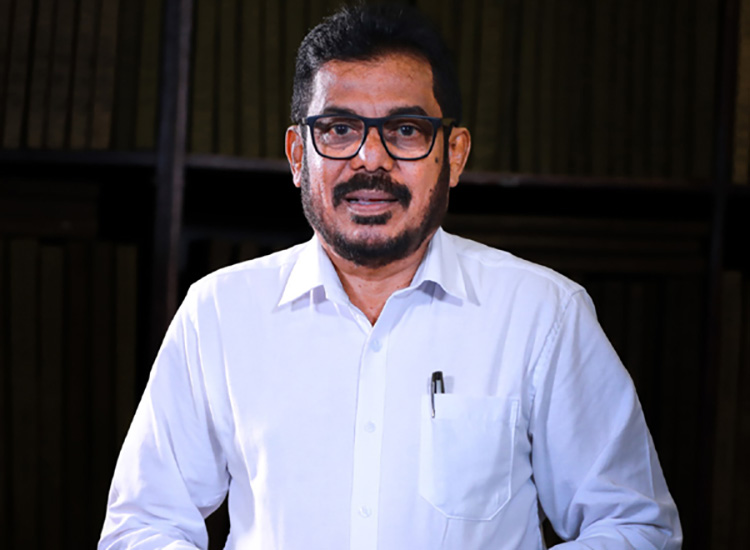
Former Speaker and NPP Member of Parliament Asoka Ranwala, who was involved in a vehicular collision Thursday night, has been arrested by the police.
He was taken into custody on charges of dangerous driving and failing to prevent an accident.
Police said that the MP is currently receiving treatment at the Colombo National Hospital and remains under police protection.
The accident occurred on Thursday (11) when the jeep in which the former Speaker was travelling collided with a car.
Police confirmed that the collision took place at Denimulla in Sapugaskanda.
A 25-year-old woman, her 6-month-old infant, and 55-year-old mother, who were travelling in the car, sustained injuries and were hospitalised.
Police added that the infant has been transferred to the Lady Ridgeway Hospital for Children for further treatment.
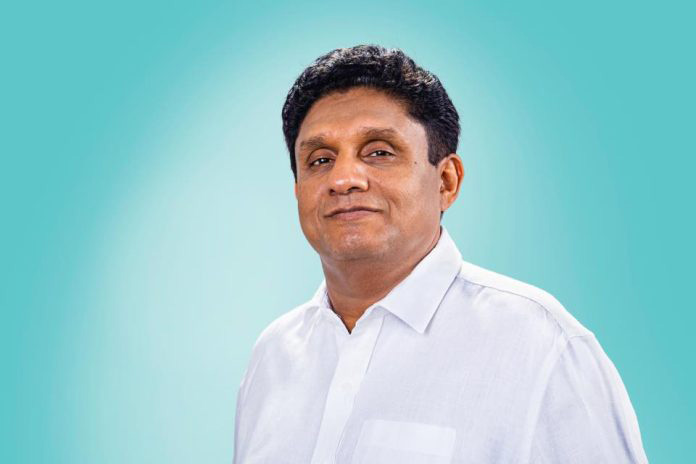
Opposition Leader Sajith Premadasa yesterday accused the government of pushing an amendment to the Universities Act No. 16 of 1978 in a manner that is “undemocratic” and lacking transparency.
Addressing the proposed changes, Premadasa said such a significant reform should not proceed without structured consultations with all relevant stakeholders, including academics, university administrators, and unions. He warned that the government is moving ahead without any formal dialogue or public clarity on the amendments.
The Opposition Leader highlighted that the proposed revisions would remove the current system under which deans and heads of departments are elected by university academics, transferring that authority to either the vice chancellor or the governing council. He cautioned that centralising such powers could create serious problems amid ongoing tensions in the higher education sector.
Premadasa alleged that, even before parliamentary approval, the University Grants Commission (UGC) Chairman had issued a letter directing vice chancellors to halt appointments of deans and department heads. He insisted that the instruction has no legal basis, contradicts established procedures, and violates existing law.
“The vice chancellors remain bound by the current law,” Premadasa said, claiming the government’s actions reflect an erosion of democratic practice and a move toward authoritarian decision-making.
He called on the government to temporarily suspend the amendment process and engage in wide-ranging consultations, insisting that reforms should be evidence-based and justifiable rather than measures that centralise power or weaken stakeholder participation.

Big fossil fuel companies are responsible for climate crisis but poor countries like Sri Lanka are battered by it – Greenpeace South Asia

Former Speaker arrested following road accident

Sajith protests against sneaky backdoor amendment

Gold prices surge in Lanka

AG throws doors wide open to recruitment of women to all positions in SLR

Orugodawatta Warehouse brims with International relief

‘Dates have the highest sugar content to fight Coronavirus’

Sunday Island 27 December – Headlines

#SundayIsland 17th December – Headlines

Sunday Island – 28th March

Sunday Island Headlines – 21 March

Sunday Island – 21st February – Headlines
-

 Features3 days ago
Finally, Mahinda Yapa sets the record straight
-

 News5 days ago
Over 35,000 drug offenders nabbed in 36 days
-

 News4 days ago
Cyclone Ditwah leaves Sri Lanka’s biodiversity in ruins: Top scientist warns of unseen ecological disaster
-
 Features6 days ago
The Catastrophic Impact of Tropical Cyclone Ditwah on Sri Lanka:
-

 News5 days ago
Rising water level in Malwathu Oya triggers alert in Thanthirimale
-
 Features3 days ago
Handunnetti and Colonial Shackles of English in Sri Lanka
-
 Business2 days ago
Cabinet approves establishment of two 50 MW wind power stations in Mullikulum, Mannar region
-

 Business5 days ago
Sri Lanka betting its tourism future on cold, hard numbers