
News
Prez in powwow with civil society: post-war national reconciliation priority

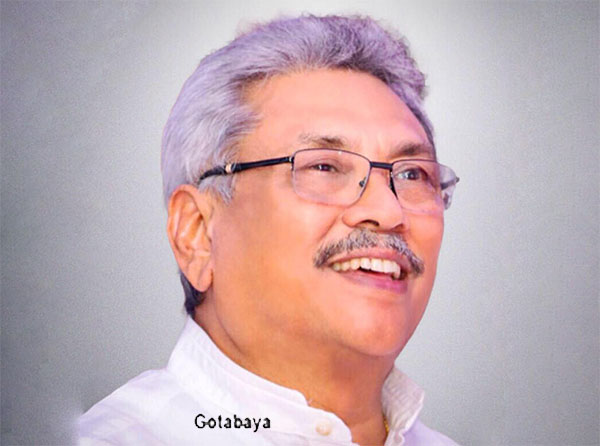
A group of civil society members under the umbrella of the Sri Lankan Collective for Consensus has discussed a range of issues, including the repealing or amending of the PTA with President Gotabaya Rajapaksa. Minister of Foreign Affairs, Dinesh Gunawardena, President’s Secretary Dr. P B Jayasundara and Foreign Secretary, Admiral Professor Jayanath Colombage had been present at the Presidential Secretariat discussion on August 3, 2021.
The civil society group presented a memorandum that set out their hopes and concerns and welcomed the opportunity to engage with members of the government on topics of post-war reconciliation, minority rights, civil society space, and governance. The group consisted of Ven. Kalupahana Piyaratana, Prof. T. Jayasingam Rev. Bishop Asiri Perera, Prof. Tudor Silva, Rev. Fr. C.G. Jeyakumar, Hilmy Ahamed, Rohana Hettiarachchi, Varnakulasingham Kamaladhas, Dr. Joe William, Sanjeewa Wimalagunarathna, Dr. Dayani Panagoda, Visaka Dharmadasa and Dr. Jehan Perera
At the outset, the civil society members expressed their support for the ideas and spirit of President Gotabaya Rajapaksa’s tweet message “We are committed to work with the @UN to ensure accountability & human dev. to achieve lasting peace & reconciliation. We are dedicated to resolving the issues within the democratic & legal frame to ensure justice & reconciliation by implementing necessary institutional reforms.” -Tweet by President Gotabaya Rajapaksa July 21, 2021
The civil society members expressed their readiness to support the President and his government’s efforts on the basis of his tweet above and called on him to bring together all political parties so that a consensual national policy on national unity and reconciliation will be framed which will be implemented by successor governments. They expressed concern with regard to civil space which they wanted the government to protect. They expressed their conviction that development will succeed best if it is accompanied by peace building and reconciliation that is successful and unites all the people through education and constructive actions.
After listening to all comments made by the civil society delegation, who had the opportunity to speak without interruption, President Rajapaksa responded to the comments made and to the contents of the memorandum. He said civil society could assist the government to take the reconciliation process forward. He said that he also wanted civil society to work in protecting the rights of children and women and that his government was committed to protecting the rights of all the people. With regard to the PTA, he said that the government was formulating a reasonable law. He said that 16 prisoners held under the PTA were released recently and the government was working on the cases involving a number of other prisoners and release would be considered in line with the legal process. He said that those in detention following the Easter Sunday attack, who were marginally involved will be released after they were rehabilitated just as 12,000 LTTE cadre had been earlier.
The President affirmed to the civil society members that he intended to make his twitter post a reality and he would be willing to work with them on reconciliation. He spoke of the need to find practical solutions to resolve conflicts such as on the takeover of land in the north and elsewhere and to facilitate improvement of the living standards of communities to make them feel as being part of Sri Lanka. He said that he was ready to address issues affecting people despite political differences. This included the release of all possible lands immediately within this year, permitting farmers to cultivate the lands within military camps and where necessary to retain lands for military purposes to pay commercial rates and acquire the lands. He also spoke of the need to enhance the people’s livelihood opportunities and improve living standards by promoting entrepreneurship.
In addressing issues of devolution of power, the President said that he had discussion with the Election Commission on conducting Provincial Council Elections and there was agreement to ensure that they had elected representatives. He said that the ruling party, the SLPP, was keen to and committed to provincial council elections as local party supporters were also keen to take part in the electoral process. In a democratic system of governance, majority consensus prevails but he said he was ready to protect the rights of all people by working through negotiations and reaching consensus.
Members of the delegation felt that they were able to freely express themselves at the meeting without a single interference or attempt to regulate their side of inputs. The meeting had the features of democratic conduct and ended with goodwill and satisfaction with the President stating he would meet other civil society organisations as many did good work although there were varied opinions about them. Throughout the meeting there was cordiality and mutual respect. The meeting concluded after an hour and twenty minutes with the prospect of future dialogue and engagement and expectation by the undersigned of concrete actions in response to the memorandum submitted to the President
MEMORANDUM TO HIS EXCELLENCY PRESIDENT GOTABAYA RAJAPAKSA ON REVIVING THE NATIONAL RECONCILIATION PROCESS, SAFEGUARD CIVIL SOCIETY SPACE AND IMPROVE GOVERNANCE
Reconciliation-related measures:
1. Repeal or amend the Prevention of Terrorism Act to ensure that any legislation on combating terrorism complies fully with the State’s international human rights and humanitarian law obligations. In the meantime, stop all arrests and detentions under this law. Put those detained under the PTA on trial speedily or release them on bail or discharge them entirely. E.g. LTTE detainees, post- Easter attack detainees and all others under the PTA.
2. Conduct provincial council elections immediately. Elected Tamil representatives who are currently marginalized in terms of power at the central government level, will be empowered at the provincial level to be decision makers.
3. Ensure an environment in which the Office on Missing Persons and the Office for Reparations can operate effectively and independently. Provide both Offices with sufficient resources and technical means to effectively fulfil their mandate. Ensure appointments are appropriate to the mission of each of the institutions.
4. Ensure the investigation and, if warranted, prosecution of longstanding emblematic cases involving alleged crimes relating to human rights violations and serious violations of international humanitarian law. Establish a truth and reconciliation commission to give a definitive account of the war, and end the speculations and divisive interpretations. The possibility of granting amnesty as in the South African TRC and in the proposed British TRC for Northern Ireland can be explored.
5. Permit the memorialization of those who died in the war without blocking them. Places of religious worship can be built in areas of battles or where large-scale loss of life occurred.
6. Reconstitute the Task Force on Historical Monuments in the Eastern Province, to include a fair representation of religious and ethnic minorities and to ensure that decisions taken do not violate the rights of people resident in those areas. Ensure that land settlement policy and take-over of traditional grazing lands does not become an excuse to re-engineer the demographics in those areas.
Civil Society-related measures:
7. Protect civil society actors, including human rights defenders, ensure a safe and enabling environment in which civil society can operate free from hindrance, surveillance, insecurity and threat of reprisals.
8. Place the National NGO Secretariat and NGOs under a civilian ministry. Currently they have been placed under the Defence Ministry which can create an erroneous impression that the government considers CSOs to be a national security threat and not a useful partner for social development and relief and humanitarian services which should receive high priority particularly during the pandemic.
Governance-related measures:
9. Repeal the 20th Amendment and replace it with a new constitutional provision that strengthens the independence of state institutions. This will include a Constitutional Council which includes members of civil society. In particular the judiciary, the police, the public service, the Bribery and Corruption commission and the Human Rights Commission need to be strengthened.
10. All elections will be on a mixed member proportional system. To ensure that there will be a minimum of 1/3 representation for women from constituencies and there will be a closed (appointed) national list where every other candidate will be a woman.
11. The Provincial Council system will be strengthened. Non-executive Governors will be appointed by the Constitutional Council. The Governors will assent to Provincial Council legislation. Taxes and revenues shall be shared between the Central Government and Provincial Councils on a rational and just basis that make the regions more attractive for investment and provincial development.
Resolving these root causes requires bold leadership, dialogue with the representatives of the ethnic and religious minorities and their political parties and the involvement of all sections of society inclusive of the opposition political parties and civil society.


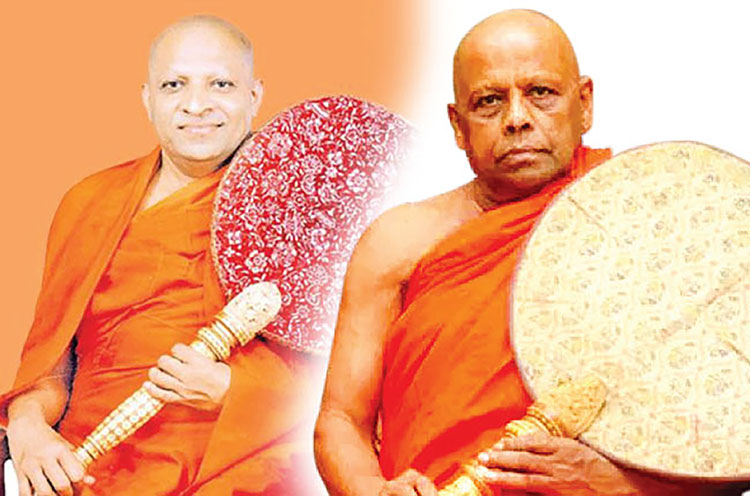
MONETABRIEF– Sri Lanka’s two most senior Buddhist chapters, Malwatte and Asgiriya, demanded special concessions for monks serving prison sentences, following the disrobing of convicted monk Ven. Galagodaatte Gnanasara in line with established procedures.
The chief prelate of the Asgiriya chapter, Most Venerable Warakagoda Sri Gnanarathana, told Prisons Commissioner Senaka Palletenna that Ven. Gnanasara, who is serving a six-year sentence for contempt of court, must be released immediately.
Prison authorities have no power to release or pardon convicts, but Palletenna told the monk in Kandy on Friday that he would convey his request to the relevant government authorities.
“There is no point in talking about this and that… The entire country has been shaken (??????? ) . He must be released,” the Asgiriya chief prelate said.
The Malwatte chief prelate, Most Venerable Thibbatuwawe Sri Siddhartha Sumangala, appeared to accept the court verdict against Ven. Gnanasara, but asked the prisons chief whether a separate section could be established for convicted monks.
Palletenna noted that a special ward for the clergy already existed at Welikada Prison.
At least 63 convicted Buddhist monks are currently incarcerated within Sri Lanka’s criminal justice system.
Meanwhile, a group of 34 Buddhist monks named in a Colombo Fort Magistrate’s Court order to vacate the vicinity of the Presidential Secretariat ended their protest and dispersed after lunch on Friday.The monks are demanding an unconditional pardon for Ven. Gnanasara, who has previously been imprisoned, making him a reconvicted prisoner.
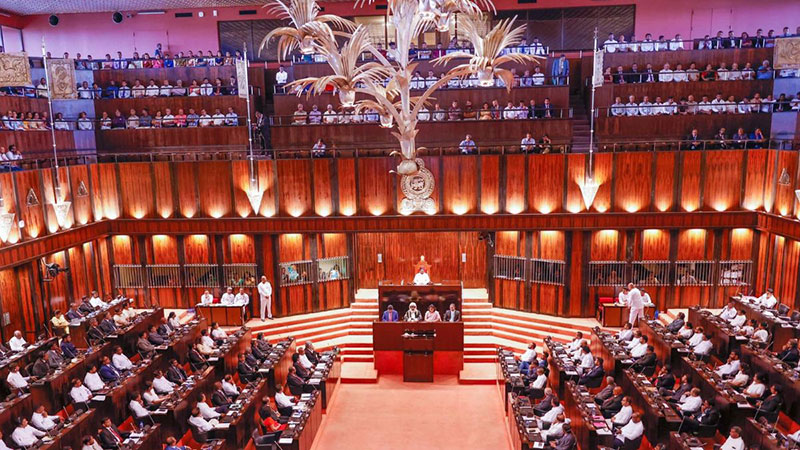
The debate on the no-confidence motion against Speaker Dr. Jagath Wickramaratne, submitted by the Samagi Jana Balawegaya (SJB), has been postponed indefinitely pending the Attorney General’s opinion on certain technical issues in the motion.
Government representatives raised the matter at a meeting of the Committee on Parliamentary Business, pointing out that several provisions of the motion required clarification and that the Attorney General’s advice should be obtained.
As obtaining the opinion would take time, the debate could not be scheduled for the next parliamentary week, parliamentary sources said.
Chief Opposition Whip Gayantha Karunatilaka said a date for the debate would be decided after the Attorney General’s advice was received.
Meanwhile, Parliament is scheduled to meet from October 20 to 23, Secretary General of Parliament Kushani Rohanadeera announced.
The parliamentary business for the week was finalised at a meeting of the Committee on Parliamentary Business held on Friday (16) under the chairmanship of Deputy Speaker Dr. Rizvie Salih.
On each sitting day, the period from 9.30 a.m. to 10 a.m. will be allocated for parliamentary business under Items 1 to 6 of Standing Order 22. Questions for Oral Answers will be taken up from 10 a.m. to 11 a.m., followed by questions under Standing Order 27(2) from 11 a.m. to 11.30 a.m.
On Tuesday, October 20, an Opposition-sponsored Adjournment Motion will be debated from 11.30 a.m. to 5.30 p.m.
On Wednesday, October 21, a resolution under the Public Debt Management Act and a Supplementary Estimate will be taken up for debate and approval from 11.30 a.m. to 5 p.m. The annual reports of five statutory institutions will subsequently be presented for approval without debate, while questions at the Adjournment Time will be taken up from 5 p.m. to 5.30 p.m.
On Thursday, October 22, the Second Reading debates on two Bills to amend the Poisons, Opium and Dangerous Drugs Ordinance (Bills Nos. 79 and 80) will be held from 11.30 a.m. to 5 p.m.
The annual reports of five statutory institutions will then be taken up for approval without debate, followed by an Opposition-sponsored Adjournment Motion from 5 p.m. to 5.30 p.m.
On Friday, October 23, the Second Reading debate on the Elimination of Rabies and Registration of Dogs Bill will be held from 11.30 a.m. to 5 p.m. A Government-sponsored Adjournment Motion will be debated during the final half-hour of the sitting.

Former Navy Commander Admiral Wasantha Karannagoda had, by letter dated May 19, 2014, requested the Secretary to the Ministry of Defence to approve the funds required for former Navy Lieutenant Yoshitha Rajapaksa, son of former President Mahinda Rajapaksa, to attend the Royal Navy Young Officers Course at the Royal Navy Training College in the United Kingdom, the Colombo High Court was told on Thursday (15).
The court was informed that £24,536 in public funds had been spent on the training programme. The details emerged during testimony by a Navy representative appearing on behalf of former Navy Commander Admiral Travis Sinniah before Colombo High Court Judge Udesh Ranatunga, when the money laundering case against Rajapaksa was taken up for hearing.
Responding to questions during cross-examination, the witness explained that payments for Navy officers attending overseas training programmes were generally made in foreign currencies, including US dollars and British pounds.
Meanwhile, Navy Captain Nuwan Thushara Arangala, testifying for the prosecution, told court that Rajapaksa had received a total of Rs. 5,159,626.37 in salaries and allowances during his nine years of service in the Navy.
The court was informed that Rajapaksa had served as a Navy Lieutenant from December 14, 2006, to February 28, 2017, although his service had been suspended on February 28, 2016.
According to the testimony, his monthly gross salary was Rs. 16,390, in addition to allowances for food, uniforms, housing and special duties.
The witness clarified that these allowances did not include payments made for overseas training programmes or participation in sporting events while representing the Navy.
During the proceedings, the prosecution also submitted Rajapaksa’s annual declarations of assets and liabilities for the period from 2009 to 2015.
A National Savings Bank official also testified regarding savings accounts and fixed deposits maintained by Rajapaksa, stating that no withdrawals had been made from the accounts since they were opened.
Rajapaksa is facing charges under the Prevention of Money Laundering Act over his alleged failure to explain the source of nearly Rs. 735 million acquired between August 1, 2012, and August 29, 2013, in Rajagiriya and Bambalapitiya.
The prosecution alleges that funds suspected to have been derived from unlawful activities were deposited in bank accounts and fixed deposits.
The court also heard testimony concerning the appointment of a guardian for Daisy Forrest, the second defendant in the case, and matters relating to the clearance of an imported outside broadcasting (OB) truck associated with CSN television.
Further examination of witnesses was scheduled for October 30, with the court directing 11 prosecution witnesses to appear on that date.

Showers or thundershowers will occur in most parts of the island after 1.00 p.m.

Buddhist hierarchy demands prison perks for monk convicts

Debate on NCM against Speaker postponed indefinitely

Karannagoda pushed for £24,536 for Yoshitha’s UK training, Court told

Flu cases surge across Lanka

Lankan rubies among treasures of London’s Cheapside Hoard

‘Dates have the highest sugar content to fight Coronavirus’

Sunday Island 27 December – Headlines

#SundayIsland 17th December – Headlines

Sunday Island – 28th March

Sunday Island Headlines – 21 March

Sunday Island – 21st February – Headlines
-

 Latest News6 days ago
Farhan and Sadaqat help Pakistan seal series in style
-

 Latest News5 days ago
Nissanka’s return headlines Sri Lanka’s Test squad against Pakistan
-
 Features6 days ago
Intake 16: 45 years of duty and honour
-
 News6 days ago
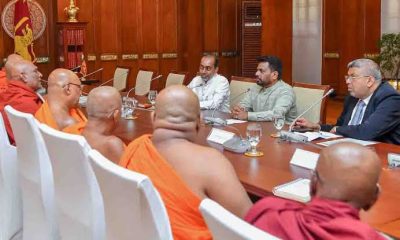
Malwathu Chapter issues statement on talks with President over Gnanasara Thera’s robes
-
 News6 days ago
CP alleges NPP has taken the blame for illegal US sanctions on Iranian vessels
-

 Opinion6 days ago
How long can Sri Lanka remain silent on its demographic crisis?
-

 News4 days ago
Sri Lanka, India caught in US-Iran ship crisis
-
 Latest News4 days ago
Kusal Mendis’ unbeaten 87 hands Sri Lanka consolation win