
Sports
Preview: Bledisloe Cup


by Rajitha Ratwatte
The annual Bledisloe Cup matches between the NZ All Blacks and the Australian Wallabies start on Saturday the 8th of August in Eden Park. Two games in Eden Park this year and one in Perth. Eden Park they say is the bastion of the New Zealanders a line of thinking that I don’t subscribe to. When a superior team comes to Eden Park they win, and it has little to do with the mysticism created by overly dramatic scribes! Hauling the All Blacks from a single-digit winter to the sub-tropical climes of Perth however will most likely result in a token victory for the Wallabies, badly needed to bolster a flagging fan base, in the light of the depths to which Australian rugby has fallen in recent times.
Great decisions by the All-Black selectors. The captaincy very deservedly given to Sam White lock in the absence due to the injury of Sam Cane. A fantastic midfield with Anton Lennert-Brown exactly where he should be and ably supported by David Havili. Final acknowledgment that Riekko Ioane is not a center and will do a much better job on the wing. Albeit grudging acknowledgment as he will no doubt make many forays into the midfield from his slot in no 11 but hopefully to simply use his speed and not his non-existent passing or decision-making skills! No Barrett’s in the starting lineup a huge call but how can one overlook the silky skills of Ritchie Mo’uanga and the fact that he put the hard yards in during the domestic season in Aotearoa – NZ. “Clutch” McKenzie probably playing for his kicking skills to supplement Mo’uanga whose only weakness seems to be in this area, because his diminutive size as the last line of defence may be questionable. Jordie Barret with his booming kicks to touch and 6’7″ frame is a surprising omission from the starting line-up as full-back. There is some talk however among the pundits of the game that Jordie doesn’t fit the role, another theory that I find hard to subscribe to. Brodie Retallick who seemed to have got a bit soft by playing in Japan, in the second row to join his old mate and captain maybe a 50 – 50 selection as against Scott Barret (who captained the Canterbury Crusaders and played the entire local tournament) but then that is what battle-hardened combinations and the mate ship derived from them is all about.
An incredible bench for the ABs with 3 Barret’s, Dane Coles, and Brad Webber waiting to create havoc in the Wallaby ranks in the last quarter of the game. The Wallabies suffering a major setback with their star winger Marika Koroibete suspended from the game for a late-night drinking session. An already green team full of rookies will definitely miss one of the best wingers in the business.
Writing the Aussies off is always a mistake as breaking the All-Blacks rhythm and spoiling their moves has resulted in the Argentinians and the Brits winning in the recent past. The power of the off-field referee to change the course of the game has also been made very apparent to the detriment of the game. The Wallabies have a Kiwi coach and nothing to lose, a combination not to be scoffed at. Forget the hype about the venue and look forward to some top-class Southern Hemisphere Rugby!


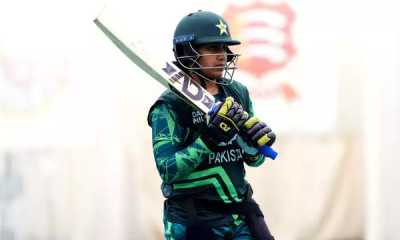



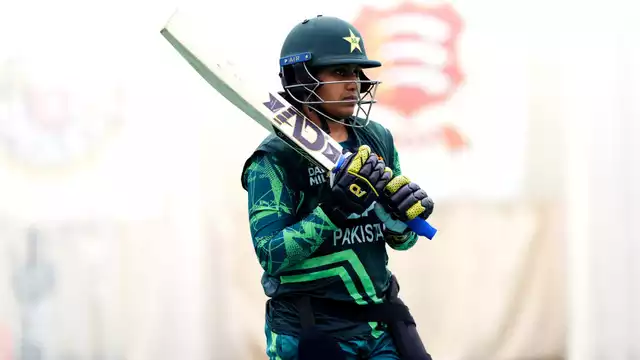
Before the first T20I against Zimbabwe Women, Ayesha Zafar had hit just one six in 28 T20 innings, with her career strike-rate in the early 80s. On Tuesday (May 12), she hit two sixes and 15 fours, smashing the joint third-fastest Women’s T20I hundred in a record-filled win for Pakistan Women.
Her unbeaten 47-ball 102 propelled Pakistan to 237/5 – the first time they crossed 200 in the format – paving the way for a whopping 153-run win in Karachi, their biggest ever margin by runs in T20Is. By the time she was done, Zafar’s career strike-rate had gone up to 97.
The 31-year-old Zafar, who made a comeback to the side in March after nearly two years away, put on a fine show dominant with leg-side hits, notching up her first T20 fifty and converting it to three figures.
At the crease in the second over, Zafar repeatedly shuffled to the backfoot and targeted the leg-side against spinners, pulling any remotely short deliveries to the midwicket or square leg fence. On 20, she got a reprieve playing that shot, with square leg shelling a catch. But Zafar continued to play that stroke, also punishing anything too full by hitting it firmly down the ground.
Gull Feroza, meanwhile, departed for a 19-ball 37, having given them an early push. Zafar raced to 40 off 18, but slowed down a bit thereafter, reaching her fifty in 29 balls.
From the 16-over mark, Zafar picked up again, showcasing her power-hitting against quicks, particularly with shots in the V and towards midwicket, using the crease well to make room. A 67-run stand off 35 balls with Aliya Riaz (48) and a 70-run partnership off just 27 balls with Fatima Sana ensured they easily crossed 200 for the first time. A last-ball four ensured Zafar crossed her three-figure mark.
In reply, Zimbabwe couldn’t really match the run-scoring, pegged down by a flurry of wickets in the Powerplay. Sana prised out Beloved Biza and Kelly Ndiraya off back-to-back balls in the third over to leave Zimbabwe at 14/3. Despite three boundaries in the sixth over, they had slipped to 30/5 at the end of the Powerplay.
There was very little resistance thereafter, with opener Natasha Mtomba top-scoring with 24 and staying put until the tenth over. No other player crossed 20.
Sana finished with 3-7, becoming the highest wicket-taker among T20I quicks for Pakistan Women (46). Zafar won the Player of the Match award and is now the only other Pakistan Women’s T20I centurion besides Muneeba Ali.
Brief scores:
Pakistan Women 237/5 in 20 overs (Gull Feroza 37, Ayesha Zafar 102*, Aliya Riaz 48, Fatima Sana 21*; Precious Marange 1-39, Nomvelo Sibanda 2-59, Beloved Biza 1-33, Michelle Mavunga 1-23) beat Zimbabwe Women 84 all out in 18.2 overs (Natasha Mtomba 24, Beloved Biza 10, Adel Zimunu 18; Fatima Sana 3-07, Sadia Iqbal 2-14, Rameen Shamin 1-18, Natalia Pervaiz 2-03) by 153 runs.
[Cricbuzz]

Kagiso Rabada and Mohommed Siraj could have been wearing their Test whites. By the end of the powerplay, they had bowled three overs each, and Sunrisers Hyderabad were reduced to 34 for 4. Somehow, they had outdone the Gujarat Titans batting line-up from the first innings – they had been reduced to 34 for 2 themselves. Wickets in hand allowed B Sai Sudarsan (61 off 44) and Washington Sundar (50 off 33) to mount a comeback for GT. On the other hand, SRH let a tricky chase of 168 slip from their grasp, folding for 86 in 14.5 overs.
At the toss, GT captain Shubman Gill said that the pitch in Ahmedabad looked like “a better wicket than we have had in the past couple of matches.” He was dismissed in the third over, off a rare mistimed swipe across the line. He had misjudged a pitch that turned out to be one of this IPL’s most treacherous ones: deliveries stuck in the surface, the new ball jagged both ways, and scoring options were hard to find square of the wicket.
An endless battery of tall GT fast bowlers – rounded out by Jason Holder and Impact Player Prasidh Krishna in the middle overs – kept striking in the chase. At the end of it, GT rose to the top of the table with 16 points.
Pat Cummins unlocked the secret to bowling on this surface early: he pushed it in on a hard length, and kept swinging the new ball away from both Sudharsan and Gill. But the first two wickets for SRH came from elsewhere. Praful Hinge found himself back in the SRH side, in place of Harsh Dubey to give them an extra pace option.
Hinge mimicked the Cummins line-and-length early on, and tempted Gill into a misjudged on-drive. In the final over of the powerplay, Jos Buttler realised he could not go big in the ‘V’, so he tried to scoop Hinge behind the wicket instead. All he managed was an edge to the keeper.
Hinge’s twin strikes consigned GT to 34 for 2, their lowest powerplay score this season.
If ever there was a pitch suited to Sudharsan’s brand of T20 batting, it was this. He kept pouncing on the deliveries that erroneously landed in the slot, and pushed the others around to turn over the strike. Nishant Sindhu, who made 22 off 14, kept him company at the other end through the middle overs. Sindhu stayed deep in his crease and played drives and cuts, both batters biding their time.
Sensing a breakthrough, Cummins brought himself back into the attack in the 10th over to bowl his third. He rifled in a delivery outside off, full but rearing off the pitch at Sindhu. He could only mistime a lofted drive to long-off.
Cummins ended with figures of 1 for 20 in the 16th. Just an over later, Sai Sudharsan – who had brought up his sixth half-century of the season – opted for another scoop off Sakib Hussain. The full delivery took off the bottom of his bat, and Hinge gobbled it up at short third.
Washington starred in the final overs of the GT innings. He jumped on top of deliveries too high for most others to cut, and sent them off to the ropes by rolling his wrists over them late. He saved his best shots for the end of the 19th over, off Eshan Malinga, who had a rare off-day and gave away 46 runs. He fell down on successive deliveries, first scooping a yorker down over short fine, then attacking a full toss by rolling his wrists, once more, for a shovel over deep square leg.
At the midway mark, GT’s total was the Schrodinger’s par score – neither quite par but also just, with Sudharsan hesitating to call it enough for their bowlers between innings. Siraj and Rabada then bowled through the powerplay for the fifth match in a row. Nineteen balls into the innings, they had dismissed Travis Head, Abhishek Sharma and Ishan Kishan.
Rabada, in particular, kept hitting the hard length close to 150kph, slanting deliveries away from the left-handers to have Kishan driving at one away from his body, Abhishek chopping one into his stumps, and No. 4 R Smaran mistiming one to Gill in covers. He finished his spell in one go, returning 3 for 28.
Holder’s entry to the GT side has given them another tall, accurate bowler to go to in the middle overs. In their previous game, against Rajasthan Royals, he had plucked out the final three wickets in the space of five balls. Here, he took 3 for 20 as he mopped up SRH’s lower order.
The wicket had worn down as the evening went on, so Holder resorted to slower balls in the back-half of the innings. First, he effectively finished the contest by taking out Heinrich Klaasen, who swiped at a ball lacking in pace over his head, to keeper Buttler running to his left. Nitish Kumar Reddy was his next victim, courtesy an edge from the extra bounce Holder kept extracting from the surface, while Shivang Kumar was the final batter to fall off a misadventurous scoop.
Our final tall bowler of the day – in the cohort of Cummins, Holder, Rabada and Siraj – also had the highest release point of all: Prasidh Krishna. He went back-of-a-length in his spell to finish with figures of 2 for 23 of his own.
At the end of a fast-bowling buffet, GT marched to their biggest victory in the IPL. Their W in the last match – a 77-run win against RR – had been their previous best. They finished this night on top of the table, suddenly the team to beat this season.
Brief scores:
Gujarat Titans 168 for 5 in 20 overs (Sai Sudharsan 61, Nishant Sindhu 22, Washington Sundar 50, Jason Holder 11*; Pat Cummins 1-20, Praful Hinge 2-17, Sakib Hussain 2-37) beat Sunrisers Hyderabad 86 in 14.5 overs (Ishan Kishan 11, Heinrich Klassen 14, Salil Arora 16, Pat Cummins 19; Mohammed Siraj 1-11, Jason Holder 3-20, Kagiso Rabada 3-28, Prasidh Krishna 2-23, Rashid Khan 1-03) by 82 runs
[Cricinfo]
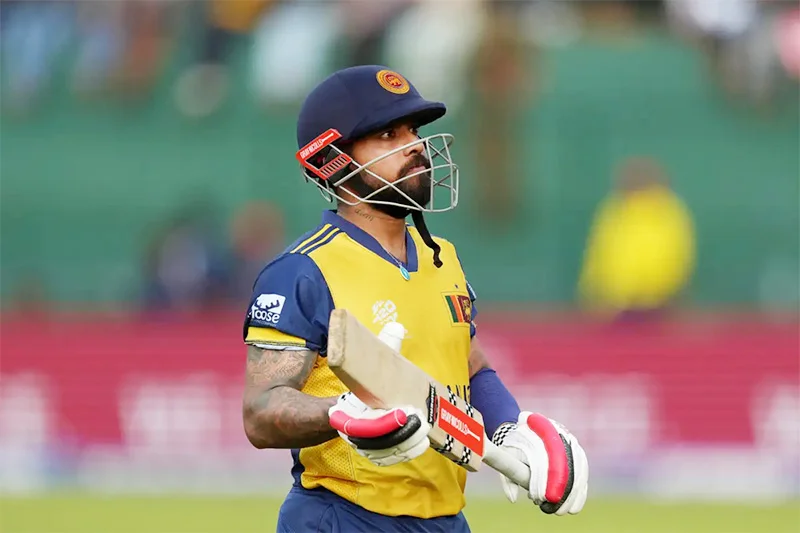
After years of disappointing returns, off-field controversies, lengthy suspensions and a bad-boy image among cricket fans, Kusal Mendis seems to have finally turned a corner. With a young daughter now at the centre of his world, Mendis appears to have realized that there’s more to life than pubs and nightclubs. The hours in the gym have increased significantly and so has his commitment to the game.
The turning point came in England last year. Every player dreams of playing a Test match at Lord’s, the Home of Cricket. Mendis, one of the senior players in the side, was dropped for the big game and it hurt him deeply.
Not many approved of the move. Former captain Duleep Mendis called it a poor decision and several others echoed similar sentiments. But the selectors knew exactly what they were doing. They wanted to prick Mendis’ ego and jolt him out of his comfort zone.
He returned for the next Test in a new role as wicketkeeper-batsman and Sri Lanka went onto win the game. Pathum Nissanka’s century grabbed most of the headlines, but it was Mendis who laid the platform. Chasing only 219, he counter-attacked aggressively, forcing England to spread the field and eventually playing right into Sri Lanka’s hands.
Since then, he has been a revelation in limited-overs cricket as well, forging a formidable opening partnership with Nissanka. His wicketkeeping too has been spotless.
People may have plenty to say about Mendis, but one thing that has never been in doubt is that he is a team man. He has been more than willing to do the hard yards while younger players like Pathum Nissanka, Charith Asalanka and Kamindu Mendis enjoy the limelight.
Such has been his form in the PSL that he finished as the tournament’s second highest run scorer, playing a major role in helping his franchise win the title.
Against that backdrop, the national selectors are contemplating handing him the white-ball captaincy. But Mendis already has enough on his plate as opener and wicketkeeper. Why burden him further with captaincy responsibilities?
Charith Asalanka, meanwhile, has been groomed for leadership since the age of 17. The selectors already blundered by taking the T20 captaincy away from him. Now, with the 50-over World Cup a year away, they seem keen to strip him of the ODI captaincy too.
Their previous choice for T20 captaincy, Dasun Shanaka, proved uninspiring. True, Asalanka can sometimes get under your skin with his excesses. During the recent NSL final, he was reportedly fined a significant portion of his match fee following an altercation with the umpires. But if you have entrusted a man with a job, then back him to do it.
One is reminded of what happened during the 2023 World Cup. Mendis began the tournament in blazing fashion with scores of 76 and 123 in the first two games. From the third match onwards, however, he was handed the captaincy after Shanaka’s injury and his form nosedived. He failed to score a single half-century in the next seven innings.
Ironically, the same man who now chairs the selection panel was the architect of that decision as well. Some lessons, it seems, are never learnt.
by Rex Clementine

Complete all projects funded under the LKR. 500 bllion allocation for Ditwah within this year – President

Development projects should be carried out in line with the practical needs of the people – PM

Ayesha Zafar’s rapid ton crushes Zimbabwe

Donald Trump lands in China for high-stakes meeting with Xi Jinping

Gujarat Titans go No.1 after Rabada and Holder rout Sunrisers Hyderabad

Showers will occur in the Western, Sabaragamuwa, Central, North-western and Northern provinces and in Anuradhapura, Trincomalee, Galle and Matara districts

‘Dates have the highest sugar content to fight Coronavirus’

Sunday Island 27 December – Headlines

#SundayIsland 17th December – Headlines

Sunday Island – 28th March

Sunday Island Headlines – 21 March

Sunday Island – 21st February – Headlines
-

 News7 days ago
MIT expert warns of catastrophic consequences of USD 2.5 mn Treasury heist
-

 News4 days ago
Lanka Port City officials to meet investors in Dubai
-

 Editorial7 days ago
Clean Sri Lanka and dirty politics
-

 News5 days ago
SLPP expresses concern over death of former SriLankan CEO
-

 Editorial6 days ago
The Vijay factor
-
 News13 hours ago
Ex-SriLankan CEO’s death: Controversy surrounds execution of bail bond
-

 News5 days ago
Police inform Fort Magistrate’s Court of finding ex-CEO of SriLankan dead under suspicious circumstances
-
 Features6 days ago
Palm leaf manuscripts of Sri Lanka – 1