
News
Govt. in a bind over massive salary and pension bill: Revenue dwindles amidst pandemic

By Shamindra Ferdinando
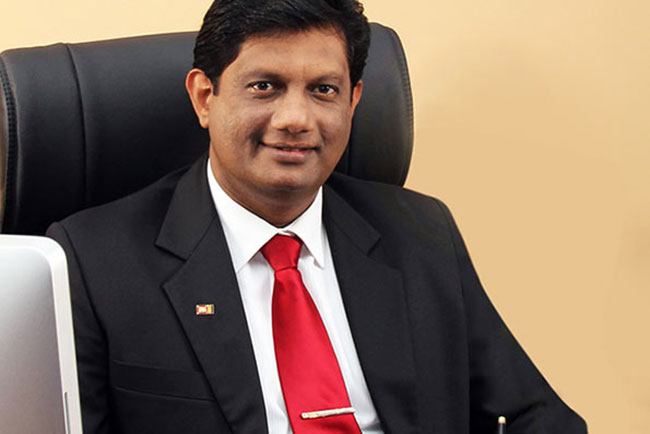
State Minister Dr. Nalaka Godahewa says the country is in a bind due to dwindling revenue in the face of annual state sector salary and pension bill reaching a staggering Rs 1.2 trillion.
Dr. Godahewa, who holds Urban Development, Waste Disposal and Community Cleanliness portfolios, is of the view that the issue at hand should receive the attention of all political parties represented in Parliament.
The Viyathmaga pioneer, Godahewa said so when The Island sought a clarification as regards his admission at a recent event at the National Housing Development Authority (NHDA) that the government was left with Rs 200 bn after the allocation of Rs 1.2 bn for state sector salaries and pensions. The event was held to welcome those who had been recruited to the public sector.
The declaration comes in the wake of COPA (Committee on Public Accounts) faulting tax collection mechanism comprising Sri Lanka Customs, Inland Revenue and Excise Department for failing in their primary task. The annual income has fallen to just over 9 percent of the GDP (Gross Domestic Product) according to the Central Bank.
The State Minister said: “There are over 1.4 mn public sector workers. There is a large number of pensioners. Annually, we need about Rs 1.2 trillion to pay salaries and pensions. In 2020, our annual income was Rs 1.4 trillion. We are left with Rs 200 bn to provide health services, education, transport et al.”
Dr. Godahewa explained the government had no option but to obtain loans to manage the economy under extremely difficult situations.
The Gampaha District lawmaker questioned the responsibility on the part of the public sector as the country struggled to cope up with the daunting challenges caused by the raging Covid-19 epidemic. He pointed out that the public sector salaries and pensions had been fully paid in spite of severe difficulties whereas the private sector had imposed unilateral salary cuts.
During his address at the NHDA, State Minister Godahewa made reference to honest as well as corrupt public sector officers and those who neglected their responsibilities. Welcoming those who had newly joined the public service, Dr. Godahewa urged them to join the genuine lot.
The State Minister said that a few irresponsible individuals shouldn’t be allowed to tarnish the image of the entire public sector.
Dr. Godahewa admitted that the government too was responsible to see whether the public sector addresses the requirements of those who needed their services.
The national economy had suffered severe setback due to the total disruption of the tourism trade that brought as much as USD 5 bn annually, he said. The State Minister explained the crippling impact the disruption of tourism was having on the national economy at an event at Walapone where he inaugurated a major construction project. The State Minister emphasized the need to kick start tourism once the ongoing vaccination drive was brought to a successful conclusion by Sept-Oct 2021.
The SLPP is under heavy fire for depriving the Treasury of over Rs 500 bn at the onset of the incumbent administration. The SJB both in and outside parliament has alleged that the Treasury lost well over Rs. 500 bn due to a controversial decision to do away with a range of taxes, including PAYE (Pay As You Earn), NBT (Nation Building Tax), Withholding tax, Capital Gains tax imposed on the Colombo Stock Exchange, Bank Debit tax and unprecedented reduction of VAT (Value Added Tax). The SJB said that the 15% VAT and the 2% NBT which amounted to 17% imposed on all goods and services were unified and reduced to 8%, effective from the first of December 2019.
SJB senior Mujibur Rahman said that the decision was taken at the first cabinet meeting of the incumbent government held on Nov 27, 2019.

News
Lanka’s eligibility to draw next IMF tranche of USD 700 mn hinges on ‘restoration of cost-recovery pricing for electricity and fuel’

The International Monetary Fund (IMF) said on Thursday that the completion of Sri Lanka’s combined Fifth and Sixth Reviews, under the Extended Fund Facility (EFF), remains subject to approval by its Executive Board, which is expected to meet in the coming weeks.
Addressing a media briefing, IMF Communications Department Director, Julie Kozack, said IMF staff and Sri Lankan authorities had reached a staff-level agreement on 09 April.
She noted that several prior actions must be completed before the programme can be submitted to the Executive Board, including the restoration of cost-recovery pricing for electricity and fuel, measures to protect vulnerable groups, and the completion of financing assurances.
Upon Board approval, Sri Lanka would gain access to approximately US$700 million in financing, Kozack said.
Responding to a question on whether the government’s fuel subsidy scheme — including the Rs. 100 per litre diesel subsidy — was consistent with the IMF’s pricing framework, Kozack declined to comment directly on the measure. However, she reiterated that the programme requires both cost-recovery pricing reforms and safeguards for vulnerable communities.
Kozack also observed that Sri Lanka had recently faced “two very large shocks”, referring to Cyclone Ditwah and the wider external impact of the Middle East conflict, which, she said, had affected both the economy and the public.
Despite these challenges, she said Sri Lanka’s reform programme was yielding positive results, citing strong fiscal performance in 2025, progress in debt restructuring, 5 percent economic growth, and inflation returning to positive territory following a period of deflation.
She reaffirmed the IMF’s commitment to supporting Sri Lanka’s reform agenda, stressing that the institution continues to work closely with the authorities to sustain economic stability and recovery.
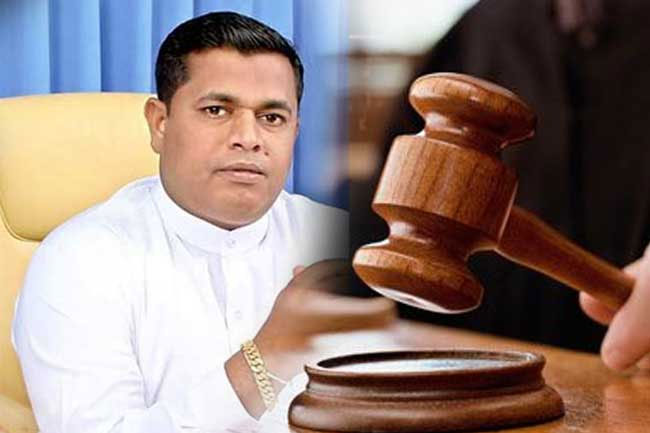
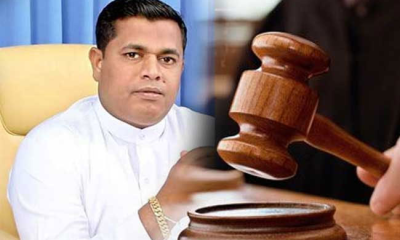
Former Arachchikattuwa Pradeshiya Sabha Chairman, Jagath Samantha, was yesterday sentenced to five-and-a-half years’ rigorous imprisonment by the Chilaw High Court after being found guilty of assaulting the Arachchikattuwa Divisional Secretary.
The court also ordered Samantha to pay Rs. 1 million as compensation to the victim, failing which he will serve an additional 24 months in prison.
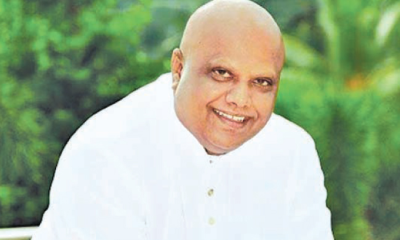
The case had originally been filed against former State Minister Sanath Nishantha and his brother Jagath Samantha over the assault incident.
However, following the death of Sanath Nishantha, in a road accident on the Katunayake Expressway, on 25 January, 2024, only Samantha appeared before court for the proceedings.
The verdict was delivered after the High Court considered the evidence and submissions presented during the trial.
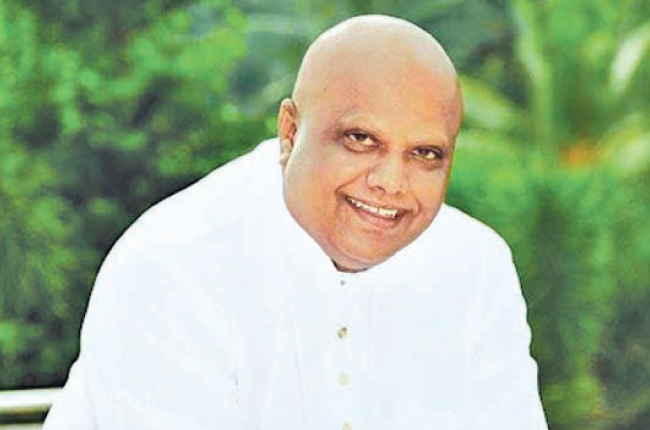
The main Opposition SJB yesterday alleged that the government has effectively allowed student activists to take control of the controversial Malwana property, once linked to former Minister Basil Rajapaksa.
SJB Kalutara District MP Jagath Vithana, speaking to reporters yesterday, claimed that a group had “unlawfully” entered the premises, taken possession of it, and begun cleaning it while police personnel stood by without intervening. He questioned whether such action had official sanction, asserting that responsibility lay with the government.
Warning of potential wider repercussions, Vithana said unchecked incidents of this nature could fuel public unrest and even escalate into more serious security threats.
The Malwana property, which Basil Rajapaksa has previously denied owning, was taken over by the state after attempts to auction it were reportedly obstructed.
Vithana stressed that state assets belong to the public and must be protected accordingly.
Meanwhile, members of the Inter University Students’ Federation (IUSF) occupied the Malwana premises on 14 May, saying the site should be repurposed for public use. The activists argued that successive administrations had failed to utilise properties allegedly acquired through public funds, and urged that the land be allocated to universities facing acute space constraints.
The IUSF said it had launched, what it described as, a “direct struggle” and vowed to continue the occupation until authorities addressed their demands.

Lanka’s eligibility to draw next IMF tranche of USD 700 mn hinges on ‘restoration of cost-recovery pricing for electricity and fuel’

Sanath Nishantha’s brother sentenced to jail over assault case

SJB sees govt. hand in allowing unlawful take over of Malwana property by student activists

Lanka and Belarus draw roadmap for deeper cooperation in trade, industry, agriculture, tourism, education, and people-to-people ties

Govt. to overhaul internal auditing and financial oversight mechanisms in SOEs

ADB’s digital push signals a wake-up call for Sri Lanka

‘Dates have the highest sugar content to fight Coronavirus’

Sunday Island 27 December – Headlines

#SundayIsland 17th December – Headlines

Sunday Island – 28th March

Sunday Island Headlines – 21 March

Sunday Island – 21st February – Headlines
-

 News6 days ago
Lanka Port City officials to meet investors in Dubai
-
 News3 days ago
Ex-SriLankan CEO’s death: Controversy surrounds execution of bail bond
-
 Features4 days ago
When University systems fail:Supreme Court’s landmark intervention in sexual harassment case
-
Features4 days ago
High Stakes in Pursuing corruption cases
-
 Midweek Review3 days ago
A victory that can never be forgotten
-

 News7 days ago
President of Vietnam and delegation departs Sri Lanka
-
 Features6 days ago
Serving as MR’s Deputy Finance Minister and the travel the job entailed
-
 Features6 days ago
Bengal Turns BJP, Didi Falls