
Features
My Brief Career at Christ Church, Oxford

by Vijaya Chandrasoma
Christ Church has, through the ages, been a political college, having produced 13 British prime ministers, the highest number by any college in Oxford and Cambridge. They included Sir Alec Douglas-Home (1963-64), Sir Anthony Eden (1955-57) and two of the most famous prime ministers of the 19th century, Sir Robert Peel (1834-35 and 1842-46) and Sir William Gladstone (1892-94, 1886, 1880-85, 1868-74). Christ Church was also the alma mater of our own prime minister, Solomon West Ridgeway Dias Bandaranaike (1956-59).
I started my career at Christ Church in October, 1960.
Freshmen are usually accommodated in the College quads at the House, as Christ Church is popularly known at Oxford. Eight of us freshmen were shunted to a boarding house near the Oxford railway station, appropriately named the Railway Annex. The digs were most ordinary, about a mile from the College, eight single rooms with common bathrooms, a dining room where a regular English breakfast was served; and a living area with a black and white television set, quite a luxury in those days. There was a regular bus service to Carfax, the city center, very close to Christ Church, but the first purchase for most us was a bike.
I got a transfer to Peckwater quad at the start of the Hilary term in January. Peck is one of the most prestigious quadrangles in Oxford. I shared a large, oak-paneled study with a fireplace, leading to two single rooms, which had obviously been monks’ cells in the middle ages. They had undergone few changes since. The only fixtures were a bed, a chest of drawers and a sink. Our rooms were on the third floor, with the bathrooms in the basement. So we had to make the trek down three floors in the heart of the Winter to attend to our ablutions. Unlike the common bathtubs we had got used to in our digs in London, the bathrooms at the House had showers with hot water, a luxury in those times; although hot water was not always a given. I had been compelled on many an evening to shower in icy cold water.
We had a scout who acted as our own personal assistant, who woke us up, made our beds, cleaned our rooms, looked after us when we were suffering with any ailments, mainly hangovers, attended to our laundry and generally made life very comfortable for us.
During the first week at the House, we met the Masters of the Honours degree subjects we had selected, mine being Philosophy, Politics and Economics. Sir Roy Harrod, famed English economist, held the fellowship in economics and modern history at Christ Church. He was a senior adviser to Sir Harold Macmillan, the British Prime Minister at that time. He gave us the usual pep talk, ending with the hardly traditional advice that we should ignore the university lectures, but concentrate on the weekly tutorials we had with graduate students, which he said was all that was necessary to get through our first year.
I cannot explain what caused my abject failure at Christ Church. I had always been a good student, but at Christ Church, I didn’t attend a lecture, cut most of the tutorials and hardly picked up a book. Universities in England in those days had no Counselors, so I went from day to day, bad to worse, until I failed Prelims. Twice. I couldn’t confide my predicament to my parents who were in Colombo, as I knew how disappointed they would have been. There was really no one I could have asked for advice while I was digging my academic grave. That’s not strictly true. The graduate student who was taking my weekly tutorials in Logic visited me halfway through my second term, and asked me why I hadn’t showed any interest in pursuing my studies. I dodged the question, and he went away, no doubt satisfied that he had made an effort to help me. Which he did, to no avail.
I am certain that things have changed now, but in those days, universities had no Student Counselors to help us with our problems, no facility for changing the course of the career path we had decided upon on admission, no taking a year off “to find ourselves”. British Universities did not coddle their students. You either finished the degree that you had originally selected in the mandatory number of years, or you didn’t; you either did your work or you got the hell out. It was as simple, as rigid as that. Ironically, the exact sentiment as expressed in the motto of my old alma mater, Royal College: Disce Aut Discede – Learn or Depart.
I was rusticated, which is slightly better than being sent down. I would have been able to resume my studies at the House had I passed Prelims in the future. Which I didn’t even attempt.
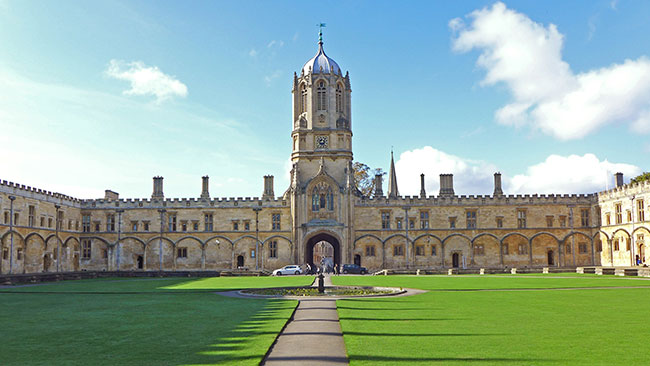
As one of the 26 Colleges that made up the University at that time (there are 45 today), Christ Church was breathtaking in its history and its architecture. The House boasted a number of nationally and architecturally significant buildings, including Tom Tower, the Christ Church Chapel and Tom Clock, designed by one of the most acclaimed architects in British history, Sir Christopher Wren. Tom Clock deputized as the National Clock when Big Ben of Westminster Abbey in London was out of commission.
I did most everything else during my brief stint at the House. I have many wonderful memories of the sports in which I participated. I was a member of the Christ Church boat which competed and finished second in the 1961 Torpids, held at the end of the Hilary term. The training for this test was pretty rigorous. We had to run to the boathouse through the Christ Church Meadows, do about half-an-hour of warm-up exercises and then row four miles along the Isis, a tributary of the Thames, with our coach following us on a bike on the pathway alongside the river screaming instructions and insults at us.
There’s a funny story about the problems we faced when the hot water gave way in our showers at Peck. The bow (the guy at the back end of the boat) of the Christ Church crew was a friend, who also had his digs at Peck. I confided in him the torture I had to endure on some evenings, when, after four hours of rowing, the hot water had run out in our bathrooms, and I was compelled to shower in icy-cold water. He looked at me in puzzlement and said,
“I don’t know what you are talking about, old chap. I have my showers every Saturday morning, and there is plenty of hot water during the weekends”. We rowed at least four miles, ran perhaps a half a mile from our boathouse in the Meadows to the House, five evenings a week. And he showered once a week!
Oxford was not much better on the food stakes. Except for the first term which I spent at the Railway Annex, which provided breakfast, all our meals were in the Great Hall. Historically impressive surroundings, terrible food. Lots of bacon and eggs, baked beans, transparent slices of beef, bread and potatoes, so many potatoes. Hardly a suitable diet for a Sri Lankan raised on rice, stringhoppers and spicy curries. I would have killed for an occasional pol sambol! There were no cooking facilities whatsoever in our rooms, so like in London, I fell on the last resort of Indian food. I patronized an Indian restaurant at the Turl called, if memory serves, the Taj Mahal. The owner/manager offered me all I can eat Masala Chicken for seven shillings and sixpence, about 40 new pence after the Brits went metric in 1971. Or about six rupees in Sri Lankan currency, at the then rate of Rs. 13.33 to one sterling pound. Given my appetite, I feel the Indian owner of the restaurant fed me out of kindness, certainly not for profit.
We were allowed 45 pounds sterling per month (Ceylon Rs. 600) by the Exchange Controller in those days, which was sufficient for all expenses, tuition fees, books, room and board. The cost of this type of education at either Cambridge or Oxford these days would be in excess of 2,500 sterling pounds a month!
I was on the Christ Church tennis team and we played various colleges with mixed results in the Summer. The only game that I remember was the match we played against the lady’s team of the Oxford University Lawn Tennis Club. We got trounced by some very attractive ladies.
We also had a “social” cricket team called the Warrigals, named after what I later learned was a wild, untamed horse, of which I was a member. We played informal one-day (not 50-over, that format hadn’t yet been invented) matches against other colleges at Oxford, and even a couple at Cambridge. The Christ Church cricket grounds were famous, being the alternative used for First Class matches when the University Parks were, for any reason, not available. The Christ Church ground was the venue used when the touring Australians played the University in 1961.
The Warrigals organized a memorable ten-day tour of Kent villages in the Summer of 1961, playing on village pitches and sleeping over at village pubs. We had a wonderful time. I used to be a mediocre off spin bowler, who neither spun nor turned the ball. But one freak ball I bowled caught a rough patch, probably hit a stone and turned a mile from outside the off stump to just clip the leg bail. The few spectators, inebriated enough to cheer anyone, shouted “Goonesena, Goonesena” when I took this wicket. To be even drunkenly compared to the most accomplished Ceylonese spin bowler in England of that time was a heady moment for me, even though my swarthy skin-color played no little part in the comparison.
I was the star of the College badminton team because no one else played the game. I also led a pretty busy social life, partying, drinking and gambling with the best, activities hardly conducive to a successful academic career.
Perhaps I can claim a Sri Lankan, if not a world, record of being offered places at three of the finest universities in the world, Oxford, Cambridge and St. Andrews, and ending my academic career without a first degree. My father said that I would regret this failure for the rest of my life, and he was right. I do, to this day.
More than anything, I regret I did not give my parents the pride of their son graduating from the most prestigious university in the world. Especially as I know now exactly how much that wonderful feeling means to parents. Pride that all my children have filled my heart with. Pride that no one can take away from me.


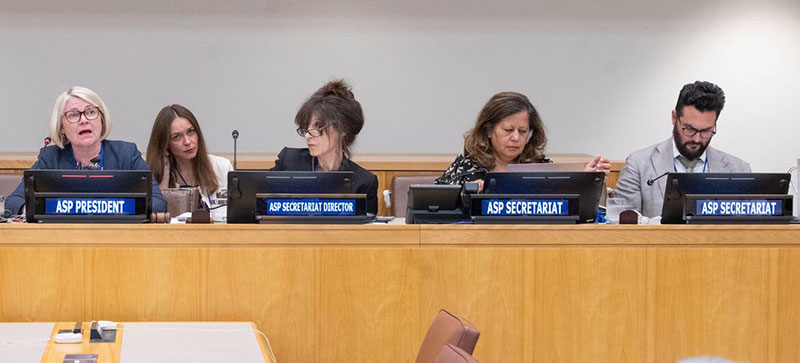
 US Secretary of State Marco Rubio’s warning to the International Criminal Court (ICC) was stark: ‘Either the ICC will end its threats, or we will end the ICC.’ It followed US central administration accusations that the court was unfairly targeting Americans on the basis of trumped-up war crimes charges.
However, a new plethora of sanctions has been clamped on the ICC by the US, which in turn has spurred accusations by sections of the world that the latter has unleashed an ‘assault’ on the international legal order.
What some of the sanctions would mean for the ICC was outlined by Rubio: ‘We will ban transactions with this rogue court, cutting off their resources and crippling their ability to operate against us.’
The ICC has shown consistency of purpose over the years. Despite some operational constraints it has indicted a large number of political strongmen from around the world, accused of war crimes and other governance excesses that come under its purview. Two such recent figures are: Russian President Vladimir Putin and Israeli Prime Minister Benjamin Netanyahu.
Rather than enjoy a mere nominal presence in the world community, the ICC has proved its effectiveness by detaining and bringing to justice scores of VIP politicians and others of their ilk who have been found guilty of human rights abuses and kindred excesses that come within the terms of reference of the ICC.
Accordingly, the international justice system would be stymied considerably as a result of the ICC being dis-empowered, particularly financially. Needless to say, potential and real perpetrators of the species of crime coming under the jurisdiction of the ICC would stand to gain most from such anarchic tendencies. That is, political repression globally would be enabled to enjoy a new lease of life.
A detailing of the types of crime coming under the purview of the ICC provides an idea of what it would cost the international community if the ICC’s operations are gravely hampered. They are mainly: genocide, war crimes, crimes against humanity and the crime of aggression.
That is, the part of the world to be worst affected would be the global South, since the latter is awash with the mentioned crimes. Needless to say, a chronically-disaffected South will sooner rather than later undermine the well being of the world dangerously. The world is already being put through these paces.
At the time of writing, ‘illegal migrants’ from the South, for example, are aggravating many a Western economy’s woes, besides creating for them acute law and order issues. The fact that these migrants’ presence goes on to become a virtual test of the migrant receiving states’ ability to forge domestic social inclusion in the face of jingoistic protests by mainly white supremacist groups is evidence of the latter. As is known, the US, to take just one example, has been up against this crisis for quite a while.
Accordingly, it will be in the best interests of the West if ‘illegal’ migrant arrivals on their shores are stemmed. If the socio-political and economic problems assailing the South are effectively managed through North-South collaborative, ‘trouble-shooting’ efforts the causes leading to ‘illegal’ migration and connected issues could be resolved at source as it were. For, it is the aggravation of the South’s material questions that lays the basis for the emergence of repressive and anti-democratic regimes in the hemisphere.
Until such time that the aforementioned issues in North-South relations are visited afresh and addressed urgently, a vibrantly functioning ICC would be needed. For, the latter would prove a deterrent to Southern political and military strongmen, highly prone to power abuse and like excesses, from coming into being in the wake of the South’s chronic material woes and the wars and conflicts that result from them.
It stands to reason then that the US would be acting in its own interests by enabling the ICC to perpetuate its mandate without hindrance. For a crop of issues that impinges negatively on internal law and order would be defused.
Meanwhile, there needs to be a meeting of minds among the rest of the West to put back in place a North-South dialogue process aimed at reducing some of the economic pressures that are weighing on the South.
Since economics usually drives politics it will be in the interests of the world community to scrutinizingly re-visit North-South issues of the past and put in place economic relief packages for Southern publics that would enable them to tide over their material hardships rather than permit the latter to aggravate into social disaffection and eventually armed militancy. It is the latter juncture that paves the way for the emergence of authoritarian rulers in the South who then go on to be a blight on their publics.
Accordingly, the Southern-based global development thinking of the past that envisaged a more equitable world economic order needs to be seen as an urgent need. That is, NAM’s international development paradigms need to be resuscitated to the extent possible.
It is unlikely that rightist governments of the West, such as the current Republican administration in the US, would find these projects feasible, but democratic states of Europe, led by perhaps the UK, are likely to think otherwise. For it would not be beneficial for the democratic world to be having on their hands repressive governments in the South who would be gravitating towards the major military and economic actors of the South, such as Iran and North Korea, who tend to be in constant power struggles with the West.
However, until such time that the mentioned, pro-people initiatives are given serious thought the ICC would need to be enabled by the international community to be in place comfortably and carry on with its mandate of bringing repressive rulers to book. Besides the ICC should pave the way for the peoples of the developing world to enjoy some substantial respite from the political repression and even terror which tend to be their lot.
Meanwhile, the wars of West Asia are relentlessly aggravating the economic hardships of people everywhere, driving the point home to enlightened sections that there is no alternative to peacemaking. A challenge is to convert the US under President Trump to this line of thinking.

 This week, I give you five simple, time-tested homemade remedies that help reduce the appearance of blemishes, control excess shine and leave your skin feeling softer and smoother.
The Honey and Lemon Brightening Dab:
For stubborn blemish marks, this is a classic. Mix one teaspoon of pure bee honey with three to four drops of fresh lemon juice. Apply gently, only on the affected spots, and leave for 10 minutes before rinsing with lukewarm water. While honey soothes and softens, lemon helps to brighten naturally. Use twice a week in the evening.
Besan and Rose Water Oil-Control Pack:
An ideal remedy to combat shine, especially on the T-zone. Take two teaspoons of besan (gram flour) and mix with sufficient rose water to form a smooth paste. Add a pinch of turmeric for its antiseptic goodness. Apply evenly, keep for 15 minutes and wash off. It absorbs excess oil without over-drying, leaving a beautiful matte finish.
Aloe Vera and Cucumber Ice Soother:
Blend fresh aloe vera gel with the juice of a grated cucumber and freeze the mixture in an ice tray. Each morning, wrap one cube in a soft muslin cloth and gently rub over a cleansed face for 30 seconds. It calms, tightens pores and imparts a baby-soft smoothness.
Oatmeal and Curd Gentle Polish:
Roughness and old blemish marks need gentle exfoliation. Combine one tablespoon of finely powdered oatmeal with one tablespoon of fresh curd (yoghurt). Massage very gently, in circular motions, for one minute, leave for five minutes and rinse. It removes dead cells and unveils softer, clearer skin.
Multani Mitti and Green Tea Magic Mask:
Brew some green tea and allow it to cool completely. Mix one and a half teaspoons of Multani Mitti (Fuller’s Earth) with the tea water to make a fine paste. Apply for 10 to 12 minutes – do not let it dry and crack completely – and wash off. It draws out impurities, fades blemishes and bestows a fresh, shine-free glow.
A Gentle Reminder:
As with any natural remedy, always do a patch test on your inner arm first. For those with oily or combination skin, avoid heavy coconut oil application and harsh scrubbing, as they tend to aggravate shine and blemishes.

 Dream of performing on a world stage? Well, here is your unique, golden opportunity!
The World Championships of Performing Arts (WCOPA) — the one and only official “Talent Olympics” — is the world’s premier global platform for aspiring singers, dancers, actors, models, instrumentalists, etc., to compete, shine and be discovered!
And, yes, this world stage is open to YOU, Sri Lankans living in Sri Lanka and overseas!
Held annually in glittering Las Vegas, WCOPA brings together over 70 countries, all competing for Gold, Silver and Bronze Medals, just like the traditional Olympics.

Lakisha Bernard: Will represent Team Sri Lanka at WCOPA 2027
Outstanding performers vie for the coveted titles of Junior and Senior Grand Champion Performer of the World, with winners and standout participants awarded over $500,000 in scholarships, cash awards and prizes to catapult their education and careers!
Sri Lanka is already making waves! At WCOPA 2026, Natharie Wickramasinghe, representing Team Sri Lanka, made the nation proud by winning a Bronze Medal in the Ethnic/Folklore Dance category!

Lakisha: Accomplished freelance Model and Fashion Design graduate
Recruitment for this prestigious competition is handled through a system of scouts and licensed National Directors — and this is where our very own Chris Rajendra, now based in Las Vegas, and National Director for Team Sri Lanka, comes into the scene.
If you are a singer, dancer, actor, model, instrumentalist — if you have talent burning inside you — contact Chris Rajendra today for registration and, who knows, you may find yourself in Las Vegas, and proudly draped in the Sri Lankan flag, at WCOPA 2027!
The contact address is: Chris Rajendra, wcopa.nationaldirector.sl@gmail.com
or chris.rajendra@gmail.com
Meanwhile, a star is born for 2027, in the form of Lakisha Bernard who is all set to represent Team Sri Lanka at WCOPA 2027.
Originally hailing from the sun-drenched coastal city of Colombo and now carving out her creative career in Canada, 22-year-old Lakisha is stepping into the international spotlight.
This accomplished freelance Model and Fashion Design graduate has officially been appointed as the Team Sri Lanka Promoter for Canada as she prepares to represent Team Sri Lanka at WCOPA in Las Vegas.
Lakisha brings a unique blend of high-fashion sensibility, captivating camera presence and expert garment design to the Team.
Having built her career, from local college shoots to high-glamour concepts, Lakisha’s inspiring journey embodies the true spirit of cultural bridge-building and creative resilience, bringing immense pride and recognition to Sri Lanka on the global stage.
WCOPA 2027 will be held at the legendary Westgate Hotel & Casino, Las Vegas, from 12th to 20th July – the very same iconic arena where the late, great Elvis Presley himself performed!
Your moment is now. Your stage is Las Vegas, so hurry and contact Chris Rajendra.

AgriConnect Sri Lanka’ to be launched on 30 October to Modernise the Agricultural Sector Through Digitalisation

57th Annual Saints’ Quadrangular Tournament on Saturday and Sunday

Showers or thundershowers will occur at most parts of the island

Prison rules to be revised over monks’ attire

AC President recuses himself from hearing prison attire case pertaining to Gnanasara Thera

Court orders steps to obtain INTERPOL Red Notice against Basil

‘Dates have the highest sugar content to fight Coronavirus’

Sunday Island 27 December – Headlines

#SundayIsland 17th December – Headlines

Sunday Island – 28th March

Sunday Island Headlines – 21 March

Sunday Island – 21st February – Headlines
-

 News7 days ago
NDB fraud Rs 60mn more than reported
-

 News7 days ago
Removing monk’s robes matter for Sangha to decide: Mahanayake Theras
-
 News6 days ago
NPP govt. reminded of its responsibilities as US warship leaves Colombo
-

 News5 days ago
Sri Lanka escalates anti-graft drive with Shiranthi’s jailing
-
 Latest News6 days ago
Farhan, Sadaqat help Pakistan ace 183 chase to go 1-0 up
-
 News7 days ago
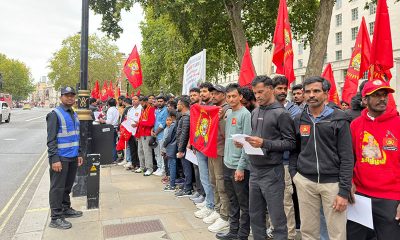
BHC, Colombo: “LTTE remains a proscribed org. in the UK”
-

 Latest News4 days ago
Farhan and Sadaqat help Pakistan seal series in style
-

 News5 days ago
Iranian ships stranded, Lanka fears US sanctions