
Sports
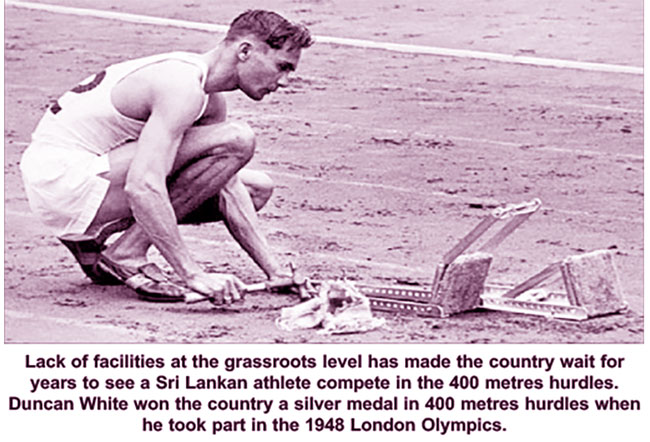
Waiting for the next Olympic hurdler

Tokyo Olympics – 8 days to go
by Reemus Fernando
The 400 metres hurdles, a discipline in which the country won its first Olympic medal has lost its popularity from being probably the most popular track discipline in 1948 to be the least-interested athletics event among school children today. The lack of facilities and neglect by officials at Divisional and Zonal level is contributing to making the event less attractive and killing the interest of potential athletes who could one day win medals at the international level. From lack of knowledge of coaches to train the technical event to lack of proper facilities (grounds), there could have been many other factors that had contributed to making the track discipline less appealing but there had been a number of athletes who have beaten the odds to win medals at the junior international level, proving that it is not a case of the dearth of talent.
After Duncan White won the country’s first medal at the 1948 London Olympics it took more than half a century for a Sri Lankan male even to earn an Olympic berth in that discipline. It also took more than five decades since Independence for a Sri Lankan male to win a 400 metres hurdles medal outside the South Asian region. In 2000 Harian Ratnayake won the Asian Athletics Championship silver and became the first Sri Lankan since Duncan White to take part in an Olympic 400 metres hurdles. Despite being the first Sri Lankan to run the distance under 50 seconds and winning silver at the Asian Championships, Ratnayake could not find a place in the semi-finals at the Sydney Olympics. Saudi Arabia’s Hadi Al-Somaily, Asia’s fastest that year went on to win a rare silver.
The 400 metres hurdle has been dominated by athletes from English speaking countries at the Olympics. While the competition among the English speaking countries has made the event faster than it had been a half-century ago, the standard of Sri Lanka’s 400 metres hurdles have remained stagnated.
When White finished second behind Leroy Cochran of the USA at the London Olympics he was just 0.07 seconds behind the winner who established a new Olympic record. The then world record was 50.6 seconds. During the last 73 years the world record has been improved by nearly four seconds. On the first of this month, the Norwegian champion Karsten Warholm broke the world record with a feat of 46.70 seconds (the record is subjected to World Athletics ratification).
The country’s national record of 49.44 seconds held by Ratnayake is more than two decades old now. Ratnayake, trained by S.M.G. Bandara and Asian Games medallist (relay) Asoka Jayasundara, trained by Sunil Gunawardena are the only athletes to have clocked sub 50 seconds in that discipline. The country’s top-level athletes today are much slower than the duo who won at the Asian level in their heyday. At World Level more than 90 athletes clocked sub 50 seconds this year. Of them, 19 are from Asia. Sri Lanka’s fastest 400 metres hurdler this year is not even among the best 50 in Asia.
“Most of the current 400 metres hurdlers are athletes who had taken up the event after joining the Army. The motor abilities of an athlete have to be developed from a young age if he is to become a good hurdler. It takes years of training to become a good hurdler. Not many who take up hurdling at school level persevere,” says Asoka Jayasundara, the Asian Games medalist who trains several hurdlers.
The reason that many athletes do not take up 400 metres hurdles at school level could be attributed to the absence of facilities at the grass-root level. The vast majority of the country’s Divisional and Zonal schools athletics competitions are conducted on 200 metres tracks, which makes it impossible to conduct a proper 400 metres hurdles event. What the majority of organizers of Divisional meets do is to promote the few athletes who have applied for the event to the Zonal level. It is at the Divisional level that a young athlete first sees the event live. At a majority of Zonal meets too athletes competing in the 400 metres hurdles are given turns to run on a single set of hurdles. After finishing their turn, they wait around the timekeepers till all complete their turns to see who has produced the fastest time.
To be continued……….



Mikel Merino scored in the 88th minute from a rebound yielded by backup Belgium goalkeeper Senne Lammens, and Spain advanced to the World Cup semifinals with a 2-1 victory.
Merino was the late hero for the second straight match for Spain, who advanced to face tournament favourite France in the semifinals on Tuesday in Dallas.
Merino came on in the 86th minute and scored from his second touch of the match, charging into the box and pouncing after Lammens spilled a Pau Cubarsi shot from outside the area.

The Arsenal forward also scored as a substitute early in injury time to secure Spain’s 1-0 victory over Portugal in the last-16.
Lammens, the Manchester United keeper, was forced into the match in the 71st minute after longtime Belgium keeper Thibaut Courtois left with an apparent thigh injury.
Belgium desperately pressed for an equaliser in the final minutes, but Aymeric Laporte volleyed their best chance out of the box.
Fabian Ruiz scored the opening goal in the 30th minute for Spain after Courtois had parried a shot from Dani Olmo from Pedro Porro’s cut-back from the right of the area, but Belgium forward Charles De Ketelaere scored the first goal allowed by Spain in the entire World Cup in the 41st minute.
His header from Timothy Castagne’s cross from the right ended a record streak of 649 minutes without conceding at the World Cup.


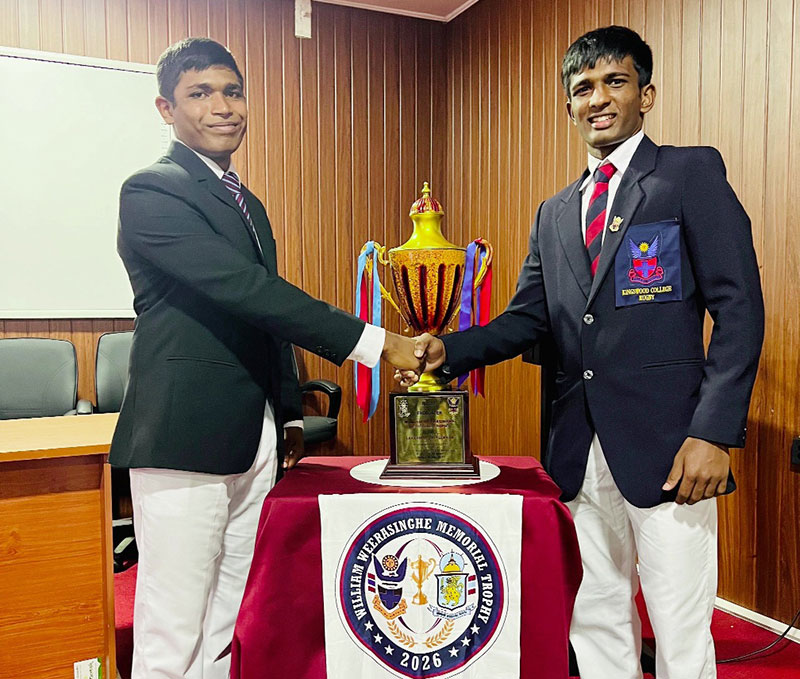
The annual rugby encounter between Dharmaraja College and Kingswood College, played for the William Weerasinghe Memorial Trophy, is set to take place today (July 11, 2026), at 4:00 PM at the Bogambara Stadium, Kandy.
The official unveiling of the trophy took place this week at the Dharmaraja College premises with the participation of the Principals of the two schools, teachers-in-charge of sports, coaches, the Rugby teams, and several distinguished guests, including Dharmaraja College Old Boys’ Association President Mahesh Wijetunga, Kingswood College Old Boys’ Association President Muditha Abeykoon,
Text and Pic by SK Samaranayake
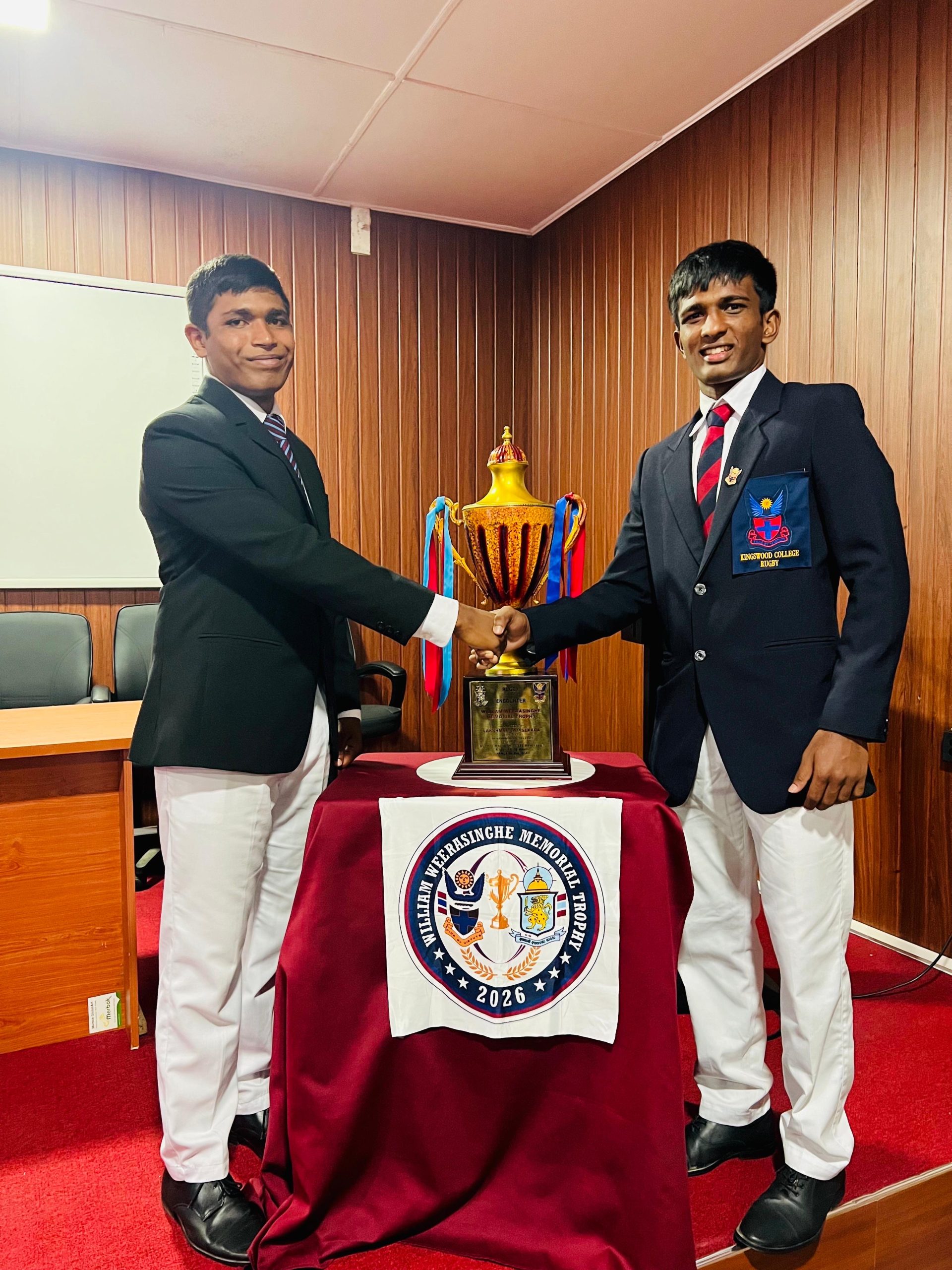
The annual rugby encounter between Dharmaraja College and Kingswood College, played for the William Weerasinghe Memorial Trophy, is set to take place tomorrow (July 11, 2026), at 4:00 PM at the Bogambara Stadium, Kandy.
The official unveiling of the trophy took place this week at the Dharmaraja College premises with the participation of the Principals of the two schools, teachers-in-charge of sports, coaches, the Rugby teams, and several distinguished guests, including Dharmaraja College Old Boys’ Association President Mahesh Wijetunga, Kingswood College Old Boys’ Association President Muditha Abeykoon,
by S K SAMARANAYAKE

Spain leave it late to book semifinal date with France

Showers will occur in the Sabaragamuwa, Western and North-western provinces and in Galle, Matara, Kandy and Nuwara-Eliya districts

US$ 2.5 mn cyber heist exposes system failures

Opposition signs no-confidence motion against Justice Minister for dereliction of duty over Negombo Prison deaths

AG informs SC of e-visa agreement review

Navy, Coast Guard seize smuggled pharmaceuticals and cosmetics in Puttalam

‘Dates have the highest sugar content to fight Coronavirus’

Sunday Island 27 December – Headlines

#SundayIsland 17th December – Headlines

Sunday Island – 28th March

Sunday Island Headlines – 21 March

Sunday Island – 21st February – Headlines
-

 News6 days ago
Singapore-based Buddhist monk marks nearly four decades of humanitarian service
-
 News1 day ago
Herath warns prospective migrant workers not to get fleeced by racketeers
-

 News5 days ago
AI concerned over proposed SL military deployment in Haiti
-

 Midweek Review3 days ago
Unexpected focus on ‘pieces of tin’ worn by military men
-
 Latest News4 days ago
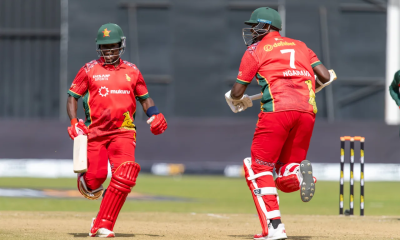
Nyamhuri and Ngarava stun Bangladesh by defending 141
-

 Features6 days ago
The NPP’s New Challenge: Balancing Easter Lawfare and Economic Welfare
-

 News2 days ago
Negombo Prison riot: Ensuring protection of prisoners fundamental responsibility of the state – UN
-

 Editorial3 days ago
Prison riots and political battles