
Editorial
Cold logic, hard facts

Amid the gloom of the country situation we are living in today, there was a beam of light emitted by a statement issued by the Association of Medical Specialists (AMS) published last week. The use of the word “Association” rather than the more familiar “Union” in the name or title of an organization blunts the abrasive edge associated with the latter term. This, of course, is not always the case. The GMOA, for example, is also an association – the Government Medical Officers Association to give its full title. But in the public mind it is, in fact, a union and one that has in too many instances in the past and present acted no differently from blue collar unions in holding the general public to ransom to obtain its demands. Not so (or should we say so much so) the AMS, although it too has in its history acted in a manner similar to the GMOA, whose members are not all medical specialists, to win various facilities and concessions for its members who too are government employees.
The statement we referred to at the beginning of this comment relates to the AMS’s warning to the government that ad hoc salary increases recently promised to nurses and paramedical services would literally open a can of worms triggering similar demands from across the entire public services spectrum. It is public knowledge that salary anomalies are ubiquitous in the various segments of the monolithic public sector. Its size, Mr. KHJ Wijeyadasa, a former Secretary to the President, says in an article published in this issue of our newspaper totals a massive one and a half million employees. To borrow his words, “Sri Lanka’s tottering economy has to sustain a massive government service of over 1.5 million employees, half a million (government) pensioners and two million Samurdhi beneficiaries.”
He has said that this means that 20 percent of the country’s population is paid by the State. Given that the average family size in this country is four, it can be calculated that as many as eight million people – about a third of our population – subsist on State funding, Wijeyadasa says. Given today’s cost of living, we would add that the former senior public servant chose the right word in using “subsist” rather than “live.” There is no escaping the reality of his conclusion that two issues, affordability and sustainability, are very much a part of the existing situation and the picture is no less than “suicidal.” What we, and we believe most sensible people understand is that a spate of pay increases across the government sector at this point of time will be totally unmanageable however much money we print. That is why we find the AMS statement refreshing. They, like Oliver Twist, are not asking for more for themselves but warning of an approaching whirlwind.
Evening television news bulletins over that past week and more projected the misery caused to poor people by the crippling of government hospital services due to various strikes. The AMS said in its statement that they, as public servants, have been least affected by the pandemic and its resultant economic impact. “Our salaries were paid in full, whether we worked from home or did not work. Even transport was arranged at the expense of the State for some. Even essentials were made available for us, delivered to workplace as an extra convenience. These are some of the privileges we have enjoyed as public servants during this period,” the statement said. “In contrast to us, the private sector employees were not so lucky. There were pay cuts, redundancies were declared and bonuses were trimmed, all cost cutting maneuvers.”
Saying all this in a public statement is refreshing candor seldom encountered in this so-called Democratic Socialist Republic of ours. The medical specialists also drew attention to the plight of those they called “freelance” workers, small businesses and most of all, the daily paid workers saying, “Therefore, we strongly believe that being the least affected segment of the society, we public servants should be more mindful of our duty over rights,” the statement said. “Having analyzed the current situation, and the cascade of events crippling the entire nation, we feel that an urgent interim solution should be sought to prevent a lot more trade unions joining the bandwagon.”
Medical specialists in this country are no doubt a very high earning segment of society. Their fees are high adding substantially to astronomically high cost of private health care. They are also beneficiaries of tax breaks on professional incomes. Many of them drive high-end cars with fleets of BMWs, Mercedes Benzes and expensive SUVs, mostly purchased on duty free permits, seen parked at private hospitals as they engage in their consultation practice in the evenings. The lesser fry, particularly in the health care sector can well throw these facts at their faces saying it is easy for those living in luxury and suffering no hardship whatever to say what the AMS has said. But their own unions must seize opportunities that arise to seize benefits for their members as they have done. That, however, does not detract from the logic of the facts as stated by the AMS. The situation is careening out of control and there is no love lost between the people and the political class that must take the hard decisions. Basil Rajapaksa’s entry into the scene is not going to result in the kind of magic that his supporters say is on the way.



Friday 6th February, 2026
Some Opposition big guns went ballistic yesterday in Parliament, lashing out at the JVP-NPP government for refusing to provide SJB MP Rohana Bandara with security in view of threats to his life. They have been urging the government to ensure the protection of MP Bandara, but in vain. It looks as if the eminences grises of the JVP remote-controlled the national legislature.
The government MPs made some facetious remarks about MP Bandara’s demand for security. Their flippancy is deplorable. Gun violence is on the rise, and hardly a day passes without a fatal shooting in this country. Underworld gangs have amply demonstrated their ability to strike anywhere at will. The police swing into action only after crimes are committed.
The police first made a proper threat assessment and concluded that MP Bandara should be provided with security. The government, which had made light of his complaint, was left with egg on its face. It disregarded the police report and sought to obfuscate the issue. While it was drawing fire in Parliament for the inordinate delay in taking action to protect MP Bandara, the police issued a counter-report, reversing their earlier threat assessment, and, lo and behold, claimed that the threats to the MP emanated from a rival in his own party. Obviously, the government pressured the police to make an about-turn and help give a political twist to the issue. The police have earned notoriety for their absurd claims, which are legion, and trotting out lame excuses in defence of their political masters.
Opposition Leader Sajith Premadasa yesterday chided the government frontbenchers for flippancy and making a false claim that MP Bandara had received threats from someone in his own party. He said a Deputy Inspector General of Police in Anuradhapura and intelligence services had initially recommended that MP Bandara be given adequate security. But the government members continued to crack themselves up. Ruling party politicians behave in this manner when power goes to their heads.
The Opposition MPs are in a dilemma where their security is concerned. When they face threats and ask for protection, the Speaker says the government goes by threat assessments done by the police in deciding whether to provide them with security. The police do as the government says, and issue reports justifying its position that there are no threats to its political rivals. Thus, the Opposition MPs have no one to turn to when their lives are in danger. The government MPs are apparently deriving some perverse pleasure from MP Bandara’s predicament.
Let the government be warned that it is making a big mistake by refusing to provide MP Bandara with security. Sri Lanka is no stranger to political assassinations. The JVP itself has gunned down hundreds of its political rivals. The UNP, the SLFP, etc., too, have a history of political violence, which claimed many lives. Those who do not learn from history are said to be doomed to repeat it. One may recall that an assassin’s bullet that pierced DUNF leader and former Minister Lalith Athulathmudali’s heart in April 1993 became the undoing of a UNP government. That repressive regime disregarded the then Opposition’s demand that the UNP dissidents be provided with security as they were facing threats to their lives from the LTTE as well as pro-UNP goons.
Most of all, a fundamental democratic and legal norm underpinning modern parliamentary systems is that all members of Parliament are equal in rights and privileges and must be treated as such. It is unbecoming of a government to dismiss threats to an Opposition MP’s life, and make flippant remarks, which reflect poorly on it.

Thursday 5th February, 2026
The argy-bargy is done, and the battle’s lost and won, one might say with apologies to the Bard. A prolonged tug of war between President Anura Kumara Dissanayake and the Constitutional Council (CC) has come to an end. The newly reconstituted CC has unanimously approved President Dissanayake’s nominee for the post of Auditor General (AG). The National Audit Office (NAO), which remained headless for months, now has a new head—Samudrika Jayaratne, who has served as Senior Deputy Auditor General. But the question is whether one can truly say, in this case, all’s well that ends well.
We do not intend to raise suspicions about the integrity of the new AG, but there are some questions that warrant answers. The critics of her appointment have levelled some allegations against her, including transactions tainted by conflict of interest and ‘unprofessional conduct’. They have also claimed that the Commission to Investigate Allegations of Bribery or Corruption has launched an investigation into allegations against her. Unsubstantiated as these allegations are, they have the potential to raise doubts in the public mind about the new AG’s integrity and that of the NAO under her. Hence the need for her to respond to them.
Thankfully, President Dissanayake’s efforts to parachute a total outsider loyal to the JVP into the post of AG came a cropper because the immediate predecessors of the three newly appointed civil society members of the CC intrepidly resisted pressure from the Executive. However, the government ought to explain why it overlooked Dharmapala Gammanpila, who served as the Acting AG. The general consensus is that he is the most eligible candidate for the post of AG. Four Mahanayake Theras wrote a joint letter to President Dissanayake, recently, urging him to appoint Gammanpila as AG. The prelates’ request resonated with those who cherish good governance, but President Dissanayake ignored it.
The JVP-led NPP’s election manifesto, A Thriving Nation: A Beautiful Life, attributes the deterioration of the public service to ‘political appointments’ and ‘state workers making political decisions’. Among the steps the NPP has promised to take to straighten up the public service are ‘merit-based appointments and promotions’. But its refusal to appoint Gammanpila as AG has raised many an eyebrow and lent credence to its critics’ claim that it is wary of having an upright official at the helm of the NAO because it does not want various fraudulent deals in the public sector on its watch exposed; some of them are the questionable release of 323 red-flagged freight containers without mandatory Customs inspections from the Colombo Port and the rice and coal scams. The only way the government can show that the merit principle it claims to uphold has not fallen by the wayside and its commitment to good governance is genuine is to give credible reasons for its decision to overlook the most eligible candidate for the post of AG.
The heads of all state institutions must be above suspicion like Caesar’s wife, so to speak, for a fish is said to rot from the head down. One may recall that the Police under Deshabandu Tennakoon, whom the SLPP-UNP government appointed IGP by unashamedly subverting the CC process amidst protests, became subservient to the then rulers. Sadly, the situation has not changed much; the long arm of the law has become a cat’s paw for the JVP-NPP government. While claiming to uphold good governance, the incumbent government has embarked on a campaign to vilify the Attorney General in a bid to pressure him to obey its dictates. Thankfully, he has proved that he is made of sterner stuff, and his staff, the Bar Association of Sri Lanka and others have circled the wagons around him.
Meanwhile, the CC’s unanimous endorsement of the appointment of the AG has diminished the Opposition’s moral right to criticise the actions of the NAO under the new head.
Wednesday 4th February, 2026
Another Independence Day has dawned. Elaborate arrangements have been made to celebrate it on a grand scale. The national flag will flutter at full mast majestically to the roll of drums and the blare of trumpets. A colourful parade and a fly-past will be among the day’s many attractions. A ceremony with such pomp and circumstance is an occasion for reflection.
Sri Lanka is celebrating the 78th year of Independence while emerging from its worst-ever economic crisis. There is a long way to go before it achieves full economic recovery. Much is being spoken about the need for economic reforms, and their importance cannot be overstated. But the question is whether they alone will help usher in national progress.
Since 1948, Sri Lanka has seen various political and economic reform movements. Its economy and political system have undergone radical changes during the past several decades. and reforms have yielded mixed results, with progress in some areas and setbacks in others. The current economic crisis and the ongoing recovery efforts have necessitated a national strategy to reform the economy. Experiments with political, constitutional and electoral reforms are far from over.
Successive governments have experimented with economic and political reforms. On the political front, the executive presidential system has survived several half-hearted attempts to abolish it and reintroduce the Westminster system. Politically-motivated amendments have made the Constitution look like a badly edited periodical, according to cynics. The electoral system has become an unholy mess. Provincial Council elections have fallen between two electoral systems, so to speak; at present, they cannot be held under either the Proportional Representation system or the Mixed Proportional system.
Meanwhile, the blame for the sorry state of affairs on all fronts has been laid solely at the feet of politicians. But it should be apportioned to the people, for it is they who elect governments. They vote in such a way that one wonders whether they are capable of making rational decisions and choices despite the country’s high literacy rate. True, politicians deserve the flak they receive for corruption, other malpractices and, above all, the country’s failure to achieve development, but it takes two to tango.
The state service has earned notoriety for inefficiency, incompetence, and delays. Decades of politicisation alone cannot be blamed for this situation. Sri Lankans’ attitude to work leaves much to be desired. The country is yet to develop a strong national work ethic, which is a prerequisite for enhancing national productivity and achieving development. Trade unions perennially make demands but rarely turn the searchlight inwards, much less concentrate on their duties and responsibilities.
The public apparently does not care much about civic duties and responsibilities. Tax compliance is extremely low, and indiscipline is widespread. Roads are characterised by utter chaos, and accidents, mostly caused by reckless driving, claim about seven or eight lives a day. Complaints of sexual harassment of women in buses and trains abound.
The focus of the government, the Opposition, the media, religious leaders and others is currently on educational reforms, which have apparently taken precedence over economic reforms. There are media reports about discussions on constitutional and electoral reforms as well. But there has been no serious discussion on the much-needed social reforms.
Social reforms are organised efforts aimed at not only promoting justice, equality and inclusion across political, economic, cultural and social spheres in a country but also helping bring about attitudinal changes and positive mindsets essential for a nation to adapt to changing times, face challenges, achieve its development goals and progress. It is time serious thought was given to social reforms.

Mighty India meet multicultural USA in polarised World Cup

At least 31 killed, dozens wounded in Islamabad mosque blast

The SSC finally steps out of the sunshine and into the floodlights

SAARC journalists meet in New Delhi

Governor of Gujarat met with Sri Lanka PM to discuss exposition of Devnimori Relics

India chase sixth Under-19 World Cup title, England their first since 1998

‘Dates have the highest sugar content to fight Coronavirus’

Sunday Island 27 December – Headlines

#SundayIsland 17th December – Headlines

Sunday Island – 28th March

Sunday Island Headlines – 21 March

Sunday Island – 21st February – Headlines
-

 Business7 days ago
Hayleys Mobility ushering in a new era of premium sustainable mobility
-

 Business4 days ago
SLIM-Kantar People’s Awards 2026 to recognise Sri Lanka’s most trusted brands and personalities
-
 Business7 days ago
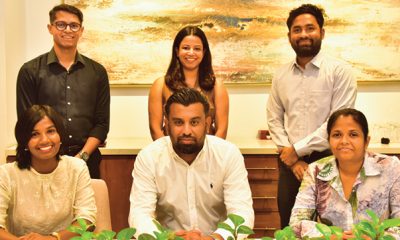
Advice Lab unveils new 13,000+ sqft office, marking major expansion in financial services BPO to Australia
-

 Business7 days ago
Arpico NextGen Mattress gains recognition for innovation
-
 Business6 days ago
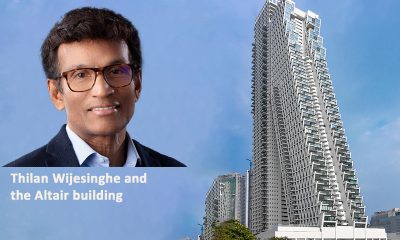
Altair issues over 100+ title deeds post ownership change
-

 Editorial7 days ago
Govt. provoking TUs
-

 Business6 days ago
Sri Lanka opens first country pavilion at London exhibition
-

 Business5 days ago
All set for Global Synergy Awards 2026 at Waters Edge