
Business
Ideal First Choice introduces the unbeatable and versatile Schwing Stetter Self Loading Mixer to the local market


Sri Lanka’s premier automotive solutions provider, Ideal Motors (Pvt) Ltd’s subsidiary Ideal First Choice has broken new ground introducing the Schwing Stetter Self Loading Mixer to the local market recently.
Ideal First Choice is the sole representative for the equipment, manufactured and distributed by Schwing Stetter India (Pvt) Ltd, a wholly-owned subsidiary of the acclaimed German group, Schwing Stetter.
German’s Schwing Stetter with a rich history for over 88 years, and as the world’s leader for concrete construction machines, has located its wholly-owned subsidiary Schwing Stetter India (Pvt) Ltd in Chennai. While Schwing Stetter’s factories are situated worldwide, the group’s entity in Chennai supplies equipment to Sri Lanka was well as 27 countries globally. This factory manufactures and distributes Batching Plant, Truk mixer, Boom Pum etc.
Schwing Stetter India (Pvt) Ltd also manages five plants across Chennai, manufacturing a wide range of concrete construction equipment. A massive 450 Self Loading Mixers are produced monthly.
Commenting on introducing this machine to the local market, Kasun Wickramaratne, National Sales Manager, Schwing Stetter India (Pvt) Ltd said, “Ideal Motors is undoubtedly the superior choice when selecting after-sales service for vehicles in Sri Lanka. Their customer service is matchless. As both our organizations are attuned to support customers, Ideal Motors is the best suited local authorized dealer for the Schwing Stetter Self Loading Mixer.”
Top construction firms such as ELS Construction, NEM Construction, Tokyo Super Mix (Pvt) Ltd use the Schwing Stetter Self Loading Mixer. Since being appointed the local authorized dealer, Ideal Motors (Pvt) Ltd has concluded a successful sale of the Self Loading Mixer to Sri Ram Construction.
The Self-Loading Mixer is an off-highway, rough terrain machine which can be easily operated, and is able to transport mixture with minimal costs. The novelty of the Self-loading Mixers is that within the vehicle it can automatically mix the concrete. Especially, in rural villages, for the development of smaller roads, the equipment is able to play a vital role.
Through an automatic system, the machine blends water, cement and stones to create the concrete and impressively is able to provide a valid receipt to the customer on the quantities of sand, stones and water used to manufacture the cement.
Dilshan Tennekoon, Head of Sales, Ideal Motors said, “The Ideal Group is recognized within the vehicle market as a trusted and leading entity which has within a short timeframe marked many achievements. The foresight and guidance of Ideal Group Founder and Chairman Nalin Welgama, Deputy Chairman Aravinda de Silva and Director Chaminda Wanigaratne has successfully contributed to help raise the local economy and also the prosperity of customers within a short period.”
Currently, the construction sector is contributing immensely towards Sri Lanka’s development. Ideal Motors is deeply committed in supporting this sector and helping organizations involved in construction to achieve every success. Ideal Motors aims to unveil other new products to the market shortly. We have realized that many organizations have become ineffective in introducing products as they are unable to maintain the equipment and support clients through after sales requirements, negatively impacting customer businesses. However I am pleased to note that we at Ideal Motors, have already made the necessary arrangements to offer superlative after-sales service for the equipment we market. Moreover, customers will be able to maintain their equipment with minimum cost, time, effort and a reduced workforce thus achieving every success within the industry. This was revealed based on a recent survey we conducted among customers in the sector who seek quality vehicle accessories and machinery. Our decision to obtain authorized dealership status from Schwing Stetter India (Pvt) Ltd, a wholly-owned subsidiary of the renowned German group, Schwing Stetter, is due to these reasons,” Tennekoon added.
Ideal Motors operates a large network of over 300 after-sales service centres with fully-trained technicians and engineers, across the island. As an organization Ideal Motors remains dedicated to supporting entities involved in the construction sector through its island-wide after-sales service network and invites companies in the industry to experience the consistent superior service.


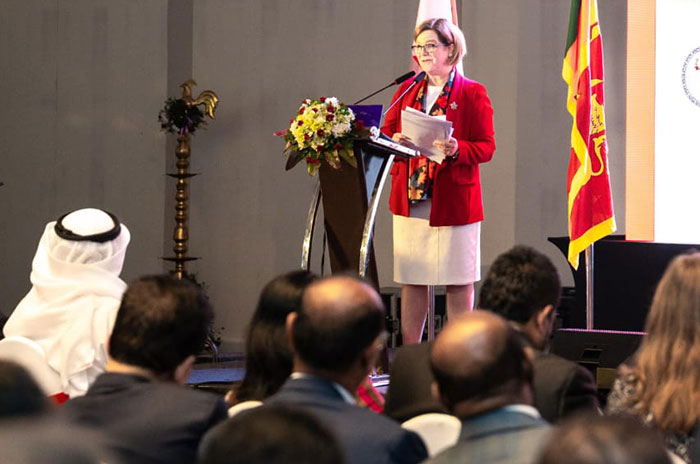
The vibrant celebration of Canada’s 159th National Day in Colombo brought together diplomats, government representatives, leading business executives and members of the Sri Lankan and Canadian communities, highlighting the growing strength of bilateral economic and commercial relations between Sri Lanka and Canada.
Hosted by the Canada Sri Lanka Business Convention (CanCham Sri Lanka), the event attracted one of the largest gatherings in its history, providing an important platform for business networking while celebrating the enduring friendship between the two countries.
Addressing the gathering, High Commissioner for Canada in Sri Lanka and the Maldives Isabelle Martin said Canada and Sri Lanka continue to enjoy a warm and expanding partnership built on shared values, people-to-people links, trade, investment and development cooperation.
“Canada Day is an opportunity not only to celebrate our country but also to celebrate the strong friendships and partnerships we have built with Sri Lanka.
The remarkable turnout this evening reflects the strength of those relationships and the growing collaboration between our two nations,” Martin said.
She noted that the close engagement between Canadian and Sri Lankan businesses continues to create new opportunities in trade, innovation, education, sustainable development and investment.
CanCham Sri Lanka officials said this year’s celebration was among the most successful Canada Day events ever organised by the Chamber, drawing an outstanding crowd and creating exceptional opportunities for business networking.
“What an incredible celebration of Canada Day. This was truly one of the most successful Canada Day celebrations in history, with an outstanding crowd and exceptional networking opportunities. It was wonderful to see so many distinguished guests, business leaders and community members come together,” the organisers said.
They thanked sponsors, partners, supporters and volunteers whose dedication ensured the success of the event.
The evening showcased Canada’s multicultural heritage while reaffirming the Chamber’s commitment to promoting stronger commercial links between Sri Lanka and Canada.
Guests representing a wide cross-section of industries exchanged ideas on expanding trade, investment and innovation partnerships.
Canada remains an important economic partner for Sri Lanka, with bilateral trade spanning apparel, agriculture, seafood, ICT services, education and professional services.
Canadian companies continue to explore opportunities in renewable energy, infrastructure, technology and sustainable development, while Sri Lankan exporters maintain a significant presence in the Canadian market.
Business leaders attending the celebration expressed confidence that closer collaboration between the two countries would further strengthen economic resilience and create new opportunities for investment, entrepreneurship and knowledge sharing.
The event concluded on a celebratory note, reaffirming the longstanding friendship between Canada and Sri Lanka and the shared commitment to fostering stronger business and people-to-people ties in the years ahead.
By Ifham Nizam
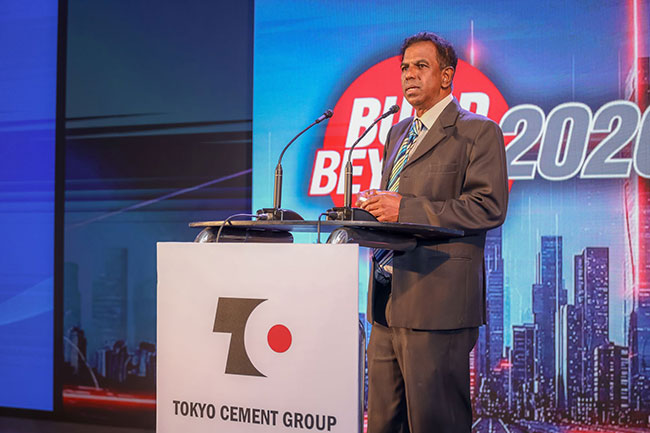
Tokyo Cement hosted ‘Build Beyond 2026 Summit’, a premier knowledge-sharing conference that brought together leading academics, civil and structural engineering experts and professionals of the Sri Lankan construction industry. The event featured keynote addresses by renowned construction technology specialists, Professor Shashank Bishnoi from the Indian Institute of Technology (IIT) Delhi-Abu Dhabi, and Senior Professor Priyan Mendis from the University of Melbourne.
The summit marked the second edition of the Build Beyond Engineering Technology Summit organized by the Tokyo Cement Group, designed to foster collaboration between academia and industry while highlighting global trends, innovations, and emerging technologies in cement and concrete. This year’s discussions focused on advancements in material science that are driving more sustainable and cost-efficient construction practices.
The event drew participation from state-sector authorities, research institutions, academia, engineering students, and public and private sector organizations, creating a dynamic platform for engagement across the construction industry. A key feature of the summit was a high-level panel discussion on “Building a Resilient and Sustainable Construction Future,” featuring several distinguished industry leaders.
The panel included Eng. Nissanka Wijerathne, the Secretary General/CEO of the Chamber of Construction Industry Sri Lanka (CCI), Founder and Deputy Chairman of Civil & Structural Engineering Consultants (Pvt.) Ltd.; Eng. Shiromal Fernando, the Chairman of CTBUH Sri Lanka and Vice President of the Green Building Council Sri Lanka, Adjunct Senior Lecturer at the General Sir John Kotelawala Defense University and visiting lecturer at the University of Moratuwa; Eng.
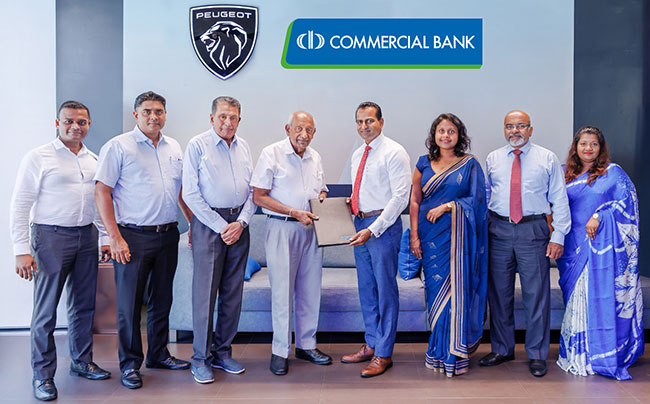
Strengthening its commitment to making vehicle ownership more accessible and affordable, Commercial Bank of Ceylon has entered into a strategic partnership with Carmart (Pvt) Ltd. to offer specially structured leasing facilities for Peugeot and Leapmotor vehicles.
Formalised through a Memorandum of Understanding (MoU), the collaboration brings together the Bank’s expertise in flexible financing and Carmart’s portfolio of internationally recognised vehicle brands, creating a value-rich proposition for customers seeking to purchase new vehicles.
Under this MoU, valid until 30th June 2027, Commercial Bank will offer attractive interest rates, concessions on documentation charges, and a complimentary credit card with the first year’s annual fee waived. These benefits are designed to reduce upfront costs and ease the financial commitment associated with vehicle ownership.
With leasing facilities available through Commercial Bank’s island-wide branch network, a cross section of customers will be able to part-finance their vehicle purchases while structuring repayments to align with their income patterns, enabling greater financial flexibility.
Further enhancing the value proposition, Carmart (Pvt) Ltd. will offer customers a range of added benefits, including a complimentary full tank of fuel, free vehicle registration, and other exclusive privileges, making the overall vehicle ownership experience more rewarding.
The Bank said the partnership reflects its continued focus on delivering practical and customer-centric leasing solutions in collaboration with reputed vendors. By combining competitive rates with cost-saving concessions, the Bank aims to make vehicle ownership more attainable for both existing and new customers.
This collaboration is particularly significant in the current market context, as it offers customers the opportunity to benefit from preferential leasing terms while managing repayments in a way that suits their financial circumstances.
As a pioneer in leasing solutions, Commercial Bank continues to innovate through strategic alliances that enhance value, broaden choice, and support customers in achieving their lifestyle aspirations.

Juventus Training Camp from 6-10 July in Colombo

Wijesundara set for debut as injury-hit Sri Lanka struggle to make up XI

UNEP support pledged to strengthen Sri Lanka’s Environmental Priorities

Ronaldo scores as Portugal come back to win, Croatia denied by late VAR

Lister replaces injured Sears for ODI series in the West Indies

Showers will occur in the Western, Sabaragamuwa and North-western provinces and in Galle, Matara, Kandy, Nuwara-Eliya and Anuradhapura districts

‘Dates have the highest sugar content to fight Coronavirus’

Sunday Island 27 December – Headlines

#SundayIsland 17th December – Headlines

Sunday Island – 28th March

Sunday Island Headlines – 21 March

Sunday Island – 21st February – Headlines
-
 News5 days ago
LAWASIA warns against ad hoc initiative to increase judges’ retirement ages
-
 News6 days ago
Another 1,132 Sri Lankan Personnel to be deployed for United Nations Peacekeeping Missions
-
 News4 days ago
Chamuditha to seek removal of injunction on Youtube programme
-

 Business7 days ago
Month-end profit-takings drive stock trading; indices up
-

 Features4 days ago
Climate action to bring South Asia together
-
 Features6 days ago
People’s Bank expands digital banking network with 125th cheque deposit kiosk
-

 News4 days ago
CPRP alleges another death in custody, seeks protection for witness
-

 News7 days ago
FSP complains of irregularities in a Guinness World Record event held in Sri Lanka