
News
Russia has developed ‘first’ vaccine offering ‘sustainable immunity’ against Coronavirus: Vladimir Putin

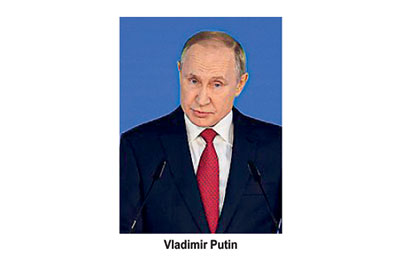
The announced vaccine, jointly developed by the Gamaleya Research Institute and the Russian Defence Ministry, had reportedly reached advanced stages of development and was set to pass state registration, despite concerns raised by the WHO.
SNS: Russia has developed the first vaccine offering “sustainable immunity” against Coronavirus, President Vladimir Putin announced Tuesday.
“This morning, for the first time in the world, a vaccine against the new coronavirus was registered” in Russia, Putin said in a televised video conference call with government ministers.
Further speaking at a government event, Putin said that the vaccine has proven efficient during tests, offering a lasting immunity from the Coronavirus and emphasized that the vaccine underwent the necessary tests. He added that one of his two daughters has received a shot of the vaccine and is feeling well.
The announcement comes as reports have been floating that Moscow is all set to register its first COVID-19 vaccine this week despite safety concerns raised from several quarters, including the WHO.
The country has been pushing extensively for virus vaccine for quite some time now before it starts mass vaccination in October.
Russia’s Deputy Health Minister Oleg Gridnev recently revealed plans to register a Coronavirus vaccine on August 12, Sputnik news agency reported.
Russia is the fourth worst-hit nation after the US, Brazil and India.
The announced vaccine, jointly developed by the Gamaleya Research Institute and the Russian Defence Ministry, had reportedly reached advanced stages of development and was set to pass state registration.
On August 3, a “final medical examination” of participants in clinical trials of the vaccine took place at the Burdenko Main Military Clinical Hospital, the Russian Defence Ministry earlier said in a statement.
The results clearly showed that all volunteers had a clear immune response resulting from vaccination, the ministry said, adding that there were no side effects or abnormalities in the work of the volunteers.
“Thus, the available data of laboratory and instrumental studies allow us to speak about the safety and good tolerance of the vaccine,” the statement added.
But this vaccine is not among the six vaccines that have reached the crucial Phase 3 trial, according to the World Health Organization.
Responding to a question on concerns about any vaccine candidate that hits the market in this calendar year, Michael Ryan, Executive Director, WHO Health Emergencies Programme, said that “we will still have to remain cautious”.
“Should we find that signal we should be able to move into production of that vaccine and begin to use it in human populations, but we will still have to remain cautious as we scale up the number of people vaccinated,” Ryan said.
“Side effects are rare, and they only become apparent when you vaccinate lots and lots of people. So there will still be a need for a monitoring phase even when we start to vaccinate at population level,” he said.
Of the six COVID-19 vaccine candidates that have reached the Phase 3 level according to the WHO, three are from China and the other three, include the ones developed by the University of Oxford and AstraZeneca, Moderna, and one jointly developed by Pfizer and BioNTech.
Meanwhile, Russia had said on August 3 that it aims to launch mass production of a Coronavirus vaccine next month and turn out “several million” doses per month by next year.
“We are very much counting on starting mass production in September,” Industry Minister Denis Manturov had said in an interview published by state news agency TASS.
“We will be able to ensure production volumes of several hundred thousand a month, with an eventual increase to several million by the start of next year,” he said, adding that one developer is preparing production technology at three locations in central Russia.
The head of the Russian Direct Investment Fund, which finances the trials, had said he expects official registration of the vaccine to be complete “within ten days.”
“If this happens in the next ten days, we will be ahead not just of the United States but other countries too, it will be the first registered Coronavirus vaccine,” RDIF chief Kirill Dmitriev said in televised remarks.
Gamaleya’s vaccine is a so-called viral vector vaccine, meaning it employs another virus to carry the DNA encoding the needed immune response into cells.
Gamaleya’s vaccine is based on the adenovirus, a similar technology to the Coronavirus vaccine prototype developed by China’s CanSino, currently in the advanced stage of clinical trials.
Meanwhile, Russia has dismissed allegations from the UK, the United States and Canada that a hacking group linked to Russian intelligence services tried to steal information about a Coronavirus vaccine from labs in the West.
(With agency inputs)

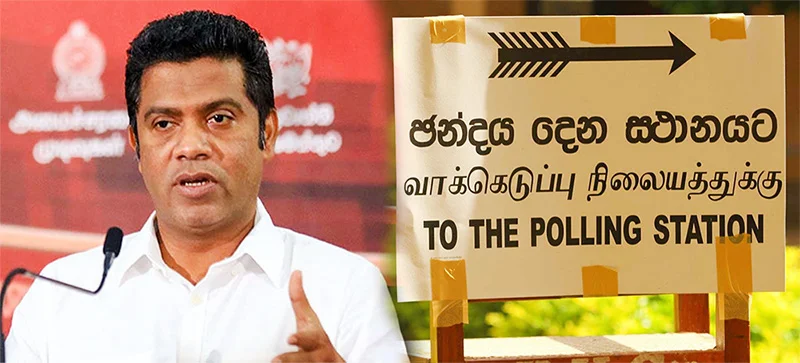
Cabinet Spokesperson and Minister Dr. Nalinda Jayatissa yesterday (26) said that funds were available to conduct Provincial Council polls.
He said so at the post-Cabinet media briefing in response to a media query regarding JVP General Secretary Tilvin Silva’s declaration in Jaffna that PC polls wouldn’t be held this year as funds allocated for that purpose were utilised to provide relief for Ditwah cyclone victims.
Minister Jayatissa said that the main obstacle to holding the Provincial Council election lies in the existing legal framework.
The Minister noted that a parliamentary committee was examining the matter and working towards resolving the legal issues.
He added that, once the necessary legal provisions are enacted, the Provincial Council election can be conducted without delay.
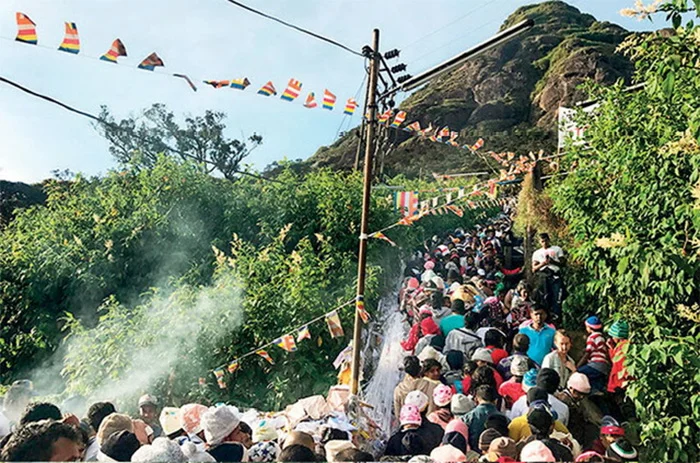
As the Sri Pada pilgrimage season commences, the Police Media Division has reported the arrest of 322 individuals in possession of various illegal narcotics while travelling to pay homage to the sacred Sri Pada site.
Among the substances seized by authorities were heroin, Ice (crystal methamphetamine), hashish, kush, mawa, cannabis, madana modaka, and illicit prescription pills.
Following their apprehension, the suspects were produced before the courts, where they pleaded guilty to the charges. The court subsequently imposed fines totaling Rs. 2,065,000 against the offenders.
The arrests were the result of a series of coordinated raids and rigorous security inspections conducted by special police teams across the Hatton police division. The operations were specifically targeted at key transit points, including Hatton, Polpitiya, Ginigathhena, and Nallathanniya, to ensure the safety and sanctity of the pilgrimage route.
The Police Media Division emphasised that these measures are part of an ongoing effort to curb the smuggling and consumption of drugs during the sacred pilgrimage period. They warned that police surveillance would be intensified throughout the season to prevent further incidents of this nature and to maintain order among the thousands of devotees visiting the holy site.
By S. K. Samaranayake
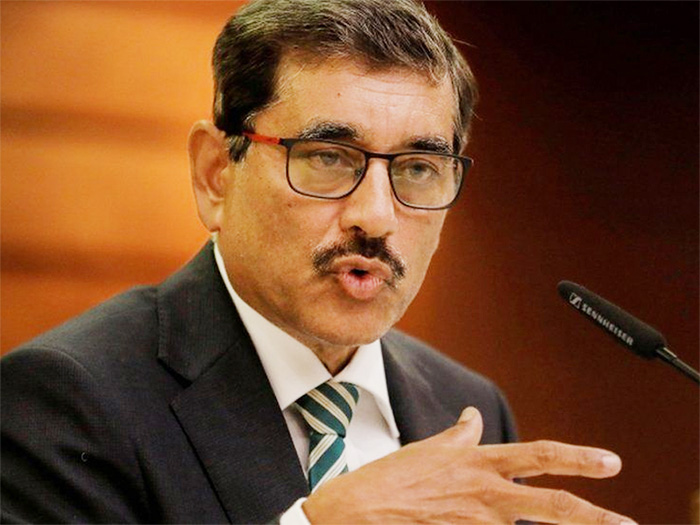
Central Bank Governor Dr. Nandalal Weerasinghe asserted yesterday that Sri Lanka’s latest round of coordinated policy tightening had already begun restoring economic stability, effectively containing external sector pressures and inflation risks. He stressed that more drastic emergency interventions are unnecessary at this stage.
Speaking to the media, following the announcement of the Monetary Policy Review—which raised the Overnight Policy Rate by 100 basis points to 8.75 percent—Governor Weerasinghe said the government and the Central Bank had succeeded in regaining control over currency market conditions.
“The current adjustments are sufficient,” he said, adding that the combined fiscal and monetary measures introduced last week were delivering the intended results, particularly in stabilising the exchange rate and easing pressure in the dollar market.
Despite ongoing global uncertainties, linked to the Middle East tensions and elevated oil prices, the Governor indicated that policymakers did not currently see a need to escalate intervention measures.
“Although there are other policy tools available, there is no need,” he reiterated.
Market participants are likely to interpret the Governor’s remarks as an effort by the authorities to quell speculation that Sri Lanka could impose tougher restrictions or aggressive administrative controls if pressure on the rupee intensifies further.
Instead, Dr. Weerasinghe appeared to signal that a calibrated combination of tighter fiscal discipline, credit controls, and monetary tightening is already sufficient to cool excessive demand conditions in the economy.
Last week, the government imposed a surcharge on vehicle imports, while the Central Bank tightened lending rules—reducing loan-to-value ratios for vehicle financing and capping gold-backed lending at 70 percent. The Central Bank believes these measures will help contain strong private sector credit growth, which has been fuelling import demand and straining foreign exchange liquidity.
“These measures have already stabilised the exchange rate,” the Governor said. “The supply and demand for US dollars are under control.”
An economist who spoke to The Island noted that the Governor’s comments carry an important policy message: Sri Lanka is attempting to avoid both extremes—neither allowing imbalances to build unchecked nor overreacting with destabilising emergency restrictions.
“Instead, authorities appear to be pursuing a middle path aimed at slowing credit-fuelled import demand while averting higher inflation expectations and severe external vulnerabilities,” the economist said.
The latest rate hike also signals that the Central Bank remains focused on anchoring inflation expectations, after April inflation accelerated to 5.4 percent—following energy price adjustments linked to global oil market disruptions.
By emphasising that no additional tools were currently necessary, the Governor sought to reassure investors and businesses that the situation remained manageable within the framework of conventional macroeconomic policy rather than crisis management.
By Sanath Nanayakkare

Move to postpone PC polls: Cabinet spokesman contradicts JVP Gen. Sec.

Over 300 busted for possession of narcotics during Sri Pada season

Mendis handed white-ball reins

Israeli-US aggression won’t go unanswered -Iranian Ambassador

Flaws in laws

The rupee is warning us again

‘Dates have the highest sugar content to fight Coronavirus’

Sunday Island 27 December – Headlines

#SundayIsland 17th December – Headlines

Sunday Island – 28th March

Sunday Island Headlines – 21 March

Sunday Island – 21st February – Headlines
-
 Opinion6 days ago
Murder of Ehelepola family, Bogambara Wewa and Sightings of Wangediya
-

 Business5 days ago
Historic launch of CCWE Fashion Week & International Summit 2026
-
 News6 days ago
Steps underway to safeguard Sri Lanka’s maritime heritage
-
 News2 days ago
Police probe underway to ascertain links between criminals deported from UAE and local politicians
-
 Features3 days ago
The NPP’s pivot to the past
-

 News3 days ago
All-New GRAVITE launches at LKR 6.99 Mn
-
 Editorial6 days ago
A play without its protagonist
-

 Opinion5 days ago
The need to reform Buddhist ecclesiastical order