
News
WHO extends time for booster shot, raises hope for AZ jab recipients

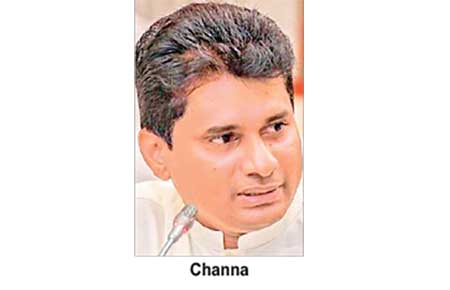
Prof. CJ explains how combination of three vaccines was used to address problem
By Shamindra Ferdinando
Those who have missed Oxford AstraZeneca (Covishield) second jab so far are unlikely to get theirs before the originally stipulated period to ensure the best effect of the vaccine.
Various government spokespersons, including Senior Presidential Advisor Lalith Weeratunga are on record as having said that the second jab should be administered between 12 to 16 weeks to maximise protection against new variants of coronavirus.
However, State Minister of Pharmaceutical Production, Supply and Regulation Prof Channa Jayasumana yesterday (24) said subsequently the WHO had determined that the second jab could be given in 24 weeks (six months).
Prof. Jayasumana said that though the original deadline couldn’t be met due to the disruption to the supply line, the time and space provided by the latest WHO technical paper would give the government an opportunity to complete the inoculation of those who earlier received Covishield first jab.
Prof. Jayasumana said so in response to The Island queries.
 Asked how the government intended to ensure the second jab for approximately 570,000 before the expiring of the new deadline, Prof Jayasumana said that in addition to 264,000 covishield promised through the Covax programme in the second week of July, Sri Lanka would take delivery of 26,000 Pfizer vaccines doses on July 5, 12 and 19 and the remaining requirement would be met through US donation of Covid-19 vaccines, probably Moderna. “If everything goes as expected, the issue of Covishield second jab can be settled by end of July,” Prof Jayasumana said.
According to the State Minister, the WHO has said the second dose could be given after 20 weeks though previously it was 16 weeks. According to WHO technical study dated May 26, 2021. “The uncertainty of future supplies has prompted countries to review policy and programmatic implications, as providing the second dose of the vaccine within the WHO recommended 8-12-week schedule may not be feasible in the near future,” according to the WHO study.
The Island sought an explanation from Prof. Neelika Malavige, who is also the Head, Department of Immunology and Molecular Medicine at the Sri Jayewardenepura University Medical Faculty, what would happen if the deadline couldn’t be met. Prof. Malavige said that a slight delay wouldn’t be an issue but in the absence of required data she couldn’t comment on much delayed inoculation and what its impact would be.
Referring to available foreign research data, Prof. Malavige said having the second dose was essential to guarantee the best effect of the vaccine, and in particular to maximise protection against new variants.
Director General of Health Services (DGHS) Dr. Asela Gunawardena didn’t answer his mobile phone and therefore the response of the senior most official responsible for Covid-19 counter-measures to the plight of nearly 600,000 persons awaiting the second jab couldn’t be obtained.
Prof. Malavige pointed out that against the backdrop of sharp increase in the cases of the Delta variant, in some parts of the world the administration of the second dose had been advanced. According to the Office of Health Ministry’s Chief Epidemiologist as at 8pm, June 22, 2021, altogether 372,675 had received the booster shot whereas 925,242 got the first dose during January-April 2021. The report revealed that on June 20, 21 and 22, the covishield second dose had been given to 252, 132 and 385 persons.
Sri Lanka received altogether three stocks of Covishield consisting 1,264,000 from Serum Institute, Pune beginning January 28, 2021. Of them, India and Covax donated 500,000 and 264,000, respectively. Sri Lanka paid for the rest.
The Japanese Embassy on Wednesday (23) said that Sri Lanka’s request for stock of AstraZeneka vaccines was still under consideration. The Island raised the issue with The Japanese embassy in the wake of a statement issued by the President’s Media Division (PMD) on June 09 regarding positive Japanese government response to Sri Lanka’s request.
“President Gotabaya Rajapaksa’s request to the Prime Minister of Japan, Yoshihide Suga for 600,000 doses of AstraZeneca vaccine has received positive response,” PMD stated in a statement soon after the President met Japanese Ambassador in Colombo Sugiyama Akira on June 09.
Asked whether the Japanese Embassy could comment on the PMD statement, the Japanese Embassy has sent The Island the following statement: When circumstances allow and at an appropriate time, Japan will allocate around 30 million doses of vaccines manufactured in Japan to other countries and regions, including through the COVAX Facility. We have received a request from the Government of Sri Lanka for assistance in relation to vaccines. The two governments are in discussion on the issue and the request is being considered at our HQ. We would like to refrain from making further comments on the diplomatic communications.”
However, according to media reports Japan had already donated 1.24 million doses of AstraZeneca vaccine to Taiwan early this month.
Authoritative Foreign Ministry sources told The Island that the Sri Lanka reiterated call for urgent supply of AstraZeneca from the UK in the wake of recently concluded G7 summit where the issue of some influential countries hoarding vaccine stocks was revealed.
Both Prof. Jayasumana and Prof. Malavige explained the current status on the basis of relevant documents made available to The Island. Prof Jayasumana acknowledged that it would be the responsibility of the government to ensure the proper implementation of the inoculation drive though some shortcomings were obvious. He said the issue of malpractices in the overall programme couldn’t be denied but every effort would be made to implement the programme.




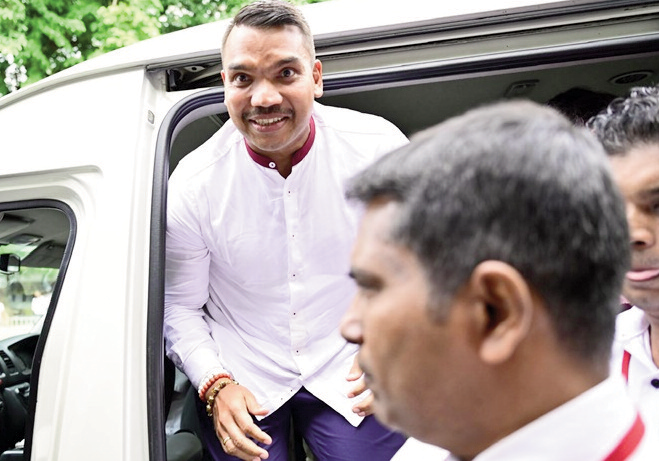
Sri Lanka Podujana Peramuna (SLPP) National Organiser and Parliamentarian Namal Rajapaksa was yesterday remanded until September 18 by the Colombo Chief Magistrate’s Court following his arrest by the Commission to Investigate Allegations of Bribery or Corruption (CIABOC) in connection with an investigation into the controversial SriLankan Airlines Airbus aircraft transaction.
Rajapaksa appeared before the CIABOC at around 9.15 am yesterday to record a statement after being summoned over the transaction. He was taken into custody following several hours of questioning and subsequently produced before the Colombo Chief Magistrate.
The investigation centres on allegations surrounding the acquisition of six Airbus A330 and eight A350 aircraft by SriLankan Airlines in 2013, in connection with an alleged USD 2 million bribe.
Former SriLankan Airlines Chief Executive Officer Kapila Chandrasena and his wife, Priyanka Niyomali Wijenayake, had previously been named in connection with the alleged bribery.
Chandrasena was arrested on March 12 as part of an investigation launched by the CIABOC under the Anti-Corruption Act and was subsequently released on bail. He was later found dead on May 8 while on bail, with police suspecting that his death was a suicide.
Open warrants have been issued for the arrest of Wijenayake, who is named as the second suspect, and Shamindra Rajapaksa, named as the third suspect, in the case pending before the Fort Magistrate’s Court in connection with the Airbus transaction.
The investigation has also received assistance from Airbus, with a delegation from the company’s parent group in France visiting Sri Lanka during the first week of August. The delegation provided statements and other assistance to the CIABOC as part of the ongoing inquiry.
Rajapaksa’s arrest and remand yesterday mark a further development in the widening investigation into the controversial aircraft deal.
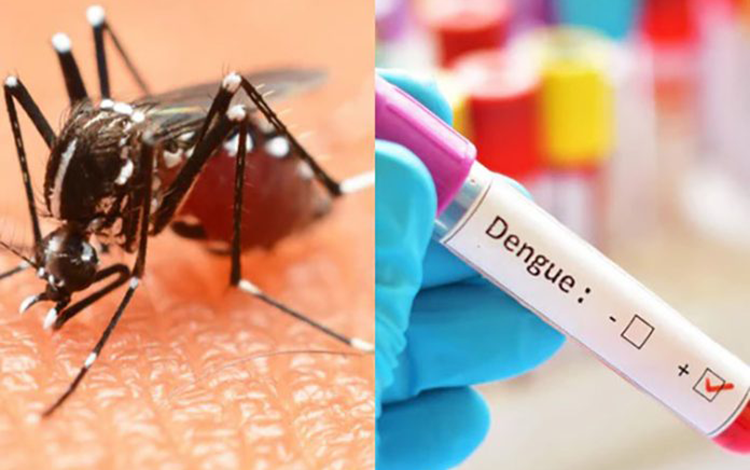
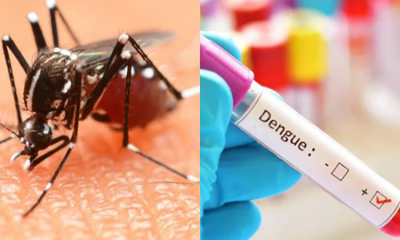
The number of dengue cases reported in Sri Lanka this year has risen to 96,040, with 72 deaths recorded so far, according to the National Dengue Control Unit.
The Unit said 10,155 cases were reported in August alone, highlighting the continuing spread of the disease across several parts of the country.
The Western Province has recorded the highest number of cases at 50,760, followed by the Southern Province with 13,931, the Central Province with 8,788 and the Sabaragamuwa Province with 7,910.
At district level, Gampaha has reported the highest number of cases at 20,444, followed by Colombo with 19,008.
Kandy has recorded 7,043 cases, while Kalutara and Matara have reported 6,181 and 6,154 cases,a respectively.
The National Dengue Control Unit said 50 Medical Officer of Health (MOH) areas across the country have been identified as high-risk areas for dengue.
Health authorities have continued to urge the public to take measures to prevent mosquito breeding, particularly in areas where a high incidence of dengue has been reported.
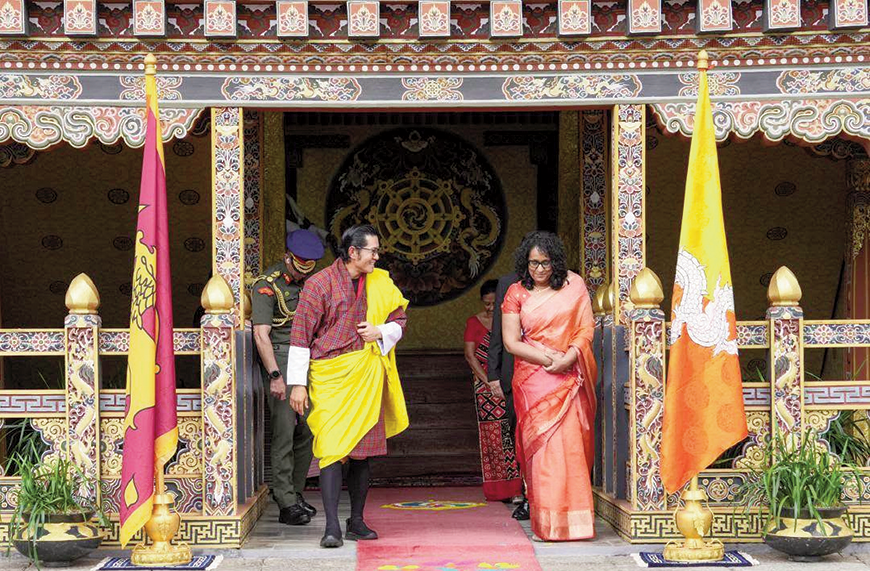
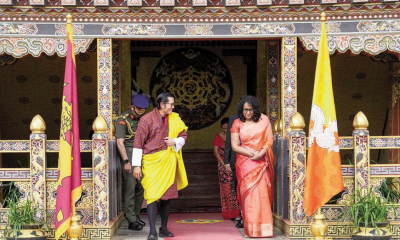
Prime Minister Dr. Harini Amarasuriya met King Jigme Khesar Namgyel Wangchuck of Bhutan at the historic Tashichhodzong, in Thimphu, last Wednesday (02), with discussions focusing on Bhutan’s development priorities and ways to strengthen bilateral relations with Sri Lanka.
The meeting took place during Dr. Amarasuriya’s official visit to Bhutan.
The Bhutanese King expressed interest in drawing on Sri Lanka’s experience and expertise in areas relevant to the country’s long-term development plans, according to a statement issued, following the meeting.
The two sides also discussed opportunities to expand investment cooperation, including a proposal to establish an investment zone in Bhutan.
The discussions further covered demographic challenges facing Bhutan, particularly the increasing migration of young people and its potential impact on the country’s future workforce and population.
Both sides underscored the importance of sustainable development and creating greater opportunities for young people to contribute to national economic growth and development.
The meeting formed part of efforts to broaden cooperation between Sri Lanka and Bhutan beyond traditional areas of bilateral engagement, with investment, development expertise and demographic concerns emerging as areas of common interest.

Namal remanded until Sept. 18 over Airbus deal investigation

Dengue cases surpass 96,000 this year

PM Harini, Bhutan King explore closer ties

Johnston granted bail following CIABOC arrest

SC concludes hearing of petitions against Anti-Corruption Bill

US Maritime Commission chiefs to visit Lanka to boost shipping ties

‘Dates have the highest sugar content to fight Coronavirus’

Sunday Island 27 December – Headlines

#SundayIsland 17th December – Headlines

Sunday Island – 28th March

Sunday Island Headlines – 21 March

Sunday Island – 21st February – Headlines
-

 Features6 days ago
“Wrap Me Up in My Blazer”— A Gentlemanly Bradby Reminiscence
-

 Features5 days ago
When Sri Lankan stories find their own voice
-
 Features6 days ago
JVP/NPP government as seen from outside by Lionel Bopage now domiciled in Australia
-
 News5 days ago
BASL takes exception to Justice Ganepola being denied a place in SC
-
 Features6 days ago
Prof. Savitri Goonesekere: What has she done?
-

 News2 days ago
Denied of promotion to SC despite vacancies, justice Gurusinghe retires
-

 Latest News3 days ago
Grade 5 scholarship exam results released
-

 Features6 days ago
World Trade Politics: Canada rebuffs Trump’s tariff blackmail