
News
Politically motivated efforts to sabotage Covid-19 inoculation project alleged

… despite shortcomings, vaccination drive on track
By Shamindra Ferdinando
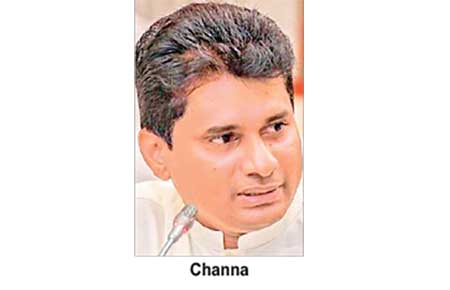
State Minister of Pharmaceutical Production, Supply and Regulation Prof. Channa Jayasumana says despicable attempts are being made to derail the ongoing Covid-19 inoculation drive.
In a wide ranging interview with Dasun Wasantha on ITN on Wednesday (16) night, Anuradhapura District lawmaker Prof. Jayasumana alleged that the recent inoculation of a group of people from Colombo at a vaccination centre in Galle was certainly part of their strategy.
When the interviewer pressed for an explanation, the medical academic turned politician said a senior Opposition politician’s younger brother was behind the moves to discredit those engaged in the vaccination programme.
Pointing out that the matter was now before courts, Prof. Jayasumana emphasised that the government could not ignore the threat posed by those who were out to prevent it from overcoming the Covid-19 challenge.
Prof. Jayasumana said that the government was also countering a threat on the political front. Answering another query, he alleged that an influential section of medical administrators and doctors, too, were trying to sabotage the vaccination programme for political reasons.
Conspiracy to derail vaccination drive
The state minister compared those who had been trying to sabotage the vaccination programme with the political groups which could not bear the eradication of terrorism. He recalled how certain influential persons had tried to thwart the combined security forces campaign on the Vanni front during eelam war IV (August 2006-May 2009).
Prof. Jayasumana said that some of those pursuing politically motivated strategy had been removed, moved out or neutralised to ensure that the vaccination programme would be conducted efficiently, but action could not be taken against some elements as they were under the Public Service Commission (PSC).
Acknowledging shortcomings and some failures on the part of the SLPP administration in the implementation of the vaccination programme, Prof. Jayasumana said he was confident that the vaccination drive could be steered to a successful conclusion.
Lanka refused to allow clinical trials
At the onset of the interview, Prof. Jayasumana explained why the government had refused to involve Sri Lanka in Covid-19 clinical trials. “We were given the opportunity. If agreed, we could have secured some privileges such as priority access to vaccines. Brazil and Peru were among those countries involved in clinical trials and were given priority in the distribution of vaccines.”
Prof. Jayasumana denied the interviewer’s assertion that Sri Lanka was late in launching the vaccination programme. “How could that be? We launched inoculation drive on January 29, within 24 hours after taking delivery of 500,000 free covishield doses from India.”
Prof. Jayasumana pointed out that Sri Lanka had launched the inoculation drive two weeks before the World Health Organization (WHO) approved AstraZeneca/Oxford COVID-19 vaccine aka covishield produced at Serum Institute, Pune in India for emergency use.
Sinopharm jab
Commenting on the introduction of the Sinopharm vaccine here, Prof. Jayasumana said that the Chinese product encountered serious challenges due to a highly politically motivated campaign meant to sabotage the inoculation campaign. He alleged a section of the print media contributed to that project carried out by disruptive elements, who also directed a high-profile social media campaign targeting Sinopharm.
Prof. Jayasumana said that the campaign against Sinopharm had delayed the administration of it. Referring to political influence exerted on medical specialists to discourage them from approving its use, Prof. Jayasumana acknowledged that finally a new regulatory committee had been appointed to secure approval for the Chinese jab.
Prof. Jayasumana said that the government had first used Sinopharm on May 8 though China delivered stock of 600,000 doses on March 31. “Doctors felt threatened. They believed a decision on Sinopharm could boomerang.”
Asked whether the government could have tackled Covid-19 if Sinopharm had been introduced much earlier, the State Minister said the vaccination process could have been advanced.
Prof. Jayasumana said, adding that Sri Lanka recently received sufficient Sinopharm doses to sustain the inoculation drive. He revealed that another consignment of one million vaccine doses was awaited in addition to six million doses expected in July and August.
Prof. Jayasumana said that the unexpected Covid-19 eruption in India had disrupted Sri Lanka’s inoculation project. Having received 500,000 free covishield doses from India, the government expected to buy 10 mn doses from Serum Institute, but only 500,000 could be bought. Besides, Sri Lanka had received 264,000 doses through Covax facility, Prof. Jayasumana said, adding that the breaking up of the supply chain had resulted in about 575,000 being deprived of the covishield second dose. “We are quite concerned about the situation.”
Commenting on difficulties experienced in procurement efforts, Prof. Jayasumana said that there was no point in denying the fact that both the US and Russia pursued what he called vaccine diplomacy in line with their geopolitical strategy.
Prof. Jayasumana said that those who seek to discourage the use of Sinopharm had recently propagated the lie China sold Sinopharm dose at USD 15 a piece to Sri Lanka whereas Bangladesh received the same for USD 10 each. He alleged social media had been abused to mislead the public into believing that Sinopharm was unsafe and China was engaged in unfair trading practices.
‘200-million-rupee property’
Prof. Jayasumana said he had been accused of building a Rs 200 mn house in Etul Kotte. “Neither I nor my family members own any property in Etul Kotte or Pita Kotte,” Prof. Jayasumana said, adding that he had called for a police investigation.
Declaring that Sri Lanka had procured the Sinopharm vaccine at the lowest possible price, Prof. Jayasumana explained the procedures adopted in the procurement process.
Prof. Jayasumana insisted that no other country had received Sinopharm at lower prices.
The State Minister also discussed efforts to provide the second dose of covishield to those denied it so far. According to him, the WHO has promised to deliver 264,000 covishield doses as booster shots. “We expect to take delivery of the consignment within the first two weeks of July,” Prof. Jayasumana said, adding that Sri Lanka had also requested additional 300,000 doses for those deprived of the second dose. Those countries having additional stocks of that vaccine had said they could make available the vaccines only through the Covax programme, the state minister said.
Possible AZ-Pfizer mix
Prof. Jayasumana said that if their efforts to procure sufficient stock of covishield failed, the Pfizer vaccine could be used for the second dose. However, this would be subjected to approval by the regulatory body though the WHO had approved the vaccine mix.
Prof. Jayasumana said that 300,000 doses of Pfizer vaccines were expected to be delivered next month. Sri Lanka expected to take delivery of as many as 5 mn Pfizer vaccines this year, including 300,000 expected next month.
Responding to another query, Prof. Jayasumana said that there had been only three cases of those who had received Sinopharm experiencing side-effects though 1.4 mn received the vaccine since May 8. The recent problem at a garment factory in Anuradhapura had not been caused by Sinopharm, but an issue caused by poor ventilation, the state minister said.

Latest News
Landslide Early Warnings issued to the districts of Colombo, Galle, Gampaha, Hambanthota, Kalutara, Kandy, Kegalle, Kurunegala, Matara, Nuwara Eliya and Ratnapura


The National Building Research Institute has issued landslide early warnings to the districts of Colombo, Galle, Gampaha, Hambanthota, Kalutara, Kandy, Kegalle, Kurunegala, Matara, Nuwara Eliya and Ratnapura from 16:00 hrs on 25.09.2026 To 16:00 hrs on 26.09.2026
Accordingly,
LEVEL III [RED] landslide early warnings have been issued to the Divisional Secretaries Divisions and surrounding areas of Neluwa, Nagoda, Niyagama and Thawalama inthe Galle district, Ganga Ihala Korale, Udapalatha, Doluwa and Pasbage Korale in the Kandy district, and Kothmale West, Ambagamuwa, Kotmale East and Norwood in the Nuwara Eliya district.
LEVEL II [AMBER] landslide early warnings have been issued to the Divisional Secretaries Divisions and surrounding areas of Elpitiya, Baddegama and Karandeniya in the Galle district, Walallawita in the Kalutara district, Deltota, Udunuwara, Gangawata Korale, Yatinuwara and Panvila in the Kandy district, Aranayake, Dehiowita, Mawanella, Deraniyagala and Yatiyanthota in the Kegalle district, Thalawakelle in the Nuwara Eliya district and Ratnapura and Pelmadulla in the Ratnapura district.
LEVEL I [YELLOW] landslide early warnings have been issued to the Divisional Secretaries Divisions and surrounding areas of Seethawaka and Padukka in the Colombo district, Attanagalla and Mirigama in the Gampaha district, Katuwana and Walasmulla in the Hambanthota district, Ingiriya and Bulathsinhala in the Kalutara district, Hatharaliyadda, Poojapitiya, Medadumbara, Kundasale, Ududumbara, Thumpane, Akurana, Pathadumbara, Harispattuwa and Pathahewaheta in the Kandy district, Warakapola, Bulathkohupitiya, Galigamuwa, Kegalle and Ruwanwella in the Kegalle district, Mallawapitiya, Alawwa, Polgahawela and Mawathagama in the Kegalle district, Pitabeddara, Kotapola and Pasgoda in the Matara district, Nuwara Eliya in the Nuwara Eliya district and Elapatha, Ayagama, Nivithigala, Kuruwita and Kalawana in the Ratnapura district

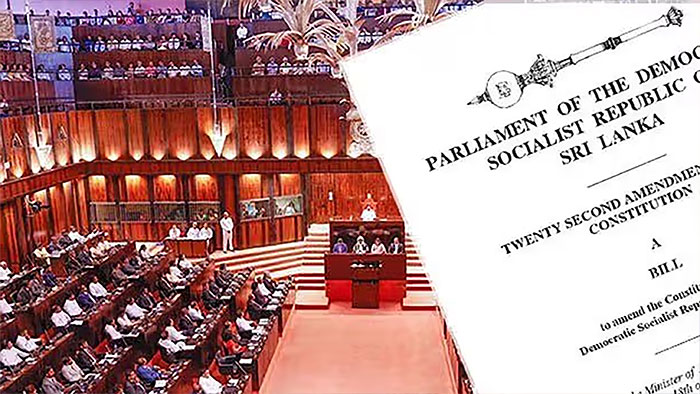
Parliament yesterday passed the Twenty-Second Amendment to the Constitution Bill and the Judicature (Amendment) Bill with two-thirds majorities, with 158 MPs voting in favour and 63 against each Bill.
The Illankai Tamil Arasu Kadchi (ITAK) and Sri Lanka Muslim Congress (SLMC) voted with the SJB against the Bills.
NDF MPs Ravi Karunanayake and Faizer Musthapha and SJB Badulla District MP Nayana Wasalathilaka were not present when the votes were taken.
The final vote on the Judicature (Amendment) Bill was announced at around 8.08 p.m. after Opposition MPs called for divisions on its clauses during the Committee Stage.
The votes followed a two-day debate which commenced on Thursday (24), after Justice and National Integration Minister Harshana Nanayakkara presented the Bills for their Second Reading.
The Supreme Court’s determination on the Bills was presented to Parliament on Tuesday (22) by Speaker Dr Jagath Wickramaratne. The Court determined that the 22nd Amendment Bill did not require approval at a referendum and could be passed by a special two-thirds majority in Parliament.
The amendment provides for raising the mandatory retirement age of Supreme Court judges from 65 to 67 and that of Court of Appeal judges from 63 to 65. It also provides for the Chief Justice to retire at 67 or after completing six years in office, whichever comes earlier.
The Speaker informed Parliament that the Judicature (Amendment) Bill could be passed by a simple majority.
The SJB opposed the legislation and its MPs attended Parliament dressed in black yesterday. The party also staged a protest at Polduwa Junction, Battaramulla, under the theme “No to 22, which destroys democracy”, with Opposition Leader Sajith Premadasa and several SJB politicians participating.
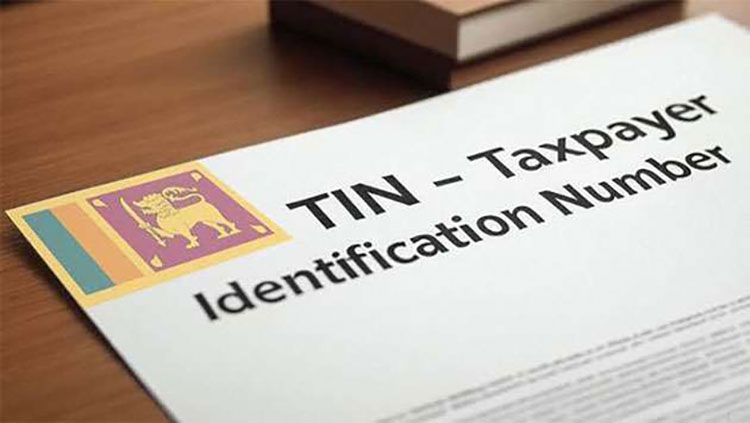
A valid Taxpayer Identification Number (TIN) Certificate will be required for a range of key transactions in Sri Lanka from November 1, 2026, the Inland Revenue Department (IRD) has announced.
The requirement, introduced under the Inland Revenue (Amendment) Act, No. 11 of 2026, applies to transactions specified under Section 102(3) of the Inland Revenue Act.
Accordingly, individuals will be required to produce a valid TIN Certificate when opening an account at a bank or financial institution, obtaining approval for a building plan, registering or renewing the licence of a motor vehicle, registering land or title to land, registering a business, transferring shares in a company incorporated in Sri Lanka or obtaining a credit card.
In the case of share transfers, both the transferor and transferee will be required to provide TIN certificates.
The IRD said officials handling such transactions had been instructed to ensure that a valid TIN Certificate was submitted before processing or completing the relevant transaction.
The Department advised those who do not already have a TIN to obtain one in advance through its e-Services platform.
It said a printout of the TIN verification result showing the applicant’s National Identity Card number and TIN could also be accepted instead of the certificate.The IRD also reiterated that obtaining a TIN is mandatory for resident individuals aged 18 and above under the applicable provisions.

Landslide Early Warnings issued to the districts of Colombo, Galle, Gampaha, Hambanthota, Kalutara, Kandy, Kegalle, Kurunegala, Matara, Nuwara Eliya and Ratnapura

Showers in the Western, Uva and Sabaragamuwa provinces and in Galle, Matara, Kandy, Nuwara-Eliya, Batticaloa and Ampara districts.

22A, Judicature Amendment Bills passed with 2/3 majority

TIN mandatory for key transactions from Nov. 1

Navy brings 25 Indonesian fishermen ashore after trawler capsizes

Former Mineral Sands Chairman arrested over recruitment irregularities

‘Dates have the highest sugar content to fight Coronavirus’

Sunday Island 27 December – Headlines

#SundayIsland 17th December – Headlines

Sunday Island – 28th March

Sunday Island Headlines – 21 March

Sunday Island – 21st February – Headlines
-

 News6 days ago
Namal Rajapaksa Buddhist gambit fails, bail denied
-

 Features6 days ago
Why the spelling Sri Lankan names in English vary
-

 Features6 days ago
Three bands, a new identity: Sri Lankan wolf snake recognised as distinct species
-

 Business6 days ago
SLIIT holds largest-ever convocation
-

 News6 days ago
Vehicle prices drop by up to Rs. 1 mn, says importers’ body
-

 News6 days ago
Govt monitors reported Saudi death sentence – Foreign Ministry
-

 Business6 days ago
All-new Bolero MaXX Pik-Up unveiled in Lanka
-
 Business6 days ago
Lanka’s famed beach shack battles demolition